Feeds:
Posts
Comments

Archive for the ‘Architecture’ Category

Surprise! We’re in Vienna. Well, technically speaking we are in Hungary now, but we were in Vienna.  We had no intention of visiting Austria during our RTW trip, but had to in order to get to our desired destination, Budapest. It took four hours, a bus and two trains from Český Krumlov, but before we knew it, we had arrived.

Vienna was a lovely surprise. Granted, we did spend our only full-day of sightseeing slightly hung-over, but you have to make sacrifices sometimes, right? Life is short. Two Americans, one Korean-born Australian and one Argentine in Austria = a jolly good time. Jägerbomb anyone? We have no idea where Diego and Lisa are now, but we wish them safe travels.

So, what did we see on this glorious day in Vienna, you ask?

Naschmarkt

An incredible outdoor market that stretches on for blocks, with stall after stall of flowers, spices, pastries, sipping vinegars, produce, meat, seafood, and more. Most importantly, it provided a much needed hummus fix for Amy.
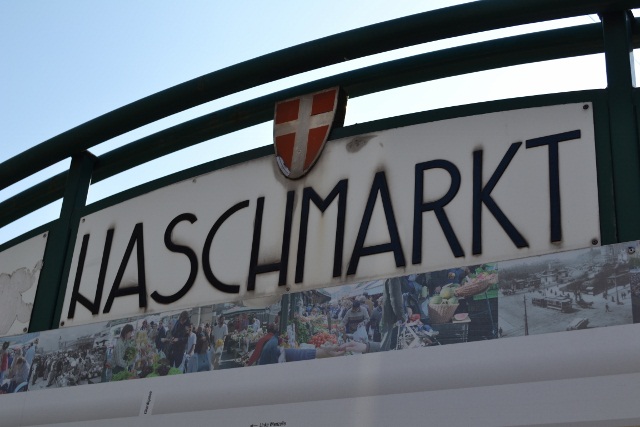
Naschmarkt entrance. You can read about the history of this market here.
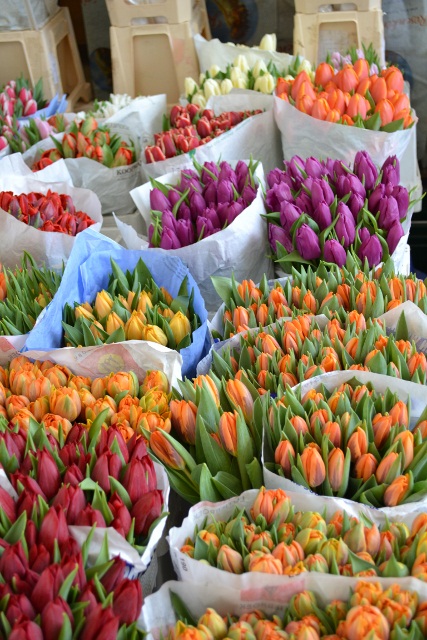
Colorful tulips. Christina, I was thinking about you when we walked by this stand.
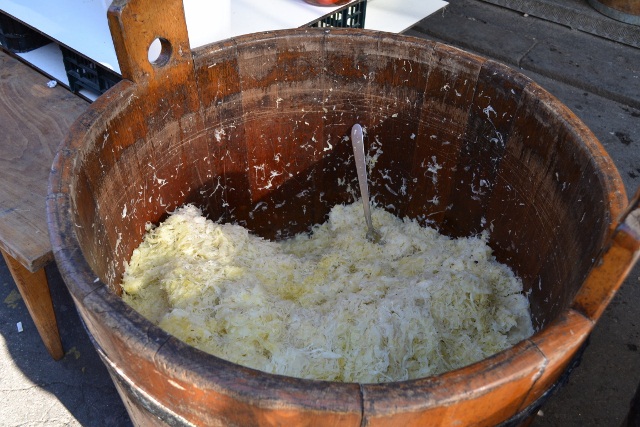
That’s a lot of kraut!
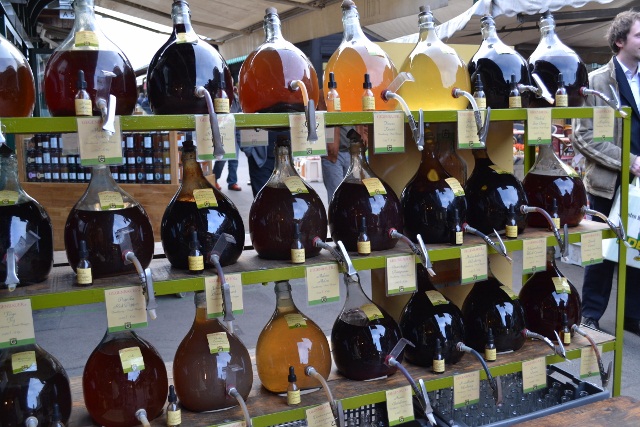
Rows upon rows of tasting vinegars

An interesting observation we made in Vienna is that Austrians are constantly eating on the go; there are countless food stands strewn across the city, and it seems as though every third person you see is eating on the move. Anyone giving Americans a bad rap this behavior should visit Vienna. Naturally, we had to give eating Vienna-style a try, so picked up some fantastic noodles-in-a-box from the Naschmarkt.
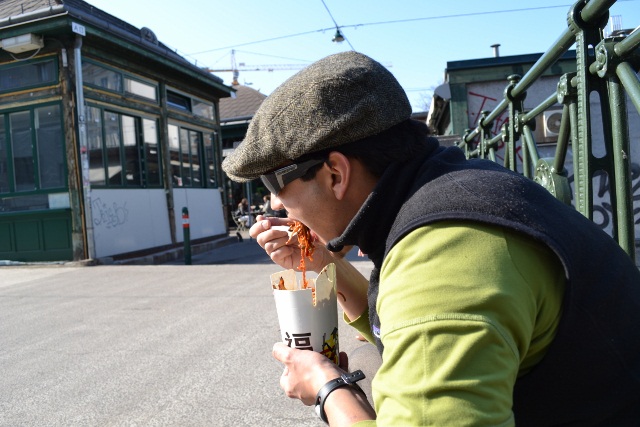
Yum.

Ringstraße

The heart of Vienna is encircled by roads that are collectively called Ringstraße (Ring road). We spent a few hours walking it and were astounded by how grandiose everything is; architecturally it is one of the most impressive European cities we’ve seen thus far. Pictures simply do not do it justice. It is quite an experience to literally be stopped in your tracks by the magnificence of a building, every single block, for five straight kilometers.

The Austrian Parliament Building situated on Ring road
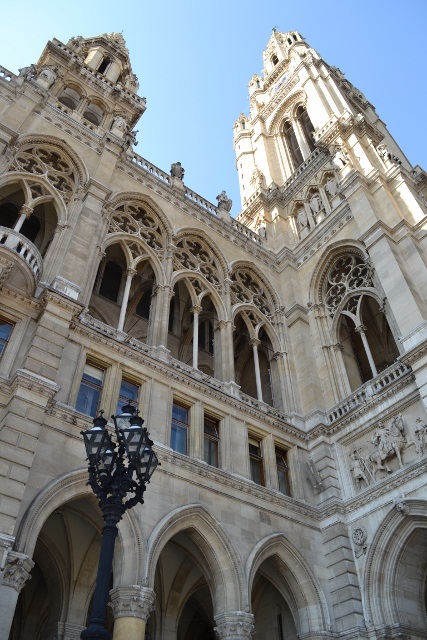
The Vienna City Hall, also located just off of Ring road
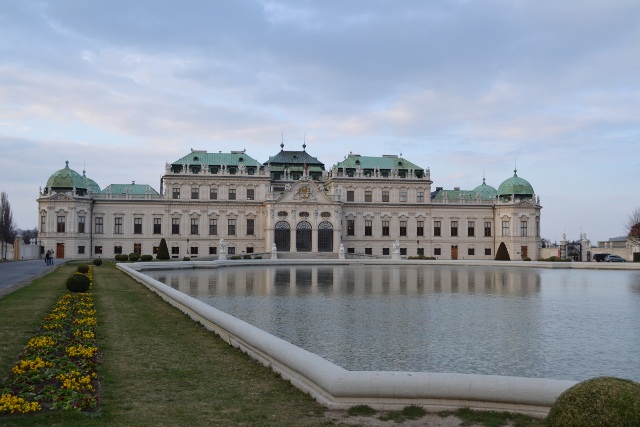
The stunning Upper Belvedere Palace, near Ring road

People Watching

Honestly, no place we visit is without this activity; however, people watching in Vienna seemed to be of particular interest. Every park had a sign posted that attempted to communicate “do not walk on the grass” with stick figures, but none of them seemed to get the point across. There were bodies littering the grass and soaking in the afternoon sun; ideal for people watching.

All in all, our less than 48 hours in Vienna were pure and simple fun. We didn’t feel obligated to do and see everything since our time was limited. Hell, we didn’t even have Viennese coffee. What we did manage to do was get a pleasant taste of the city that left us wanting more.
Read Full Post »

Sometimes bad weather is a blessing in disguise; allowing you to get chores done, or serving as an excuse to just be lazy. Rainy, dreary Prague caused us to try something we had not yet done on our trip, spend the day at a museum. We know it must sound crazy, no museums in two months of travel? If you know us well, you know that we are not museum people. However, we were pleasantly surprised by the Jewish Museum in Prague.

The Jewish Museum is divided into several buildings throughout Prague’s old Jewish neighborhood, including four synagogues, a cemetery and ceremonial burial hall.

We learned that Prague held one of the largest Jewish populations in Europe, which was unknown to us before visiting the museum. During their occupation of Europe, the Nazis destroyed many Jewish monuments and neighborhoods but chose to leave Prague’s Jewish Quarter relatively untouched for the purpose of creating a “museum of an extinct race.” It is chilling to think back to those times. They even shipped Jewish artifacts from across the continent to Prague. Many of these remain, giving the modern Jewish Museum one of the world’s largest collections of Judaic art.

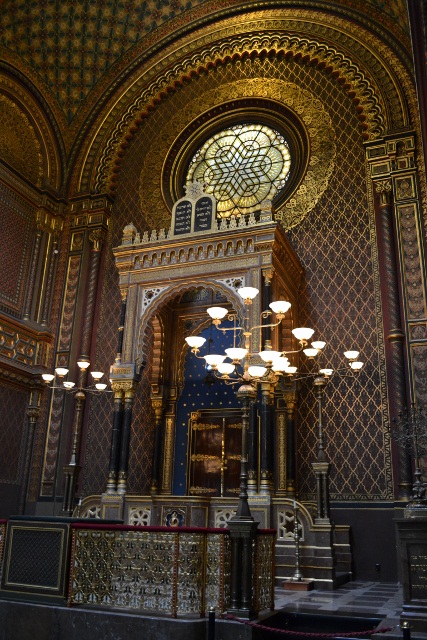
The Spanish Synagogue, interestingly designed in Moorish style

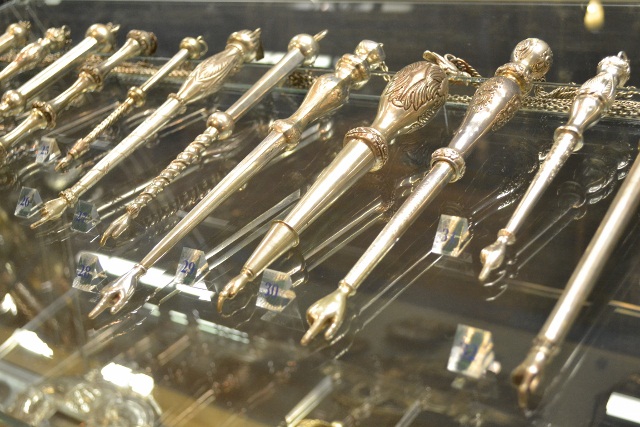
Just a few of the hundreds of Torah pointers on display at the Jewish Museum in Prague

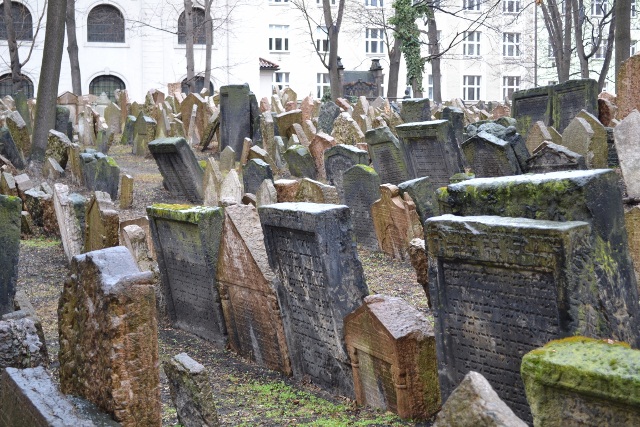
Slanted array of headstones in the Old Jewish Cemetery

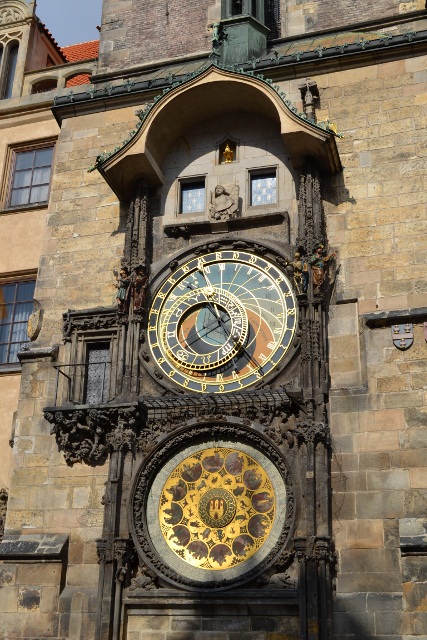
After the clouds lifted, we set out exploring the city by foot. The picturesque buildings, castle and bridges that span the Vltava River give Prague a fairytale feel. Adding to this whimsical atmosphere is the city’s Astronomical Clock. A clock may not seem too cool, but take our word for it; this one is. Not only does it tell the time, date, season, and current zodiac sign, it also gives a really fun show every hour.

The Prague Astronomical Clock just before putting on its hourly show

After checking out the old town and watching the clock strike noon, we headed for Prague Castle, crossing over the river on the Charles Bridge. The bridge and castle are said offer great views of the city, and while worth a visit, were a bit too touristy for our liking. We didn’t stick around too long.

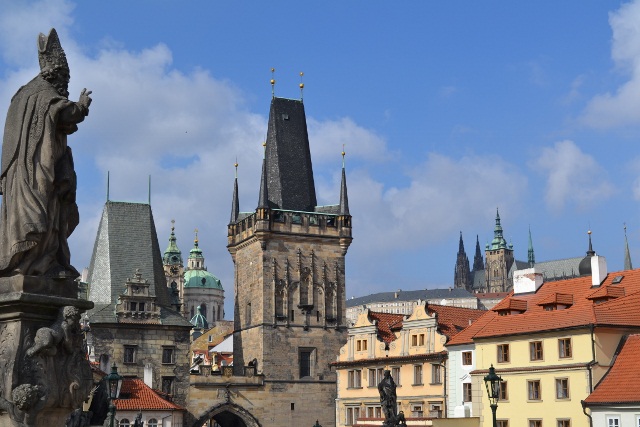
Walking over Charles Bridge towards Prague Castle

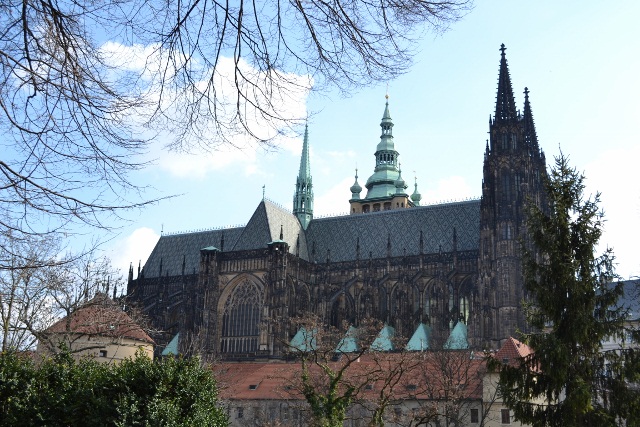
Prague Castle from the backside, as we walk towards the Prague 6 district for lunch

While searching for an elusive beer garden (turns out these are more of a summer thing), we discovered that the real place to get a great view of Prague is from the bluffs of Letna Park. About a 10-15 minute walk from Prague Castle, this park was a perfect place to peacefully soak in the beauty of the city, bridges, and far off hills.

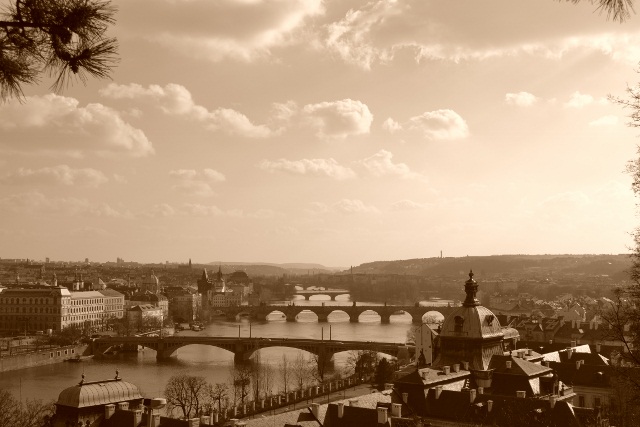
Beautiful view of Prague and the Vltava River from Letna Park

Our original itinerary for the Czech Republic only included Prague, but on a recent flight we had read an article about the Czech Beer Route in a magazine. As beer lovers, we were intrigued to learn more, so we did some research and decided to depart from Prague in the direction of Czech’s famous beer towns of Plzeň, České Budějovice and Český Krumlov.

Read Full Post »

Upon our arrival in Lisboa (a.k.a. Lisbon), we were excited to find that our “hostel” was more along the lines of a downtown loft. For the first time in nearly a month, we actually felt like we had a home of our own. While there were other rooms, the place was basically empty, and we were given a room with a balcony and an amazing view overlooking Lisboa’s main pedestrian street, Rua Augusta.

Rua Augusta Arch as seen from our room

As difficult as it is to admit, we were feeling our first spell of travel burnout after leaving Porto, and our luck in accommodations couldn’t have come at a better time. We made it to Lisboa exactly one month after beginning the international portion of our RTW trip, and had already stayed in nine different hotels and visited twelve different cities. All that moving around takes a toll, so we spent a good portion of our time being “normal” (making home-cooked meals, reading, playing cards, riding the trams, and just hanging out).

After a few days of recharging our internal batteries, it was time for Carnaval! Parades, parties, concerts, costumes, fun in the sun. What a fantastic event!

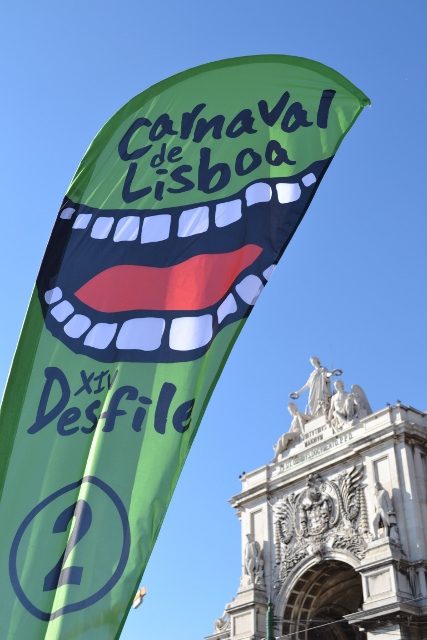
Carnaval Lisboa 2012

Carnaval parade in Lisboa

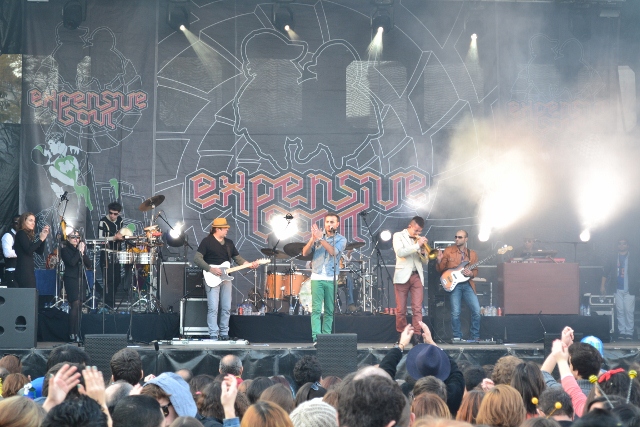
Expensive Soul playing at Rossio Square during Carnaval Lisboa

Another must mention of our visit to Lisboa, was our day trip to Sintra. Just a short train ride from Rossio station, this town sits between tall green mountains and the sea. It is also home to two amazing monuments, the Castelo dos Mouros and Pena National Palace and Gardens.

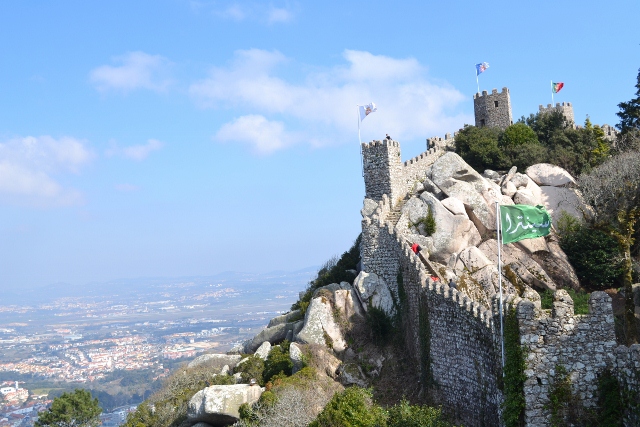
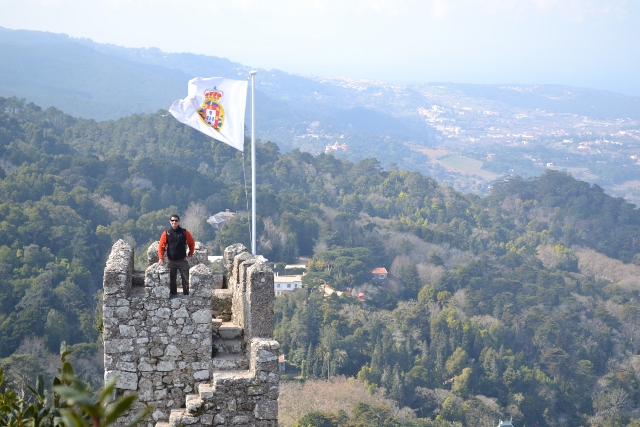
Castelo dos Mouros, overlooking the town of Sintra, was constructed by the Moors in the 8th century

Mike atop a tower at Castelo dos Mouros

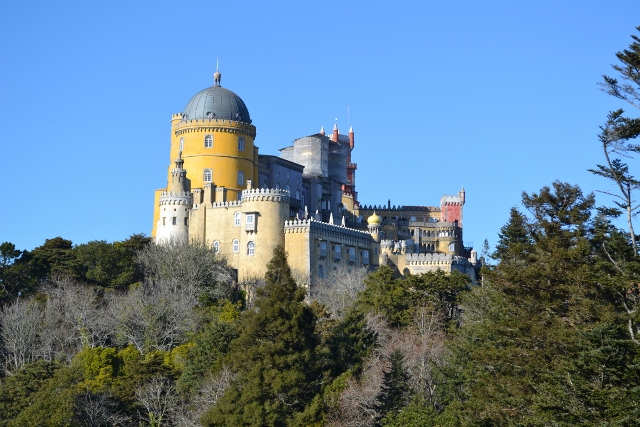
Pena National Palace

View of gardens from the Queen’s Balcony at Pena National Palace

While we are certain that Lisboa could be a great city for a single-destination vacation, our travel burnout and ironic timing with Carnaval turned our visit into something a bit different. It felt more like a “stay-cation” in a not so familiar place.

Read Full Post »

From Valencia, we caught the midnight train to Granada, a first for both of us. Despite opting out of a sleeping car, we were still able to get a solid night’s sleep. When the train pulled into the station in Granada, we were shocked at the sight of snow-capped mountains. Our amazement was not because of their beauty, but due to our breath being taken away by the sting of cold air. Our general assumption had been that moving further south would mean slightly warmer temperatures. Wrong. Apparently Granada is situated at just over 2,000 feet and in a valley between Spain’s two tallest mountains.

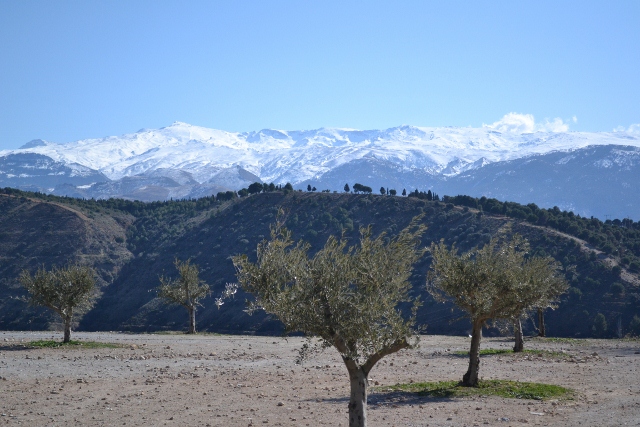
View of the Sierra Nevada from Granada

After putting on all of our clothes (yes, that meant multiple pairs of pants, socks, shirts, jackets, hats and gloves), we managed to get warm enough for the walk to our hostel. The weather was the first of many situations to come where we had to just go with the flow. Here are some other examples of our forced flexibility while in Granada.

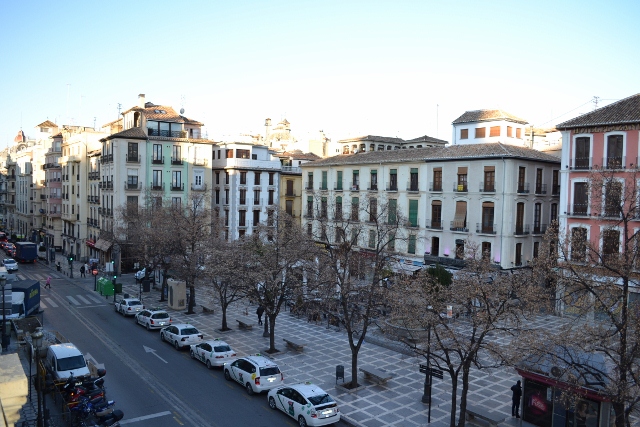
Example #2: We arrived at our guest house and were told that we had been upgraded to a better room! We not only got a private room and bathroom, but the room also had a balcony with a view of Plaza Nueva. Score.
View from our guest house of Plaza Nueva

After basking in the glory of these awesome accommodations, we went to plug in our computer only to find that there were no power outlets. Have you ever stayed in a hotel with no plugs in your room? This could have been expected in SE Asia, but Spain? Last time we checked, Spain was a well developed country. But, we just went with the flow, and used the outlet in the public area.

Example #3: Our main motivation for visiting Granada was to explore the famous ancient city and palaces of the Alhambra, a UNESCO World Heritage Site.

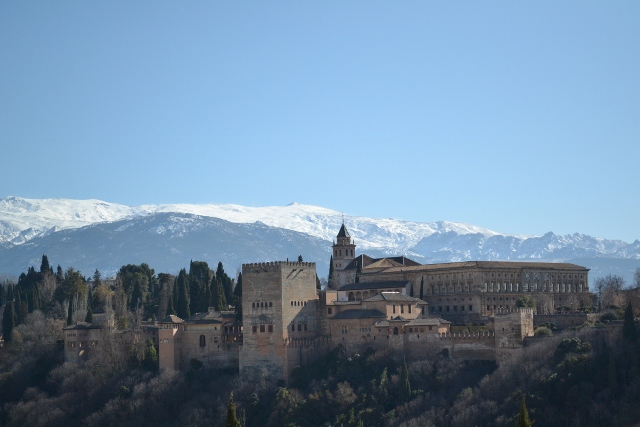
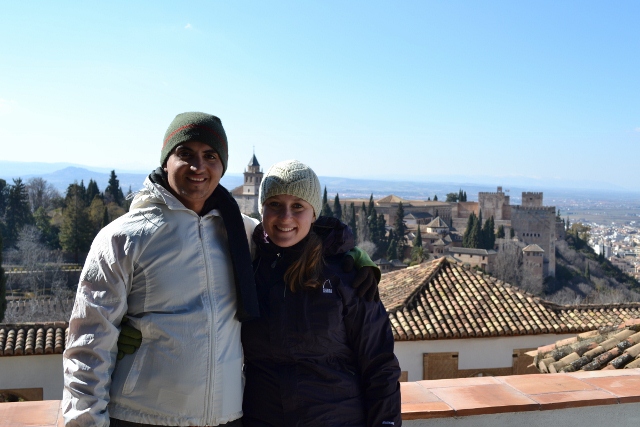
View of the Alhambra from Mirador de San Nicolás

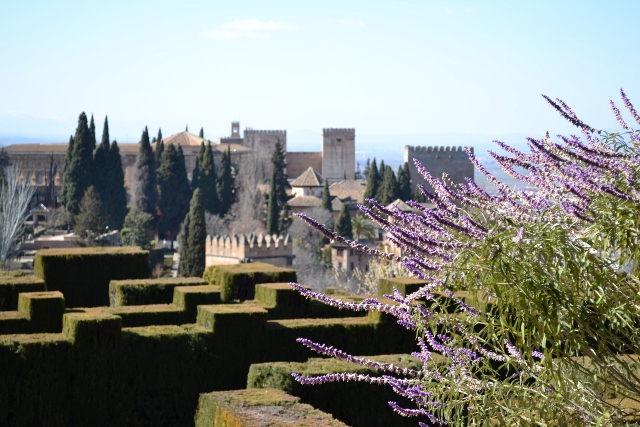
View of the Alhambra from the Generalife gardens

In a perfect world, we would have explored the Alhambra all day, but when we arrived to purchase tickets, we were only able to gain access for four hours. There is a rigid structure of viewing sessions in place to limit the number of visitors so as to preserve this historical site. To visit the main attraction, the Nazarene Palaces, each visitor is provided with a 30 minute time slot. We weren’t given a choice, it was simply assigned. So again, we just went with the flow. If you visit the Alhambra during peak season, we recommend purchasing tickets in advance and visiting during the early morning session.

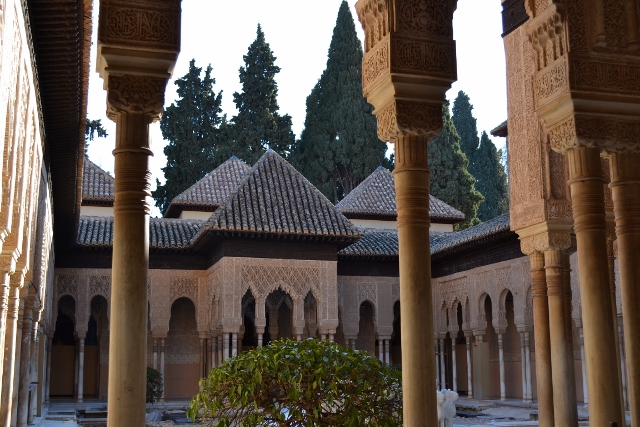
Patio of the Lions in the Nazarene Palaces

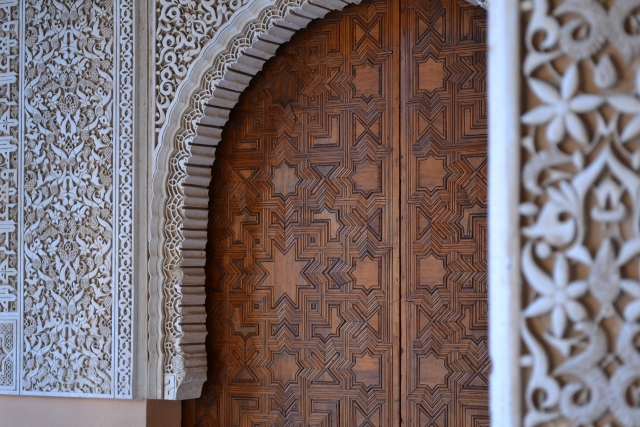
Intricately carved stone and inlaid wood door at the Nazarene Palaces

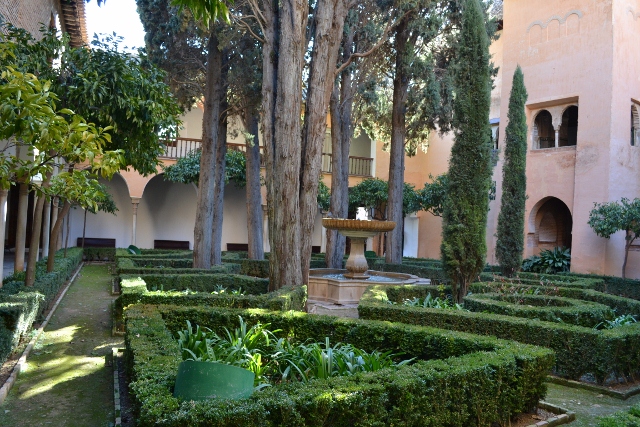
Daraxa’s Garden at the Nazarene Palaces

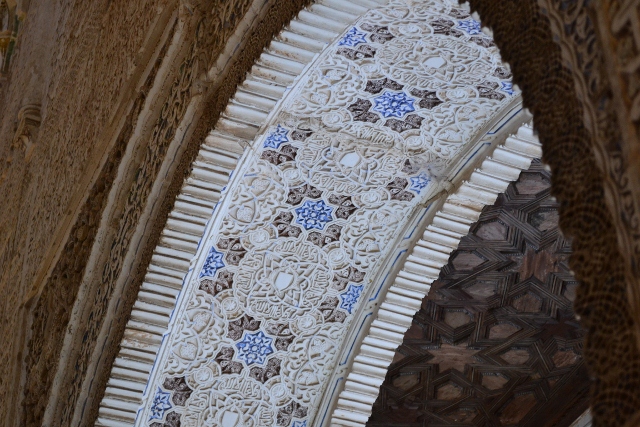
Arch decorated in traditional Moorish style

The Alhambra sits on top of a large hill overlooking the heart of Granada. It was constructed in the late 1300s, which makes it even more awe inspiring. The name Alhambra comes from its Moorish roots, literally meaning “the red one” in Arabic, due to the massive red stone walls that surround the city. Aside from the ornately decorated palaces, we were continually impressed by the extensively planned and still functioning irrigation system, which carries water from the mountains down through the city, to fill fountains, provide plumbing and nourish gardens.

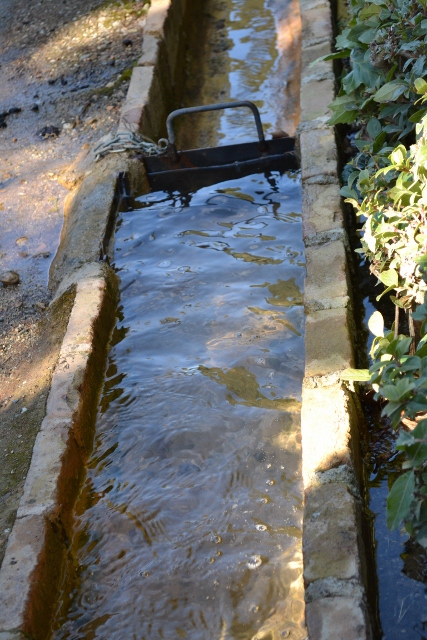
Aqueduct at the Alhambra, gated to divert water towards specific plant beds

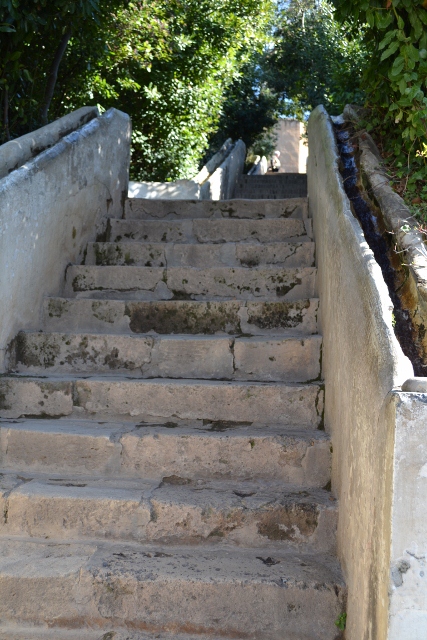
The Water Stairway at the Alhambra

Example #4: One fun surprise we encountered in Granada was “tapas gratis.” In most of Spain, you pay for tapas, but in Granada tapas are provided free of charge with the order of a drink! This led us to the invention of a fun dinner activity which we call “Tapa-Hopping.” This is a twist on conventional bar hopping, where you go from place to place, having a drink (and in Granada, a tapa too) at each stop. The only tricky part about Tapa-Hopping is that you have to go with the flow, because the bar chooses your tapas for you.

We enjoyed our time in Granada, despite the cold, and the Alhambra was all we had hoped for and more (unlike our failed quest for paella in Valencia).

Enjoying the views at the Alhambra

Read Full Post »

If you’ve read the About Us page of our blog, you know that we love food and that one of the main goals of our trip is to sample local flavors.  As the home of paella, we knew that we had to make Valencia one of our stops in Spain.

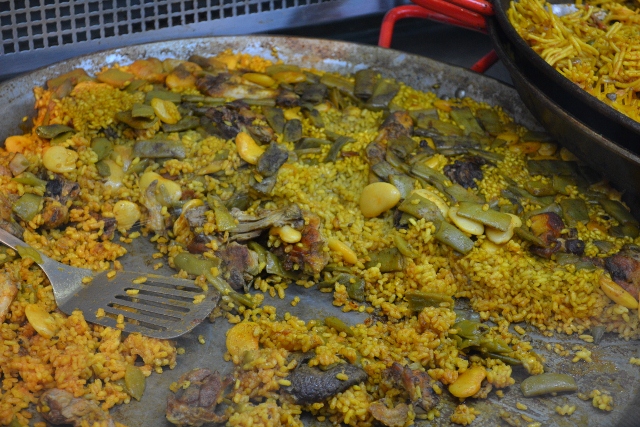
Pan of traditional Valencian paella

As expected, there was paella coming out of the woodwork in Valencia.  Every restaurant, take-out window and market sells paella.  It has become such a tourist spectacle, however, that it seemed somewhat forced.  We learned that “Paella Valenciana” is not the typical seafood paella that you commonly find in the States, but rather has chicken, rabbit, peas and beans intermingled with the saffron rice, as well as a strong rosemary flavor.  Here is a link to a traditional Valencian paella recipe.

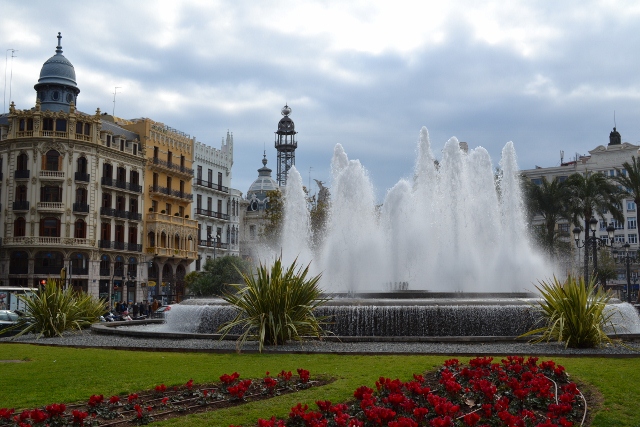
While the paella wasn’t all that we had hoped for, the city had many pleasant surprises.  The old part of town has an abundance of quaint marbled plazas that seem to appear out of nowhere in the maze of small winding streets.

La Plaza del Ayuntamiento

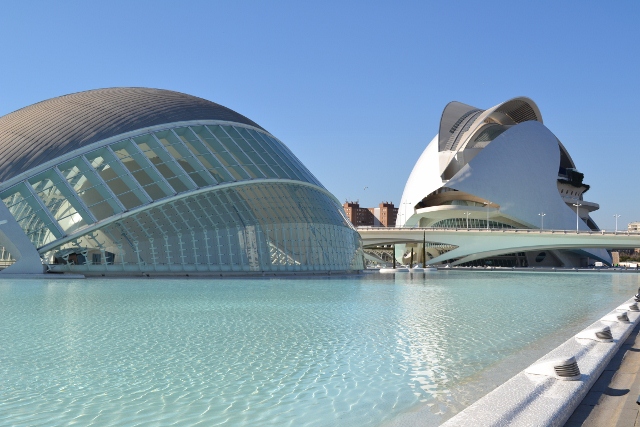
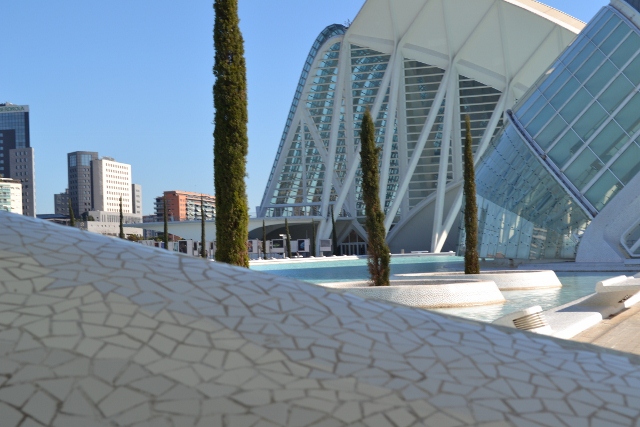
Another part of Valencia that we loved was El Parque Natural del Turia, which stretches 9km across much of the city and is located in the bed of the river Turia which was diverted in following a massive flood in 1957.  The park is host to a wide diversity of trees, gardens, sports courts, paths and playgrounds and culminates at La Ciudad de Las Artes y Ciencias.  If you read our last post, Setting Sail, this architecture may look familiar.  It is the work of Valencian architect Santiago Calatrava, who was also the brains behind El Auditorio de Tenerife which we visited on our cruise.  His work is modern, yet reminiscent of Gaudi at times, and also marked by the use of chipped, white tiles.

The Hemispheric & Palau de les Arts Reina Sofia at La Ciudad de las Artes y las Ciencias

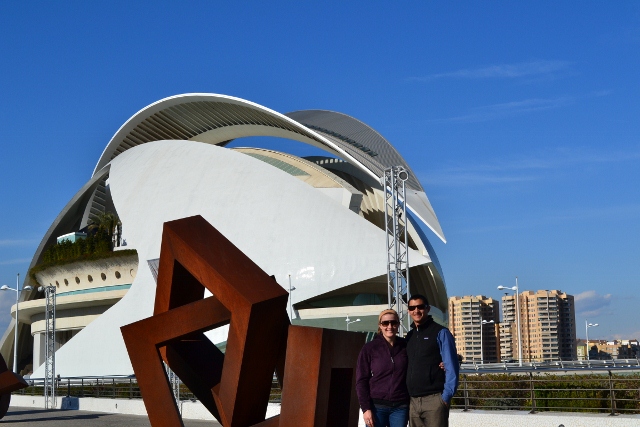
Us in front of Palau de les Arts Reina Sofia at La Ciudad de las Artes y las Ciencias

El Museo de las Ciencias Principe Felipe at La Ciudad de las Artes y las Ciencias

While our visit to Valencia began as a quest for paella, we found that this city has so many other culinary delights to offer.  We first encountered cured morcilla (blood sausage) in a restaurant in Valencia and have since been addicted, eating it every chance we get.  While blood sausage was not a new concept to us, we had never seen it in this form, dried and sliced, similar to salami.

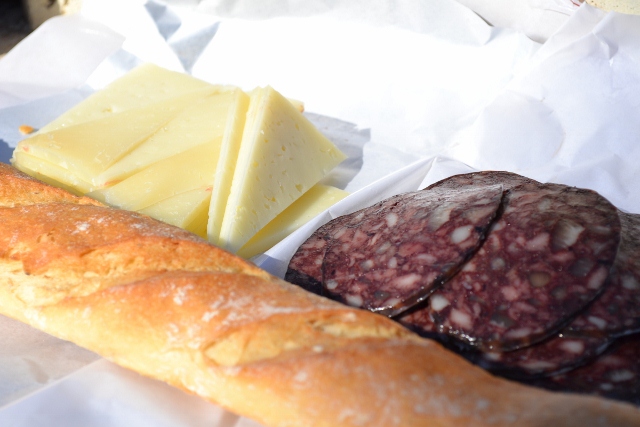
Picnic of pan fresco, manchego fuerte and morcilla

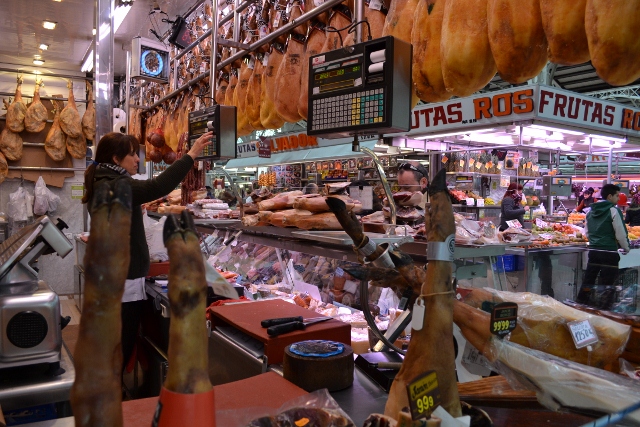
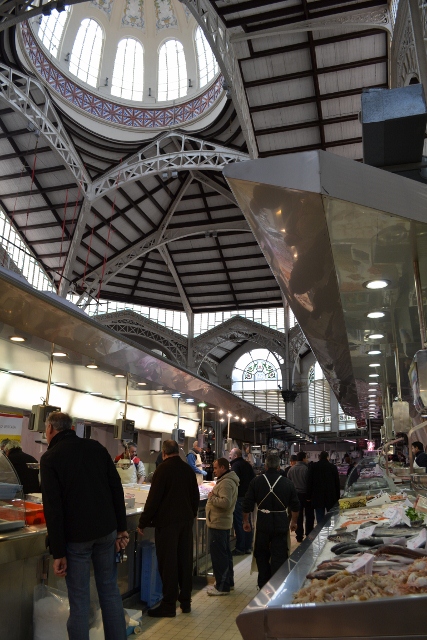
Valencia’s main market, Mercado Central, is the largest and most impressive we’ve seen in Spain thus far. Pictures do not do it justice, as the smells, sounds and flavors make up so much of the experience.  We were impressed by how specialized some vendors are, for example, one stall sold only lemons and garlic.  Somehow the 20+ produce stands, all of which sell more or less the same product, manage to not only stay in business, but thrive!  It appears that locals have their favorite vendors and ignore the rest.  Everyone gets their share.

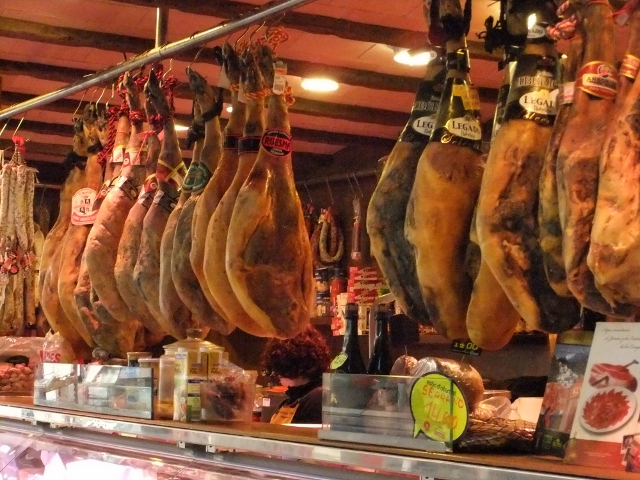
Jamón vendor at Mercado Central

Fishmongers at Mercado Central

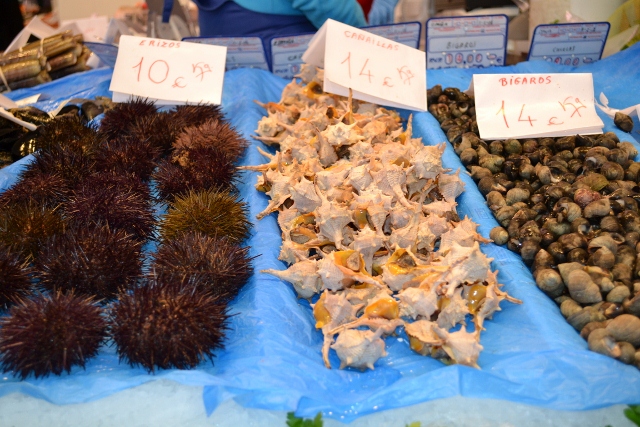
Not your typical seafood

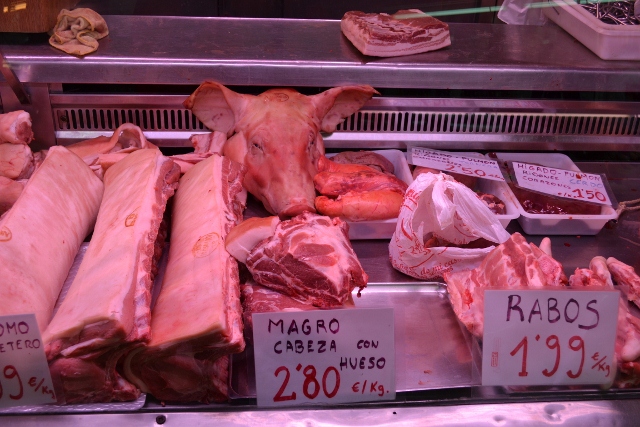
This little piggy went to market…

We are beginning to appreciate that one of the best parts of traveling is encountering the unexpected. While our visit to Valencia did not lead us to the world’s greatest paella, it did provide us with some other great adventures and delicious food.

Read Full Post »

The past nine days of our RTW trip were spent cruising on the Norwegian Jade. We know that cruising isn’t exactly the first thing that comes to mind when you think of budget backpacking, but while researching destinations in Spain during the planning phase of our adventure, we came across an incredible deal on this cruise.
Our ship, the Norwegian Jade

The Canary Islands were of particular interest, not only for their relative obscurity and year round temperate weather, but also because much of Mike’s family lineage prior to arrival in the Americas comes from this small group of islands.

We set sail from Barcelona just after sunset on Sunday, January 22 and headed out to sea for two days before making our first port.  It was a real treat to sail through the Straight of Gibraltar and catch our first glimpse of Africa, lit up on the midnight horizon.

Funchal, Madeira – Madeira Islands (Portugal)

Our first stop was in Funchal, the capital city of Portugal’s Madeira Islands.  Despite being located in the North Atlantic, the island felt very tropical with an amazing variety of flowers and birds.  We caught city bus #21 first thing in the morning which took us up a narrow and curvy (to say the least) road leading to the mountain top village of Monte.  From here, the famous Funchal toboggan drivers set up shop.  The toboggan rides, which originated as a way to rapidly transport ice to the shore from the mountain top ice houses, have turned into a major tourist skeptical. While we did not indulge in a ride, we had a blast watching shrieking passengers skid down the mountainside.

Toboggan Ride

While most tourists take the toboggans down, we took the scenic walking route, which allowed for some incredible views of the Atlantic with Funchal in the foreground. If you’re interested in the particular route that we took, Google search “walking monte to funchal” and you’ll find step by step directions.

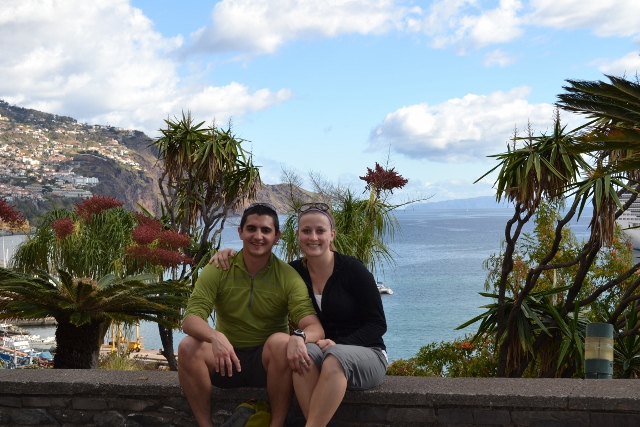
View of Funchal

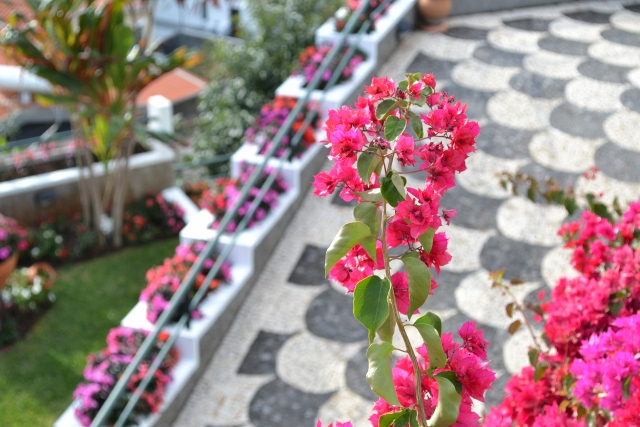
The steep scenic route did a number on our legs but also allowed us to check out the local architecture.  We were inspired by the walled courtyards with beautiful tile work, all perfectly framed by pink and orange tropical flowers.

Tiled courtyard with colorful flowers

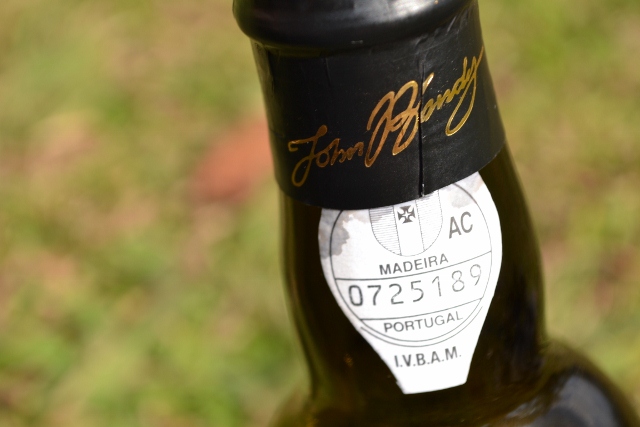
By the time we reached the city center, we were ready to relax. The islands of Madeira are known for producing their own variety of Port wine, so naturally, we had to try some. We picked up a bottle and headed for a nearby park to enjoy our last few hours in this island paradise.

Blandy’s Madeira Wine

Santa Cruz, Tenerife – Canary Islands (Spain)

On our second day at port we were blessed with particularly great weather, so headed for one of Tenerife’s few sandy beaches, La Playa de Las Teresitas. We heard that the beach was only a 20 minute bus ride from town and ambitiously attempted to walk instead. While walking, we discovered the Canary’s ubiquitous outdoor public gyms, but after over an hour, the sidewalk became an onramp to the interstate, and we were forced to take the bus.

Outdoor gym in the Canary Islands

When we finally made it to la playa, we were stoked to say the least! We think the picture says it all.

La Playa de Las Teresitas

After Amy’s pale skin couldn’t handle the sun any longer, we hoped the bus back to the city center to check out the city’s music hall, El Auditorio de Tenerife.

The beautifully tiled Auditorio de Tenerife

Arrecife, Lanzarote – Canary Islands (Spain)

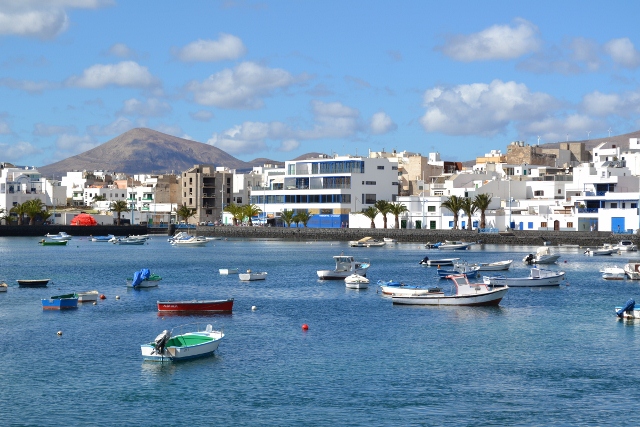
The island of Lanzarote is best known for its picturesque and rugged volcanic landscapes, but we were drained of energy from our previous day in the sun and chose to stay in the small town of Arrecife.  While this city is noticeably smaller and less energetic than our first two ports of call, we did enjoy its captivating blue waters and small fishing town feel.

Fishing harbor in Arrecife

Málaga, Spain

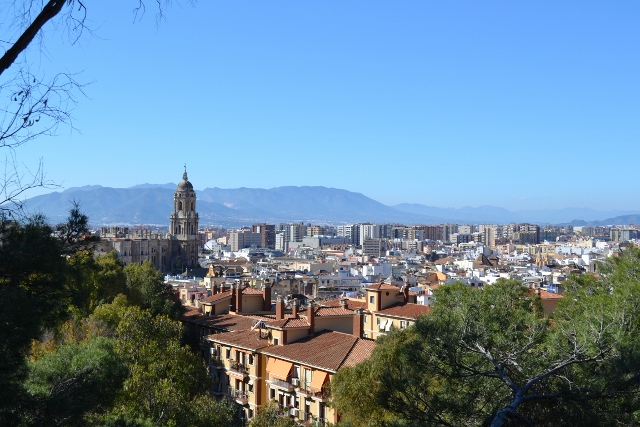
Our final stop on the way back to Barcelona was the port city of Málaga, situated on Spain’s southern coast near Granada. Prior to our arrival, we knew very little about Málaga, but were pleasantly surprised. The city is very modern and well kept, but is still host to some amazing ancient structures.  To get a better view, we headed to an old roman theater known as el Alcazaba and hiked up a fantastic nearby trail. From the top we were able to view many of the city’s main attractions including the Plaza de Toros and Catedral del Obispo.

View of Málaga

On the Ship

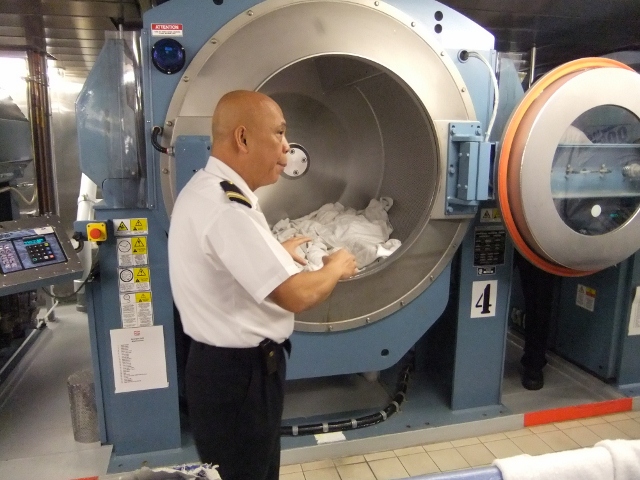
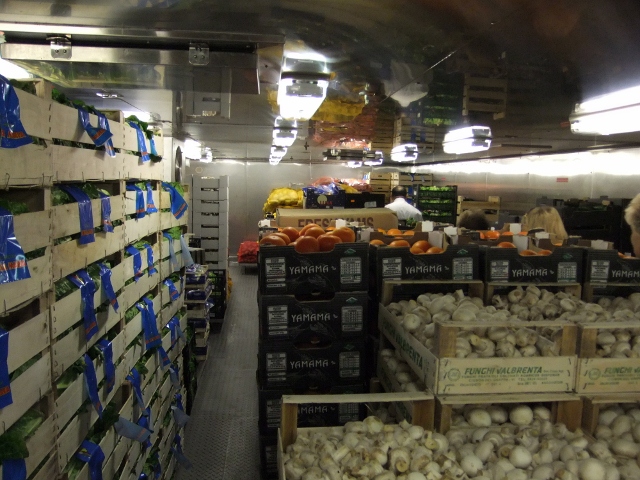
Most of our days at sea were spent relaxing by the pool, reading, playing cards, and enjoying the Jade’s fantastic live music and entertainment. Because of Mike’s background in the hospitality industry, we were both interested in the operational aspects of running a floating hotel. After speaking with the Hotel Director, we had the opportunity to take a behind the scenes tour of the ship, including the kitchen, galley and provisions areas, bridge control room, laundry facilities, waste disposal center, and theater. We were amazed at what goes into making a cruise happen smoothly and seamlessly.

Tour of the Jade’s laundry facilities

Tour of the Jade’s massive walk-in produce cooler

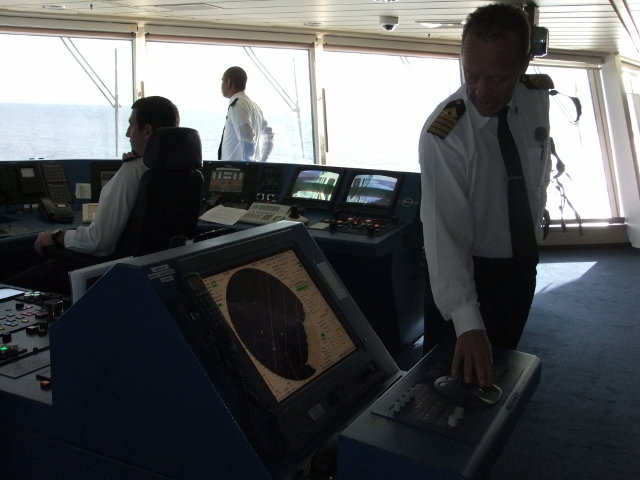
The Jade’s Staff Captain explains the radar system during the tour of the Bridge

We had a fantastic time at sea and it was a great opportunity to rest up, eat three (or more) good meals per day, and prepare ourselves for the upcoming month of hostel living and a relatively unknown itinerary. We are now in Valencia and looking forward to exploring the home of paella!

Read Full Post »

We are leaving Barcelona in the morning.  What a great time it has been.  Now that we are actually on the road, living from our packs, and exploring the unknown, we have a lot more pictures and stories to share.  So without further delay, we present to you some of our favorite parts of this amazing city.

Gaudi

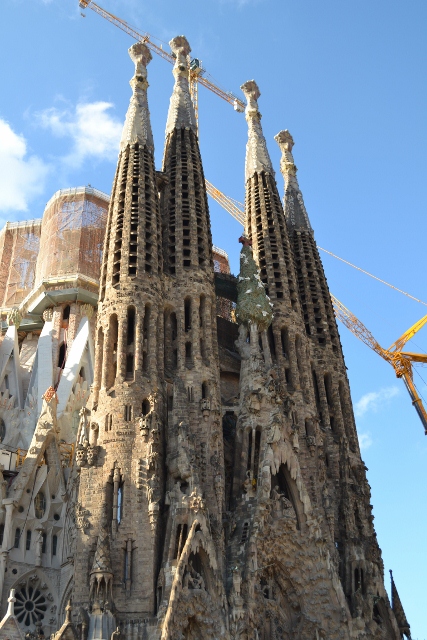
What a guy! The famous Spanish architect, Antoni Gaudi, drew much of his inspiration from nature’s constructive beauty. Through this revolutionary style of design, he made so many incredible contributions to Barcelona.  He has even made Amy’s “Top 5 list of people to bring back from the dead to have dinner with.”  We dedicated one full day to exploring Gaudi’s contributions, including two of his most famous works El Templo de La Sagrada Familia and Parc Güell.

La Sagrada Familia

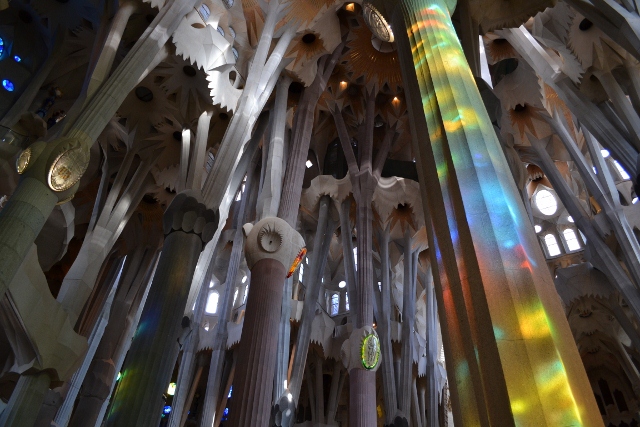
La Sagrada Familia – interior of basilica, stained glass projecting on columns

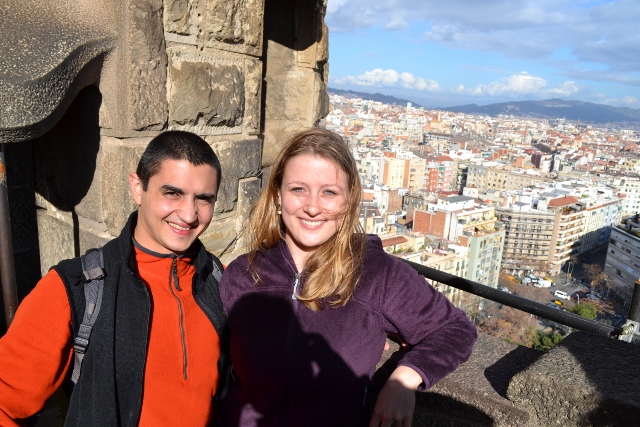
View from the top of the Nativity Lift at La Sagrada Familia

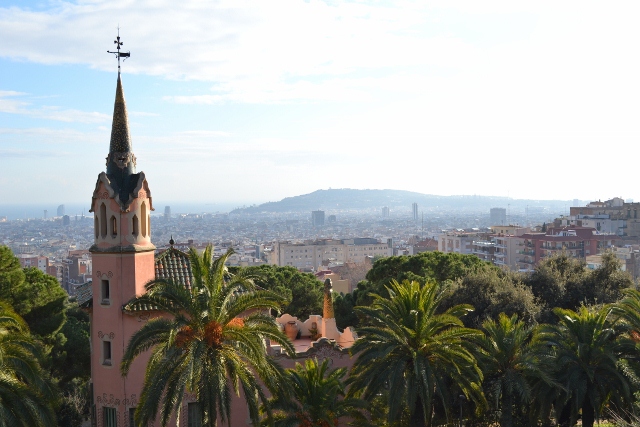
Gaudi’s House at Parc Güell

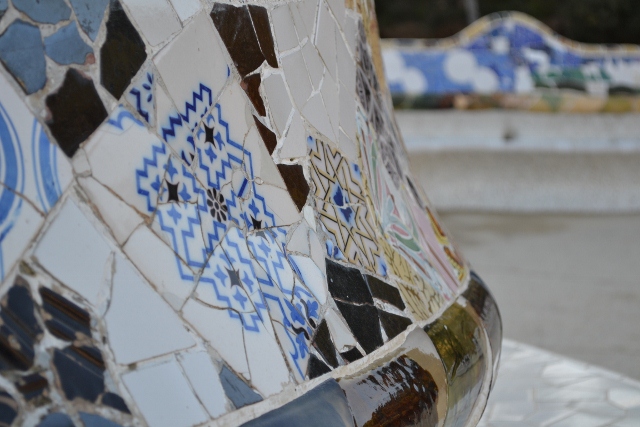
Open plaza surrounded by tile benches, Parc Güell

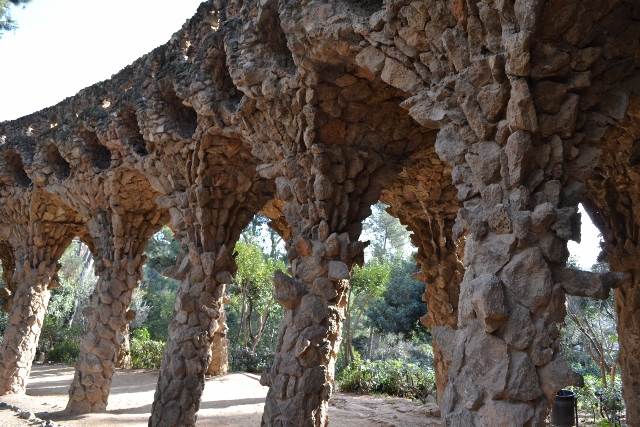
Columns by Gaudi in Parc Güell

Mercats

We spent a ton of our time in Barcelona simply walking around the city.  While not high on the list of must sees for most tourists, we found the neighborhood “mercats” in Barcelona to be a bright point of our time here.  While exploring a quaint old part of town known as La Barceloneta, we encountered our first mercat.  Imagine the produce section of Whole Foods on steroids. These are different than the make-shift, bazar style markets that you find in much of the world.  They are a well built structure, clean/sanitary, and packed with some of the best food we have ever seen.  Upon returning from Barceloneta, we found a very similar mercat just a few blocks from our hostel in the neighborhood know as El Clot. Since we had access to a full service kitchen at our hostel, we took advantage of the incredible produce, meats and seafood to cook affordable and yummy dinners.

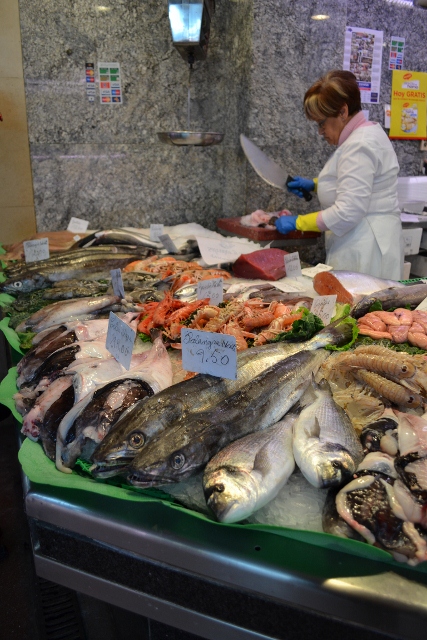
Fish Vendor at Mercat El Clot

Cured Meat Vendor at Mercat La Barceloneta

Sitges

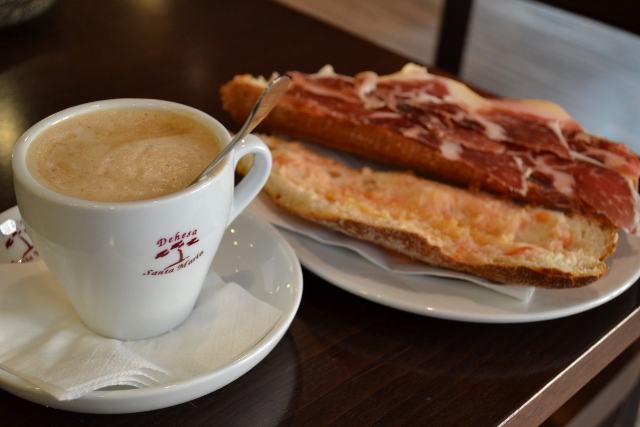
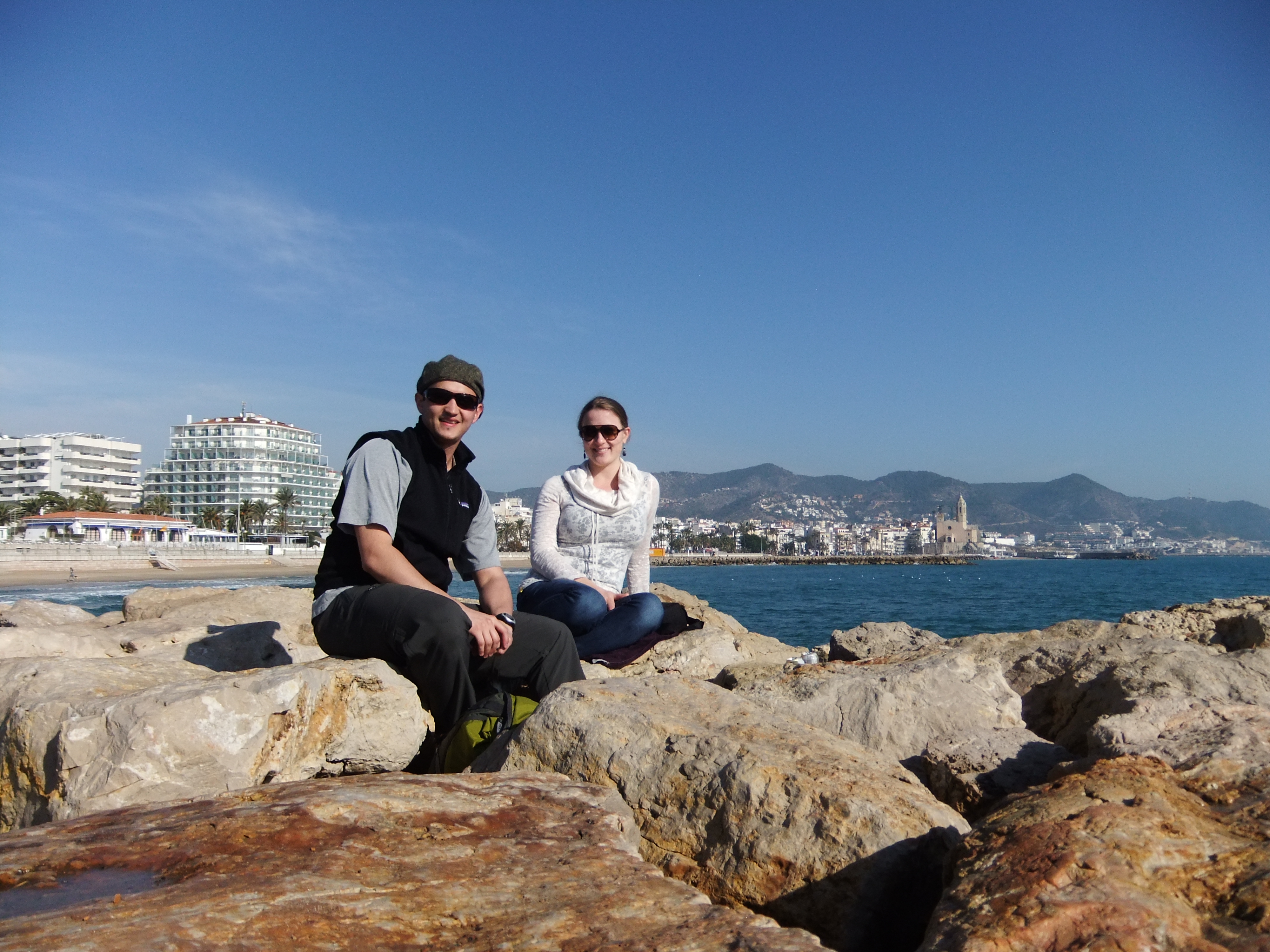
After a few days in Barcelona, we were eager to get out of the city and see more of Catalonya.  Based on a suggestion from Mike’s cousin, Lilli, we hopped on a train one morning headed towards Sitges.  Sitges is a pristine beach town, just 30 minutes south from Barcelona via a regional train along the coast.  Shortly after arriving, we stopped for breakfast where Mike enjoyed toast with “pata negra” ham, the most delicious cured meat he has ever tasted, and Amy a cafe con leche y croissant. We had a fabulous time strolling the beach and walking through the narrow, well kept streets.  It was a welcomed change from the hustle and bustle of Barcelona.

Cafe con Leche y Bocadillo de Jamón

Enjoying the sunshine in Sitges

Tomorrow evening we will be boarding a cruise to Spain’s Canary Islands, Portugal’s Madeira Islands and Málaga/Granada.  We found a killer deal on this cruise before leaving the States and it is an exciting change from hostel living!  Looking forward to sharing our travels upon our arrival to Valencia following the cruise.  Salud!

Read Full Post »

« Newer Posts