Feeds:
Posts
Comments

Archive for the ‘Asia’ Category

A lot can happen in a week. Since we last wrote, we’ve played with tigers, ridden on elephants, watched knockout Muay Thai, honed our motorbike skills, climbed Thailand’s highest peak, and so much more.  Where did we do all of these spectacular things? A little place called Chiang Mai.

Not so little actually, Chiang Mai is the second largest city in Thailand making it somewhat of a “capital” for the northern region of the country. While it doesn’t have the skyscrapers, mega-malls, and constant adrenaline of Bangkok, Chiang Mai still seems to have something for everyone. We easily could have spent a month there, but the tourists visas we acquired at the border with Cambodia were only valid 15 days, so we had to leave before we were ready to say goodbye. Thanks to our friends Daniel and Libby, we got a taste of home and some great suggestions of what to do and see in the city. Here is a glimpse at the different faces of Chiang Mai.

On the Wild Side

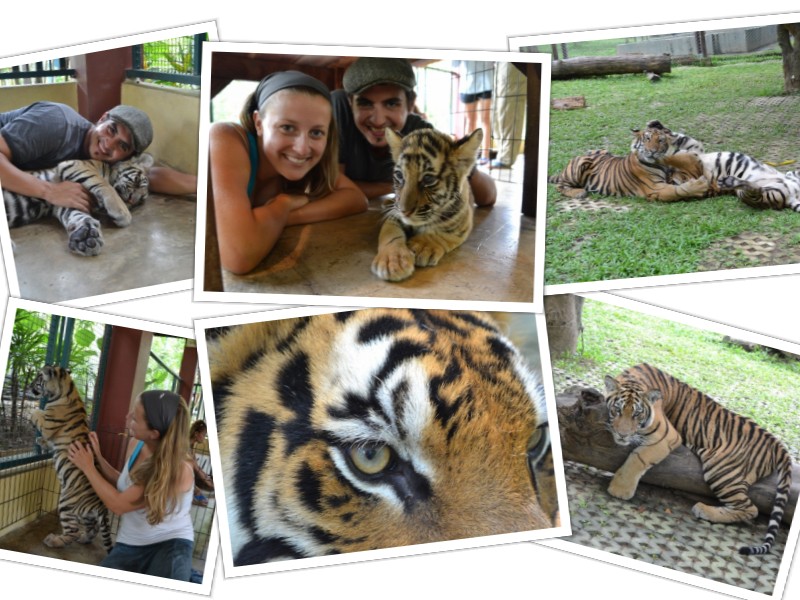
Amy is a cat lover through and through, and since childhood Mike has been watching Jake Jabs play with baby tigers on those annoying American Furniture Warehouse commercials; so when we learned about Tiger Kingdom just outside of Chiang Mai, we jumped all over it. As the name would suggest, this place is crawling with tigers! Tiger Kingdom does not drug their animals prior to allowing visitors into the animal enclosures. This is evident from their playfulness and alert demeanor. For our visit, we chose to get in the cage with the little guys. The tiger cubs we played with were 2-4 months old and beyond adorable. Unfortunately, we couldn’t come up with a plan for lifting one in the fifteen minutes we were allotted, but we did get plenty of pictures.
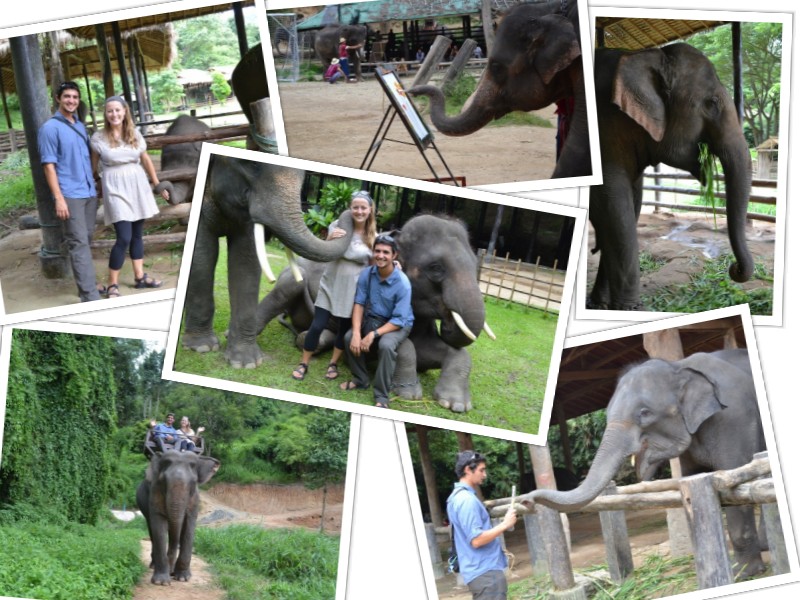
As Thailand’s national animal, elephants are an important symbol of the country’s culture and history. Chiang Mai is home to numerous elephant sanctuaries, some more concerned with the elephants’ well-being than others. We took the advice of our friends and visited a place called Maesa Elephant Camp, a place that rescues elephants from bad situations and breeds baby elephants to increase the dwindling population in Thailand. During our visit, we saw a 4 month old calf with his mother, fed bunches of bananas and sugarcane to a herd of hungry elephants, and even rode on the back of an old-guy by the name of Poo Somboon. He was 41 years old and carried three of us on his back like it was nothing. The camp even has a daily show where the elephants play harmonicas, paint incredible pictures, and shoot soccer goals. There is no doubt that the elephant trainers love and care for these animals, and we can only hope that the elephants themselves also have fun preforming.
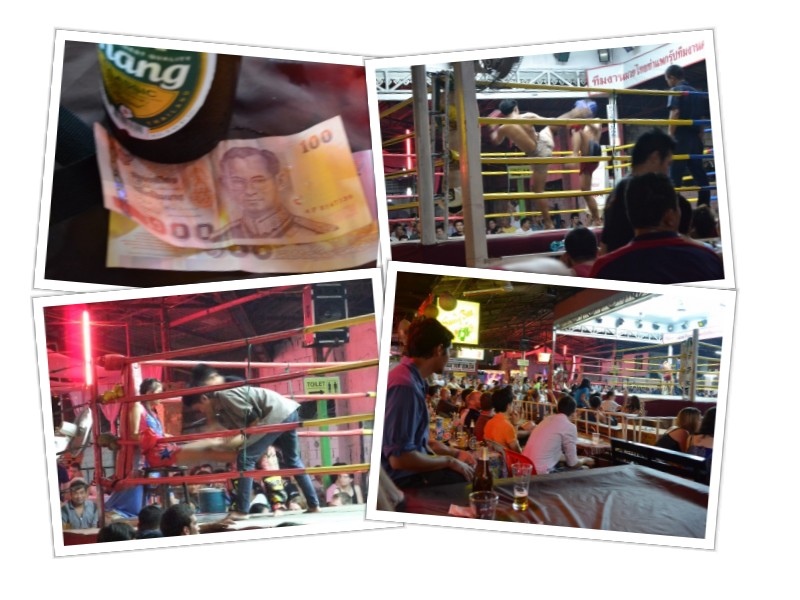
We also got a close look at one of the most dangerous animals around, the Muay Thai kickboxer. You don’t want to mess with these guys or gals. Muay Thai is the nation’s favorite sport and for good reason. We spent an evening watching several fights at a local arena in Chiang Mai. The night began with two female fights then moved on through increasing weight classes of men. Although gambling is technically illegal in Thailand, throwing down a few Baht between friends is common and makes things a bit more interesting. While small, the female kickboxers who started things off fought with great ferocity. The male fighters, on the other hand, were more methodical in their attacks. Unfortunately, the “main event” didn’t even last one round; a knee to the kidney and kick to the temple ended things quite quickly in a knockout.
The Street Food Scene

We can say with confidence that Chiang Mai has the best street food scene that we have experienced thus far in SE Asia. The weekly Saturday and Sunday markets boast endless options of Thai food and other interesting specialties like sushi, Indian and Burmese food. We spent our weekend evenings in Chiang Mai grazing through the stands and ended up absolutely stuffed each time.
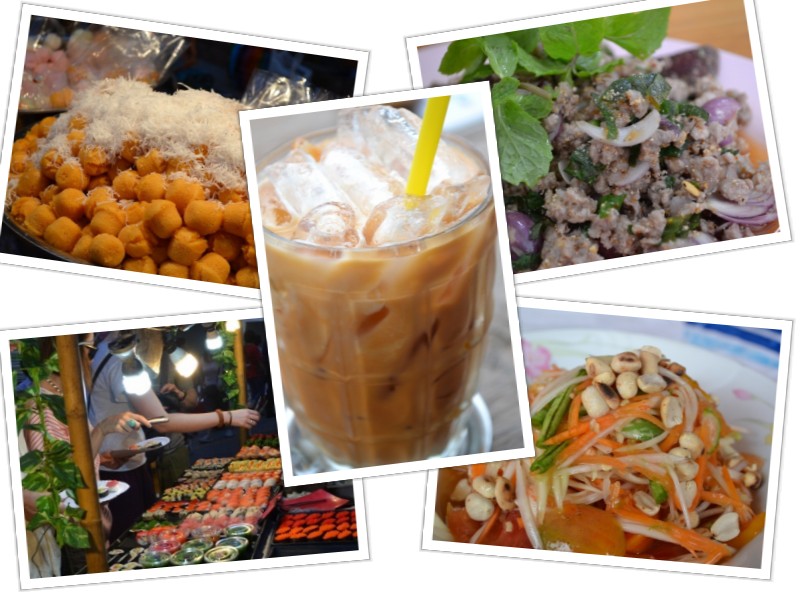
Greater Chiang Mai

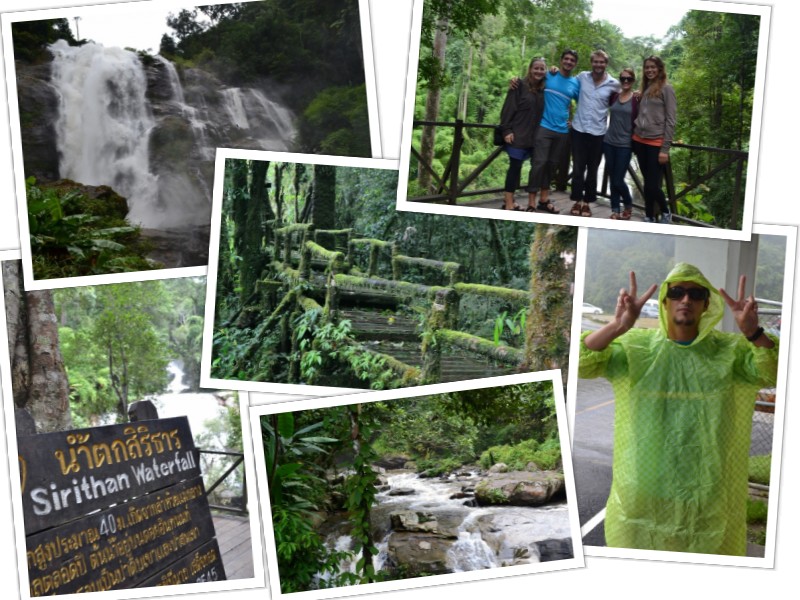
For those with more than a few days to spend in Chiang Mai, we recommend getting out of the city center to visit a doi (meaning mountain in Thai). We spent one day with our friends driving up Doi Inthanon, the tallest mountain in Thailand. The air became cooler and less tainted with pollution as we scaled the mountainside. Thick fog had engulfed Doi Inthanon that day, and the rain was relentless, but we still had fun walking through some trails and visiting a few waterfalls.
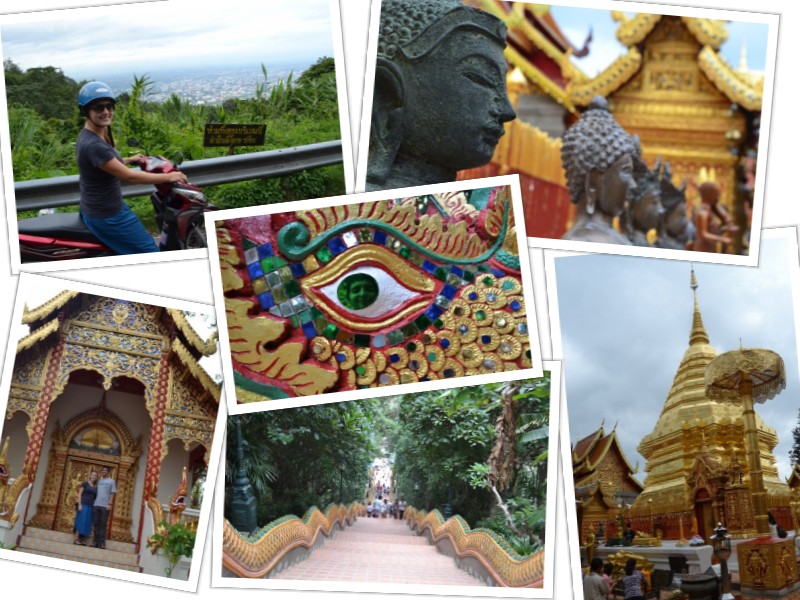
Another more easily accessible mountain is Doi Suthep, which is a short 25 minute drive from the center of Chiang Mai. We rented a motorbike one day to visit the temple that is perched on the top of this mountain, Wat Phrathat. The temple itself is stunning, and the panoramic views of Chiang Mai cannot be beat.
Taking it Easy

After several action-filled days, we were ready for some relaxation. Having heard of the infamous Thai massage, we wanted to give it a try. You can’t walk down a street in Chiang Mai without seeing two or three spas, so it was easy enough to find a spot. We can’t say that getting a Thai massage is the most relaxing experience, but it definitely awakens your muscles and works out the kinks. It’s kind of like visiting a masseuse and chiropractor at the same time.

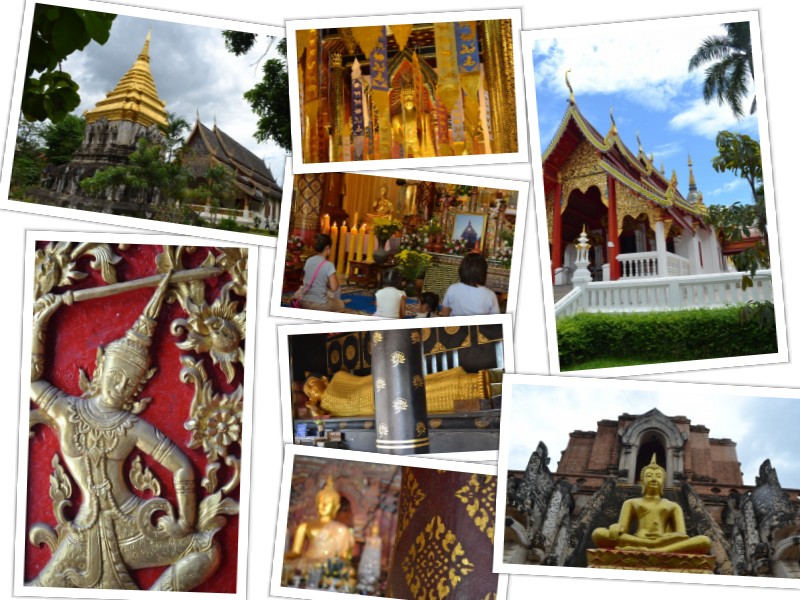
An afternoon stroll through the streets of Chiang Mai will lead you by countless ornately decorated temples. We spent an entire day just marveling at these wats and stopping for Thai Tea along the way. Turns out that it was Buddhist Lent during our visit to Chiang Mai, so we saw lots of activity at the temples.
There is nothing like a familiar face, especially when you haven’t been home in seven months. This blog is dedicated to our friends Daniel and Libby – thank you for sharing your home with us for the past week and showing us a great time in Chiang Mai! The hours spent playing cards, telling jokes, and sipping coco locos made us feel so at home. The farewell lanterns were the perfect end to a great week.
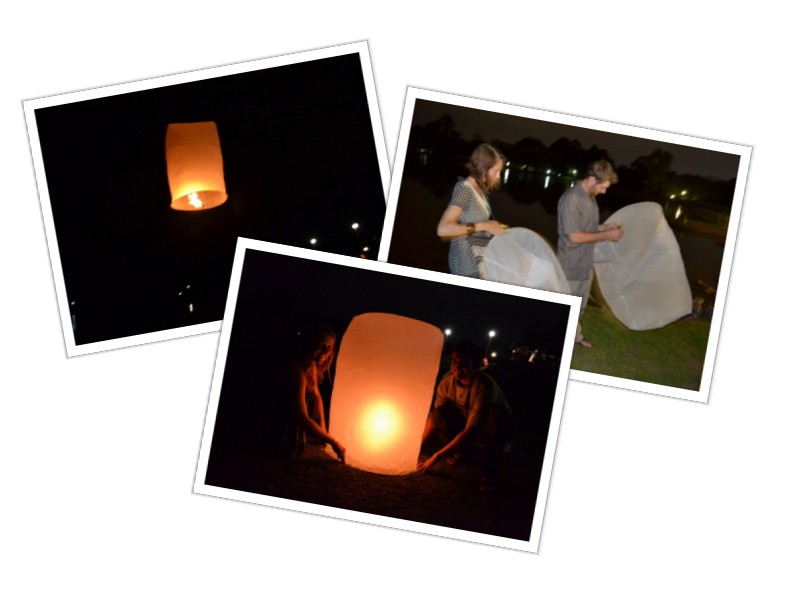
Read Full Post »

We bet you’ve seen Indiana Jones or maybe Tomb Raider if you are from a younger generation.  What is it about exploring ancient ruins that captivates the mind and conjures up a deep sense of adventure?  Some of the world’s most well know ruins can be seen at Angkor Wat. It is the single most popular tourist attraction in Cambodia, but for many travelers the question remains, what’s up with Angkor Wat? Last week we visited this mystical city, and through our pictures and story hope to share its wonder.  (NOTE: there are many photos in this post, therefore it may take some time to load!)

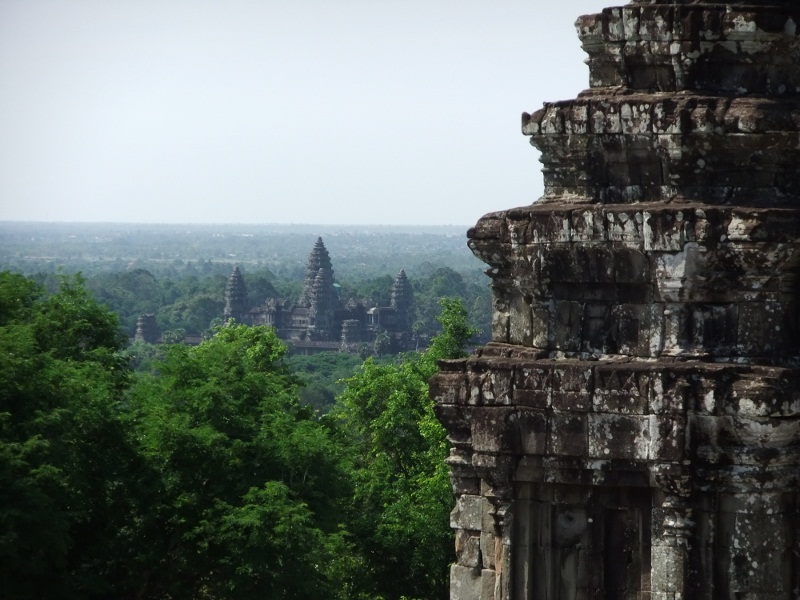
Our favorite view of Angkor Wat from Phnom Bakheng, the famous hill from which sunset and sunrise are watched by tourists each day.

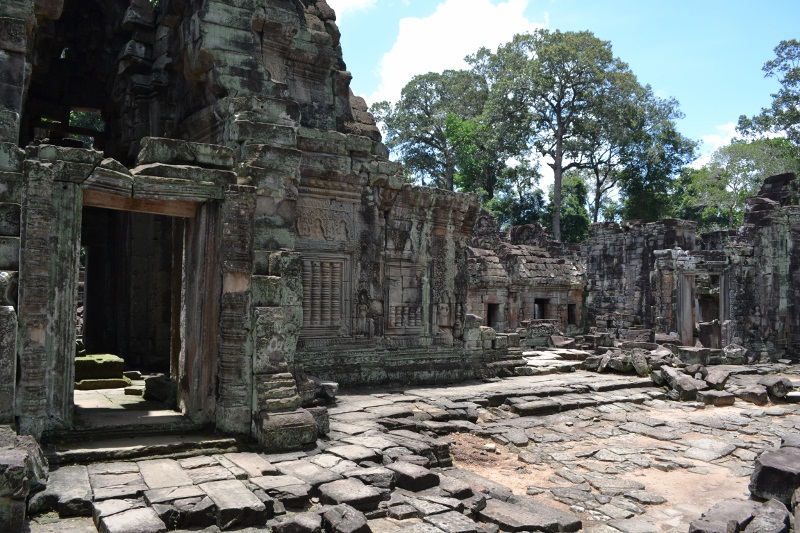
While this temple complex bears the name of its most famous structure, Angkor Wat, it actually contains over 1,000 temple ruins which were the center of the Khmer Empire. It is an awesome place (truly “awe” inspiring, as the word was intended) that all travel lovers should add to their bucket list.

Tickets are required for entry into the Angkor Archaeological Park: 1-day, 3-day or 1-week passes are available. We opted for three days and made it to over 20 of the ruin sites. This amount of time was perfect for us, but if you fancy yourself an amateur archeologist, you may want to go with the 1-week pass.

Day 1

We started our first day early and full of energy and excitement to see Angkor Wat. We had been looking forward to visiting for many years. We found a tuk-tuk to drive us 6km north from Siem Reap to the entry point of the Angkor complex. Despite fellow travelers advising us to hire the tuk-tuk for the entire day, we decided to do things our own way (sound familiar?) and walk between the temples. Our first stop was the granddaddy of them all: Angkor Wat. From there, we set off on a trek through jungle roads and crumbling monuments. When the day was done, we had visited Angkor Wat, Prasat Kravan, Banteay Kdei, Ta Prohm, Ta Keo and Bayon.

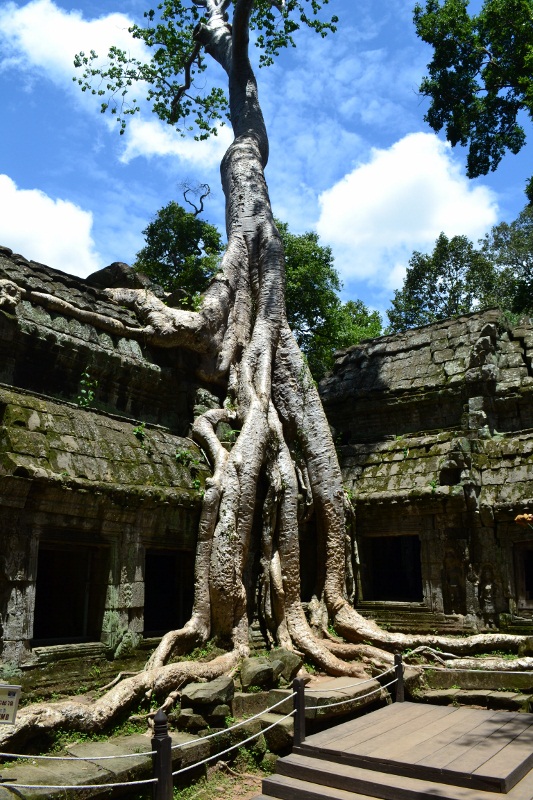
Ta Prohm is commonly referred to as “The Tree Temple” because of the numerous roots that have grown into and around the ancient ruins.

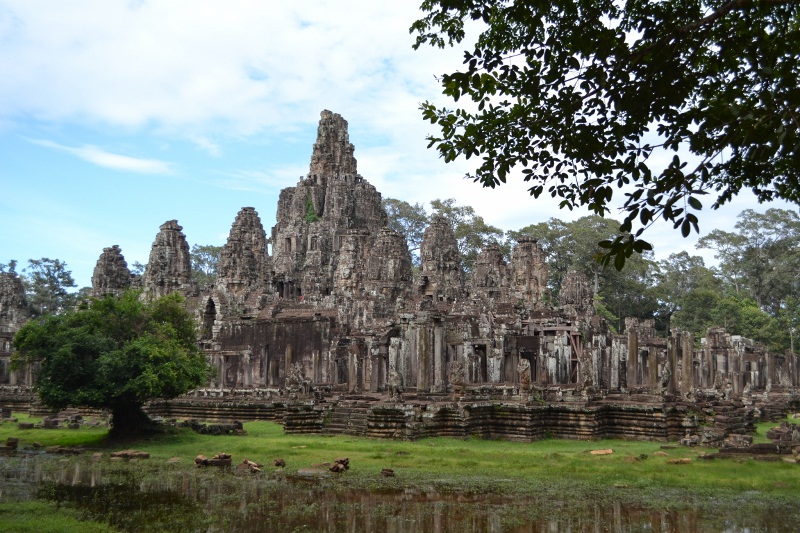
Bayon, the main temple within the ancient walled city of Angkor Thom

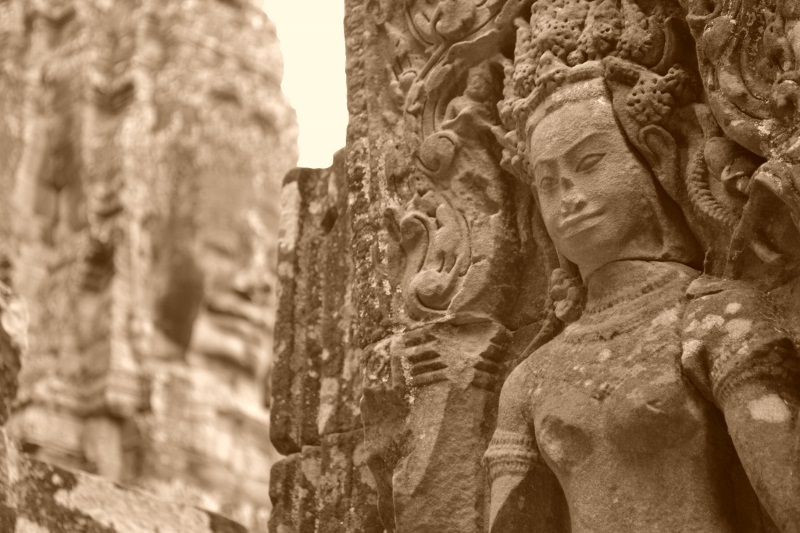
Bayon is filled with massive stone faces, one of which can be seen in the background here.

Day 2

After a very hot, sweaty and exercise-filled day, we came to our senses and opted to hire a tuk-tuk driver for our second day. It ended up being a great decision. We were able to cover more ground and see some of the further out temples that simply would not be walkable (unless you’re a crazed exercise fanatic that gets off on speed walking marathons).  Our first stop was Phnom Bakheng, a pyramidal temple atop a hill from which you can take in an aerial view of Angkor Wat (as pictured in the very first photo of this post). After viewing Angkor Wat from above, we visited Baphuon, the Royal Palace, Preah Khan, Neak Poan, Ta Som, East Mebon and Pre Rup.

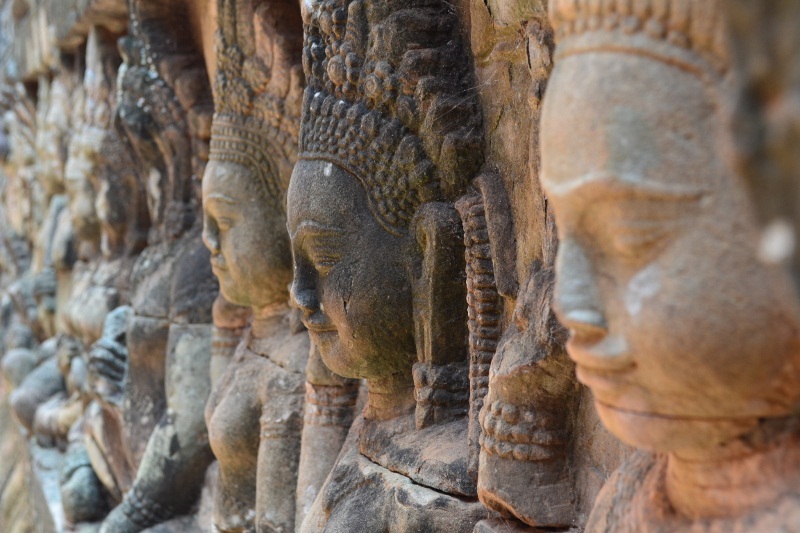
These detailed faces carved out of stone stretched on for hundreds of feet just outside of the Royal Palace within Angkor Thom.

Preah Khan was one of the largest temples we visited in terms of area and also the least restored. The sheer amount of stone used to construct this building blew our minds.

By the time we reached East Mebon in the late afternoon, we were glad that we had hired a tuk-tuk. We likely would not have made it this far without a vehicle.

Day 3

After two days at the Angkor complex, we took a day off to relax and rest our sore mussels.  At only $5 USD per hour, a massage seemed like a pretty good way to spend the afternoon.  We had no idea what we were in for…we endured one of the roughest and painful, yet most effective massages we have ever experienced. Definitely one of those “hurts so good” moments.  We had planned on returning to the ruins the next day, but Amy awoke to a bout of food poisoning (and all that entails) so we took another day off.

The next day her situation had improved. We hired a tuk-tuk once again and this time set our sights on the temples located even further away from Siem Reap.  As would be expected, the more remote the temple the fewer the tourists. It was nice to escape the crowds as we enjoyed more of these magnificent ruins, including Banteay Srei, Banteay Samre, Preah Ko, Bakong and Lolei.

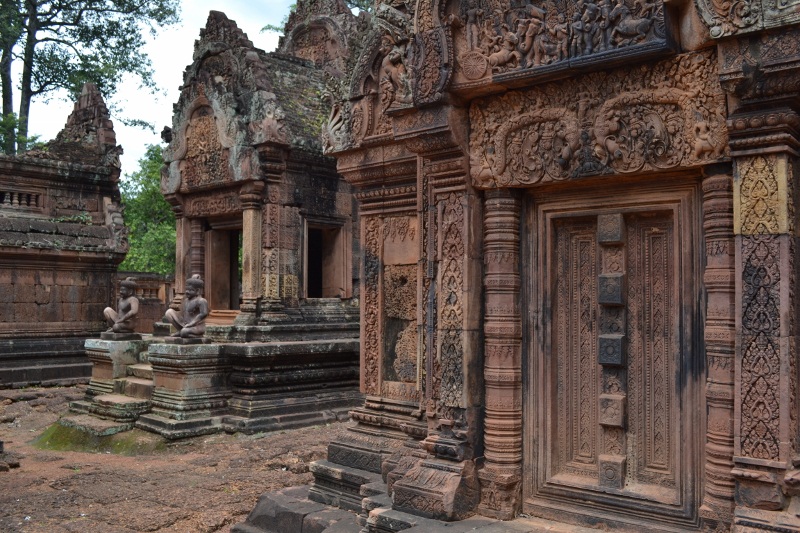
Banteay Srei is one of the furthest out temples from the heart of the Angkor complex. It has the most detailed stone carvings of any of the temples we visited, making it well worth the long journey.

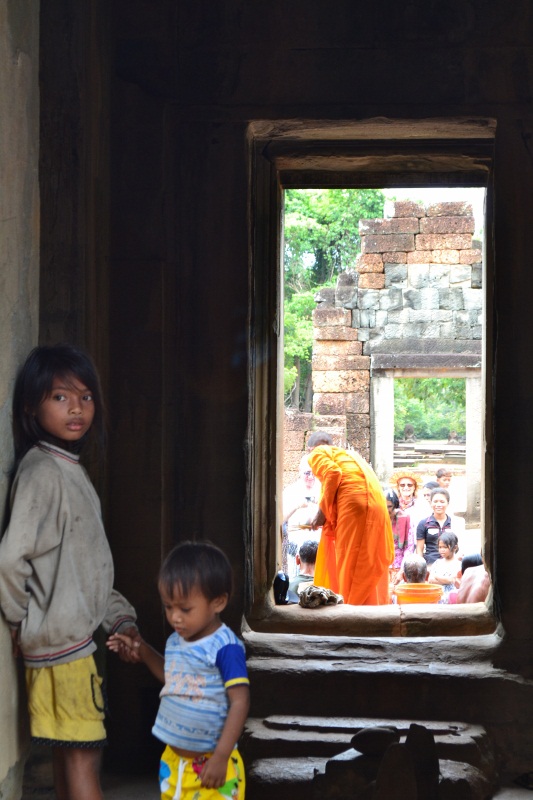
While visiting Banteay Samre, we came across a Buddhist Monk preforming a rain prayer over local villagers. Although many of these temples are ancient, some are still used for religious ceremonies.

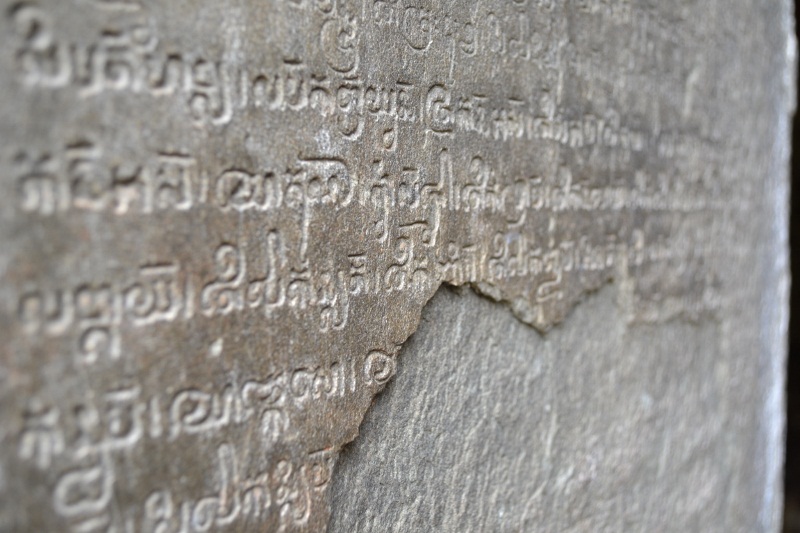
Beautiful Sanskrit carvings lined the door frames of Preah Ko

The main tower of Bakong was built to represent the mythical Mount Meru, also symbolized by the central structure of Angkor Wat.

Too often during our travels we visit UNESCO World Heritage Sites that have been spoiled rather than preserved by being added to this list; many of the sites feel more like Disneyland than places of great historic and cultural relevance.  This was not the case with Angkor Wat.  Despite the millions of visitors annually, the temple complex retains a great deal of authenticity and truly deserves its reputation as a world wonder.  To put it plainly, no matter who you are, Angkor Wat will not disappoint.

Read Full Post »

After nearly a month of traveling Vietnam from north to south, we were eager to depart Saigon and make the journey across the border into Cambodia. Land crossings in this area of the world are notorious for being unorganized and prone to inflated fees, and our crossing fit the bill exactly. We managed to pay less than others on our bus, but were still forced to fork over an “express visa fee” that went straight into immigration officials’ pockets. Gotta love land borders!

After forking over some extra cash, we had  Cambodian visas in our passports

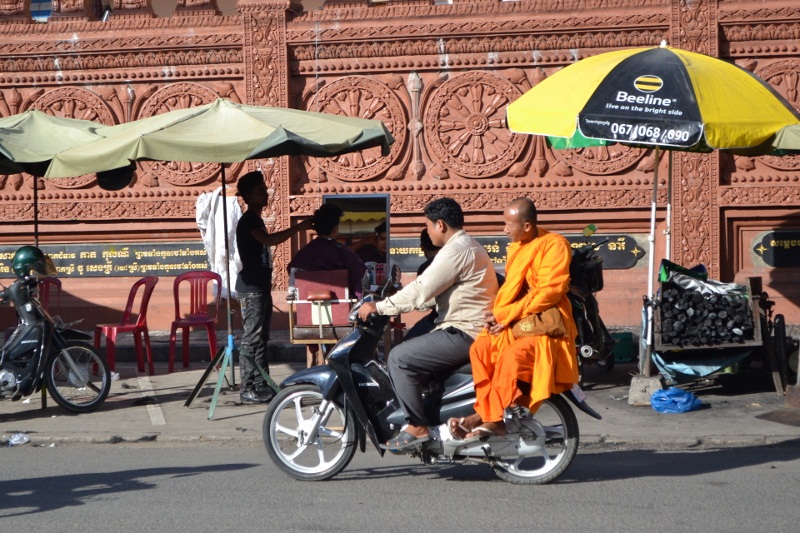
Once across the border, however, all the tension faded away. Cambodia is home to large, flat expanses of sparsely populated countryside, which can really make you feel like you are in the middle of nowhere. Even as we approached the capital city of Phnom Penh, it became clear that Cambodians take life a little bit slower than their Vietnamese neighbors. Buddhist monks stroll through the streets, the sound of car horns is much less prevalent and the locals seem to have smiles permanently glued to their faces.

A monk catching a ride down a Phnom Penh street

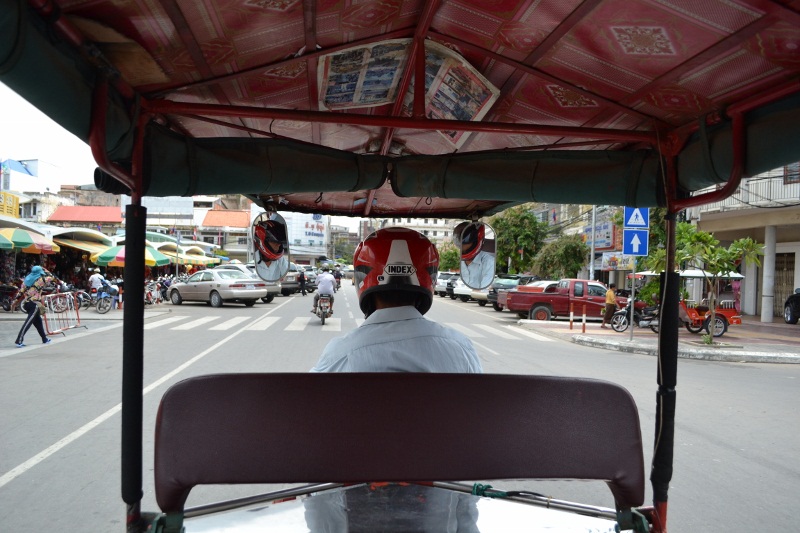
For many travelers, Phnom Penh is merely a stop-over on the way to Siem Reap and Angkor Wat. For us, spending a few days in the capital allowed us to learn more about the country’s unstable and tragic political history in the last century. We decided to make an early start one morning and set off for an all-day power tour of the city. Our first stop was the Royal Palace.  There are no official bus routes in Phnom Penh; we hopped aboard a tuk-tuk to get there. These motor carriages serve as the city’s public transit system.

Cruising in a tuk-tuk

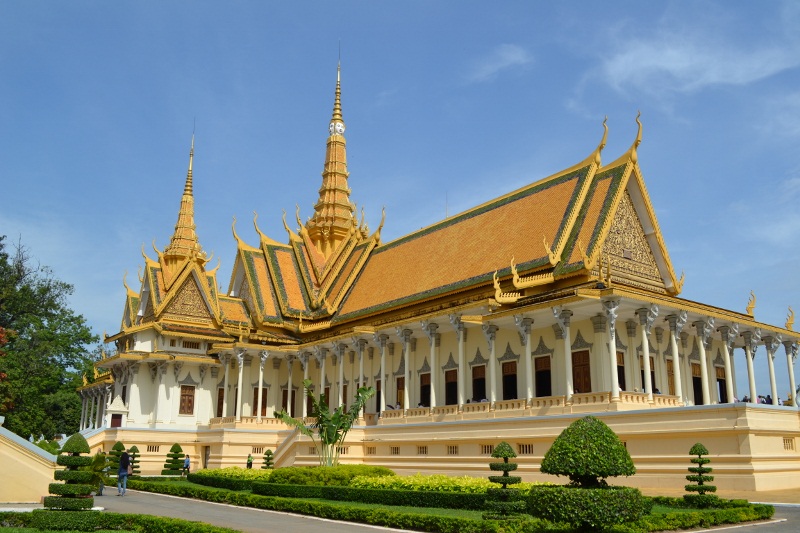
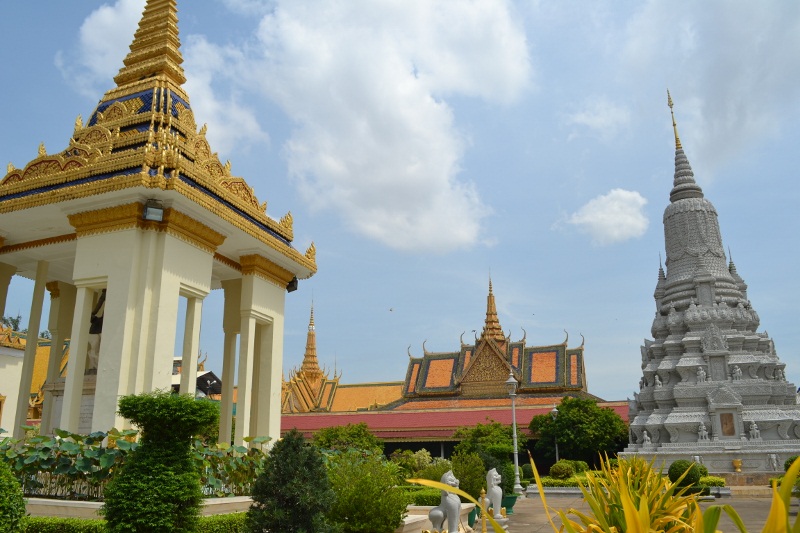
We took our time exploring the Royal Palace and admiring the colorful layered roofs and traditional Khmer architecture. The well-manicured grounds and stunning buildings offer a glimpse back into the early 20th century, before Pol Pot and the Khmer Rouge.

Throne Hall in the Royal Palace

Courtyard of the Silver Pagoda

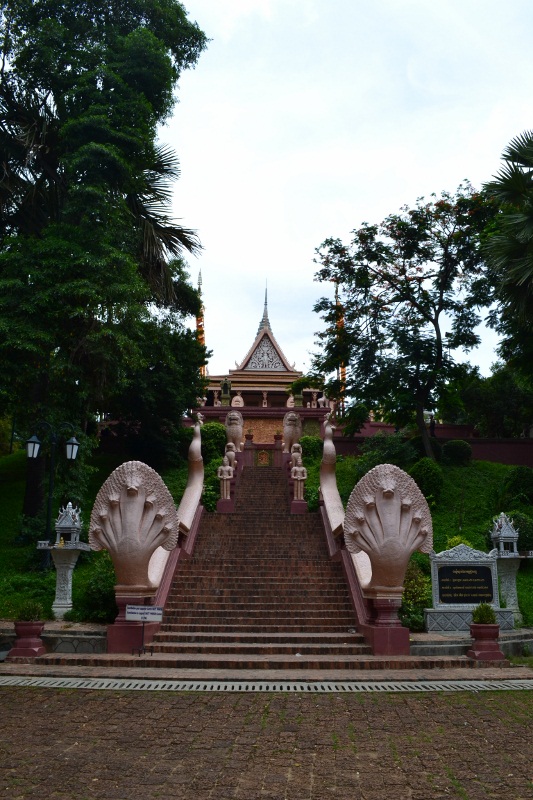
Following the palace we grabbed a quick bite to eat and headed back along the river to see where the city of Phnom Penh gets its name. The city existed for centuries before becoming the capital and the story goes that an old lady named Penh found four Buddha statues floating on a log during a massive flood. She had a temple built upon the tallest hill in the area to house the Buddhas. “Phnom” means hill in Khmer, and since the temple was constructed under the orders of Penh, the city became known as Phnom Penh, or Penh’s hill.

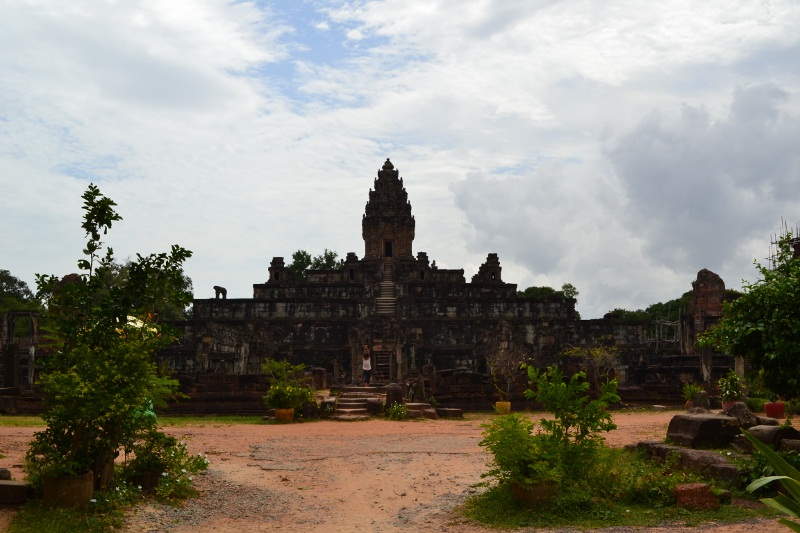
Wat Phnom

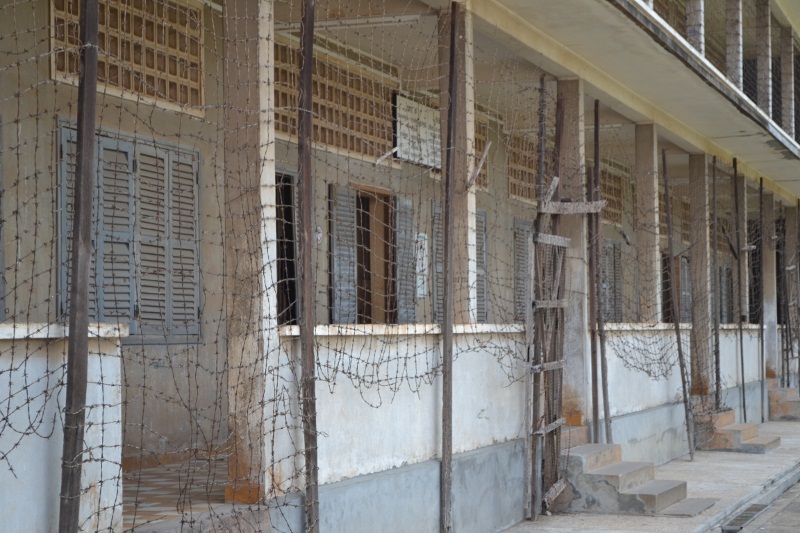
After a brief stop at the Central Market, we hoped on a tuk-tuk toward Tuol Sleng Genocide Museum. Formerly S-21 prison, and a primary school before that, the Khmer Rouge used this complex to detain, torture and execute Cambodians during their horrific reign in the 1970s.

One of the four buildings that make up S-21 Prison, now the Tuol Sleng Genocide Museum

Sadly, one of Phnom Penh’s major tourist draws is an area outside the city known as “The Killing Fields.”  This area contains the largest mass graves from the Khmer Rouge era. Despite frequent offers from tuk-tuk drivers to take us there, we made a conscious choice not to visit.

By the end of the day, we felt that we had received a pretty good crash course in recent Cambodian history. We had come to Phnom Penh with a brief background after reading First They Killed my Father, but touring the city made what we had learned that much more impactful. As though in line with our somber afternoon, a wall of rain poured down from the skies that evening.

The next day we awoke to a sunny morning and prepared to explore a brighter time in Cambodia’s history, the age of the Angkor people. Despite the seven hour ride ahead of us, we happily boarded our bus and took off for Siem Reap.

Read Full Post »

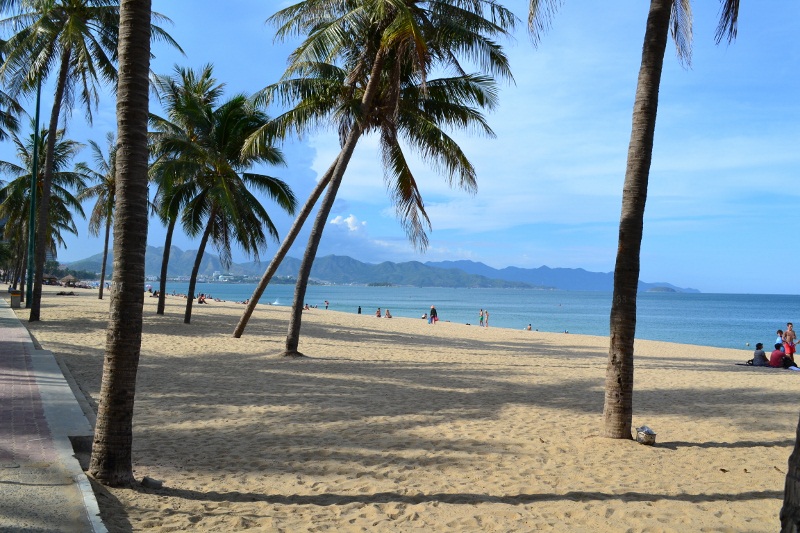
When most people think of world class SCUBA diving, places like the Caribbean, Indonesia, the Maldives or Australia come to mind. Vietnam doesn’t make many top 10 or even top 100 lists; however, we heard that Nha Trang offers the best diving in the country, so we set our course for this coastal city in central Vietnam.

Nha Trang Beach

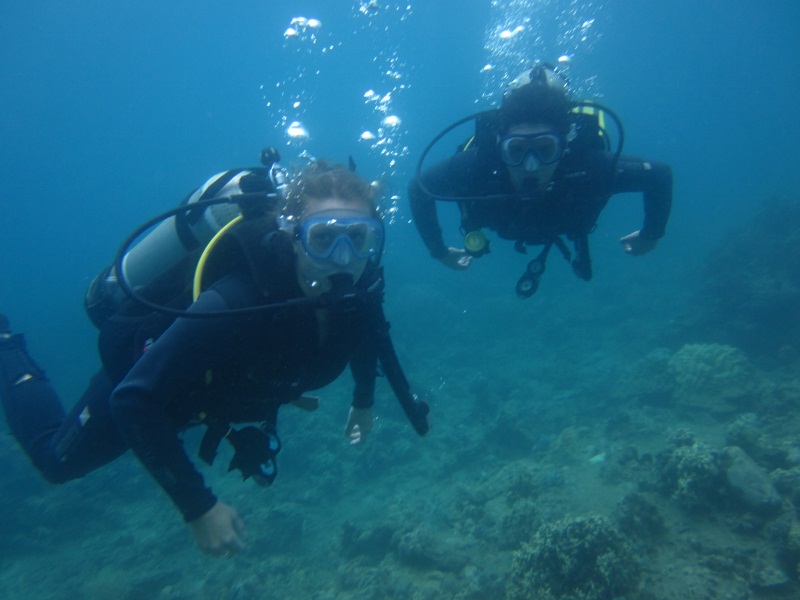
When we arrived in Nha Trang, we set up our home base in a small hotel just a block from the beach with dive shops all around. Becoming certified SCUBA divers was one of our many goals for this trip, as we both love outdoor sports and the ocean.  After some searching, we found a shop we liked and decided to take the plunge. We signed up for a three-day, six-dive, SSI Open Water Diver certification course. It was one of the most enjoyable and rewarding activities of our RTW trip thus far!

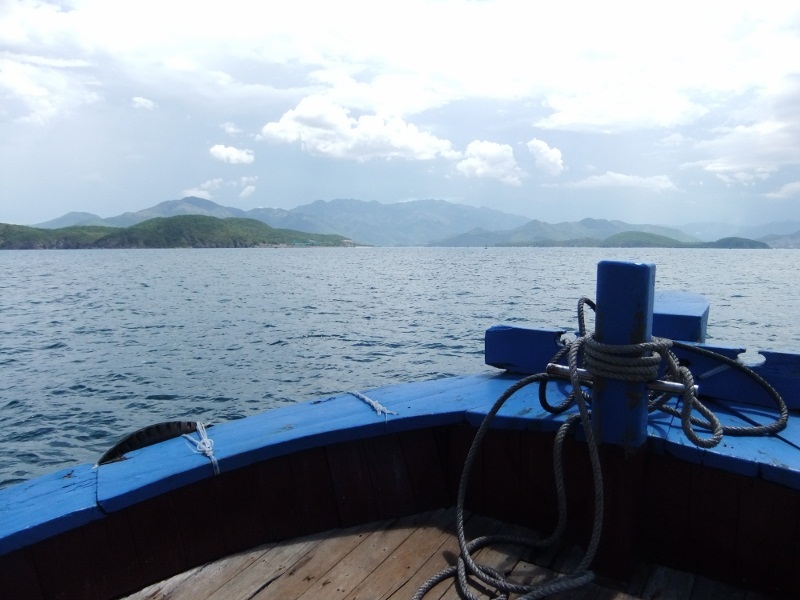
Heading out for our first day of diving

Most of the diving in the area takes place in the Mun Island Marine Park, which consists of more than a dozen different dive sites.  The water in this area ranges quite a bit in depth making it an ideal place for new divers to learn underwater skills and become comfortable exploring the reef.  Much of our first day was spent in shallower water (5-10 meters), where we learned the fundamentals before heading out on some “discovery dives” with our instructor, Kim.

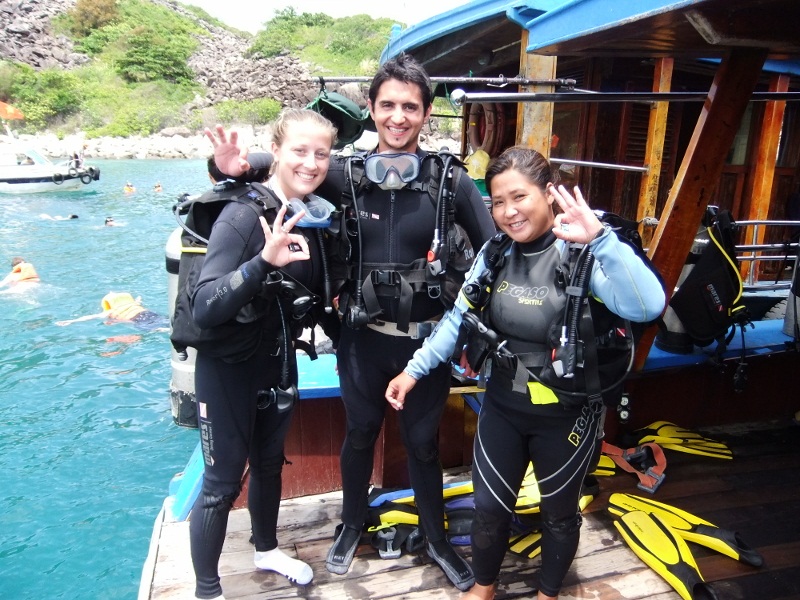
Just need some fins and we’re ready to dive

While Nha Trang isn’t the Great Barrier Reef or Blue Hole, the marine life was still impressive.  The good visibility combined with the diverse aquatic creates  made it an amazing dive location.

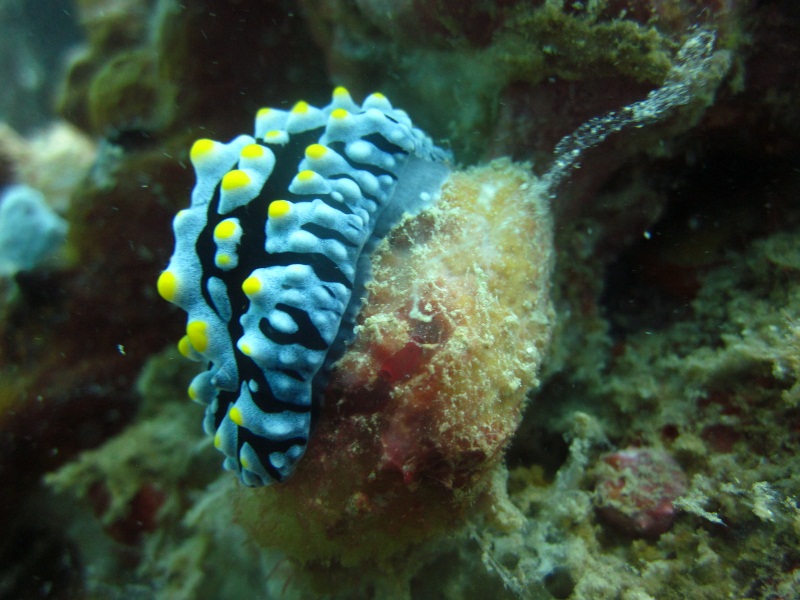
Nudibranch


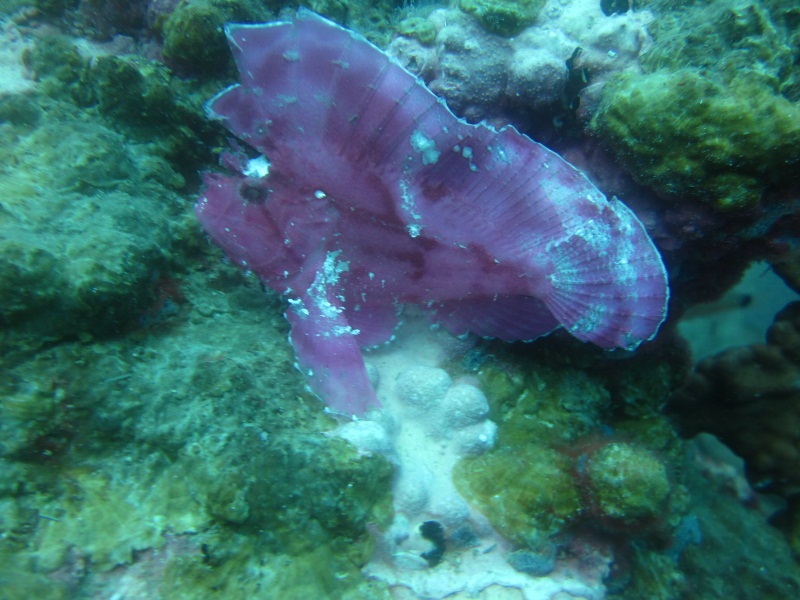
Scorpion fish

Blue sea star

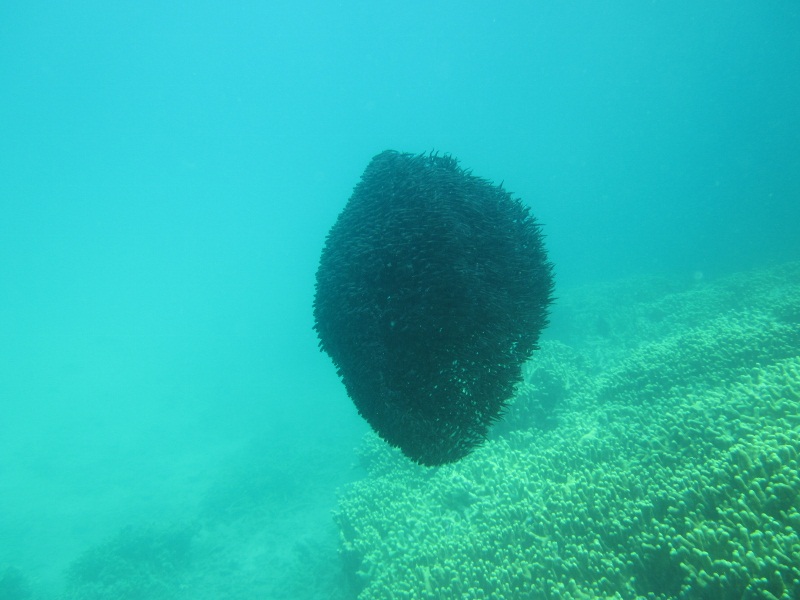
School of recently hatched catfish – they moved like a swarm of bees.

Our next two days of diving included additional underwater skills training and diving at deeper depths (up to 18 meters). We even got to explore a few small caves!

Working on our buoyancy

While the majority of our time in Nha Trang was dedicated to diving, we were able to enjoy the beach and town as well. The seafood was fresh and delicious, we enjoyed some tasty pale and golden ales from a local microbrewery, and walked the 6km stretch of beach from end to end.

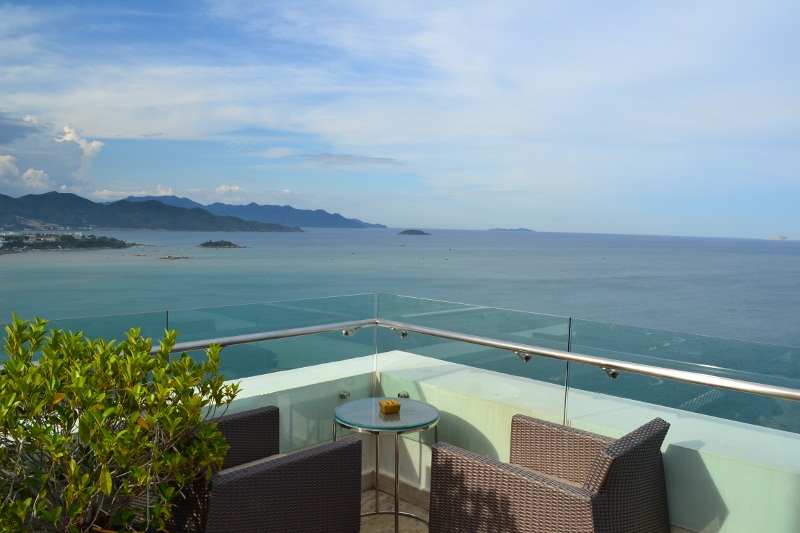
View of Nha Trang from the 28th floor of the Sheridan Hotel

We had a blast getting SCUBA certified and hanging out in Nha Trang for five days. It is the perfect place to relax on the beach or head out on the water for snorkeling, diving, parasailing or just cruising around. Oddly enough, it was a bit of a downer to complete our SSI course because we wanted to keep diving, but we had to keep moving south on our road to Ho Chi Minh City. We are counting the days until we can put our new SCUBA skills to use again and can’t wait to explore the seas of SE Asia and Oceania.

Read Full Post »

Any traveler in Vietnam will undoubtedly be told to visit the scenic area of Ha Long Bay. For decades, the limestone peaks of this coastal region in northern Vietnam have attracted tourists from far and wide.  Sadly, its popularity and designation as a UNESCO World Heritage Site have turned this natural wonder into an absolute zoo.

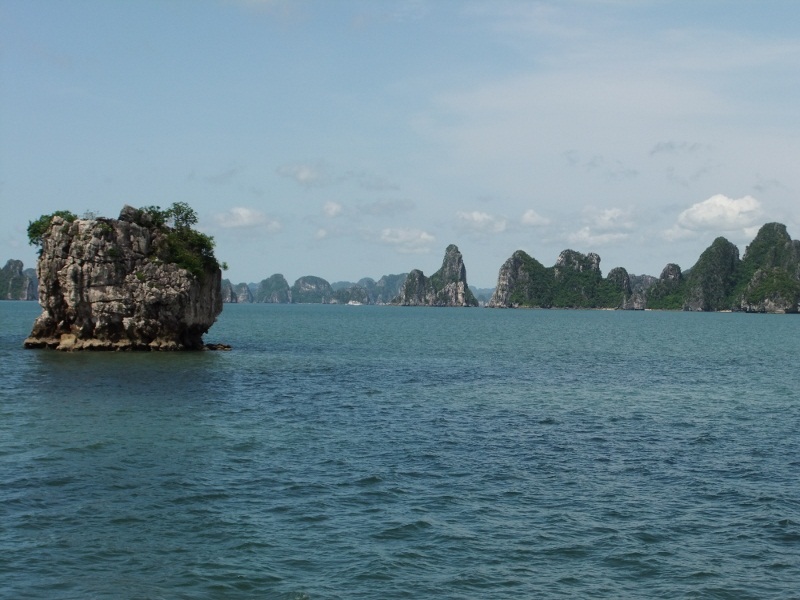
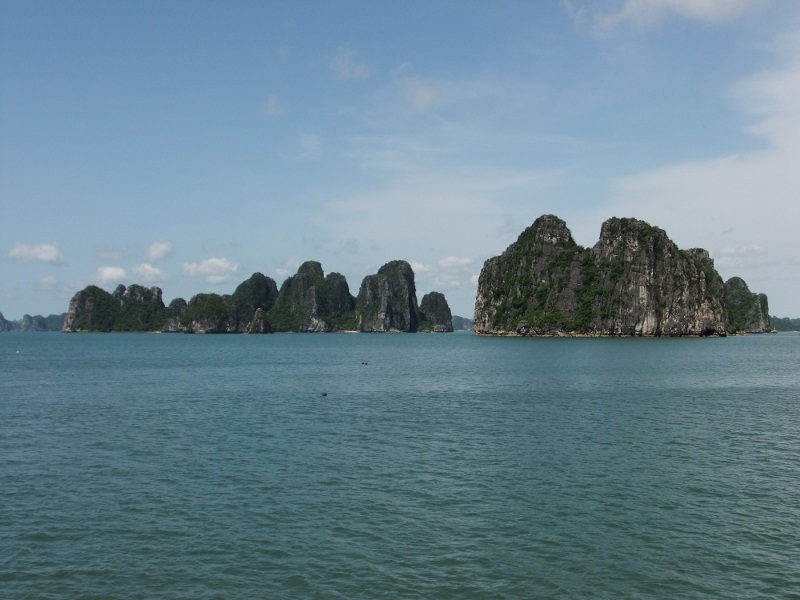
For us, there was nothing peaceful about the place; dozens of tour boats crowd the bay, tour operators aggressively try to fill their trips, and the water has become polluted from the thousands of people who visit each week. But don’t despair, another option still exists for those willing to put in a little extra effort. Adjacent to Ha Long is the area known as Bai Tu Long Bay. Like its neighbor, Bai Tu Long is home to countless limestone islands that rise sharply out of the turquoise waters and is relatively unaffected by the tourism industry.
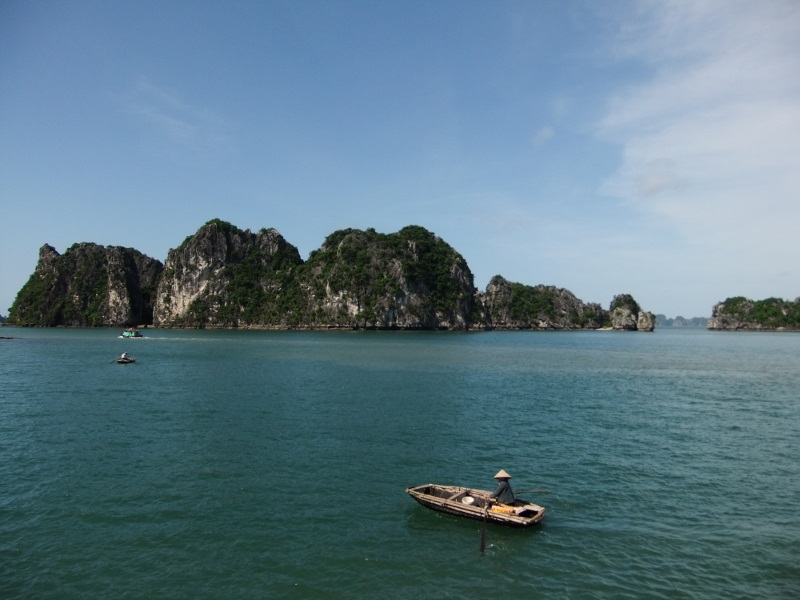
Why is Bai Tu Long better than Ha Long? The same beautiful views without the masses of tourist boats!

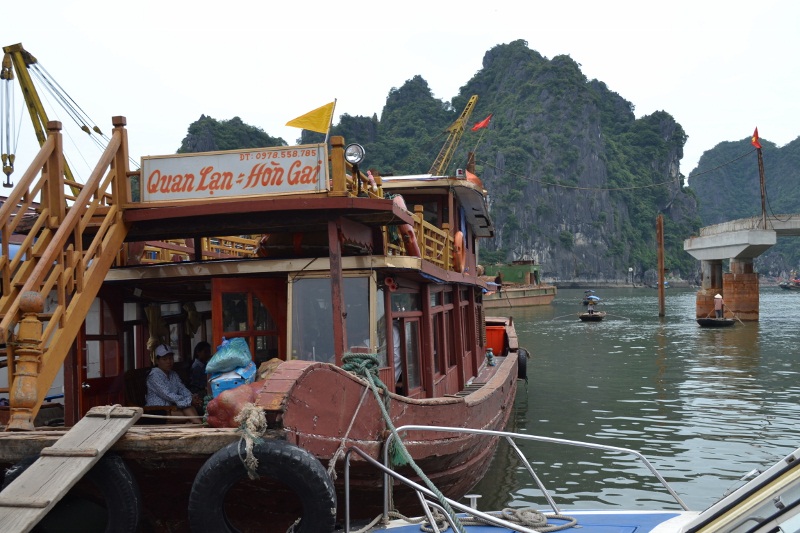
We’ve said it before and we’ll say it again, we don’t like tour groups. Several people in Hanoi tried to convince us that exploring Bai Tu Long on our own was impossible, but we took some advice from one of Amy’s brothers, did a little research and found a public ferry. We boarded a small wooden boat with locals that live on islands in the bay and set off into the landscape of towering peaks.

The public ferry that runs between Hon Gai and Quan Lan Island

View after incredible view of the limestone peaks in Bai Tu Long Bay

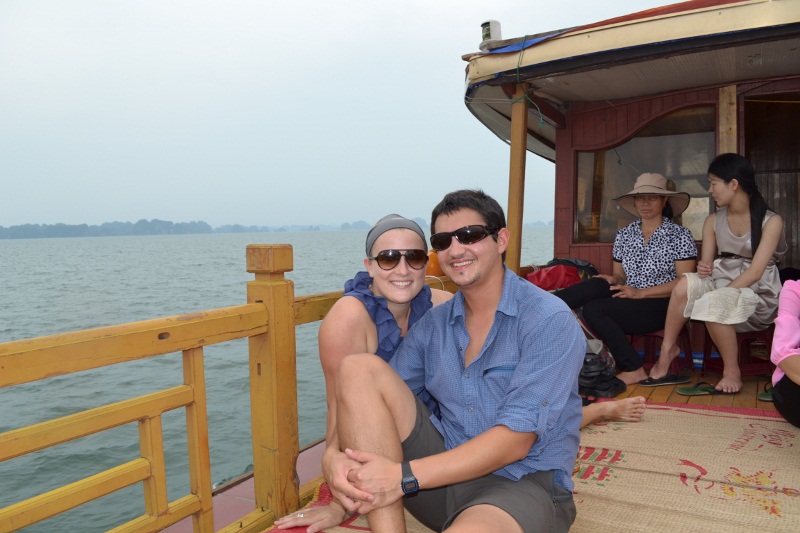
Hanging out on the roof of our boat as it slowly puttered through Bai Tu Long Bay

Because we are constantly moving, it can be easy to lose sight of the amazing expedition that we are on. Ironically, the same thing happens to travelers that happens to people at work…days blend into weeks and weeks into months. However, being out on the waters of Bai Tu Long brought back our sense of adventure. The thrill of being on a rickety boat headed to a sparsely populated island with no idea of where we were going to sleep reminded us why we left home in the first place. Watch our video from the ferry ride through Bai Tu Long Bay here or by clicking on the image below.

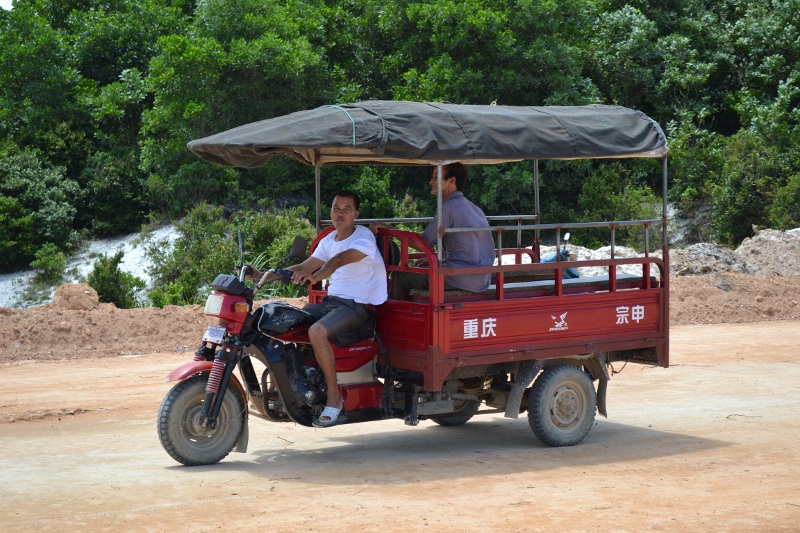
After a four hour boat journey, we docked at Quan Lan Island (pronounced Gwan-ah). This island is so remote that we were unable to find a map online prior to leaving the mainland, so we arrived with no idea of the layout of the land. Not surprisingly, there were numerous tuk-tuks waiting at the pier, so we jumped aboard and attempted to communicate that we wanted to go to a hotel, any hotel. The driver spoke zero English and gave us a blank look. He showed us 30,000 Dong and pointed to some small buildings in the distance. Having no other choice, we agreed to the price and were on our way.

Tuk-tuks and motorbikes are the only method of transport on Quan Lan.

Turns out there is no real town on the island, but there is one street that is home to a few mini-hotels, ALL of which double as restaurants, convenient stores and motorbike rental shops. They are very entrepreneurial people. It was quickly apparent that aside from the limited lodging, there is little to no tourist infrastructure in Quan Lan, a refreshing change from Hanoi and Ha Long.

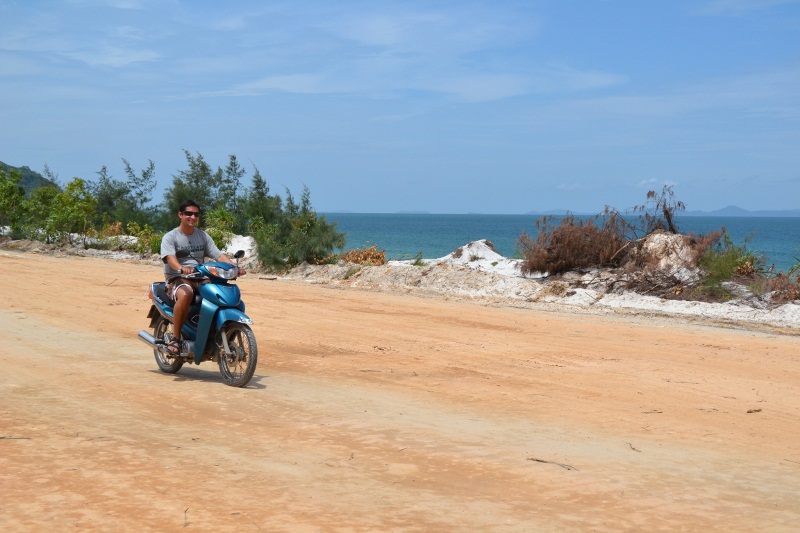
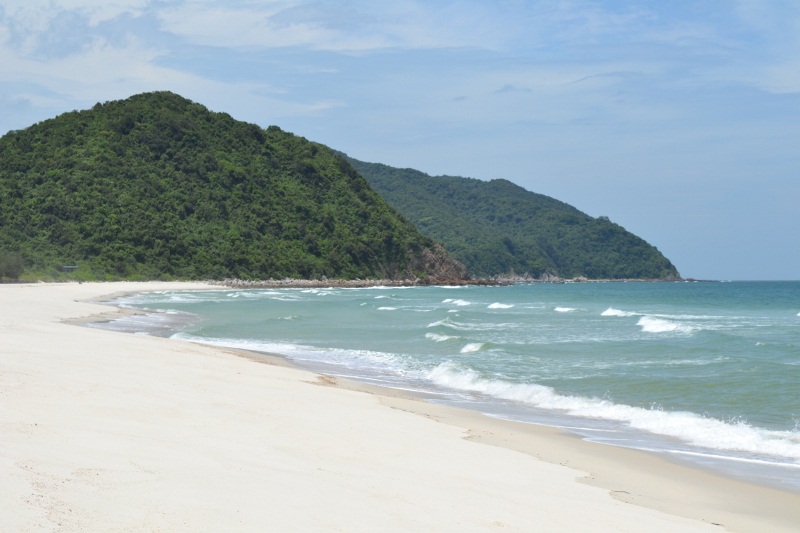
In the morning, we rented a motorbike from our hotel (we are pretty sure that it was the owner’s personal motorbike) and took off down the road. While we would never have attempted driving on the crazy streets of Hanoi, riding on Quan Lan was a piece of cake. Little to no traffic helped put us at ease, and having only one main road made getting lost on the island nearly impossible. Peaceful is the best word to describe this place; water buffalo roam the fields, rice paddies glisten in the sun, and waves crash onto white sand beaches.

Nothing but calm

Mike mastering the motorbike

Our trip to this island can be summarized as a relaxing time on the beach. We didn’t do much else. The people of Quan Lan were some of the most friendly that we have encountered in Vietnam. Even though most do not speak a lick of English, we managed to have full conversations with people using impromptu sign language, and we were even invited into a family’s home for a crab dinner one night. It is clear that the influence of tourism has not yet ravaged this island, and we hope it stays this way. However, we weren’t the only tourists there, and we know that more will make the journey with each passing year. If you find yourself amongst them, please tread lightly.

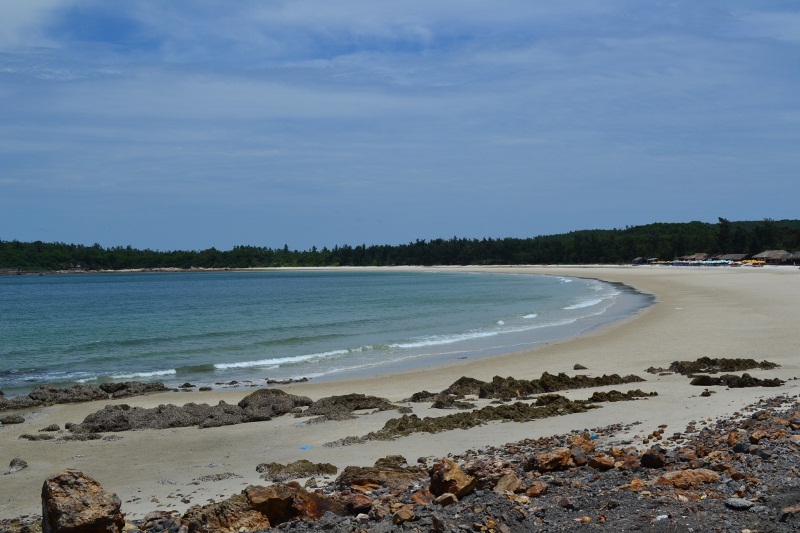
Minh Chau Beach, on the northeast side of Quan Lan

The public ferry from Hon Gai, through Bai Tu Long Bay, to Quan Lan Island was spectacularly beautiful. When combined with the laid back atmosphere and friendly people of the island, we found it to be a worthwhile alternative to Ha Long Bay.

The return ferry ride couldn’t last long enough

Read Full Post »

We have finally arrived in SE Asia! While we always strive to live in the moment, we have secretly been longing to get to this part of the world since we left home. Stories of the region’s hectic streets, friendly people and incredible street food make it a legend in hostels around the world. These tales of a backpacker’s paradise sparked our interest long ago.

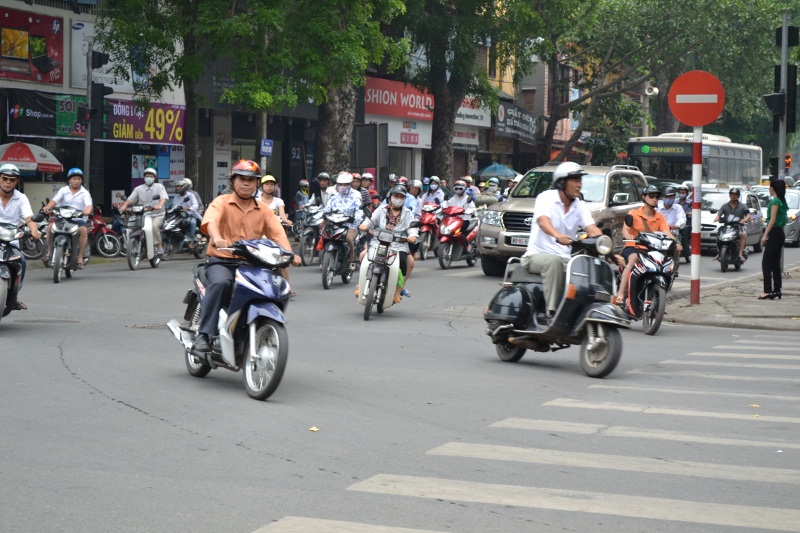
Our first stop in SE Asia was Hanoi, Vietnam. Our first impression? Holy motorbikes Batman! When we went to Marrakech, we thought the traffic was crazy. Then, we came to know the streets of China, but neither prepared us for the motorbike madness that exists in Hanoi. We have heard that cities like Bangkok and Singapore make maneuvering Hanoi look like child’s play, but our first thought when we gazed upon the raging river of motorbikes was, “WTF, how are we ever supposed to cross the street?!”

Quintessential Hanoi

After a few days, we became accustomed to walking in the street (the sidewalks are too cluttered to actually walk on) and weaving our way between bikes and cars. Our heart rates gradually lowered, and we started soaking up the good vibes that flow through this city.

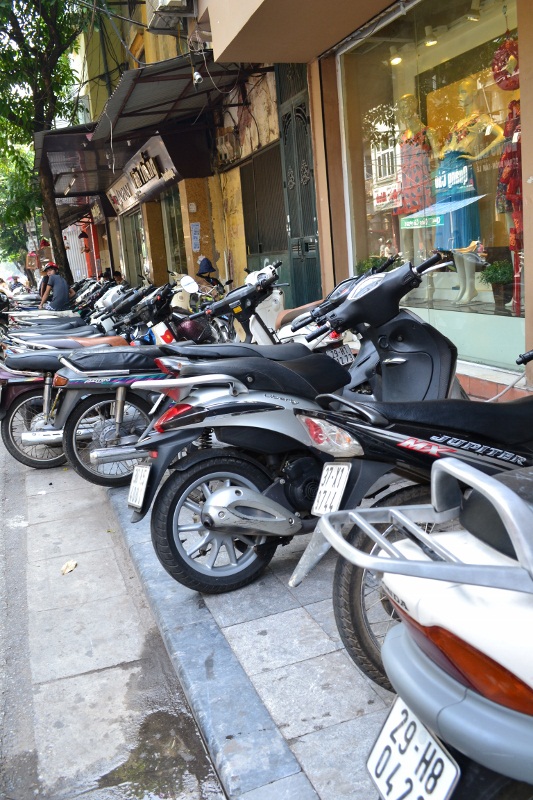
The word sidewalk shouldn’t be used in Hanoi. They are all unofficial parking lots, shops, or restaurants.

Before arriving in Vietnam, we had heard stories from other travelers about tourists getting fleeced right and left. More than one person told us that they will never return to Vietnam; it made the Vietnamese sound very unwelcoming and unfriendly. We found it to be the exact opposite. Every local we met in Hanoi said hello with a smile, and not one person tried to overcharge us, much less steal from us. It is the people of Hanoi that create the positive and upbeat vibe that we mentioned above.

There is no doubt that Hanoi is an epicenter of history, and although the city has a handful of tourist sights, we most enjoyed simply walking around the old town and seeing how the city works. It is really quite fascinating to see the systems that exist below the layers or chaos. We didn’t want to spend our whole time there just lounging around, so we dedicated about two half days to sightseeing at the following places.

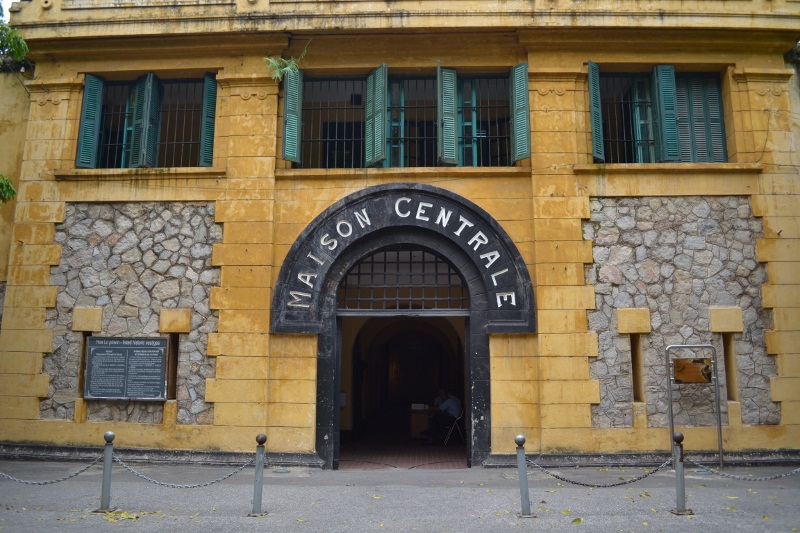
Hỏa Lò Prison, called the “Hanoi Hilton” by American POWs. Built by the French and used to imprison Vietnamese revolutionaries. Its most famous American prisoner? John McCain.

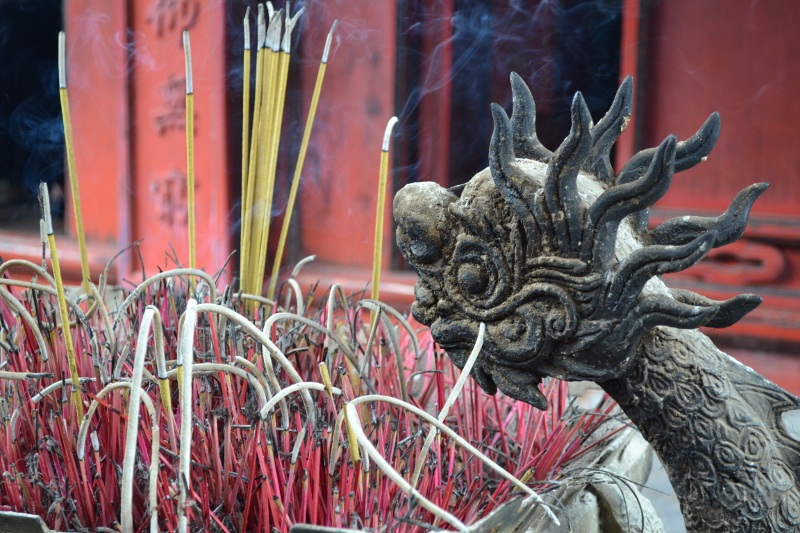
Offering of incense in front of the Temple of Literature.

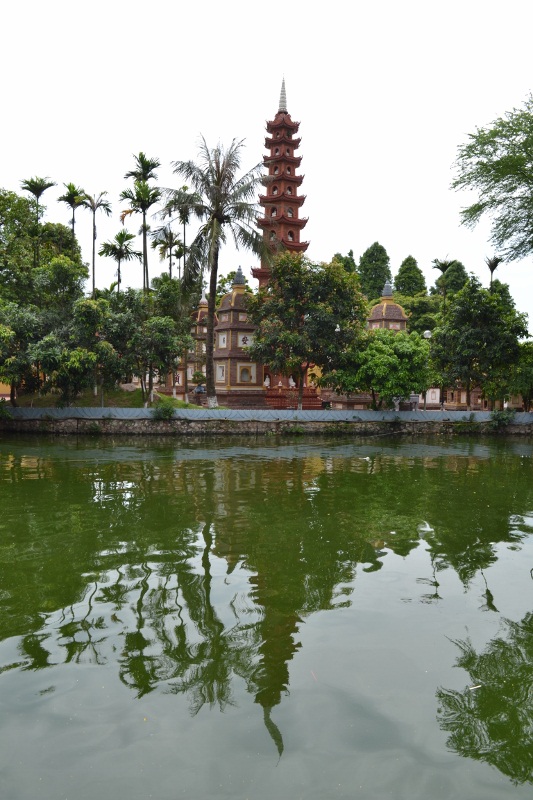
Tran Quoc Pagoda in West Lake. The oldest pagoda in Vietnam.

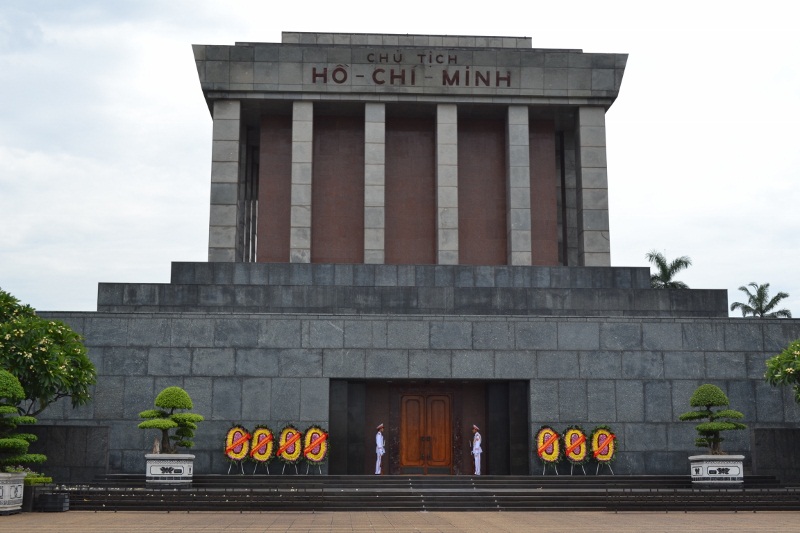
Ho Chi Minh’s Mausoleum has strict visitor policies, similar to that of Chairman Mao. After having visited Mao’s Mausoleum in Beijing we chose to forgo looking at another wax-covered corpse.

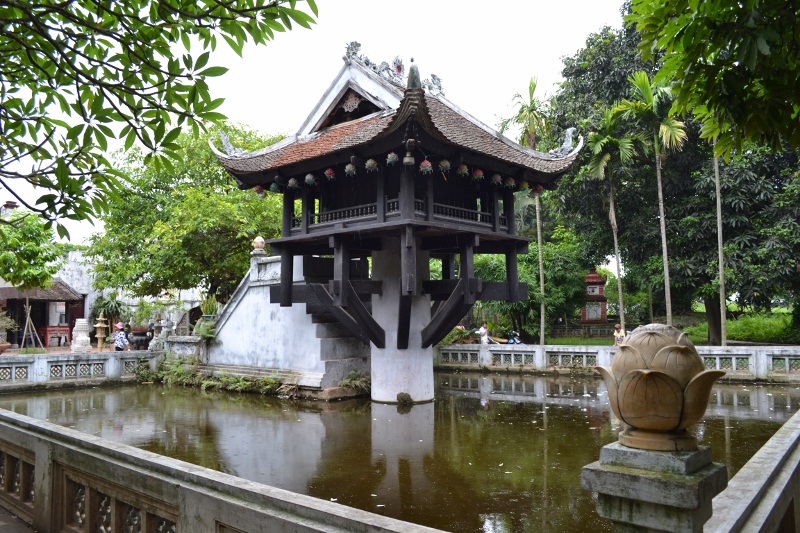
The One Pillar Pagoda, a Buddhist temple.

Sightseeing in Hanoi will really take it out of you. With the temperature over 30˚C and humidity close to 100%, we could only handle walking around town for a few hours at a time. Multiple showers per day, constant hydration and brief visits to buildings with air con helped us beat the heat. Many people cautioned us to not visit SE Asia in the summer because it is the hottest time of year and the rainy season, but to us, the frequent afternoon downpours are always a welcomed occurrence.

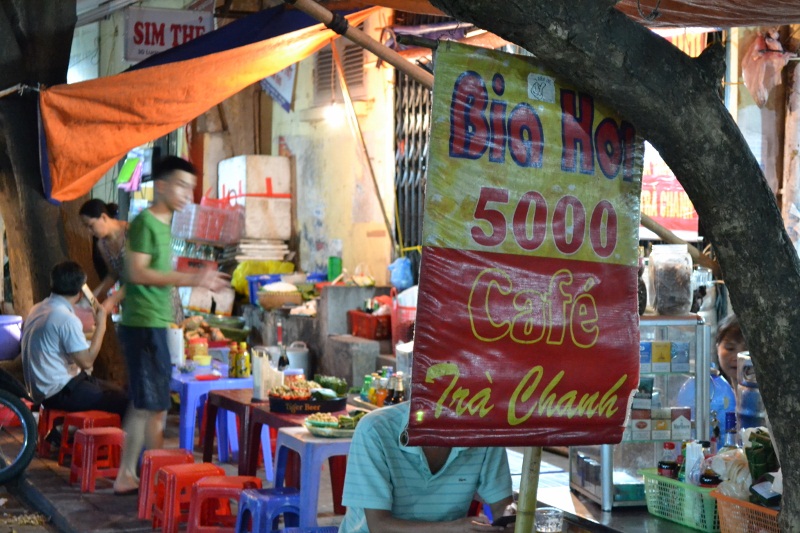
One of our favorite mid-day activities in Hanoi was stopping for some “bia hoi.” Bia hoi is Vietnamese for “fresh beer” and is quite possibly the cheapest draft beer in the world at 5,000 Dong (25 cents) per glass. It is not the most flavorful drink around, but in the sweltering heat it really makes you smack your lips and say “ahhhhhh” as your body temperature drops a couple degrees.

Our favorite bia hoi

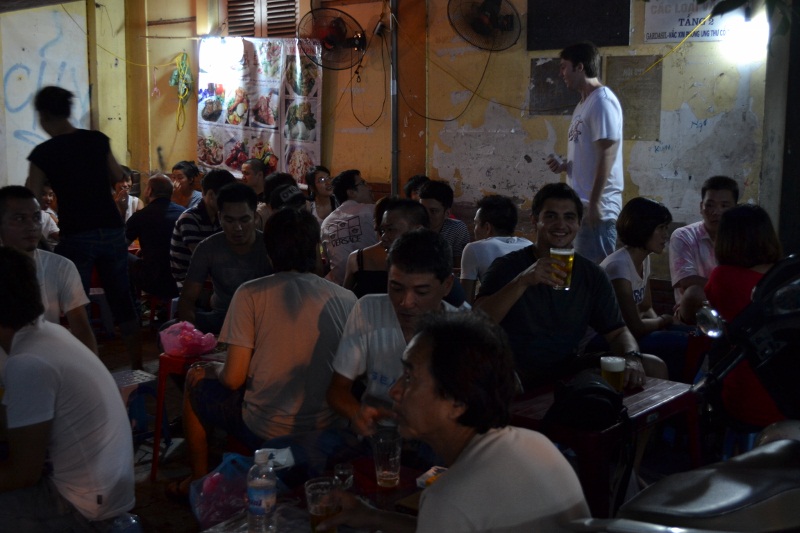
There are many places around the city to quench your thirst, but on our first day in Hanoi we found a spot that we liked and kept coming back. We spent many hours there chatting with the owner, playing with her son and drinking with the locals. After a few days, we felt like part of a small community there and were sad to say goodbye.

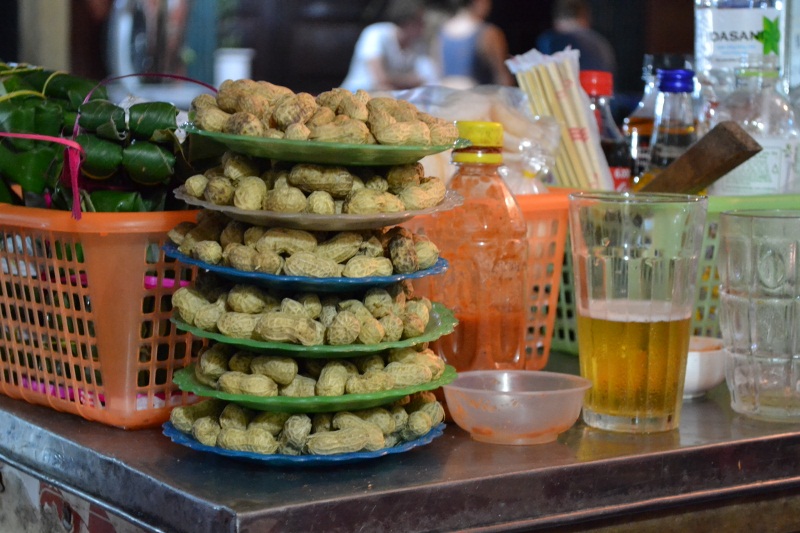
Never drink a bia hoi without a snack. Shrimp chips, peanuts, and pork in banana leaves seem to be the munchies of choice.

Can you find Mike?

One of the things that we liked most about Hanoi is that it is easy to distinguish the tourist traps from the genuinely local places. We have learned that the backpacker trail through Vietnam is well defined, with Hanoi being a hub for nearly all tourists that visit the country; therefore, Western-oriented establishments are ubiquitous. Ones that consist of very small plastic stools and tables on the sidewalk are a good indication that you are in for the real deal. These types of restaurants are the definition of hole in the wall. Sometimes they have a small portable cooking station on site, other times your order is relayed via cell phone to a kitchen down the street, and 10 minutes later someone comes walking down the block with your meal in hand.

Check out this kitchen. The health department in Hanoi must have very strict standards.

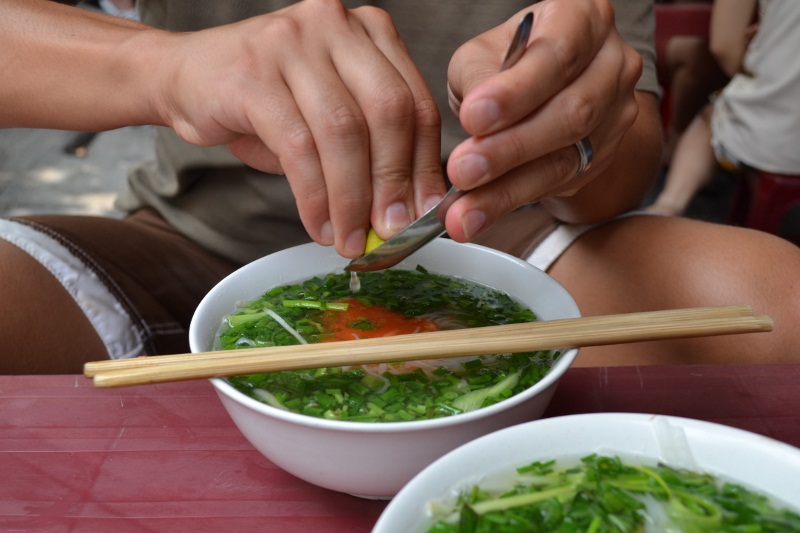
We didn’t know a whole lot about Vietnamese cuisine before arriving, and while we don’t have a firm grasp on the regional specialties just yet, we certainly got our fill of phở while in Hanoi. We were on a mission, just like Anthony Bourdain, to find the best bowl of phở around. We ate it every day for at least one meal, and came across a wide variety of styles. There is no way to decide on the best bowl of phở in Hanoi, but there are a few indicators that will let you know you’ve found a great phở spot, which Bourdain’s video explains in hilarious detail (watch it here). We couldn’t have said it better ourselves!

Phở, phở, glorious phở.

Hanoi electrified us, kept us on our toes and eventually made us feel at home. While getting advice from fellow travelers can be an incredible resource, the moral of the story here is that you shouldn’t always believe what you hear. The only way to know for sure whether or not you are going to like a city is to experience it for yourself.

Read Full Post »

While sometimes it may seem that we are obsessed with food, eating isn’t the only thing we do when traveling. We swear. Yes, Part I of this blog series was all about food, but we actually did a lot of non-food related sightseeing in Tokyo as well. In between meals, our favorite way to explore a city is to simply walk around and see where the day takes us. Many travelers we meet spend all day zipping around in taxis, trying to see everything. That’s not our style. Sometimes we take off in the morning with a specific destination in mind, but more often than not we just head out with a map in our pocket and wing it.

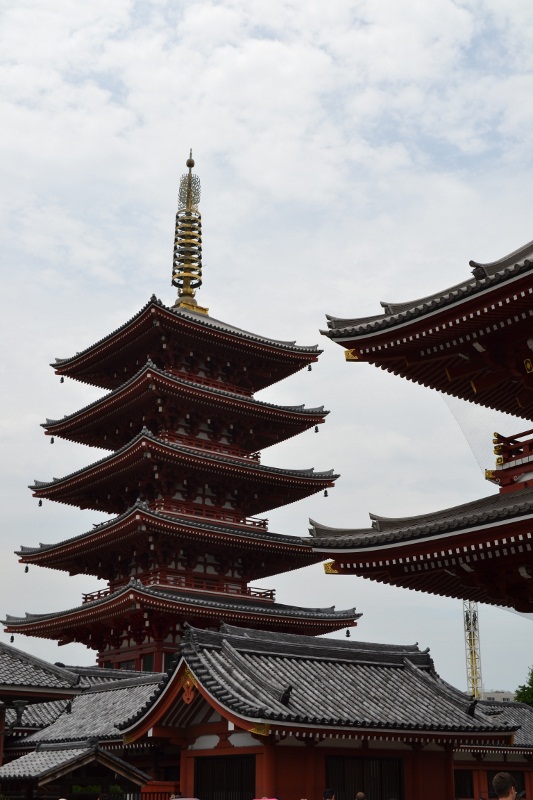
Our first few hours in Tokyo began as a quest towards the Sensō-ji Temple Complex, which we heard is the temple to visit if you time in Tokyo is short. It was a nice temple, but surrounded by hordes of tourists and neighbored by a small amusement park. It definitely was not the highlight of our trek through the Asakusa neighborhood.

Offerings at a Buddhist altar within the Sensō-ji Temple Complex

The Pagoda of Sensō-ji

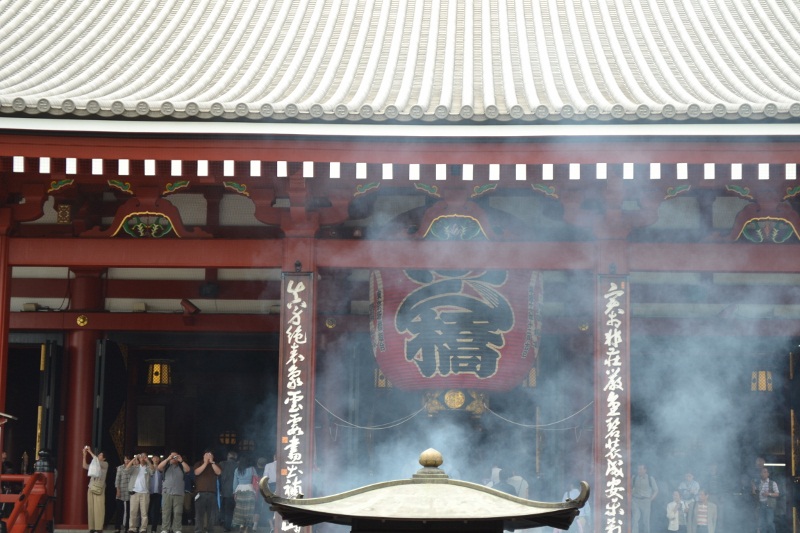
Incense smoke engulfing Sensō-ji Temple

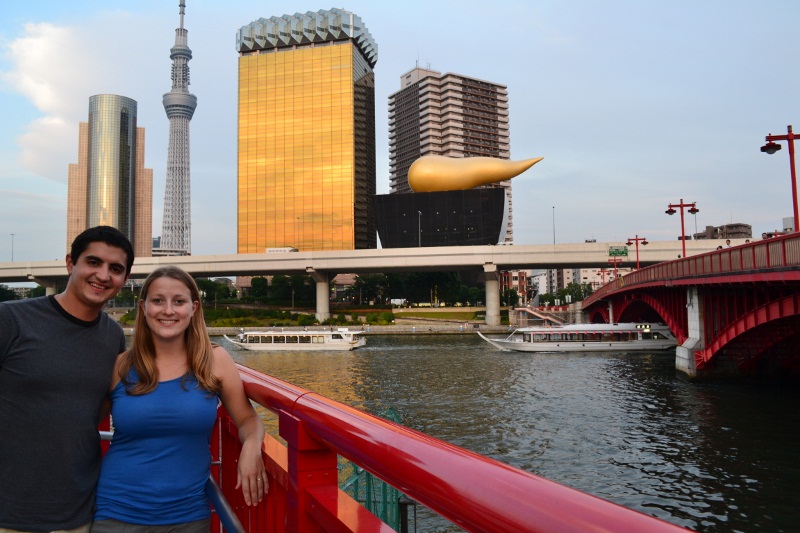
Along the way to Sensō-ji we caught our first glimpse of the brand new Tokyo Skytree. This building is all the rage in Japan at the moment; you can’t possibly walk one block without seeing a corny Skytree souvenir stand. The Skytree opened in May 2012 and is now the tallest structure in the country and the second tallest in the world. People sign up months in advance to go the top. We of course had not planned that far in advance, but had a photo shoot along the Sumida River.

The Skytree is so tall that it didn’t fit in the frame.

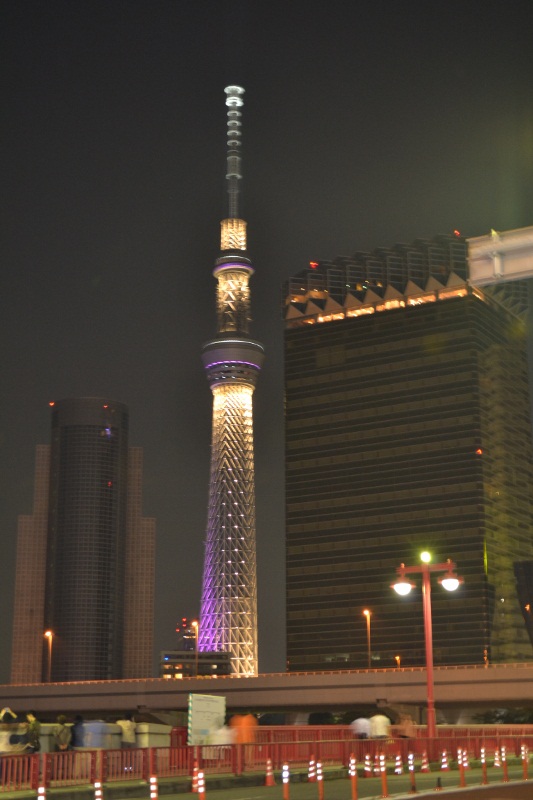
The Skytree in its evening-ware

When we had finished admiring the Skytree, we didn’t really know what to do next. So we just picked a direction and started walking. Fortunately, our choice was a good one, and we stumbled upon a fascinating shopping district. We are not talking about a cutesy outdoor mall with clothing boutiques. You see, we have come to realize that most cities in the world have entire streets, sometimes even whole neighborhoods dedicated to selling a specific grouping of products or services. We don’t know how so many competitors manage to survive in such a small geographic space, but somehow they do. Often we find ourselves walking down the street saying something along the lines of, “Oh, this must be the diapers and toilet paper section of Hanoi” or “Here is the power tools block in Istanbul” or “Man, this wedding invitation street runs half way across Prague.” Well, this particular shopping area of Tokyo was solely dedicated to selling kitchen gadgets and restaurant supplies.

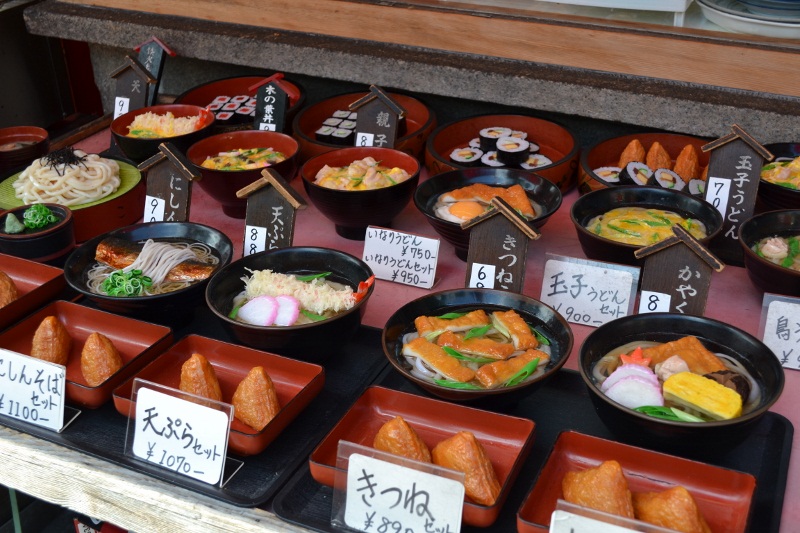
We spent hours exploring this part of town. We know it sounds strange and you are probably thinking, “They went all the way to Tokyo to visit a Williams-Sonoma?” After reading-up on it when we got back to our hostel, we learned this area of town is called Kappabashi, and Kappabashi is a crazy place. In this neighborhood, you will find entire shops that sell only plastic food for restaurant window displays. Others manufacture and sell hundreds of the most incredible chef’s knifes we’ve ever seen. There are stores that sell only antique items, while their neighbor specializes in the most cutting edge culinary equipment.

Even though it looks real, these are actually made of plastic. All of which can be purchased at Kappabashi

Amazed and over stimulated from our thorough exploration of Kappabashi, we journeyed off to find some…yes, you guessed it…food. Lucky for us, we happened upon a parade that led us straight to a festival where tasty street food was being served. After a few minutes on this street, we noticed that all of the men were wearing waist length robes, many of which exposed areas where the sun doesn’t shine. We still aren’t sure what the festival was all about, but snapped a short video of it that you can watch here or by clicking on the image below.

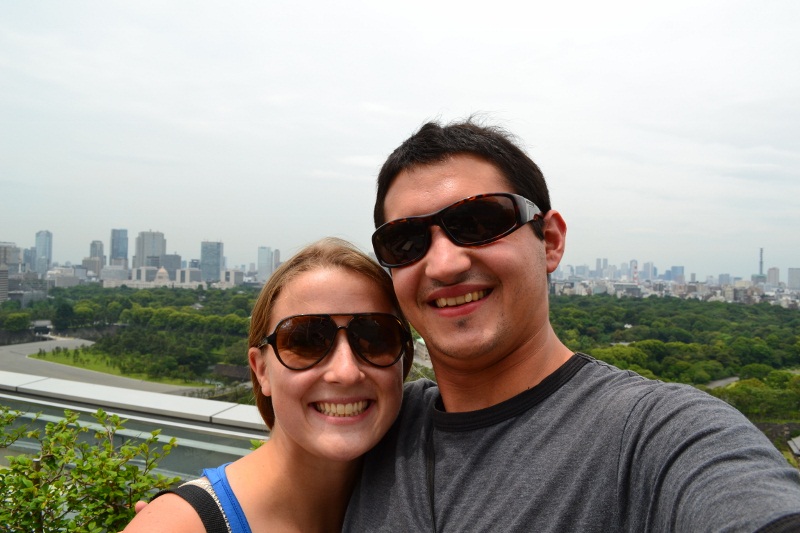
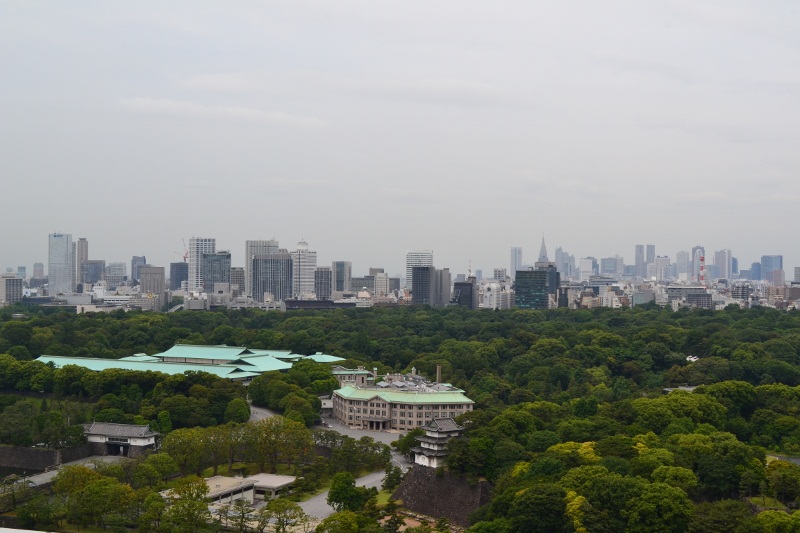
On our second day in Tokyo, we took a tip from our hostel and hopped on the subway towards the Imperial Palace. We were forewarned that many tourists do not find the palace interesting since you cannot enter the gates, but we went anyway. Determined to get a good view over the palace walls, we began to circumnavigate it in hopes of finding a good vantage point, but after 30 minutes it just didn’t seem possible. That’s when we pulled out a wild card and went with a move that has worked well for us in the past. Other budget travelers will want to write this one down as many places (the Skytree for instance) charge a pretty penny for a nice view. We hate paying for views. We located a tall hotel that bordered the palace, walked confidently into the lobby, found the elevator and pushed the button for “club level.” Once at the top, we put on our best smiles and talked our way into the club member lounge on the top floor of the Imperial Palace Hotel. There we found the view we were looking for!

Excited to be seeing it from the top

View down on the Imperial Palace and Gardens

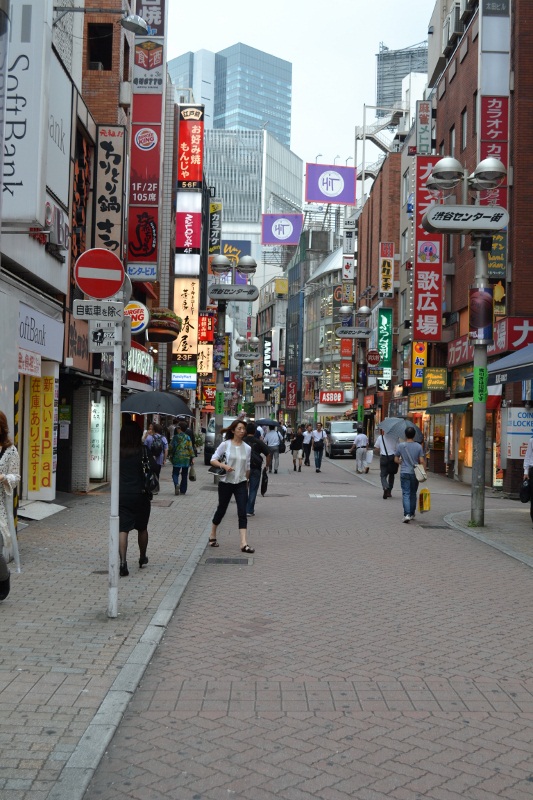
Next, we hopped on a subway and got off at a random stop called Shibuya. This is where we found the stereotypical Tokyo that we were looking for: crowded streets, flashing lights, crazy fashion, and surprises around every corner. Respect and honor may mean a lot in Japan, but they still have their seedy parts of town.

One of the calmest and least bright streets in Shibuya

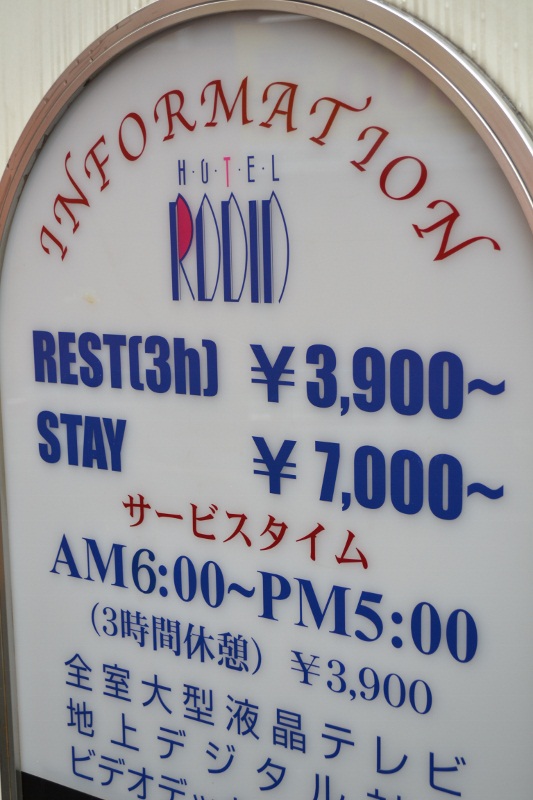
Shibuya is home to many adult activities – case in point, love hotels. 3 hours seems like enough for a “rest,” don’t you think?

Our visit to Tokyo was full of unexpected twists, and our departure was no different. A typhoon rolled into town on our last night there, which not only made for a soaking and umbrella-breaking journey to dinner that night, but also a deviation from our original flight plan. We can’t say that we were upset about the detour (the airlines can’t control the weather after all), but after 24 hours of travel and one unplanned night in a sketchy hotel in Guangzhou, we were happy to arrive in Hanoi.

Read Full Post »

We only had three days in Tokyo, so we had to make the most of this electrifying city. To write the end before the beginning, we can sum it up by saying we left Tokyo with a strong desire to return. In the first part of this series, we will share with you the incredible food scene we experienced in Tokyo. Part II will delve into our exploration of some of the city’s sights and neighborhoods.

From Sea to Table

Do you ever wonder where that little piece of tuna you’re eating came from? While it’s hard to know for certain, there is a pretty good chance it passed through the Tsukiji Fish Market in Tokyo, the largest fish market in the world. The action starts early here, with fish auctions for the high-end catches running from 5am to 7am. We arrived around 6:30am and dove right into the chaos that consumes the heart of the market.

Early morning hours at the Tsukiji fish market

This is not your typical neighborhood fish market; Tsukiji is home to fishermen who are selling massive quantities of fish to wholesalers. According to Wikipedia, over 400 types of seafood are sold at Tsukiji on any given day. If it lives in the sea and can be eaten, it’s sold at Tsukiji Fish Market.

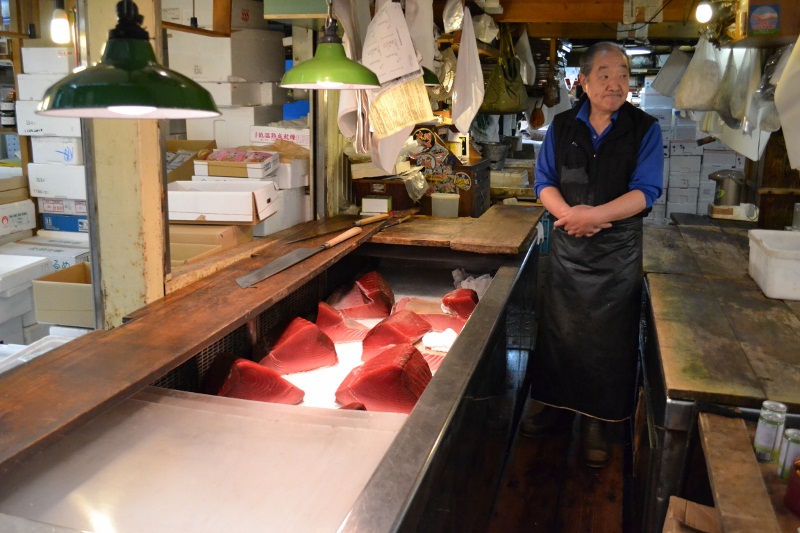
Ominously glowing pieces of tuna. Aren’t they stunning?

One of the many species of octopi on sale at Tsukiji

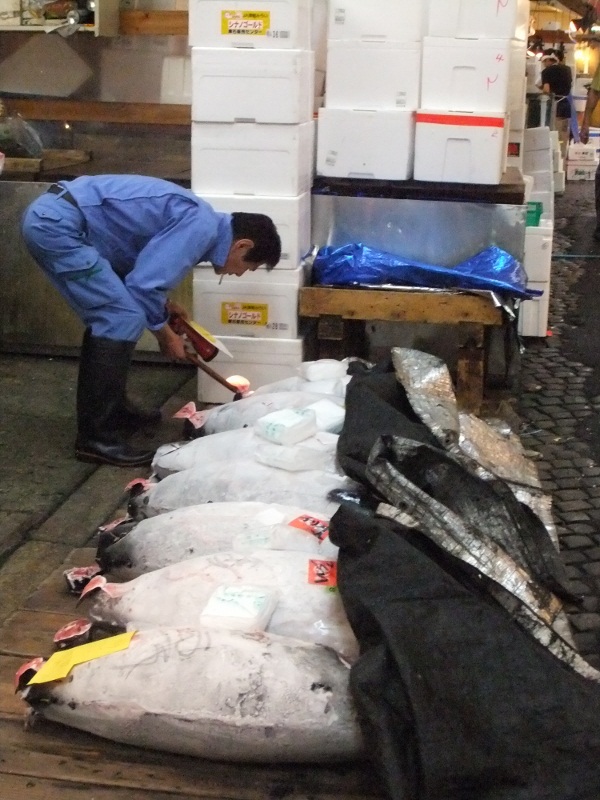
Aside from the extra large bivalves and colorful octopi, we were most impressed by the humongous tuna that we saw. Workers handled these whole frozen tuna with hooks and gloves, maneuvering them from the ground to counter tops. There, they are cut in half using band saws and then into smaller pieces by knives that looked more like swords.

HUGE tuna fish

Tuna handler in action – hopping over his group’s share of tuna and in between table saws

You do not want to get between this guy and his tuna. “Call that a knife?” This is a real knife, Mr. Crocodile Dundee.

Hop on the Sushi Train

Although a novelty in the States, sushi train restaurants are not so uncommon in Japan. Excited to try some of the fish we saw at Tsukiji the day before, we headed out to dinner at a sushi go-round in the Asakusa neighborhood.

Watching our dinner circle round as we waited in line with anticipation, our appetites growing by the second

We enjoyed some of our favorites, such as Hamachi (yellow tail) and Aji (mackerel) and also tried a few new things, including abalone and crab miso soup.

Fatty tuna roll with green onion

Octopus sushi

After the waiter tallied up our tower of plates, which ranged from 180-700 Yen/plate, and added in our sake, the bill came to about $50 USD. Not exactly a cheap meal, but compared to a sushi dinner for two at home, it was a steal. Well worth the dent to our backpackers’ budget!

We did so much damage…

Dinner, Tatami-Style

Many fantastic restaurants in Tokyo are very unassuming. There is little to no signage out front, and you often do not even realize they are there. We were intrigued by a certain restaurant near our hostel. Each day during lunch, we noticed a line of people that stretched down the block, but in the evening it was hard to tell if the place was even open. The front doors were shut, and the building had no windows. After two days of walking past with our curiosity teeming, we finally gave in and slowly opened one of the sliding wooden doors to take a peek.

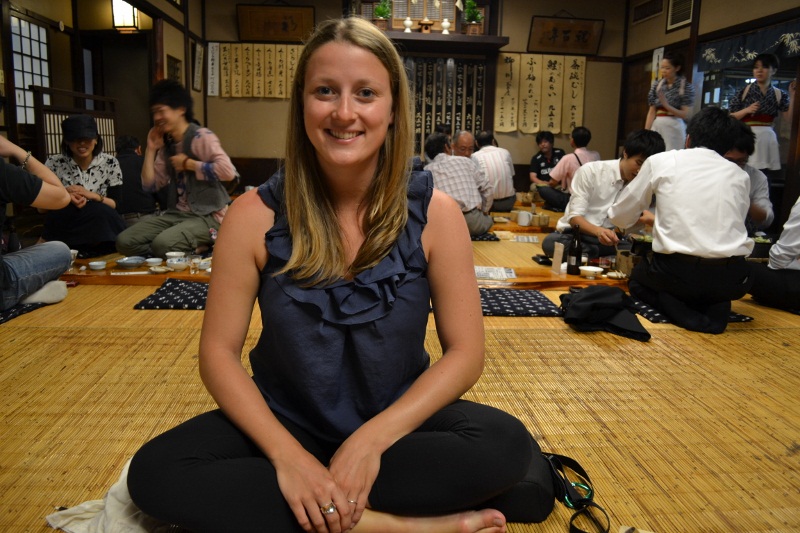
Amy getting comfortable on the tatami floor

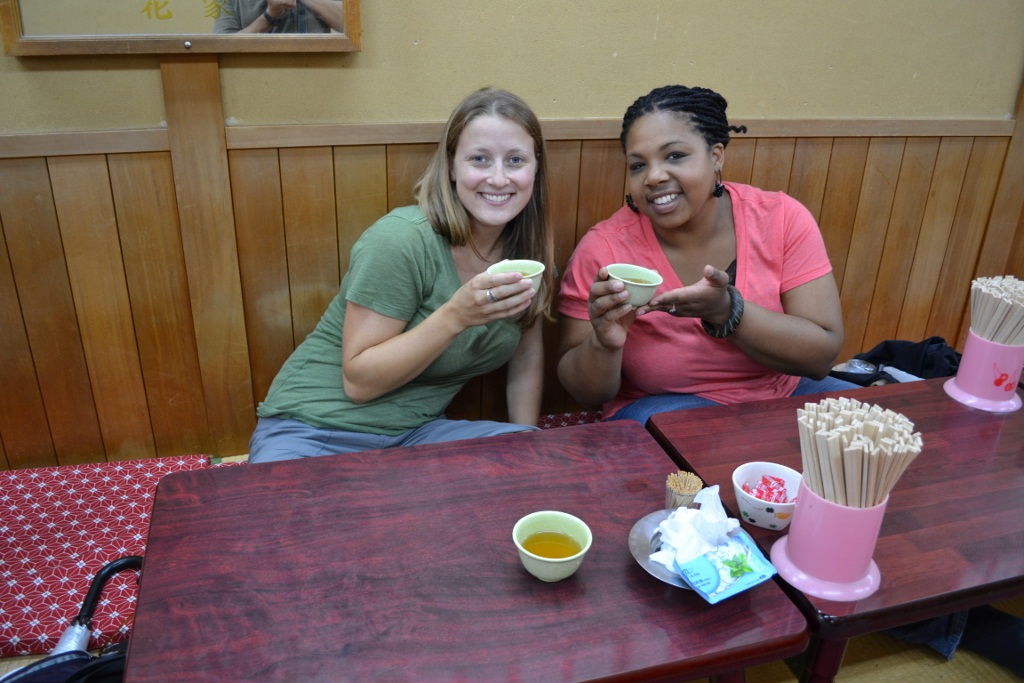
Inside, we found several tables of people sitting on tatami mats and enjoying traditional Japanese cuisine. The menu wasn’t well translated, so we did what we normally do in that type of situation – we smiled and pointed to the dish that everyone else was eating. Turns out the dish is called “Dozeu-nabe” (this website describes the dish pretty well). The dish was composed of small river fish that had first been cooked in sake and then transferred to a shallow metal dish. The fish then simmered over hot coals with green onions and fermented soy sauce on top.

The preparation method softens the fish so that they can be consumed whole, bones and all.

Mike digging into the dozeu-nabe

When the waitress first brought the dish to our table, our faces must have looked hilarious, as it didn’t look too appetizing. She graciously showed us how to properly prepare it. Halfway through the meal, she stopped by to tell us that one of the cooks was very impressed after observing our chopstick skills and Japanese dining manners. We always try to be culturally conscious travelers, and it was nice to hear that our efforts are appreciated! In the end, we could not have been more satisfied. Dozeu-nabe is delicious, and we were thrilled at the authenticity of dinner that evening.

Hibernating in the Sake Dens

Visiting an izakaya (sake den) was on our must-do list upon arriving in Tokyo. These Japanese style pubs are where the locals relax, loosen their ties after work, and often get helped out the door by a waiter as they stumble with an arm over their friend’s shoulder.

Hanging sake bottles mark the entrance to an izakaya in the Shibuya area

Following our tatami-style dinner, we made our way to a nearby izakaya that served up delicious tapas (for lack of a better word), meat skewers and generous glasses of sake.

The good stuff

The other good stuff

After six large cups of refreshing cold sake, a sampling of pork temple and chicken liver, and some great people watching, we were set for the night and made our walk home with nothing but smiles on our faces.

We call this ‘the sake glow’

The good thing about spending at least three days in a city is that it gives you the opportunity to truly experience the local cuisine by eating  nine solid meals. Between our tatami dinner, visit to the fish market, sake den experience, and many more meals, which we did not include in this post, we felt as though we had a good grip on the Tokyo food scene. As we mentioned, we left Tokyo wanting to see and taste more, and we will certainly be back someday.

Read Full Post »

Going Back to Work

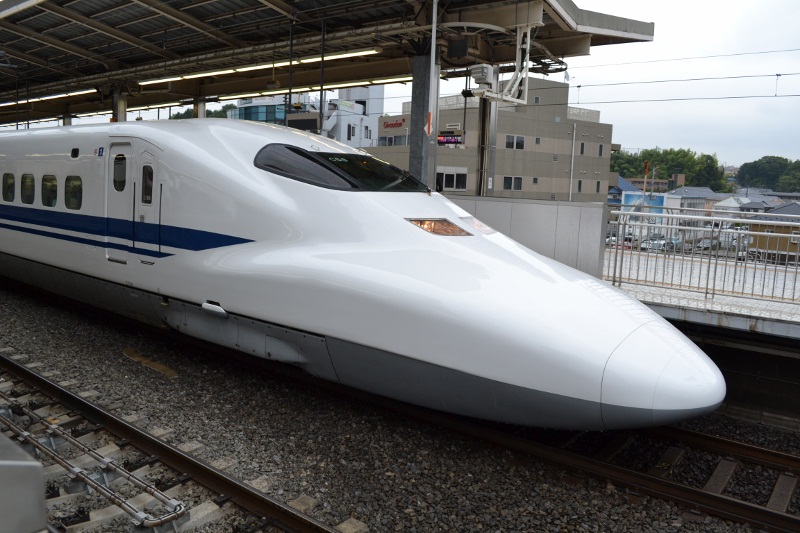
Don’t worry, our trip around the world isn’t over yet! We just had some business to take care of in Yokohama, and our return to work was only temporary. It had been six months since we last set foot in a working environment (sob story, we know), but to be honest, we were a little anxious about going back to work. In true business traveler fashion, we took the Shinkansen high-speed train from Kyoto after sightseeing there for a week. You have to have a job to take this train, as the two hour ride costs nearly $150/ticket!
The Shinkansen (a.k.a. bullet train) that we rode from Kyoto to Yokohama reached speeds over 300km/hr!

When we arrived in Yokohama, we traded in our backpacker wardrobe for business attire and prepared ourselves for four days “on the clock.” Spending several hours ironing clothes is not our idea of a fun first night in a new city, but getting dressed up in clean, pressed business attire actually felt quite refreshing. When you’ve been living out of a backpack for months on end, new clothes feel like a new car.

First day back at work!

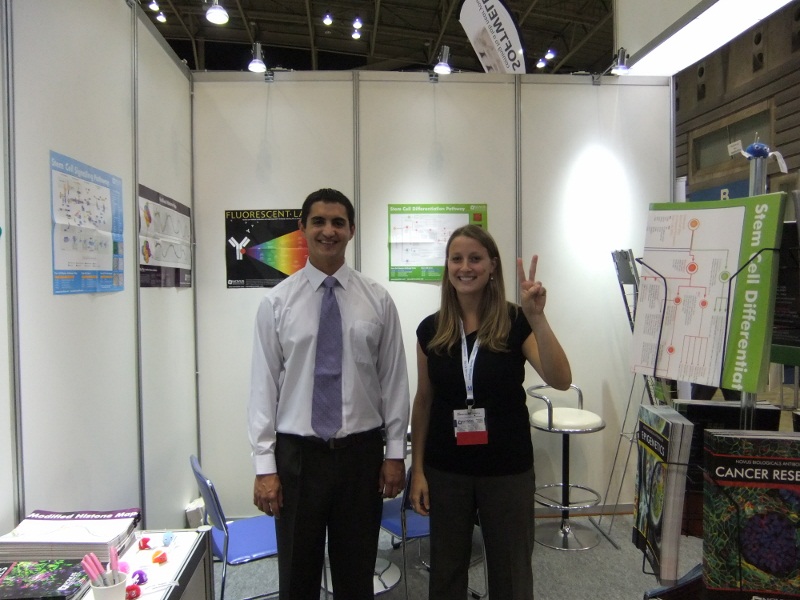
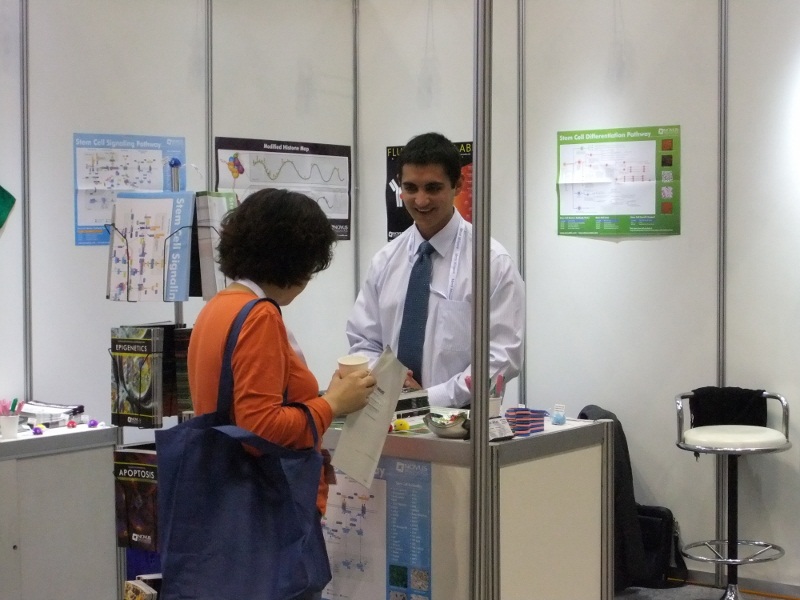
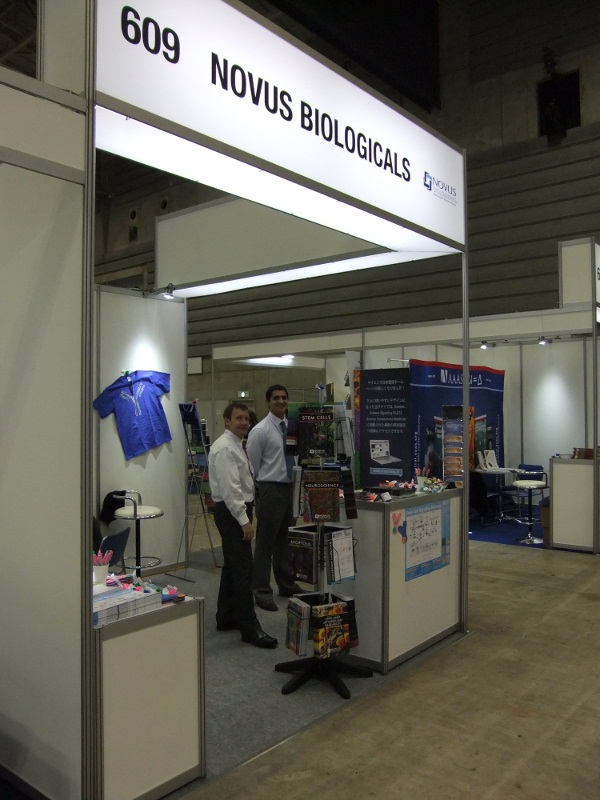
We were in town for the 10th Annual ISSCR Stem Cell Research Convention, which brought together researchers from around the globe. We were working as private contractors manning the booth for Novus Biologicals, Amy’s former employer in Colorado. Our job was to let researchers know about antibodies and other related products that may be useful to their stem cell studies. Amy has worked numerous such conventions in the past; for Mike it was a brand new experience. He got a crash course in antibodies before arriving in Japan and did a stellar job with his science lingo. Thank you, Novus, for the opportunity to work ISSCR!

Mike helping out a curious researcher

The Novus booth was our home for four days in Yokohama.

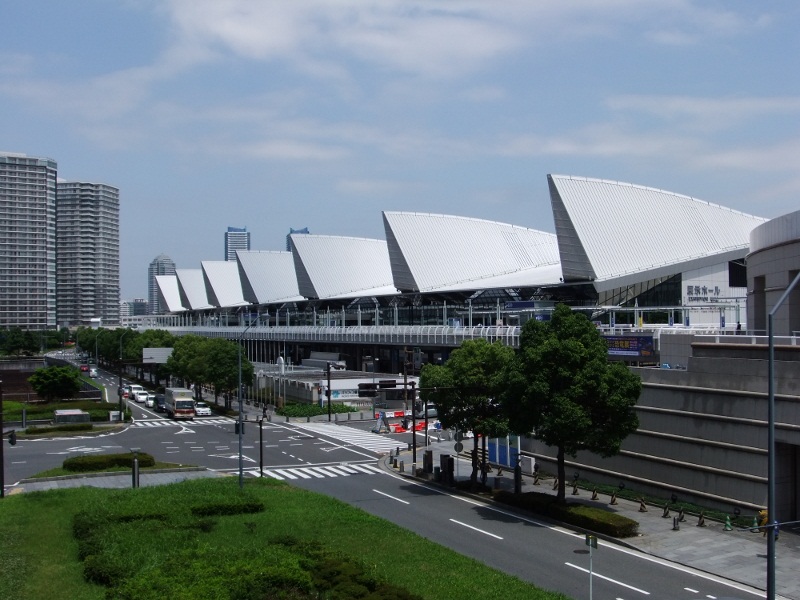
The event took place at the PACIFICO Yokohama. This convention center is situated along the water and near some great restaurants and parks in Yokohama. We were lucky enough to have a bit of time to sightsee before and after ISSCR.

The PACIFICO Yokohama on one of the few sunny, rain-free days during ISSCR

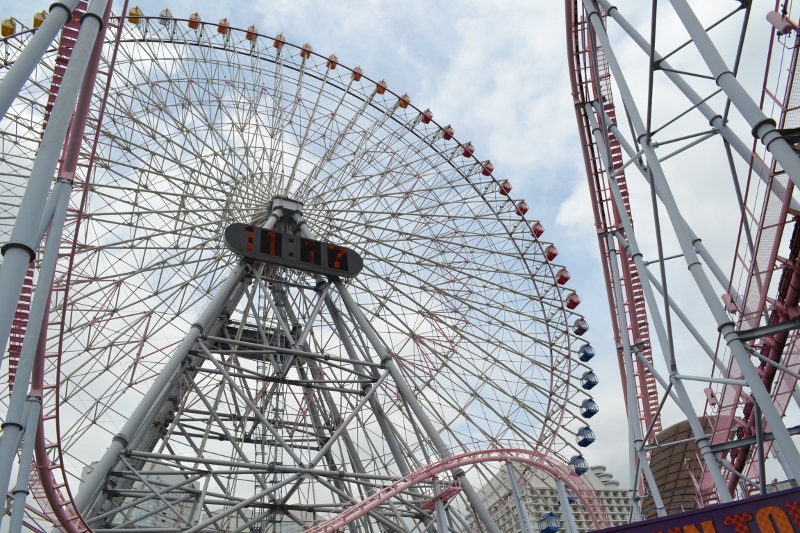
This amusement park is situated right next to the convention center, which made it easy for us to take a roller coaster ride before the first day of the show!

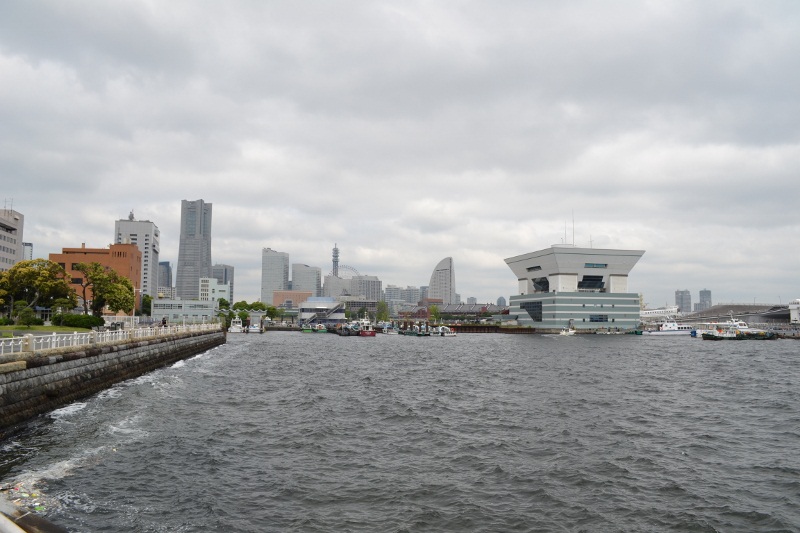
View of the skyline from Yamashita Park

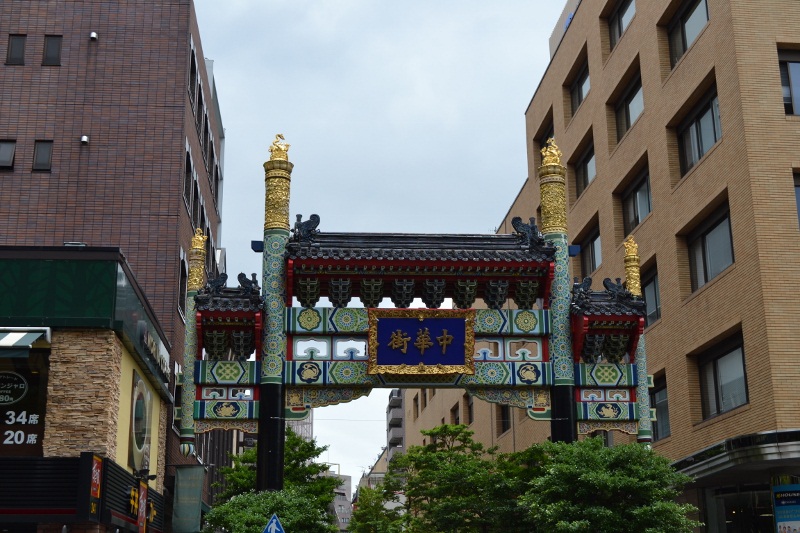
Our hotel was located just a few blocks from Chinatown, one of the largest of its kind in the world, which provided for some great people watching and delicious meals, and the hectic vibe actually brought us back to our recent travels in China.

The East Gate to Yokohama’s Chinatown

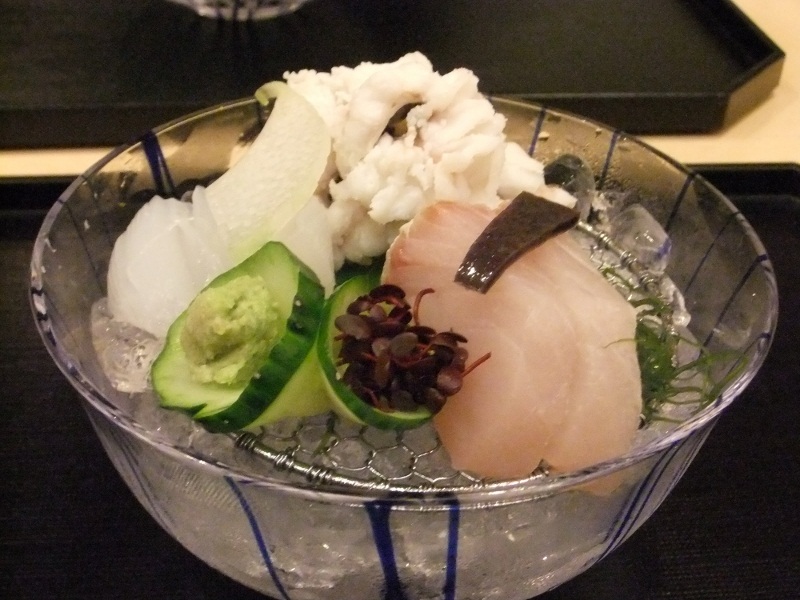
We seem to be ending all of our posts recently by talking about food, so we may as well keep with the trend. No business trip is complete without a fancy business dinner. We enjoyed an incredible Kyoto-style dinner one night with Amy’s former boss and a Japanese distributor. With ten courses, three types of sake and good conversation, it was a real treat to say the least.

2nd Course: squid, pike and sashimi served on ice.

All in all, going back to work went very smoothly. It was a good reminder of the hard work we did to make our dream of traveling the world come true. So for now, it’s back to life on the road and doing the work that we love, blogging about our travels. Who knows what the future will hold; we are focusing on living life in the present.

Read Full Post »

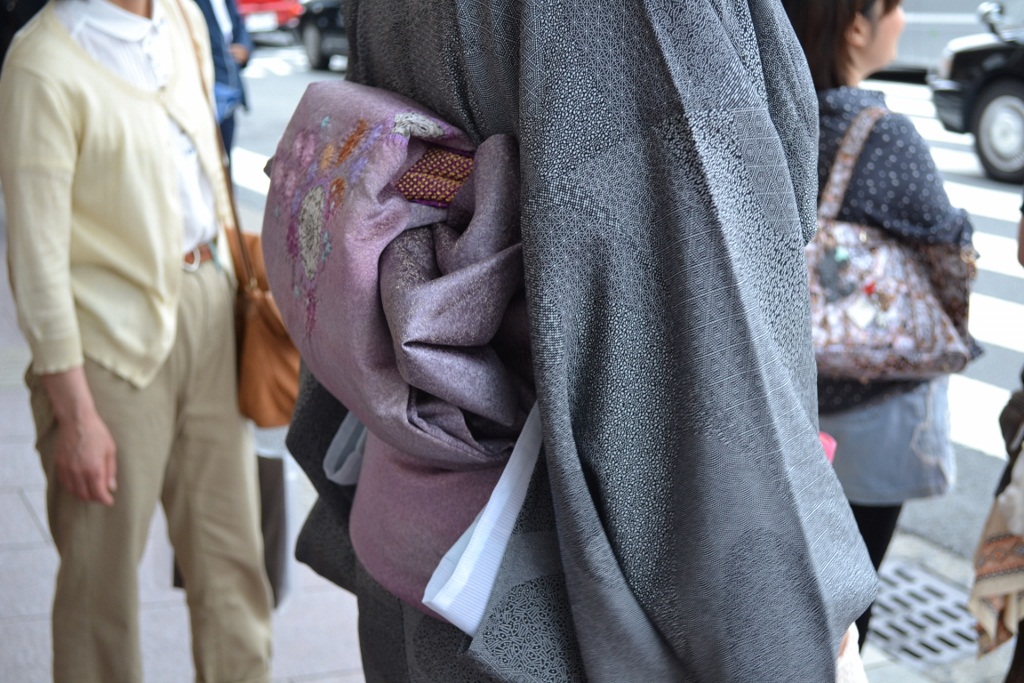
One of the first things that any traveler will notice about Kyoto is that there appears to be a temple or shrine on nearly every block. That may be a bit of an exaggeration, but Kyoto’s reputation as the home of traditional Japanese culture is well deserved. Once the Imperial Capital of Japan, Kyoto is now a modern city where the traditions of the past live on. In the midst of crowded, multiple-story malls, you will find a number of women shopping in traditional Japanese Kimonos, and when you exit the mall, you are likely to find monks worshiping at a temple just around the corner.
Kimonos are a common sight in Kyoto.

We spent our week in Kyoto visiting only a handful of the many temples and shrines, but the ones we did visit were magnificent. From the moment we set foot in Japan, we were truly humbled by the kindness and respect that people show one another. Even those who have never traveled abroad would feel safe and welcome in Japan. Nonetheless, it was helpful to have a Japanese-speaking guide to get an insider’s perspective on the culture of Japan. Our friend, Patricia, who lives and works in the Shiga Prefecture, met us in town one day to show us around to Kinkaku-ji (The Golden Temple) and Fushimi Inari Shrine. It made the experience that much more authentic.

Enjoying a tasty tempura and noodle lunch in Kyoto with Patricia. Thanks for a fun day!

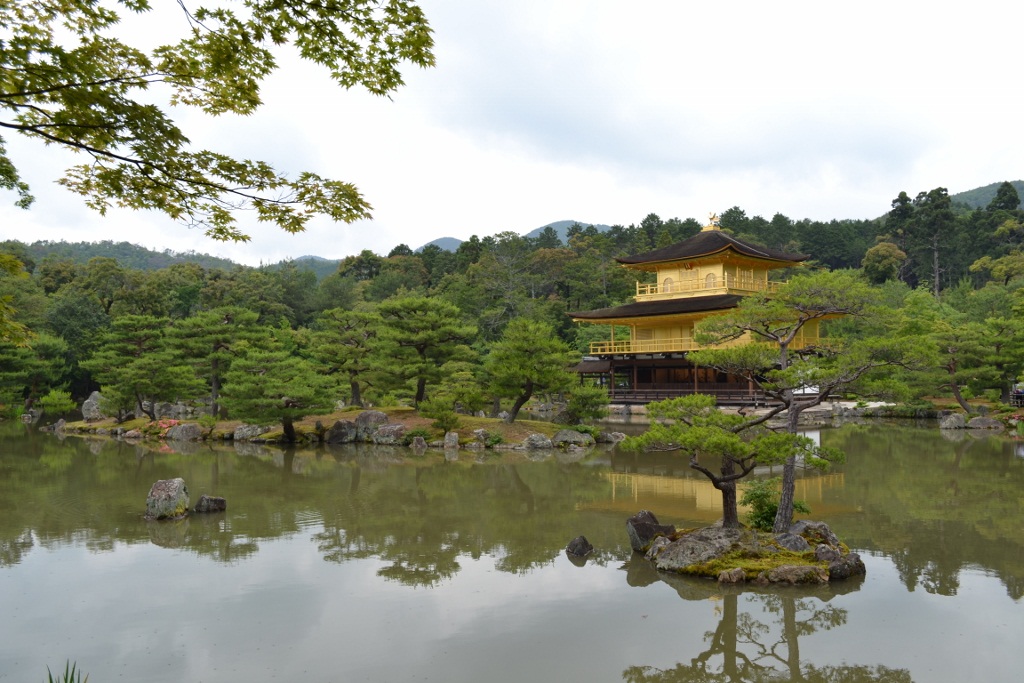
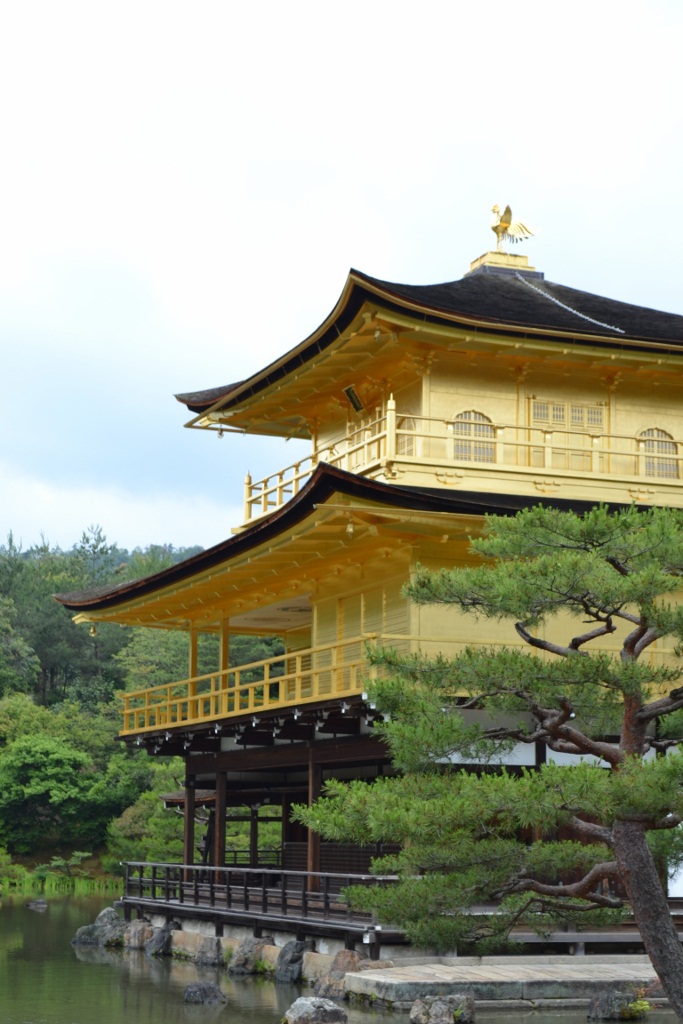
Kyoto’s Golden Temple

The temple is coated in gold leaf, similar to the dome on the capital building in Denver.

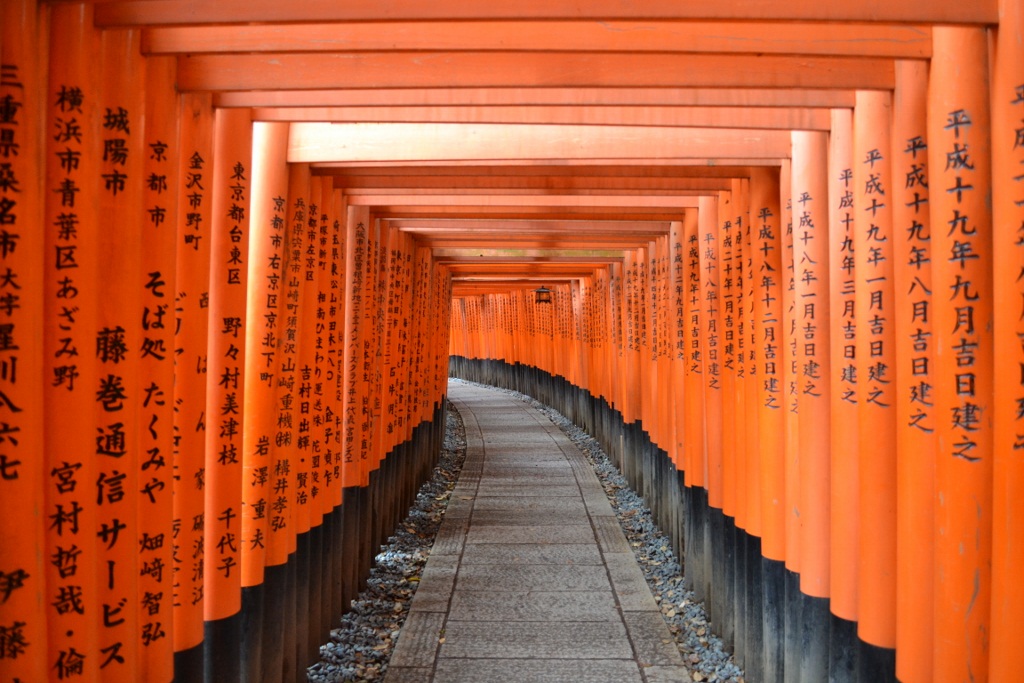
The gates of Fushimi Inari Shrine wound on and on for miles. Each one varies in size and bears the name of the individual or group that purchased it.

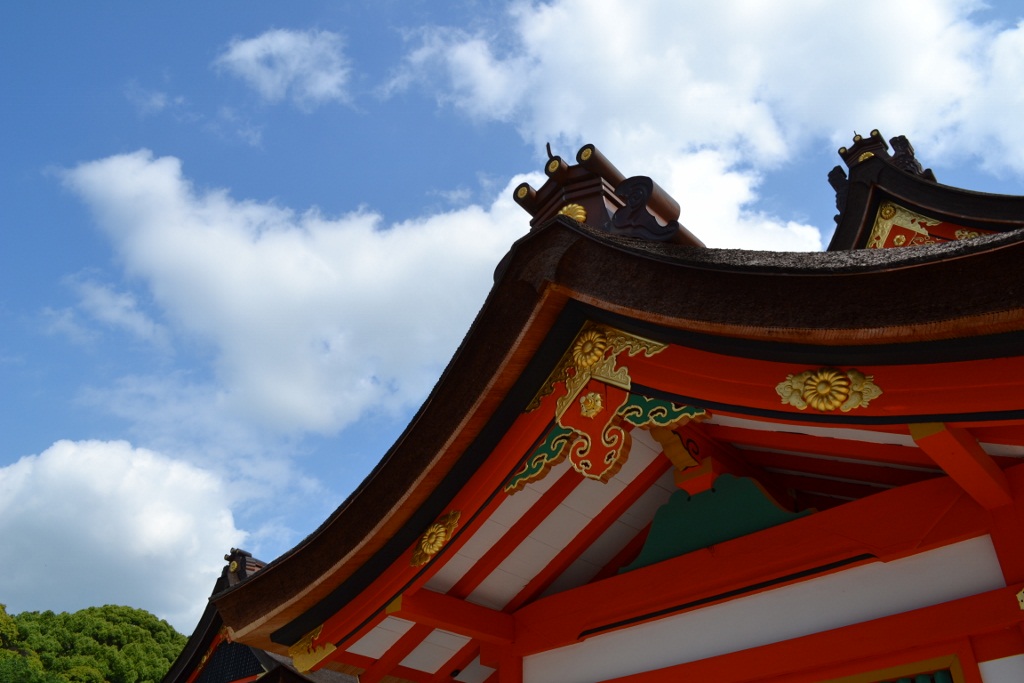
The foremost structure at Fushimi Inari Shrine.

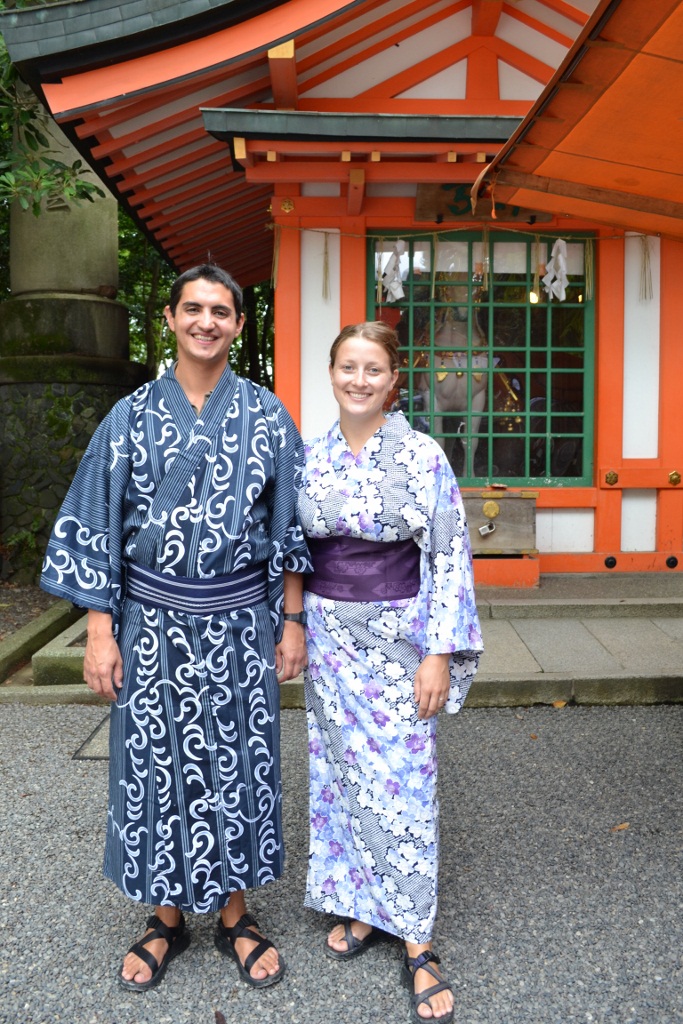
Before walking through the network of orange gates at Fushimi Inari, Patricia convinced us to dress up in traditional garb at a kimono vendor’s stall. We had no intention of purchasing kimonos, but after we got all decked out, the thought crossed our minds. While they would have been fun Halloween costumes, we eventually realized that they would have collected dust 99% of the time.

Dress up time

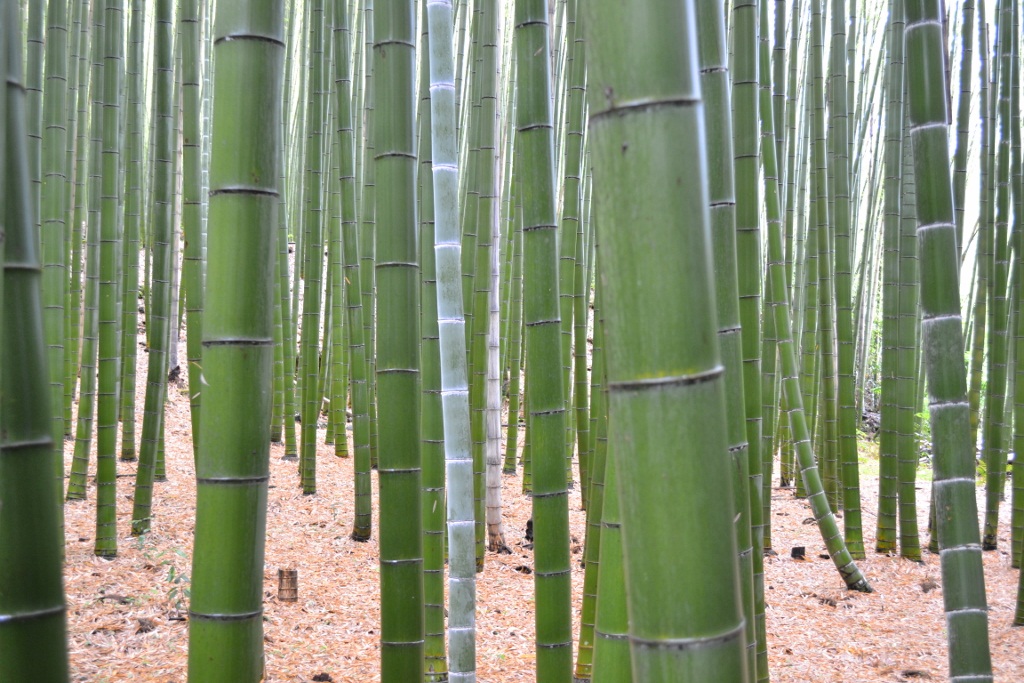
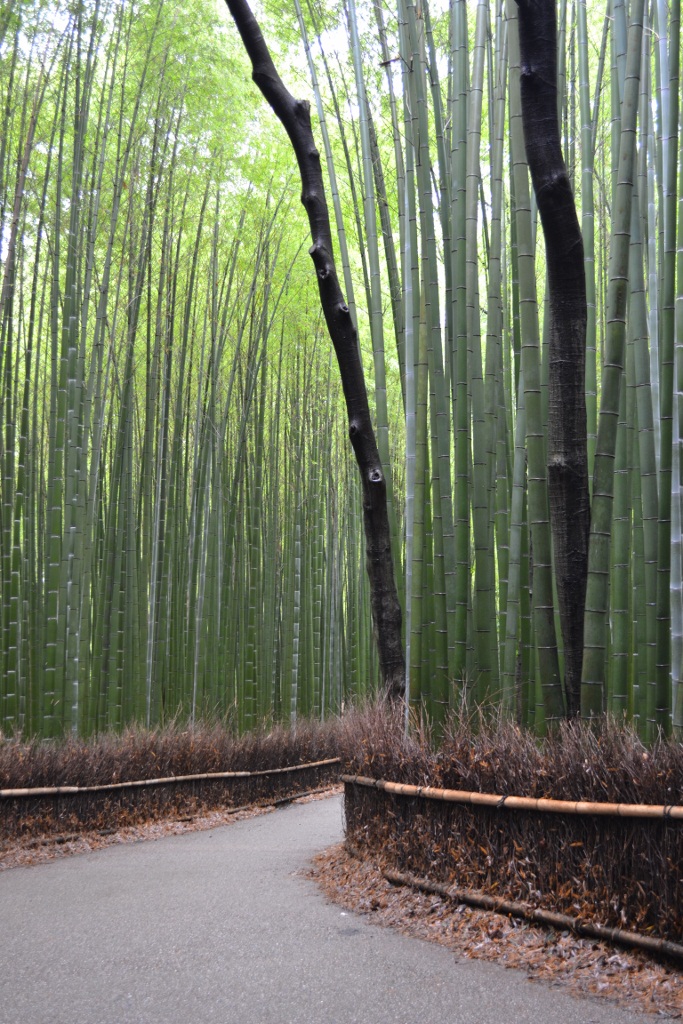
Another highlight of our visit to Kyoto was our trip to Arashiyama. We learned about this neighborhood of town from our hostel’s “things to do” board. At a first glance, it seemed like nothing more than something to do on a rainy day; however, it turned out to be one of our favorite places in Kyoto. The paths that make their way through the area are canopied by a forest of bamboo.

Seemingly endless grove of bamboo trees.

The trees towered so high that they drooped over the path to create a natural canopy.

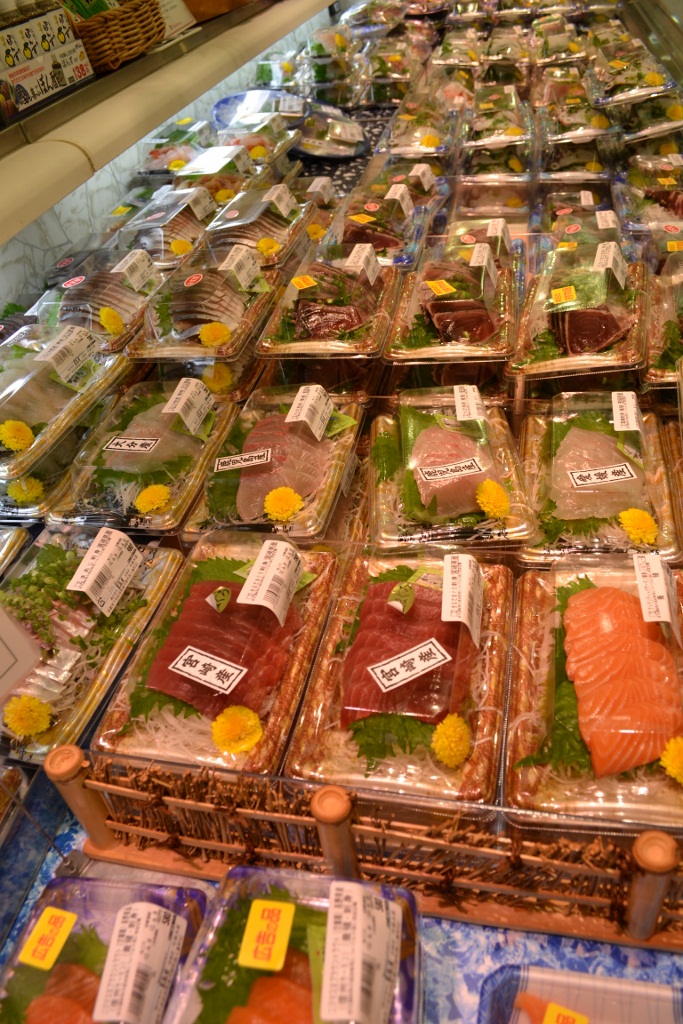
Last but not least…the food. A post on The Chamborres Expedition is not a post without writing about the cuisine of a city. We took a suggestion from a friend and sought out a grocery store located in the basement of a department store. We know that doesn’t sound like an exciting culinary adventure, but trust us, some of the best and most affordable sushi in the world can be found in such places. We scoped out our dinner selection early one morning, but lucked out by returning after 6:00PM when much of the sashimi was marked down 20 and 30 percent. No one wants day old sushi.

Sushi, anyone?

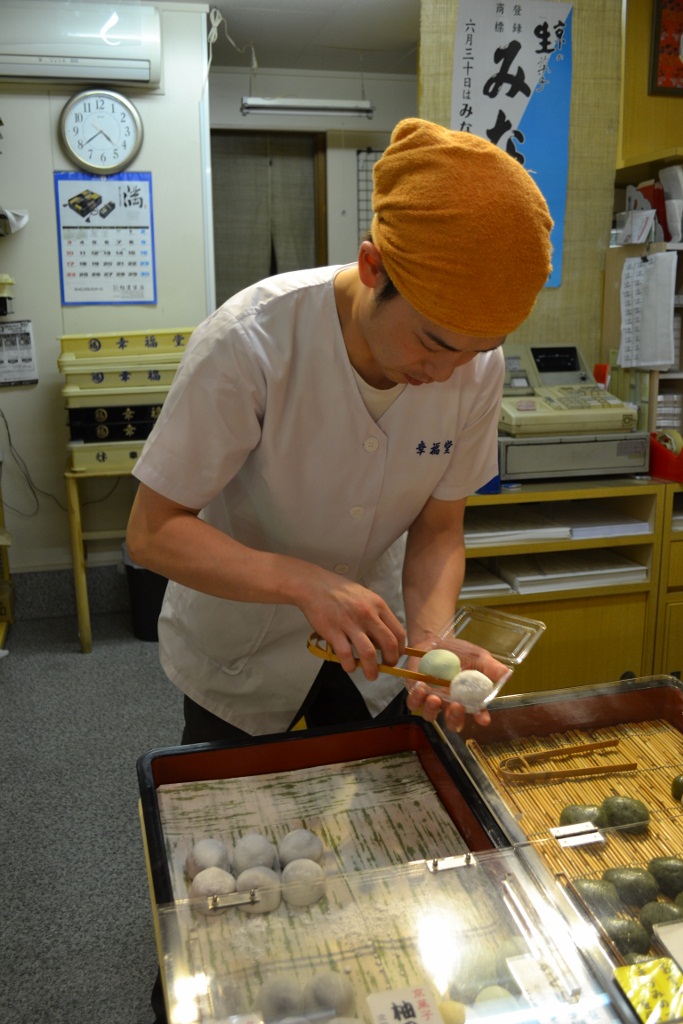
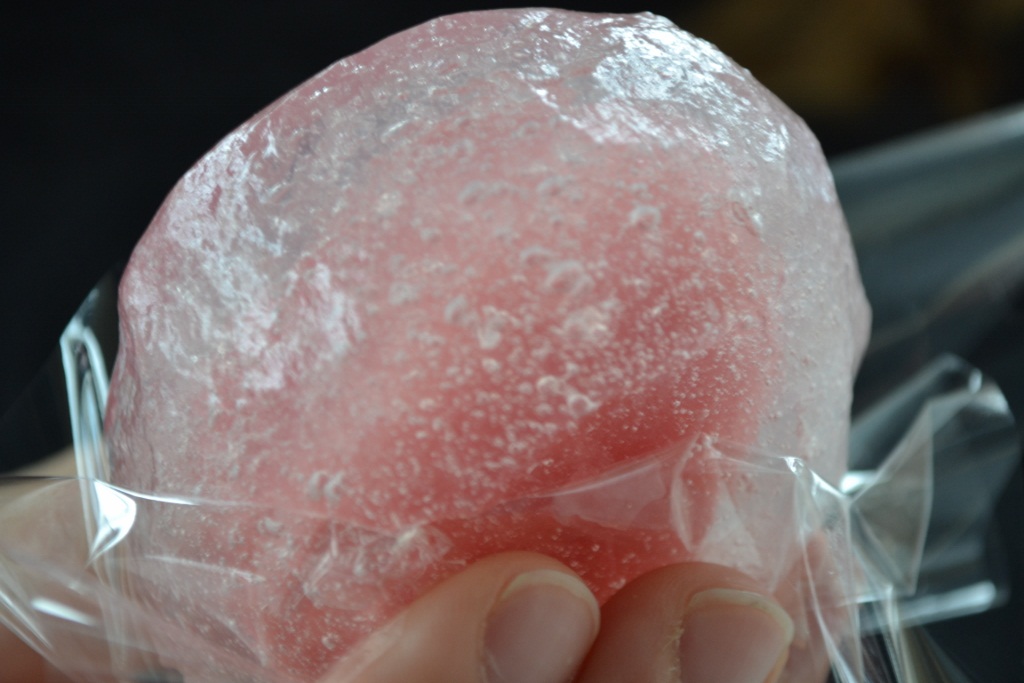
Everything in Japan is an art form, even the desserts. We were continually impressed by the presentation of products in the artisan sweet shops. The colors, textures and designs are a treat to the eye.  Having only known the deliciousness of mochi from home, we were amazed by the taste and freshness of the ones in Kyoto. At over 150 yen/piece, they are not cheap, but they are an incredibly delicate and subtle way to end a meal.

Hand-made mochi at Nishiki Market

Funky see-through mochi

Yesterday, we overheard another traveler saying, “I am so happy, it was something I have always wanted to do.” That is exactly how we felt when we arrived in Kyoto. We have always wanted to visit Japan, and exploring Kyoto was the perfect way to start our visit. It allowed us to see the temples of old, experience the food of today, and get a glimpse of the trends of tomorrow that awaited us in Tokyo.

Read Full Post »

« Newer Posts - Older Posts »