Feeds:
Posts
Comments

Archive for the ‘Europe’ Category

Surprise! We’re in Vienna. Well, technically speaking we are in Hungary now, but we were in Vienna.  We had no intention of visiting Austria during our RTW trip, but had to in order to get to our desired destination, Budapest. It took four hours, a bus and two trains from Český Krumlov, but before we knew it, we had arrived.

Vienna was a lovely surprise. Granted, we did spend our only full-day of sightseeing slightly hung-over, but you have to make sacrifices sometimes, right? Life is short. Two Americans, one Korean-born Australian and one Argentine in Austria = a jolly good time. Jägerbomb anyone? We have no idea where Diego and Lisa are now, but we wish them safe travels.

So, what did we see on this glorious day in Vienna, you ask?

Naschmarkt

An incredible outdoor market that stretches on for blocks, with stall after stall of flowers, spices, pastries, sipping vinegars, produce, meat, seafood, and more. Most importantly, it provided a much needed hummus fix for Amy.

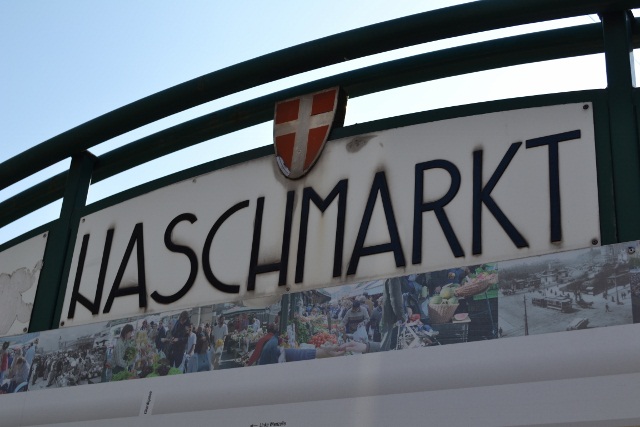
Naschmarkt entrance. You can read about the history of this market here.

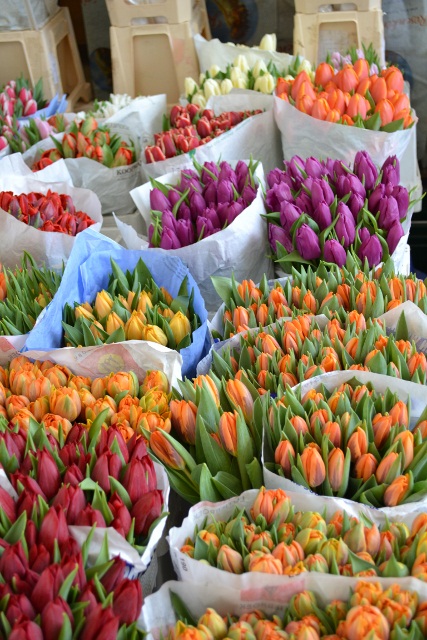
Colorful tulips. Christina, I was thinking about you when we walked by this stand.

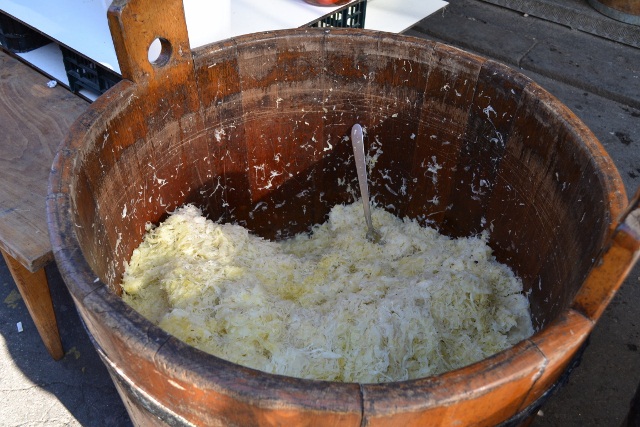
That’s a lot of kraut!

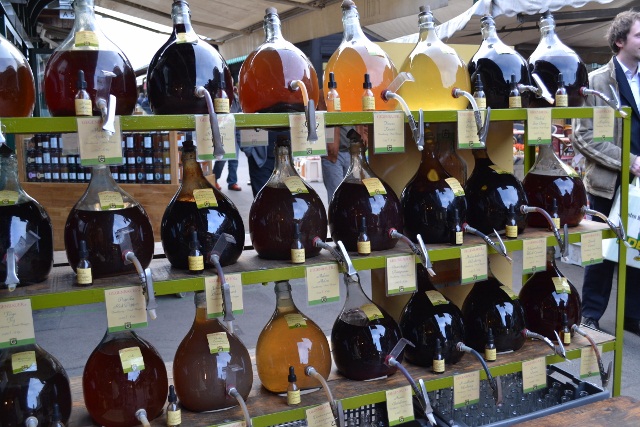
Rows upon rows of tasting vinegars

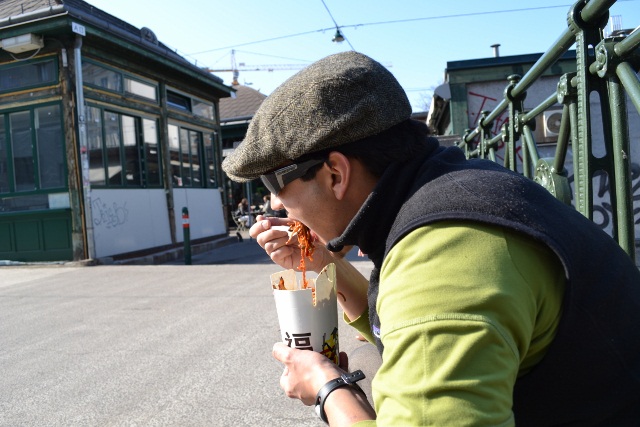
An interesting observation we made in Vienna is that Austrians are constantly eating on the go; there are countless food stands strewn across the city, and it seems as though every third person you see is eating on the move. Anyone giving Americans a bad rap this behavior should visit Vienna. Naturally, we had to give eating Vienna-style a try, so picked up some fantastic noodles-in-a-box from the Naschmarkt.

Yum.

Ringstraße

The heart of Vienna is encircled by roads that are collectively called Ringstraße (Ring road). We spent a few hours walking it and were astounded by how grandiose everything is; architecturally it is one of the most impressive European cities we’ve seen thus far. Pictures simply do not do it justice. It is quite an experience to literally be stopped in your tracks by the magnificence of a building, every single block, for five straight kilometers.

The Austrian Parliament Building situated on Ring road

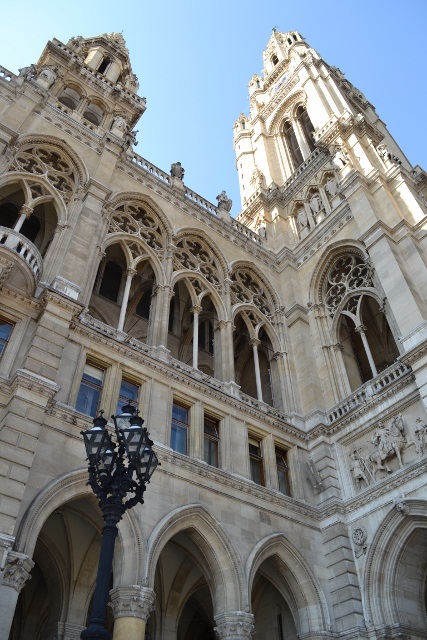
The Vienna City Hall, also located just off of Ring road

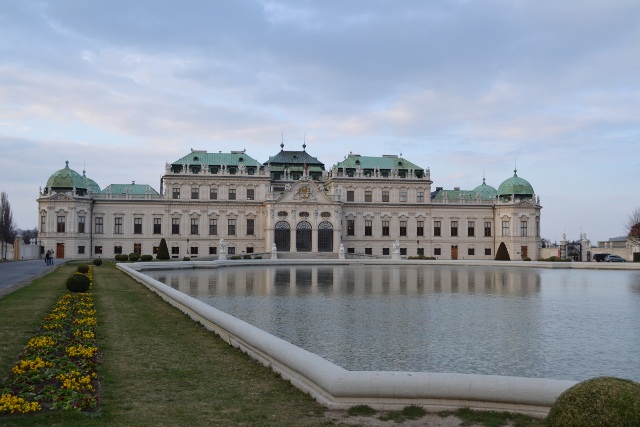
The stunning Upper Belvedere Palace, near Ring road

People Watching

Honestly, no place we visit is without this activity; however, people watching in Vienna seemed to be of particular interest. Every park had a sign posted that attempted to communicate “do not walk on the grass” with stick figures, but none of them seemed to get the point across. There were bodies littering the grass and soaking in the afternoon sun; ideal for people watching.

All in all, our less than 48 hours in Vienna were pure and simple fun. We didn’t feel obligated to do and see everything since our time was limited. Hell, we didn’t even have Viennese coffee. What we did manage to do was get a pleasant taste of the city that left us wanting more.

Read Full Post »

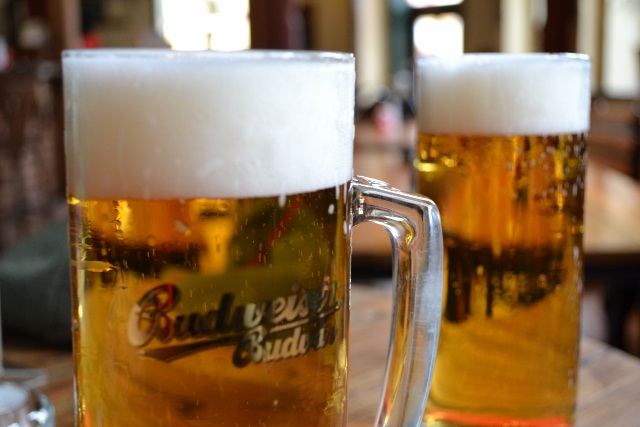
Ever heard of Pilsner beer? How about Budweiser? Unless you have been living under or rock, the answer is likely yes. Our journey into the heart of Czech beer country led us to the birthplace of Pilsner and the home of the original Budweiser beer. As beer lovers, it was a lot of fun to tour the Plzeňský Prazdroj brewery (a.k.a. Pilsner Urquell) in Plzeň and check out the Budweiser Budvar facility in the town of České Budějovice; that being said, our vote for best beer in the world remains with American craft brewers. Sorry Czech Republic, but the creativity and variety of beer in the States is simply amazing.

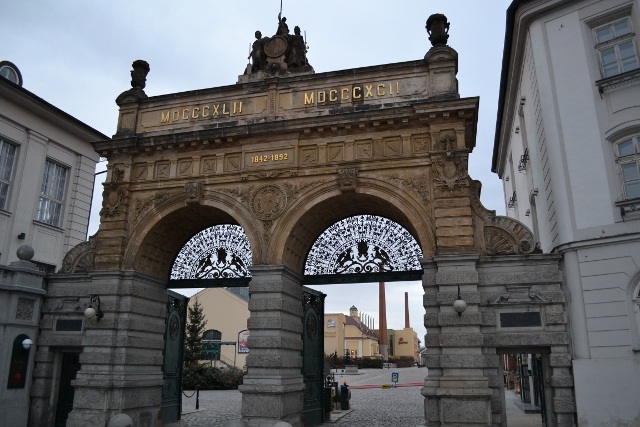
Gates leading into Pilsner Urquell

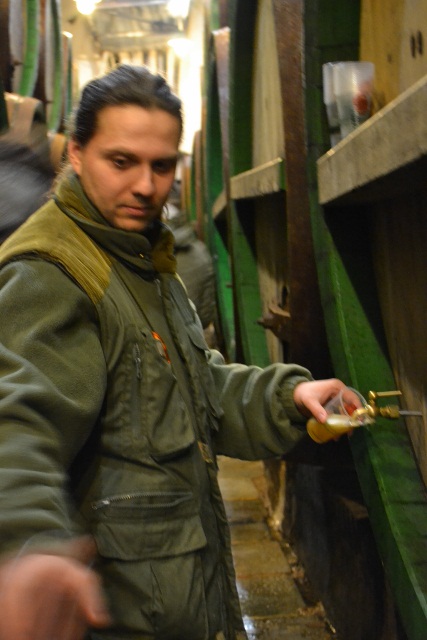
Tasting unpasteurized, unfiltered Pilsner Urquell straight out of the barrel. Only place you can get this stuff on earth.

Nice and heady Budweiser Budvar. We prefer less foam, but when in Rome…

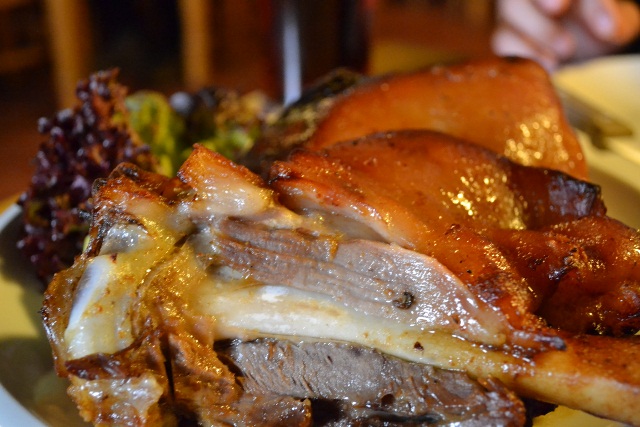
While the Czech Republic was not the beer mecca we had envisioned, our route was still filled with many other delights: among them, the pork knee and Czech hockey. A knee may not sound very appetizing, but don’t knock it till you’ve tried it. Mike became nearly obsessed with trying this traditional Czech dish after watching an episode of No Reservations; when he finally got his fill in Plzeň…well, you might just say he was in “hog heaven.”

Roasted pork knee (not pictured: Mike, drooling)

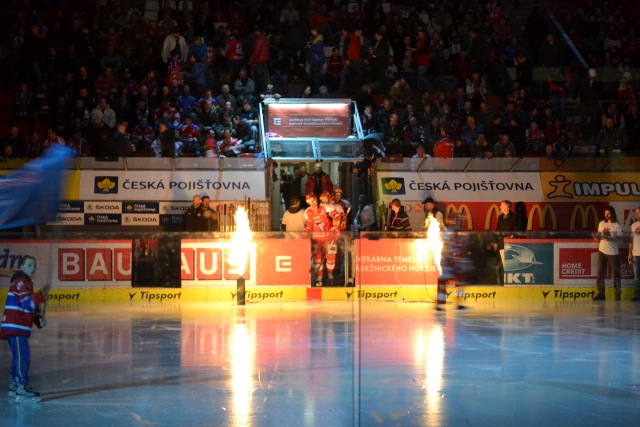
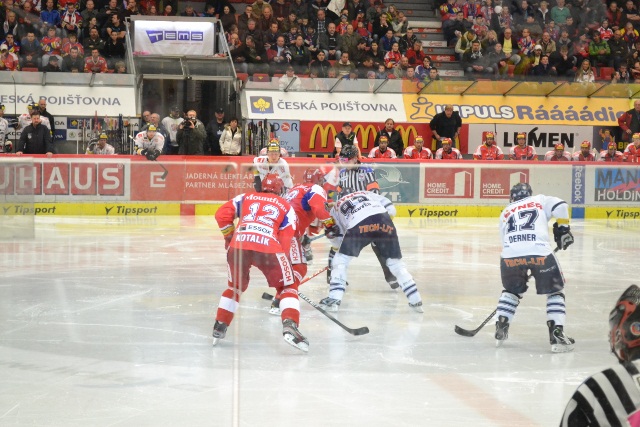
In most of Europe, and the world for that matter, football (soccer) is the king of sports. Not the case in the Czech Republic. Hockey reigns supreme. By pure chance, our visit to the country coincided with the playoffs of their pro hockey league; so, we decided to check out a game in České Budějovice. What a time. Football may not be the Czech sport of choice, but the fans are no less enthusiastic: drums, horns, flares, and all.

HC Mountfield vs. HC Liberec at Budvar Arena

Face off following one of the many fights that broke out on the ice that night

The Beer Route through Plzeň and České Budějovice was great, but the real gem of our trip to southern Bohemia had nothing to do with beer at all, it was a small town called Český Krumlov. For many it is just a day trip from České Budějovice, but we made a long weekend out of it. Learning from the many expats that we met during our visit, we took to calling it “The Krumlov,” and we must say that we think it is one of the most photogenic places in Europe.

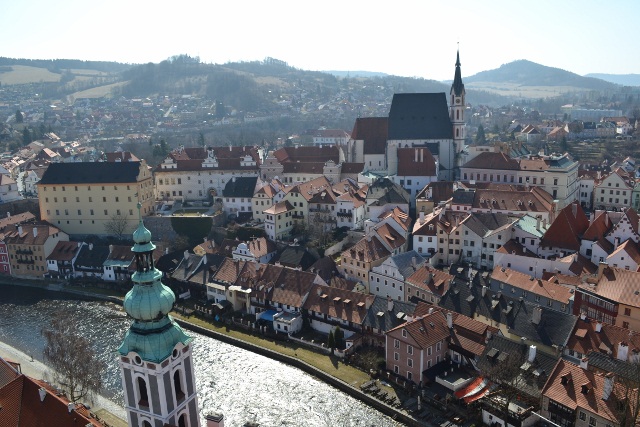
Český Krumlov from the castle tower

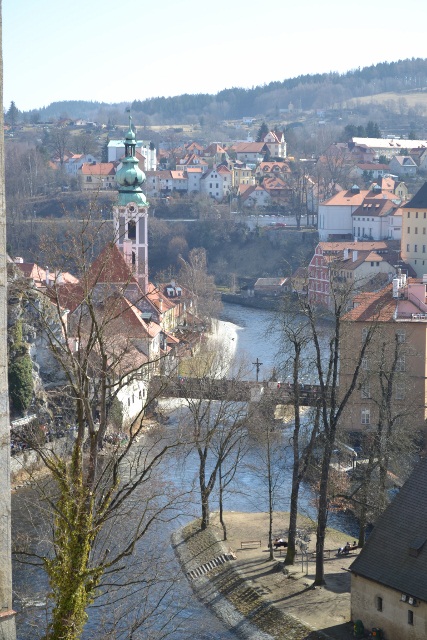
The Vltava River winding through Český Krumlov

In addition to its looks, The Krumlov captivates you with its charm and slow-paced way of life. Just as the Vltava River delicately bends and curves around the old town, locals and tourists alike seem to walk a step slower than in the rest of the Czech Republic. Stores close at 6pm during the week, before noon on Saturday, and are closed on Sundays. At dusk, your senses come alive as a haze fills the sky from wood fired stoves; you can smell the evening setting in as fires warm the quaint village homes.

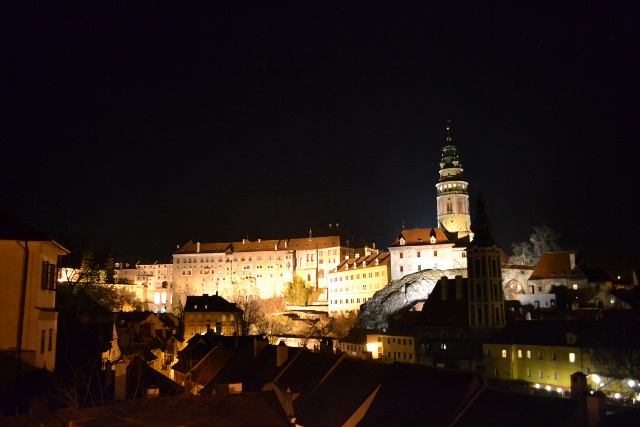
Český Krumlov Castle all lit up at night

During the day, the town seems torn between two worlds. Many streets are lined with gift shops and tour groups are common, but turn the right corner and it feels like you have traveled back in time to medieval Europe. The castle moat is still guarded in the same way it has been for centuries. Forget the armed guards, try live bears!

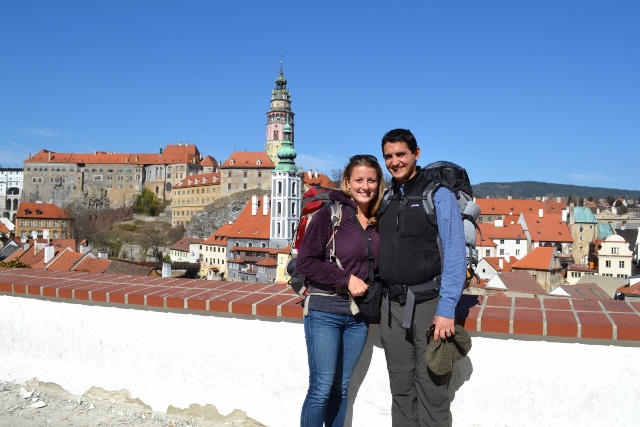
One last picture in The Krumlov

It seems that as we let go of planning and set itineraries, we stumble upon more hidden travel destinations. At first, traveling in this style had us both a bit on edge, but with each passing day, we are beginning to appreciate the true sense of freedom that it brings.

Read Full Post »

Sometimes bad weather is a blessing in disguise; allowing you to get chores done, or serving as an excuse to just be lazy. Rainy, dreary Prague caused us to try something we had not yet done on our trip, spend the day at a museum. We know it must sound crazy, no museums in two months of travel? If you know us well, you know that we are not museum people. However, we were pleasantly surprised by the Jewish Museum in Prague.

The Jewish Museum is divided into several buildings throughout Prague’s old Jewish neighborhood, including four synagogues, a cemetery and ceremonial burial hall.

We learned that Prague held one of the largest Jewish populations in Europe, which was unknown to us before visiting the museum. During their occupation of Europe, the Nazis destroyed many Jewish monuments and neighborhoods but chose to leave Prague’s Jewish Quarter relatively untouched for the purpose of creating a “museum of an extinct race.” It is chilling to think back to those times. They even shipped Jewish artifacts from across the continent to Prague. Many of these remain, giving the modern Jewish Museum one of the world’s largest collections of Judaic art.

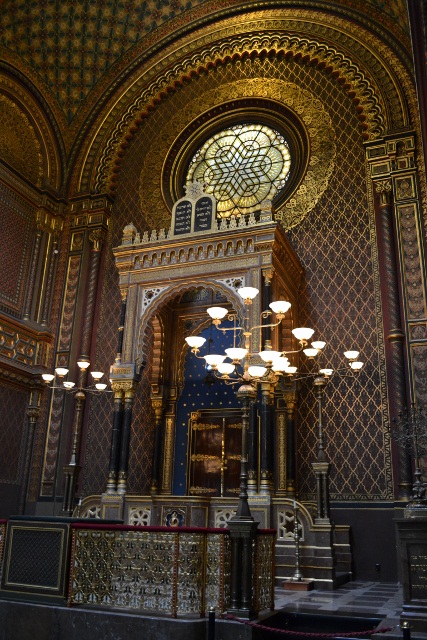
The Spanish Synagogue, interestingly designed in Moorish style

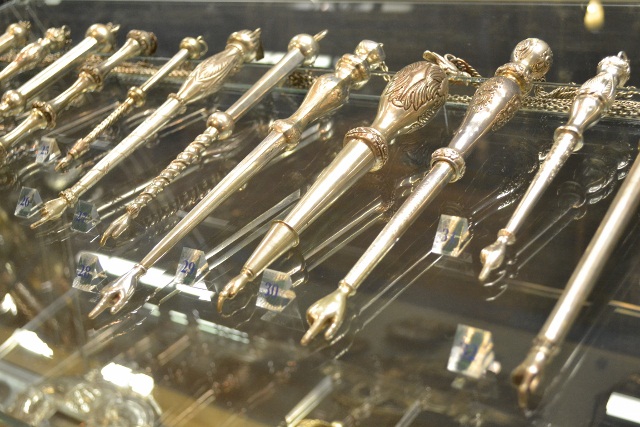
Just a few of the hundreds of Torah pointers on display at the Jewish Museum in Prague

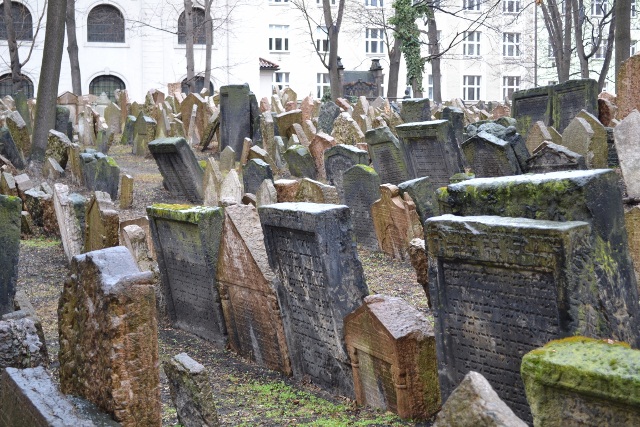
Slanted array of headstones in the Old Jewish Cemetery

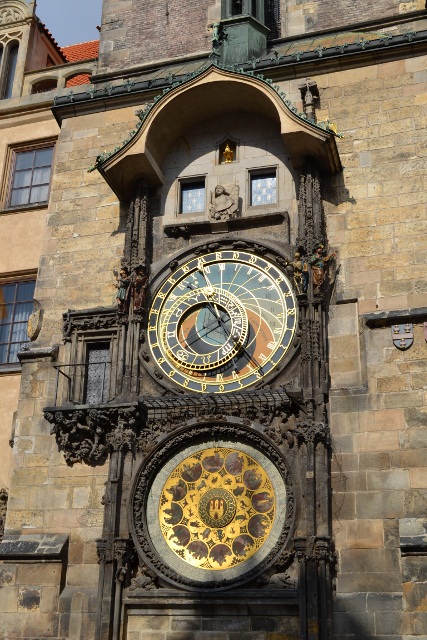
After the clouds lifted, we set out exploring the city by foot. The picturesque buildings, castle and bridges that span the Vltava River give Prague a fairytale feel. Adding to this whimsical atmosphere is the city’s Astronomical Clock. A clock may not seem too cool, but take our word for it; this one is. Not only does it tell the time, date, season, and current zodiac sign, it also gives a really fun show every hour.

The Prague Astronomical Clock just before putting on its hourly show

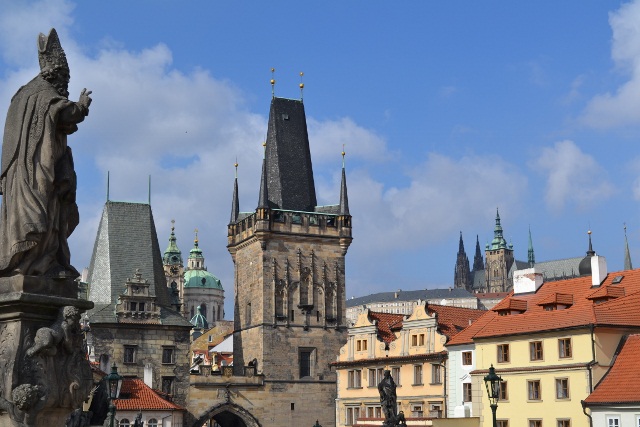
After checking out the old town and watching the clock strike noon, we headed for Prague Castle, crossing over the river on the Charles Bridge. The bridge and castle are said offer great views of the city, and while worth a visit, were a bit too touristy for our liking. We didn’t stick around too long.

Walking over Charles Bridge towards Prague Castle

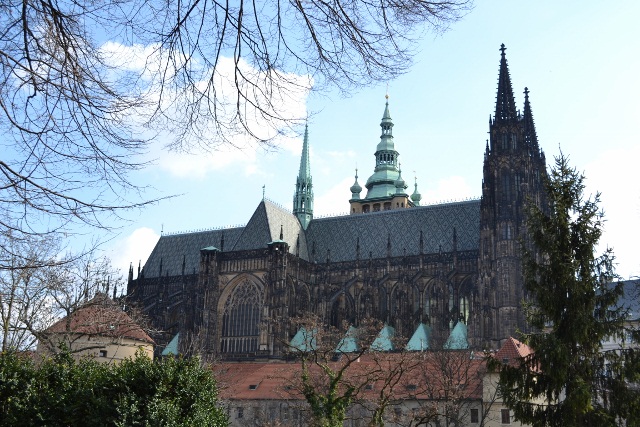
Prague Castle from the backside, as we walk towards the Prague 6 district for lunch

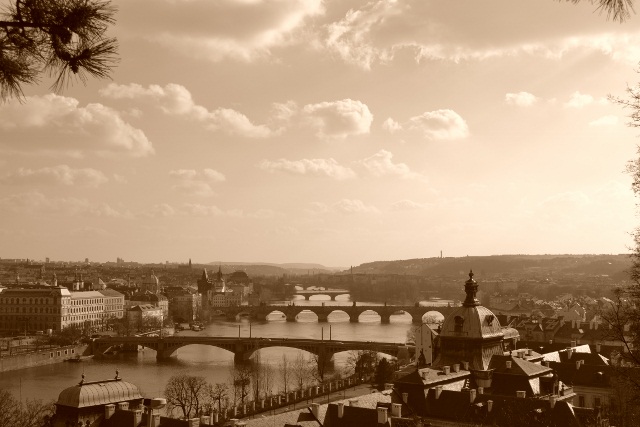
While searching for an elusive beer garden (turns out these are more of a summer thing), we discovered that the real place to get a great view of Prague is from the bluffs of Letna Park. About a 10-15 minute walk from Prague Castle, this park was a perfect place to peacefully soak in the beauty of the city, bridges, and far off hills.

Beautiful view of Prague and the Vltava River from Letna Park

Our original itinerary for the Czech Republic only included Prague, but on a recent flight we had read an article about the Czech Beer Route in a magazine. As beer lovers, we were intrigued to learn more, so we did some research and decided to depart from Prague in the direction of Czech’s famous beer towns of Plzeň, České Budějovice and Český Krumlov.

Read Full Post »

You must be wondering, what is hjem? Maybe a typo? An obscure town in Russia? It actually is the Danish word for home. We flew into Copenhagen on the 28th of February to spend a week with the host family that Amy lived with while studying abroad in Denmark in 2006. Returning to Denmark felt like a homecoming, thus the name of this post.

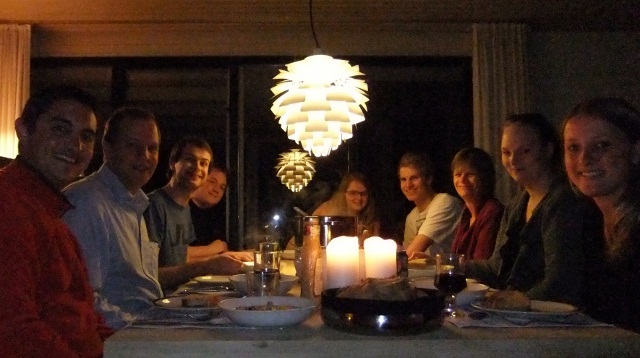
Family dinner in Osted

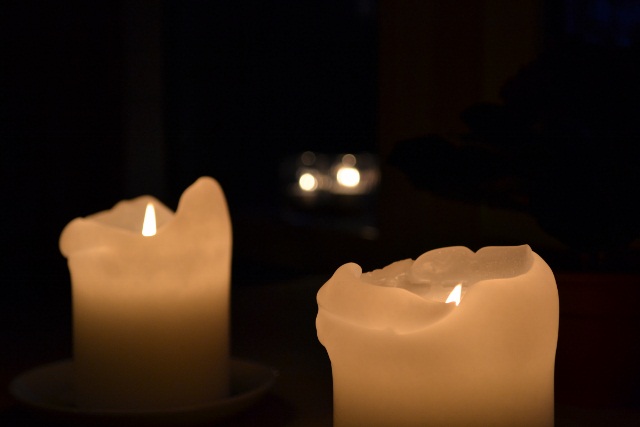
It was such a treat to spend time with Lene, Nils, Mathilde, Daniel, Martin, Sabrina and Mikkel! We enjoyed delicious meals each night with great conversations and lots of hygge. Hygge is a Danish word that is difficult to translate into English because it describes a feeling and atmosphere, not a place or thing. Cozy is the closest synonym, however does not do it justice. When relaxing in a Danish home, surrounded by candlelight, enjoying good company and often food and drinks as well, you get hygge.

Creating hygge at the summerhouse

Having spent five months living in Denmark, Amy had already seen many of the must sees, but one that had not yet been checked off the list was the Changing of the Guard at Amalienborg Palace in København (Copenhagen). We had not intended on going to see this event, but as we were driving through the city one day, Amy’s host brother, Martin, noticed the time and suggested that we stop to check it out. It was a lot of fun to watch especially since we were able to get the inside scoop from Martin, who served in the Danish Royal Guard himself. Click here to watch a video of all the action.

Changing of the Guard at Amalienborg Palace

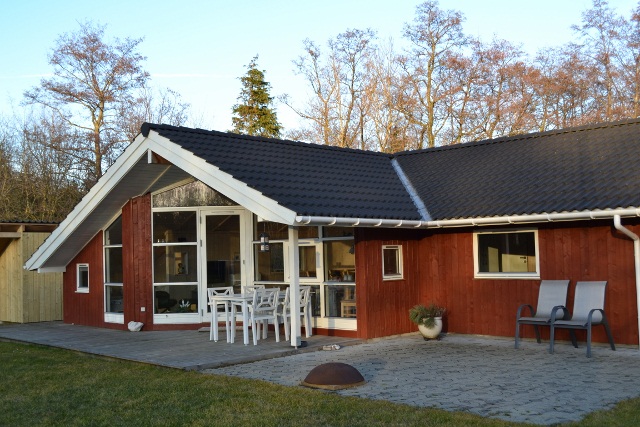
Over the weekend, Lene & Nils, Amy’s host parents, drove us to their summerhouse in northwest Sjælland. It was fun to see the completed house as it was under construction when Amy was living in Denmark.

The summerhouse!

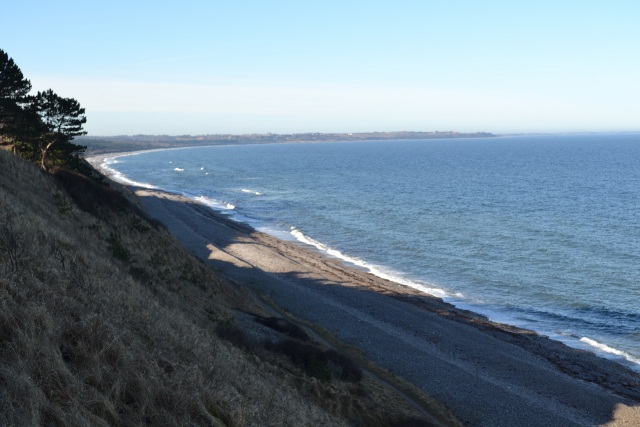
We spent our days Sjӕllands Odde exploring the scenic drives, beaches, viewpoints, and historic sites of the area, which we definitely recommend as a side trip if you plan on visiting København.

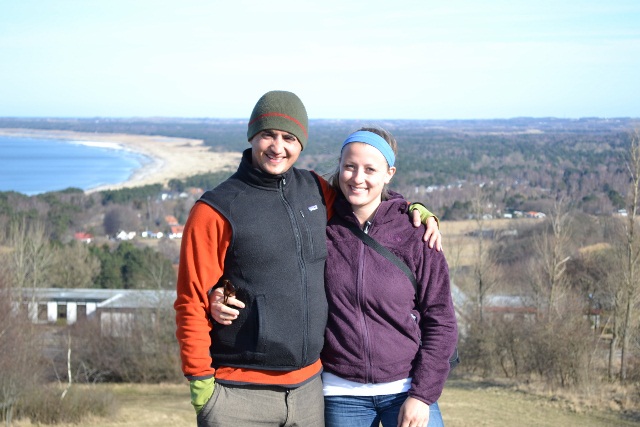
Atop a hill near Asnæs, Denmark – looking out onto Sjællands Odde

View of the beach and sea near the summerhouse

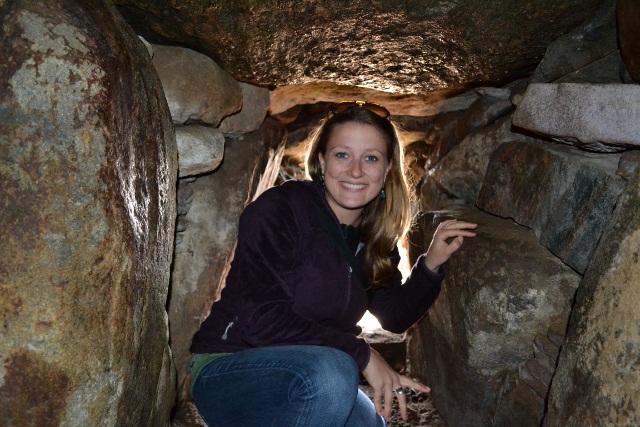
We learned about some very peculiar ancient burial mounds spread out all over the landscape. They date back to the Stone Age, and we visited a well preserved site built circa 3500 B.C. At over 5,000 years old that definitely makes it the oldest building either of us has ever entered.

Amy inside of one of the large burial mounds

In the evenings we retreated back to the summerhouse for some delicious home-cooked meals and hygge time with the neighbors, Leif and Annika.

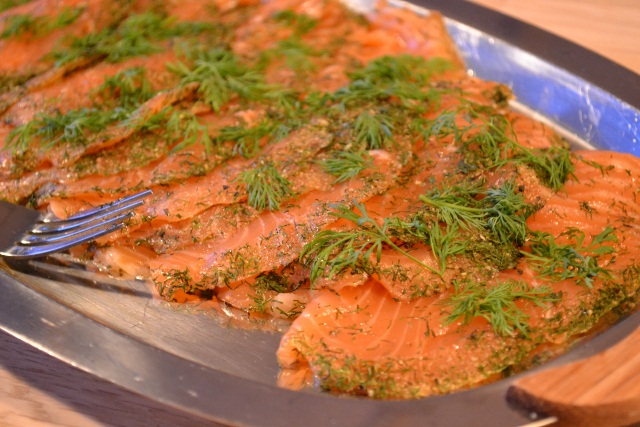
Starter of fresh salmon season with dill. Yum!

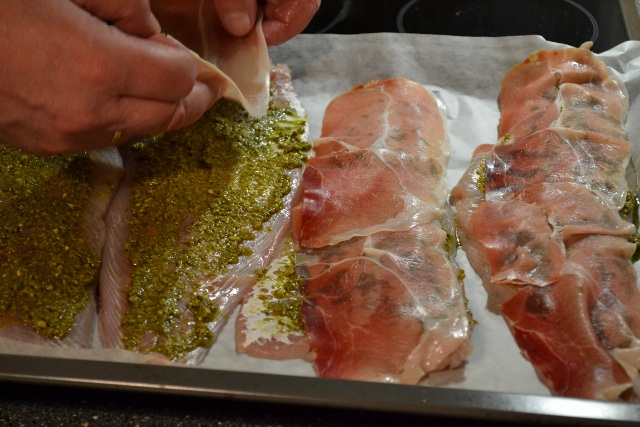
Fish filets spread with pesto and topped with prosciutto

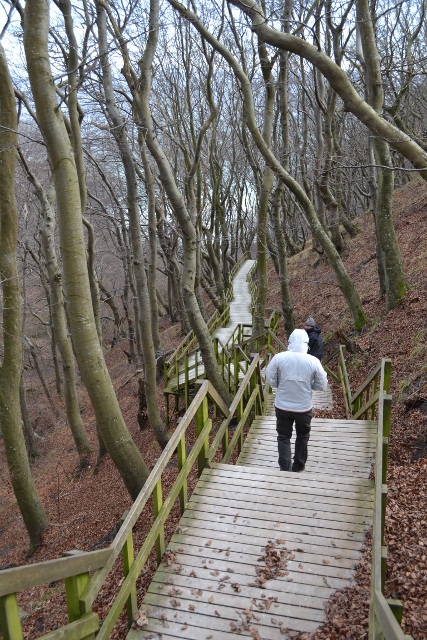
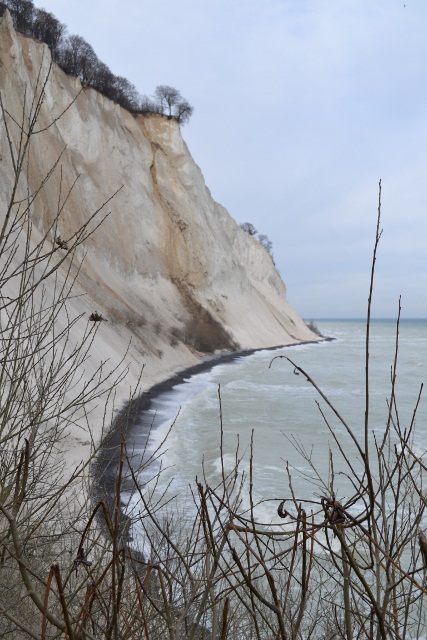
After returning from the summerhouse, we took a day trip to see Møns Klint and visit Lene’s mom on the island of Lolland. Møns Klint is a series of steep, sharp cliffs on the east coast of the Danish island called Møn, another place you should see if visiting Denmark. Descending nearly 500 stairs from the top to the beach below provides a stunning view of these chalk-white cliffs.

Stairs leading down to the beach of Møns Klint. Easier going down than back up again.

Chalk cliffs dropping into the sea

After driving from Møn to Lolland, we ended the day at the farm where Lene grew up. All week we had heard stories about “whiskey time,” so were much anticipating arriving to the farm so that we could experience it firsthand. Lene’s parents created this tradition of serving whiskey each day at 4pm to any friend, family member or neighbor who made it to their home in time. We really enjoyed whiskey time and think it is a fantastic tradition to bring people together for the simple purpose of savoring life after a day’s work.

It was more difficult to leave Denmark than the previous countries we have visited because we weren’t only leaving a country we love, but people we love. However, we will certainly be coming back to Denmark time and time again in the future, so instead of saying goodbye, we just said vi ses, which translates to “see you later” in Danish.

Read Full Post »

Upon our arrival in Lisboa (a.k.a. Lisbon), we were excited to find that our “hostel” was more along the lines of a downtown loft. For the first time in nearly a month, we actually felt like we had a home of our own. While there were other rooms, the place was basically empty, and we were given a room with a balcony and an amazing view overlooking Lisboa’s main pedestrian street, Rua Augusta.

Rua Augusta Arch as seen from our room

As difficult as it is to admit, we were feeling our first spell of travel burnout after leaving Porto, and our luck in accommodations couldn’t have come at a better time. We made it to Lisboa exactly one month after beginning the international portion of our RTW trip, and had already stayed in nine different hotels and visited twelve different cities. All that moving around takes a toll, so we spent a good portion of our time being “normal” (making home-cooked meals, reading, playing cards, riding the trams, and just hanging out).

After a few days of recharging our internal batteries, it was time for Carnaval! Parades, parties, concerts, costumes, fun in the sun. What a fantastic event!

Carnaval Lisboa 2012

Carnaval parade in Lisboa

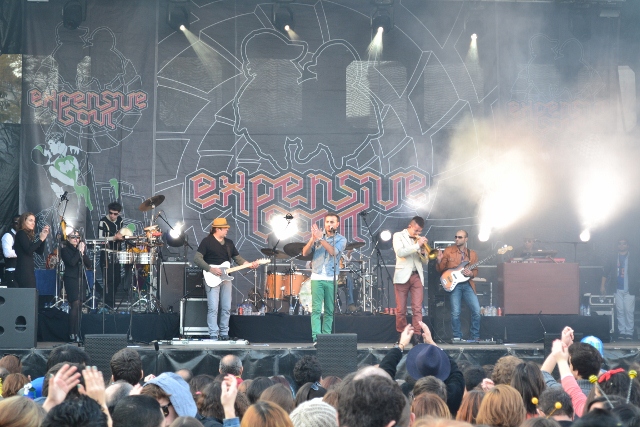
Expensive Soul playing at Rossio Square during Carnaval Lisboa

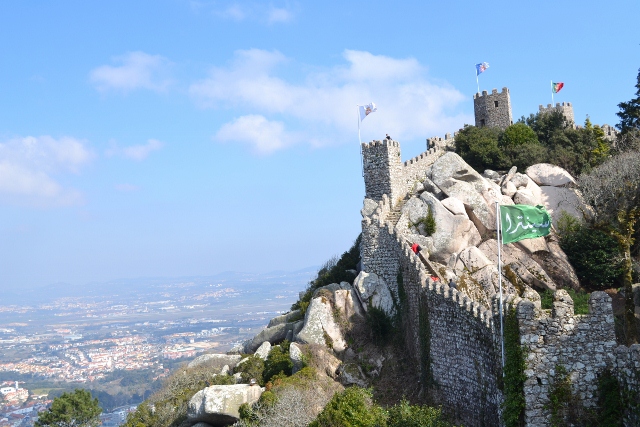
Another must mention of our visit to Lisboa, was our day trip to Sintra. Just a short train ride from Rossio station, this town sits between tall green mountains and the sea. It is also home to two amazing monuments, the Castelo dos Mouros and Pena National Palace and Gardens.

Castelo dos Mouros, overlooking the town of Sintra, was constructed by the Moors in the 8th century

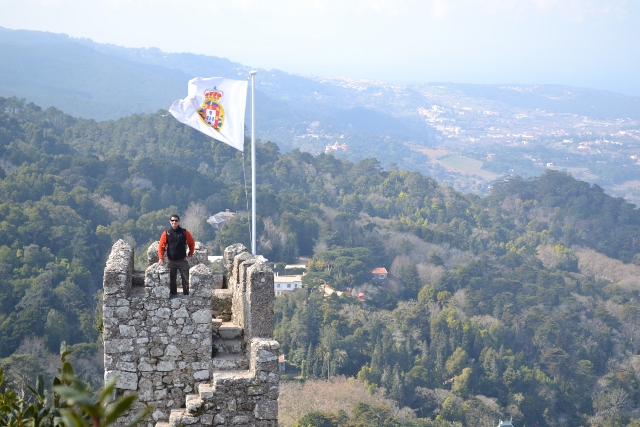
Mike atop a tower at Castelo dos Mouros

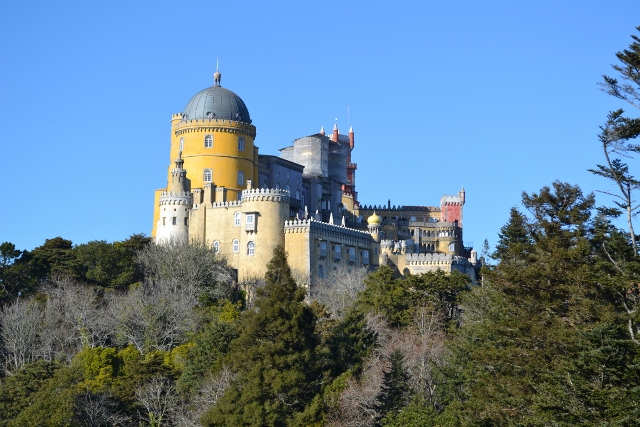
Pena National Palace

View of gardens from the Queen’s Balcony at Pena National Palace

While we are certain that Lisboa could be a great city for a single-destination vacation, our travel burnout and ironic timing with Carnaval turned our visit into something a bit different. It felt more like a “stay-cation” in a not so familiar place.

Read Full Post »

A Taste of Porto

We spent three days in Porto, and while we did explore some of the city’s churches and attractions, a good portion of our time there was spent touring port houses and tasting port wine. It is the home of port, after all; the similarity in the nomenclature is no coincidence. Porto is a truly amazing city, but we will be dedicating this post entirely to the wine that bears its name. We hope that the information we share will shed some light on this lesser known wine and help others plan their own Porto adventure.

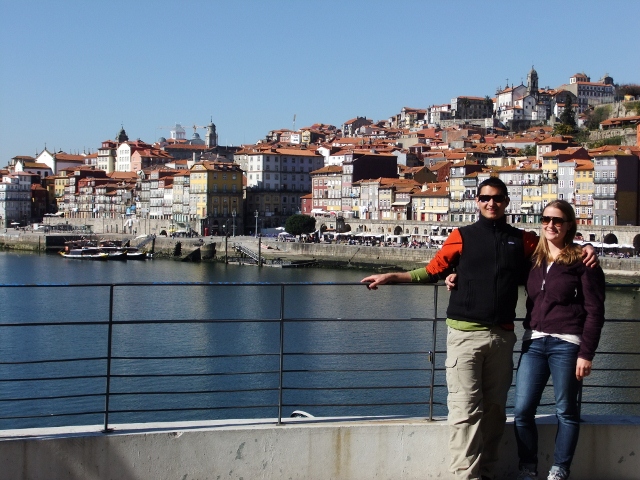
View of Porto from Vila Nova de Gaia

Although it’s called “port” wine, the majority of the port cellars are actually located in Vila Nova de Gaia, the town across the Douro River from Porto. The list of port houses below is by no means exhaustive; however, we feel that it represents the majority of the cellars in Vila Nova de Gaia. There are also maps and signs posted throughout the town to help guide you along the way (especially helpful after a few tastings).

Cálem: Closest port house to the bridge that connects Porto to Vila Nova de Gaia. Paid tour and tastings available.

Croft: Although a bit of a hike up the hill from the river, it is well worth the visit. Free tour and tastings available.

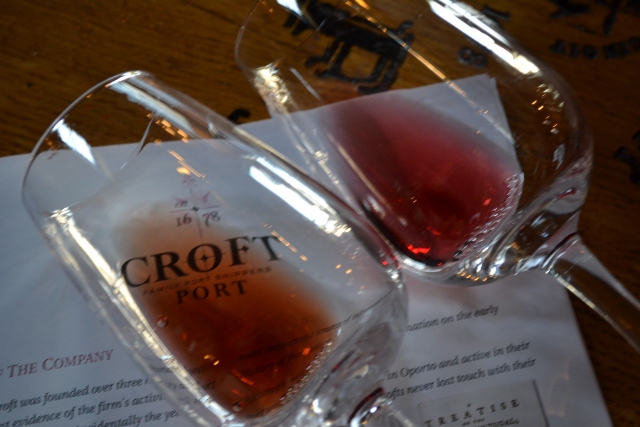
Tasting at Croft port cellar – 10 year tawny (left) & ruby (right)

Ferreira: Known as the Portuguese port wine because it is the only major port company has been continually operated by the same Portuguese family since its founding. Free museum that provides information about the company’s history. Paid tour and tastings available.
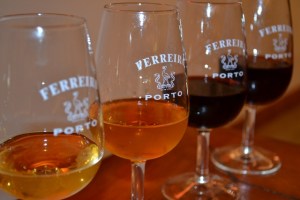
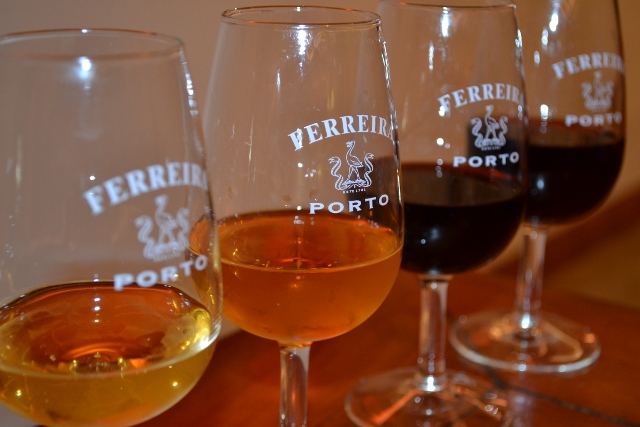
Tasting at Ferreira port cellar – branco, 3 year lágrima, 3 year ruby, 4 year tawny (from left to right)

Kopke: Tasting room only, no tour. Paid tastings available.

Quinta Do Noval: Tasting room only, no tour. Paid tastings available.

Sandeman: One of the world’s largest and most well-known port makers. Free museum that provides information about the history of port wine, the company, and marketing and brand development. Paid tour and tastings available.

Sandeman port cellar

Sogevinus: Tasting room only, no tour. Paid tastings available.

Taylor Fladgate: Free tastings. No tour, although there is an informational video playing in the tasting room. There is a restaurant on the property as well, with an outdoor patio where you can enjoy great views of Porto and the river.

Tasting at Taylor Fladgate port cellar – 2005 LBV

Vasconcellos: Paid tour and tastings available (free if you purchase a bottle).

Wiese & Krohn: Founded by Norwegian cousins, now owned by a Portuguese family. Free tastings. No tour, but there is a small museum that displays traditional port wine making equipment.
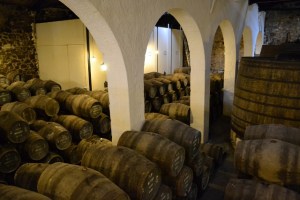
The port wine cellar at Wiese & Krohn

We took tours at Croft and Ferreira, where we learned the basics of port wine. One important lesson that we learned is that to be a true port wine, the grapes must be grown in the Douro Valley, which became a demarcated region (D.O.C) in 1756.

Port wines are fortified and filtered, so unlike table wine, they will not mature in the bottle. When you buy a bottle of port, drink it. Once opened a bottle of port is good for up to four months. The exception to this rule is when the Institute of Port Wine declares a “vintage” year based on the remarkably high quality of grapes from a particular harvest. These wines will age in the bottle and, once opened, need to be consumed within a couple of days.

At this point you may be wondering, why is port wine fortified with brandy? The answer, to get you drunk faster. No, not really. Port wine producers began to add brandy to their wine in order to preserve it better for transport by sea to England, their largest consumer.

The two most recognized port wines are ruby and tawny. Did you know there are more? During our visit to Vila Nova de Gaia, we learned that there are actually several different kinds of port. Below we explain them, in very simple terms may we add, so to learn more, you’ll just have to visit Porto yourself!

Ruby: Made from red grapes and aged for a relatively short period of time in very large French oak casks. The large size of the casks limits oxidation and flavor absorption, allowing these wines to keep a more natural “ruby” color and ripe fruit flavor.

Tawny: Made from red grapes and aged for a longer period of time in small French oak casks. The smaller barrels allow for greater levels of oxidation and contact with the wood. These two elements cause tawny to become amber in color over time and develop deeper sweetness similar to dried fruit or honey.

Colheita: A small category of tawny ports, which bear a harvest date. However, unlike vintage ports, colheita is not bottled right away, but allowed to age in the barrel, sometimes for decades.

Branco (white): Made from white grapes and aged in a similar style to the ruby. These ports range quite a bit in terms of sweetness and some producers even make a style known as “chip dry,” which referrers to a taste that is as dry as a piece of wood.

Lágrima: Made from white grapes and aged in small French oak casks for a longer period of time than white ports. Interestingly, this style of port wine is not commonly exported from Portugal due to the belief that it would not be agreeable to non-Latin palettes. So be sure to get your fix while you’re in Portugal!

Rose: The newest innovation in port wine, roses are technically ruby ports, however, are limited in their exposure to the grape skins during the fermentation process, giving them a lighter color.

Vintage: When the Institute of Port Wine determines that a particular year produced exceptionally great grapes throughout the entire Douro Valley, they declare a vintage year. This occurs approximately twice per decade, with the most recent vintage being 2007. Due to the rarity of these ports, they are quite pricey. Unlike other styles of port wine, which are made using grapes blended from various years, vintages are made only with red grapes from that year. Vintage port wines are bottled after just two years of aging in the barrel and are not filtered, which allows them to be stored and aged further in the bottle. The oldest vintage port available for sale is from 1863!

Late Bottle Vintage (LBV): Very similar to vintage ports, but much more affordable, LBVs are made when a particular winery feels that their grapes are exceptional during a given year. LBVs are not declared by the Institute of Port Wine, however are dated with the harvest year. A great tip is to purchase a LBV with the same year as a vintage port.
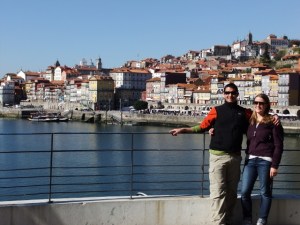
Enjoying a day of port tasting in Vila Nova de Gaia

If you enjoy wine, you should definitely add Porto to your list of travel destinations. Or, for a more affordable alternative, head to the nearest wine shop, pick up a few bottles of port and invite some friends over. We will be adding a glass of ruby, our favorite port, to the end of many meals to come.

Read Full Post »
Lagos was a pleasant surprise. There is no train service between Sevilla and Portugal and a direct bus ride to Lisboa or Porto is quite long, so we decided to enter the country via its southern region, known as the Algarve. Our first stop in Portugal was the small town of Lagos. Initially, we intended on staying only one night as a way to break up the long trip. Just minutes after arriving in Lagos and walking through its peaceful cobbled streets, we knew that we needed to stay longer, so we did.

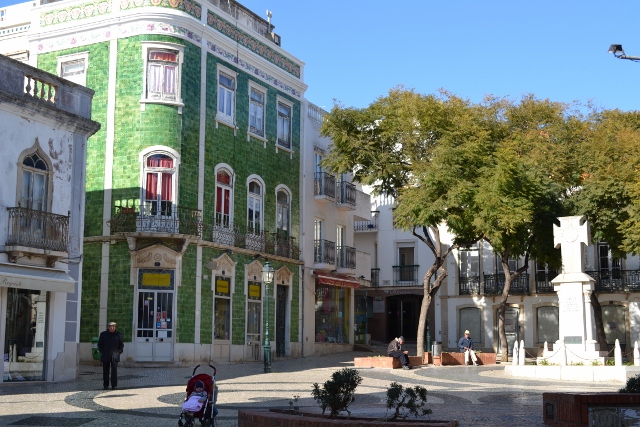
One of Lagos’ many squares

Octopus made of black, white and red cobbles in Lagos. We have found this style of cobble art to be typical of Portuguese sidewalks and pedestrian streets.

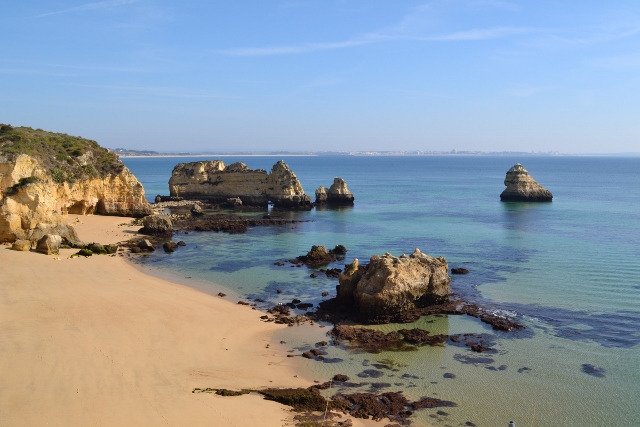
Being situated at the most southwestern corner of Portugal, Lagos is home to some of the most beautiful beaches and stunning seaside cliffs we’ve ever seen.

Cliffs and rocks jutting out of the ocean in Lagos

We spent our entire first day walking the trail from the city center to the Ponta da Piedade, a panoramic viewpoint at the west end of town. We strolled up and down the many staircases, which lead from the cliff tops to the sandy beaches below.

Stairs leading down to a beach in Lagos

Crystal clear (and cold!) water off of a beach in Lagos

Enjoying our hike around Lagos

After arriving, we learned that Lagos was recently featured in the #1 spot on TripAdvisor’s list of “15 destinations on the rise” and we could not agree more. From walking around the town, we could tell that the vibe in the high season is likely much different as there are a number of highly visible clubs and bars throughout the town. We, however, really enjoy the peace and quiet that comes with traveling during the off season. Each local we spoke with was welcoming, friendly and eager to talk.

The truth is that we wish we had more time to spend in Lagos, but the road was calling and we had to keep on moving north to check out the more well know cities of Porto and Lisboa.

Read Full Post »
We chose to take an early morning train from Granada to Sevilla so that we could check out some of the Andalusian landscape along the way. Much to our surprise, seemingly all we saw from the train windows were endless rolling hills covered with olives trees. We had been offered olives with pretty much every meal since arriving in Spain, but hadn’t really connected the dots. Did you know that Spain is the world’s largest producer of olives?!

After arriving in Sevilla, we met up with some friends who are living there as English teachers. It was fun to connect with people we know after nearly a month of solo traveling. No, we’re not sick of each other, but a familiar face always has a way of making you feel at home.

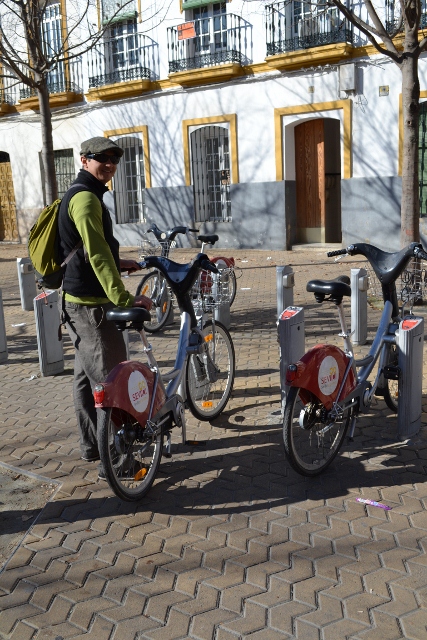
Our main mode of transport while in Sevilla was bikes, via a bike share program called Sevici (for all you Denver people, it’s similar to B-Cycle). Thanks to Blake and Danielle, we were able to use the bikes for free!

Mike checking out a bike at the Alameda Sevici station

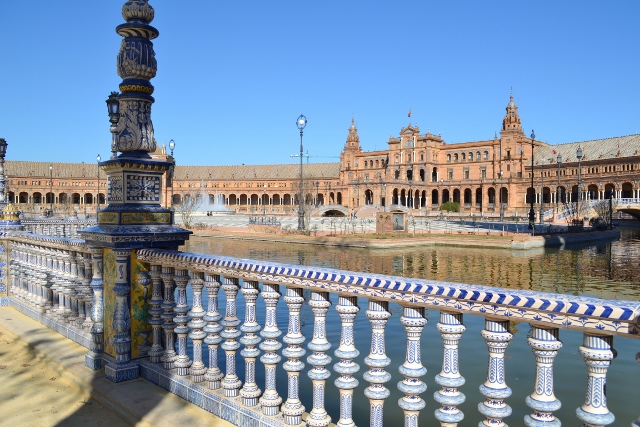
Riding around allowed us to cover much of the city in just a couple of days. A few of our favorite sites were the Plaza de España & Catedral de Sevilla, and we also enjoyed exploring the neighborhoods of Alameda, Santa Cruz and Triana.

La Plaza de España was built in 1928 for a world’s fair. It is surrounded by the beautiful Parque de María Luisa.

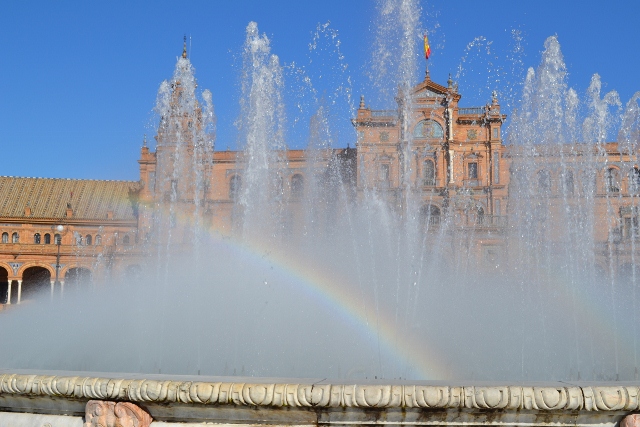
Fountain in the center of La Plaza de España

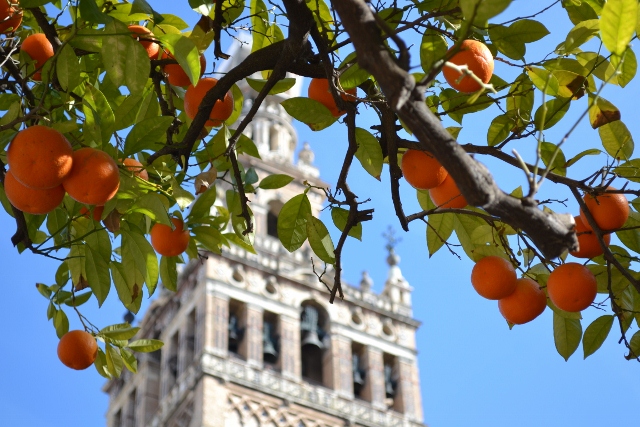
The Giralda Tower, as seen from the orange tree courtyard at La Catedral de Sevilla

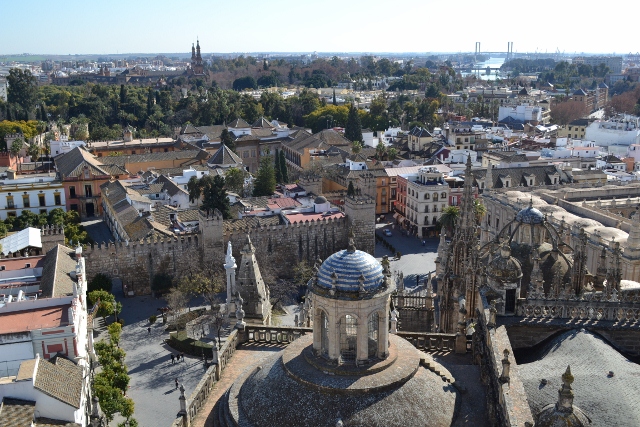
View of Sevilla from the top of the Giralda Tower at La Catedral de Sevilla

Our nights in Sevilla were filled with tapas and flamenco. El Ambigú, which was recommended by Amy’s sister, Jennifer, was a casual place filled with locals and serving delicious tapas (you can read our TripAdvisor review here). Another great tapas place we found for a late night snack was El Rinconcillo, founded in 1670, and in operation ever since.

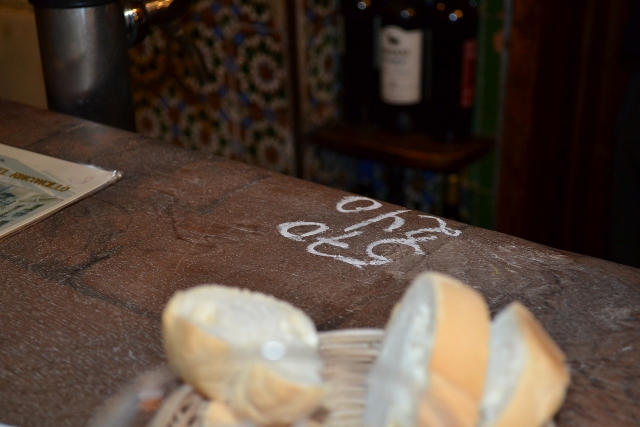
Tapas at El Rinconcillo – we love how chalk is used to keep track of tabs on the bar top!

Flamenco is part of the soul of Sevilla and can be seen everywhere; whether it be a flamenco school, a store selling traditional dresses, posters promoting  upcoming shows, or an actual Tabalo.

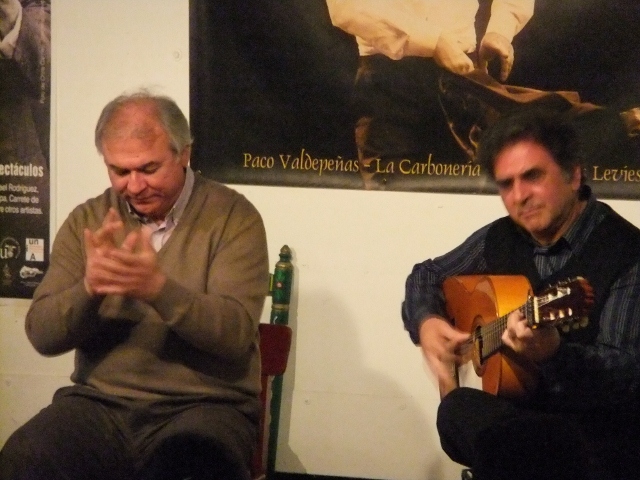
Our first flamenco experience was a performance held at La Carboneria, a flamenco venue in the Santa Cruz neighborhood that offers complimentary shows each night. This venue features ample seating, a fun bar and a casual setting. The show had no dancing, but highlighted the classic cante (singing), toque (guitar) and palmas (handclaps). It was very different but equally as impressive as the second, full blown performance that we attended the following night.

Palmas y Toque at La Carboneria

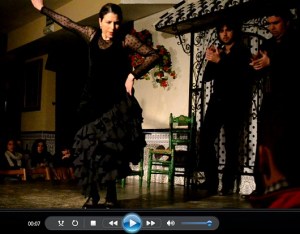
The second flamenco show, held at La Peña Flamenca Torres Macarena, was a much more intimate setting, with a raised stage and a few rows of seating on three sides. We were impressed by the dancer’s intense focus and incredible tranquil speed. Additionally, this show featured two singers which gave the performance a much more robust sound. In hopes of capturing the complex auditory component of flamenco, in addition to photos, we also took a short video which you can watch by clicking on the picture below.

After just under a week in Sevilla, we both agreed to add it to our shortlist of places we would consider living in the future. If you plan on visiting Spain, do not miss this city!

Read Full Post »
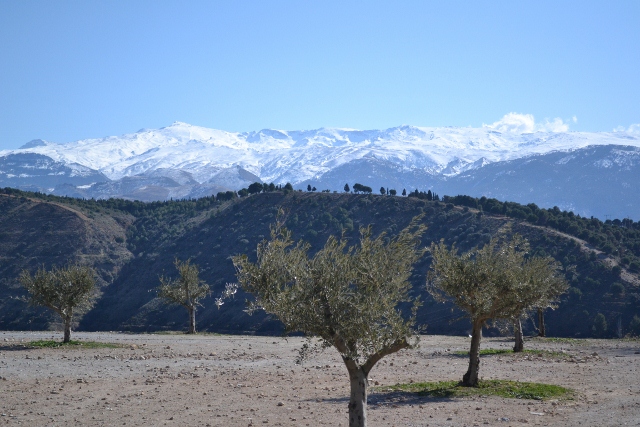
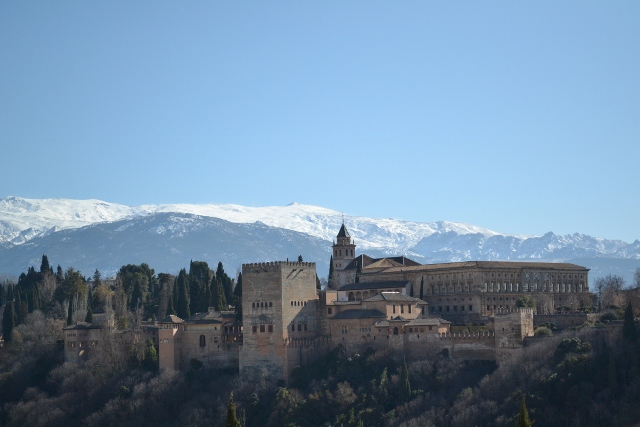
From Valencia, we caught the midnight train to Granada, a first for both of us. Despite opting out of a sleeping car, we were still able to get a solid night’s sleep. When the train pulled into the station in Granada, we were shocked at the sight of snow-capped mountains. Our amazement was not because of their beauty, but due to our breath being taken away by the sting of cold air. Our general assumption had been that moving further south would mean slightly warmer temperatures. Wrong. Apparently Granada is situated at just over 2,000 feet and in a valley between Spain’s two tallest mountains.

View of the Sierra Nevada from Granada

After putting on all of our clothes (yes, that meant multiple pairs of pants, socks, shirts, jackets, hats and gloves), we managed to get warm enough for the walk to our hostel. The weather was the first of many situations to come where we had to just go with the flow. Here are some other examples of our forced flexibility while in Granada.

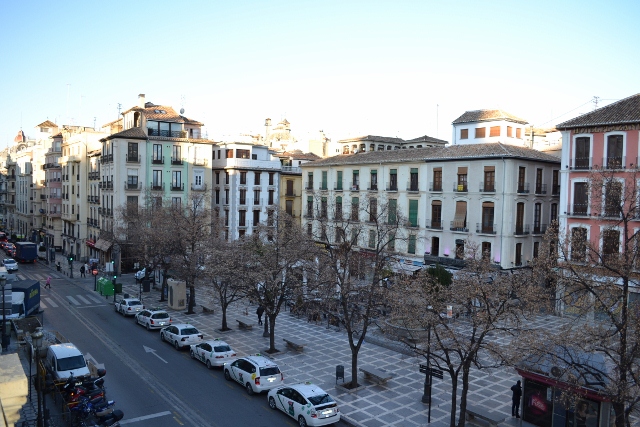
Example #2: We arrived at our guest house and were told that we had been upgraded to a better room! We not only got a private room and bathroom, but the room also had a balcony with a view of Plaza Nueva. Score.

View from our guest house of Plaza Nueva

After basking in the glory of these awesome accommodations, we went to plug in our computer only to find that there were no power outlets. Have you ever stayed in a hotel with no plugs in your room? This could have been expected in SE Asia, but Spain? Last time we checked, Spain was a well developed country. But, we just went with the flow, and used the outlet in the public area.

Example #3: Our main motivation for visiting Granada was to explore the famous ancient city and palaces of the Alhambra, a UNESCO World Heritage Site.

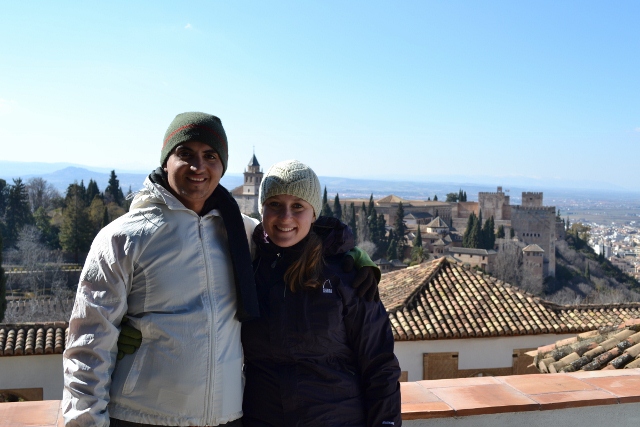
View of the Alhambra from Mirador de San Nicolás

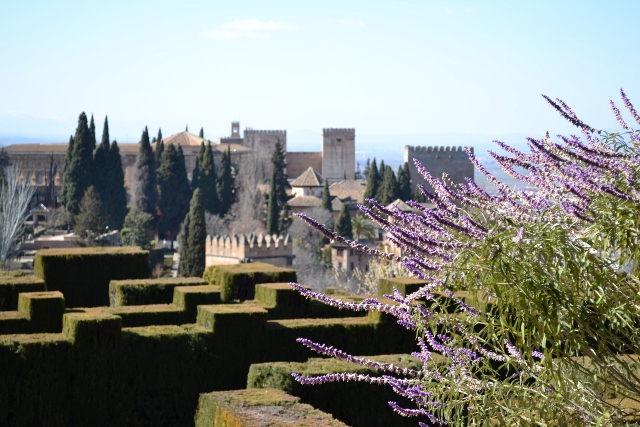
View of the Alhambra from the Generalife gardens

In a perfect world, we would have explored the Alhambra all day, but when we arrived to purchase tickets, we were only able to gain access for four hours. There is a rigid structure of viewing sessions in place to limit the number of visitors so as to preserve this historical site. To visit the main attraction, the Nazarene Palaces, each visitor is provided with a 30 minute time slot. We weren’t given a choice, it was simply assigned. So again, we just went with the flow. If you visit the Alhambra during peak season, we recommend purchasing tickets in advance and visiting during the early morning session.

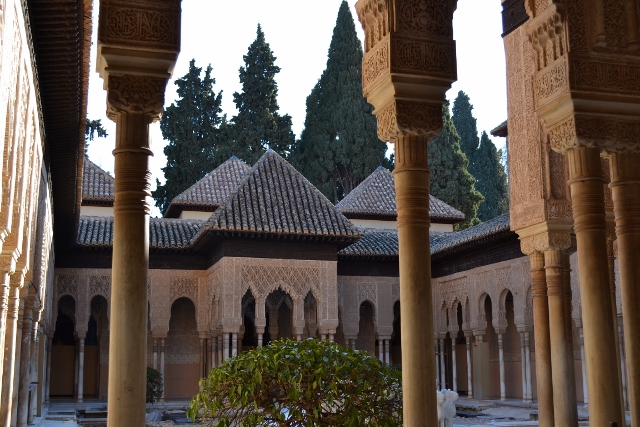
Patio of the Lions in the Nazarene Palaces

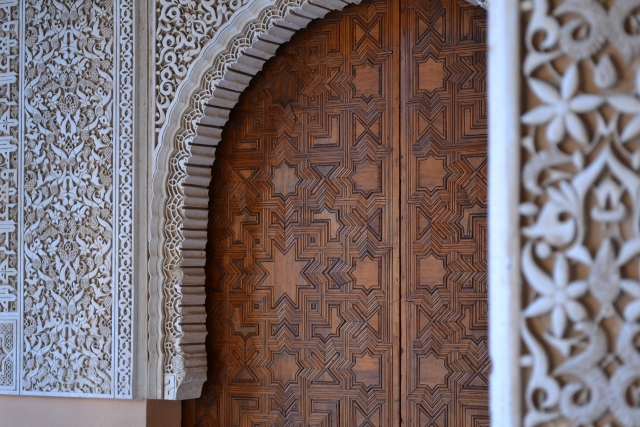
Intricately carved stone and inlaid wood door at the Nazarene Palaces

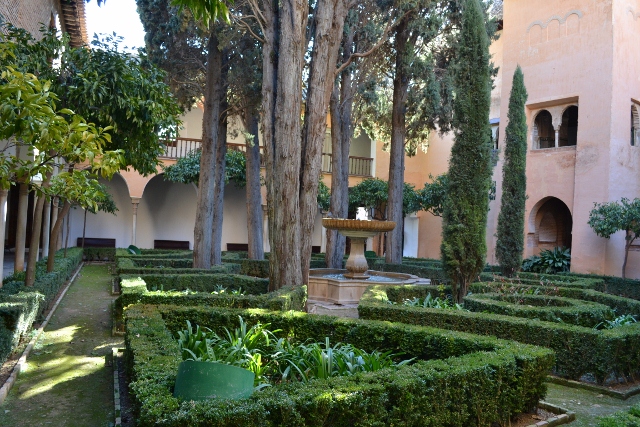
Daraxa’s Garden at the Nazarene Palaces

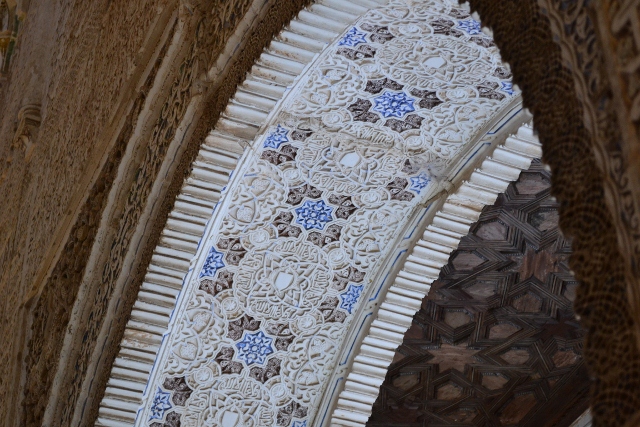
Arch decorated in traditional Moorish style

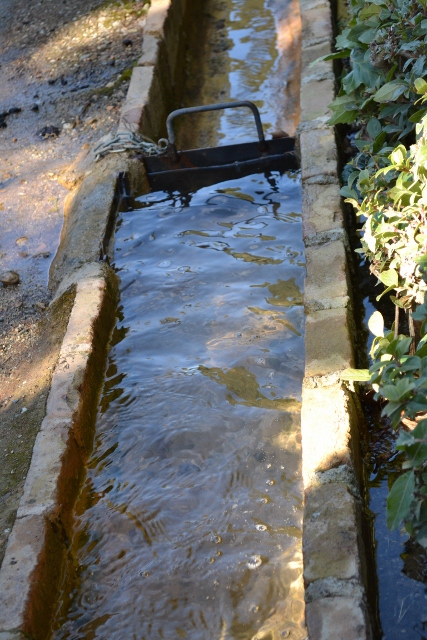
The Alhambra sits on top of a large hill overlooking the heart of Granada. It was constructed in the late 1300s, which makes it even more awe inspiring. The name Alhambra comes from its Moorish roots, literally meaning “the red one” in Arabic, due to the massive red stone walls that surround the city. Aside from the ornately decorated palaces, we were continually impressed by the extensively planned and still functioning irrigation system, which carries water from the mountains down through the city, to fill fountains, provide plumbing and nourish gardens.

Aqueduct at the Alhambra, gated to divert water towards specific plant beds

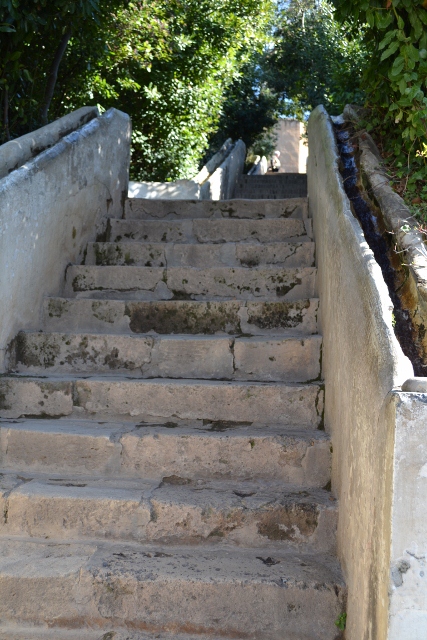
The Water Stairway at the Alhambra

Example #4: One fun surprise we encountered in Granada was “tapas gratis.” In most of Spain, you pay for tapas, but in Granada tapas are provided free of charge with the order of a drink! This led us to the invention of a fun dinner activity which we call “Tapa-Hopping.” This is a twist on conventional bar hopping, where you go from place to place, having a drink (and in Granada, a tapa too) at each stop. The only tricky part about Tapa-Hopping is that you have to go with the flow, because the bar chooses your tapas for you.

We enjoyed our time in Granada, despite the cold, and the Alhambra was all we had hoped for and more (unlike our failed quest for paella in Valencia).

Enjoying the views at the Alhambra

Read Full Post »
If you’ve read the About Us page of our blog, you know that we love food and that one of the main goals of our trip is to sample local flavors.  As the home of paella, we knew that we had to make Valencia one of our stops in Spain.

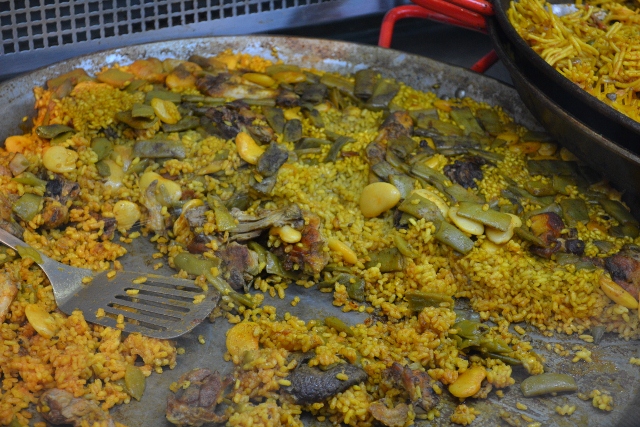
Pan of traditional Valencian paella

As expected, there was paella coming out of the woodwork in Valencia.  Every restaurant, take-out window and market sells paella.  It has become such a tourist spectacle, however, that it seemed somewhat forced.  We learned that “Paella Valenciana” is not the typical seafood paella that you commonly find in the States, but rather has chicken, rabbit, peas and beans intermingled with the saffron rice, as well as a strong rosemary flavor.  Here is a link to a traditional Valencian paella recipe.

While the paella wasn’t all that we had hoped for, the city had many pleasant surprises.  The old part of town has an abundance of quaint marbled plazas that seem to appear out of nowhere in the maze of small winding streets.

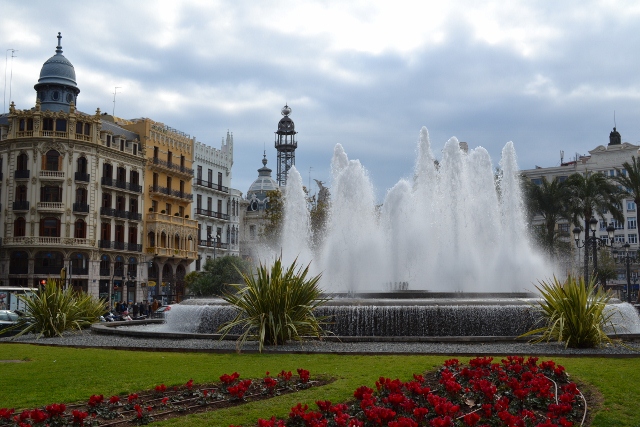
La Plaza del Ayuntamiento

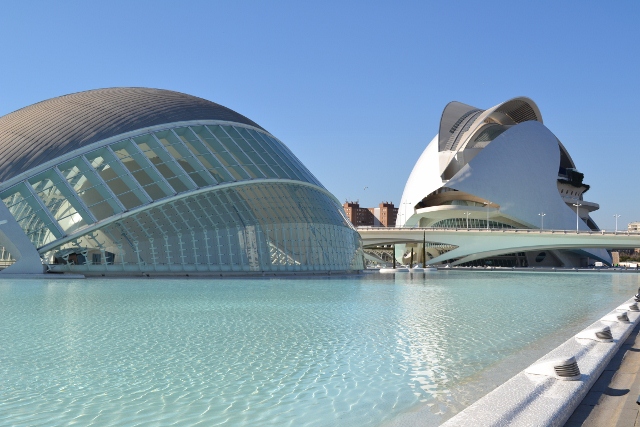
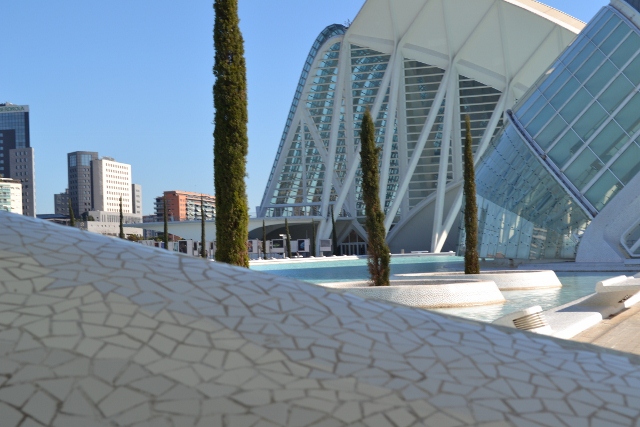
Another part of Valencia that we loved was El Parque Natural del Turia, which stretches 9km across much of the city and is located in the bed of the river Turia which was diverted in following a massive flood in 1957.  The park is host to a wide diversity of trees, gardens, sports courts, paths and playgrounds and culminates at La Ciudad de Las Artes y Ciencias.  If you read our last post, Setting Sail, this architecture may look familiar.  It is the work of Valencian architect Santiago Calatrava, who was also the brains behind El Auditorio de Tenerife which we visited on our cruise.  His work is modern, yet reminiscent of Gaudi at times, and also marked by the use of chipped, white tiles.

The Hemispheric & Palau de les Arts Reina Sofia at La Ciudad de las Artes y las Ciencias

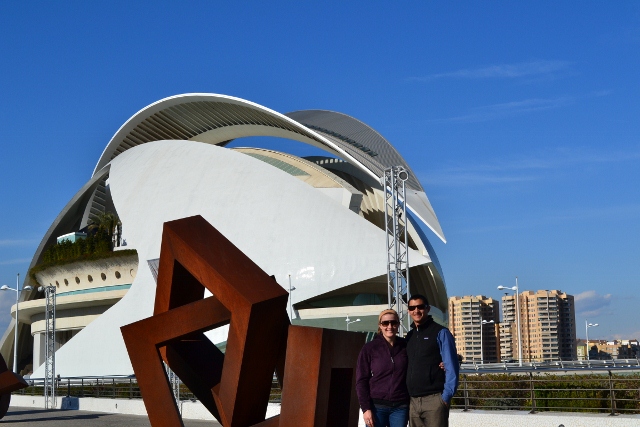
Us in front of Palau de les Arts Reina Sofia at La Ciudad de las Artes y las Ciencias

El Museo de las Ciencias Principe Felipe at La Ciudad de las Artes y las Ciencias

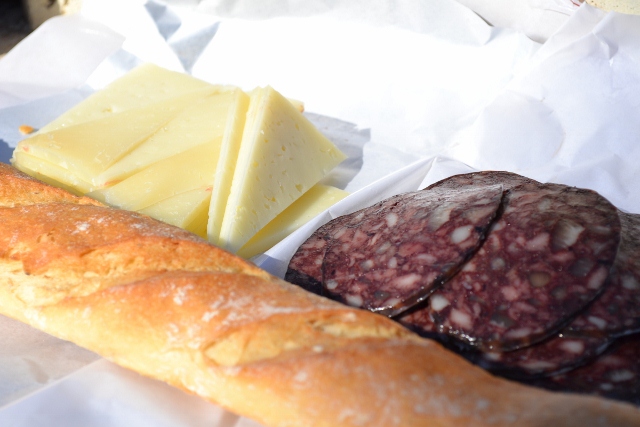
While our visit to Valencia began as a quest for paella, we found that this city has so many other culinary delights to offer.  We first encountered cured morcilla (blood sausage) in a restaurant in Valencia and have since been addicted, eating it every chance we get.  While blood sausage was not a new concept to us, we had never seen it in this form, dried and sliced, similar to salami.

Picnic of pan fresco, manchego fuerte and morcilla

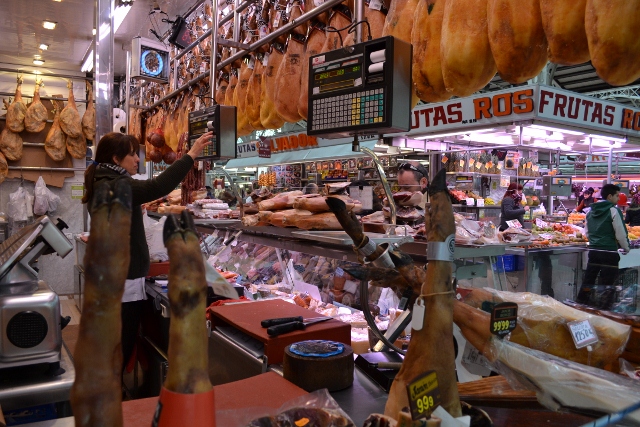
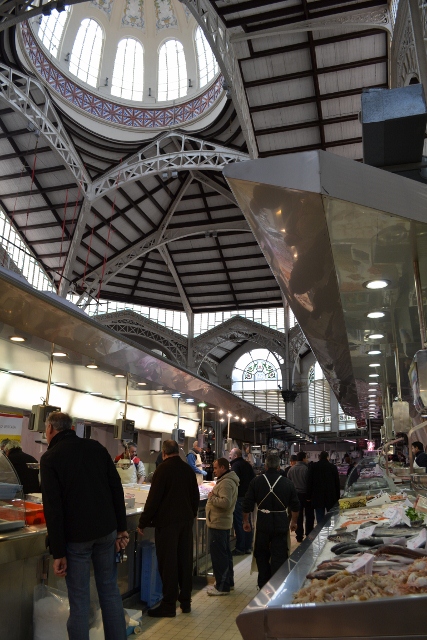
Valencia’s main market, Mercado Central, is the largest and most impressive we’ve seen in Spain thus far. Pictures do not do it justice, as the smells, sounds and flavors make up so much of the experience.  We were impressed by how specialized some vendors are, for example, one stall sold only lemons and garlic.  Somehow the 20+ produce stands, all of which sell more or less the same product, manage to not only stay in business, but thrive!  It appears that locals have their favorite vendors and ignore the rest.  Everyone gets their share.

Jamón vendor at Mercado Central

Fishmongers at Mercado Central

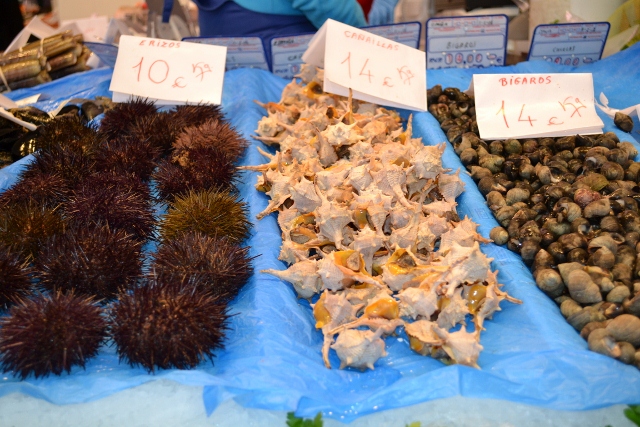
Not your typical seafood

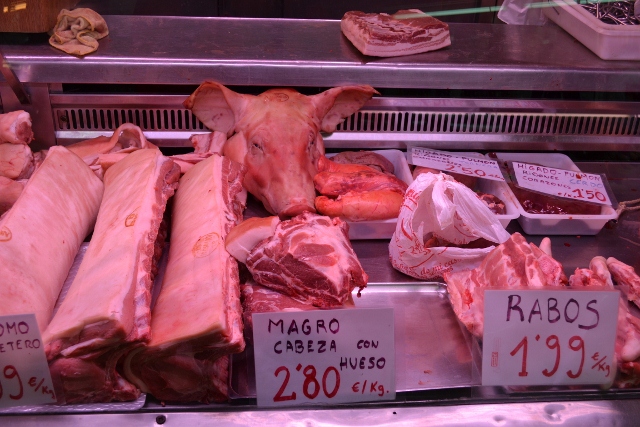
This little piggy went to market…

We are beginning to appreciate that one of the best parts of traveling is encountering the unexpected. While our visit to Valencia did not lead us to the world’s greatest paella, it did provide us with some other great adventures and delicious food.

Read Full Post »
« Newer Posts - Older Posts »