Feeds:
Posts
Comments

Archive for the ‘Travel’ Category

Our days in SE Asia are numbered, and as they draw to an end we have found ourselves drifting among the islands of the Indo-Pacific. Well, not drifting in the literal sense, more like hopping from island to island without knowing how long we will stay nor where we will go next.

The last two weeks have been spent on two islands that sit in stark contrast to one another, yet have both found a special place in our hearts. Our post today is a tale of two islands: the bustling island-nation of Singapore and the once famous, but now somewhat forgotten, Tioman Island.

The Isle of Singapore

Like so many of our favorite stops on this RTW expedition, we hadn’t initially intended on visiting Singapore. Its reputation amongst young backpackers is that it is far too expensive and really not worth the time. We heard similar complaints about Hong Kong and enjoyed it, so when we found a cheap flight on Tiger Airlines, we opted to make Singapore our launch pad into Indonesia.

After spending months in Vietnam, Cambodia, Lao & Thailand, Singapore hit us like a sack of bricks.  “Wait, that’s the price for one beer? I thought that was for a whole pitcher.” The rumors about steep prices couldn’t have been more true, but over the next few days we came to realize that Singapore is definitely worth every cent.

The first thing to catch our eye was the skyline of the city. The architecture is a perfectly woven combination of restored historical buildings, ultra-modern design, multilane highways and small public squares and parks. The city is also immaculately clean; you literally have to seek out rubbish and graffiti. This, however, may be due to the fact that nearly everything is against the law; where else will you find yourself getting fined for not flushing the toilet?
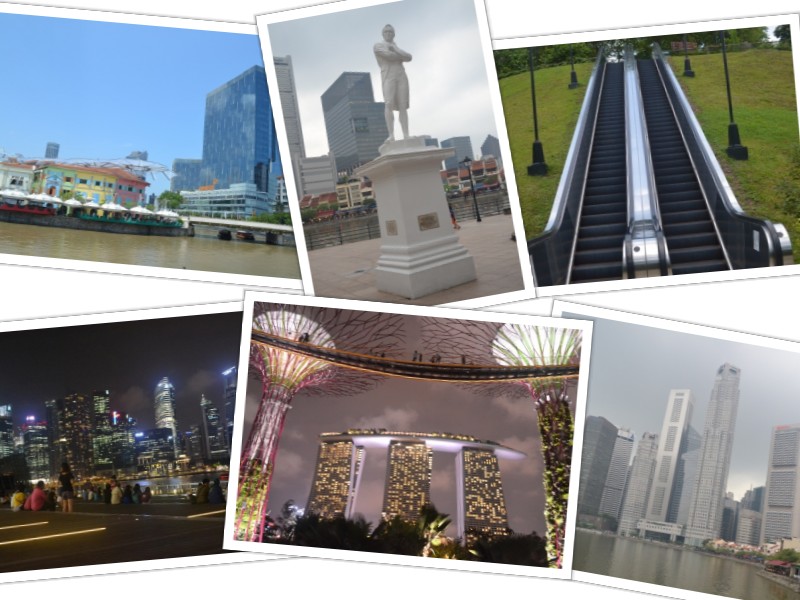
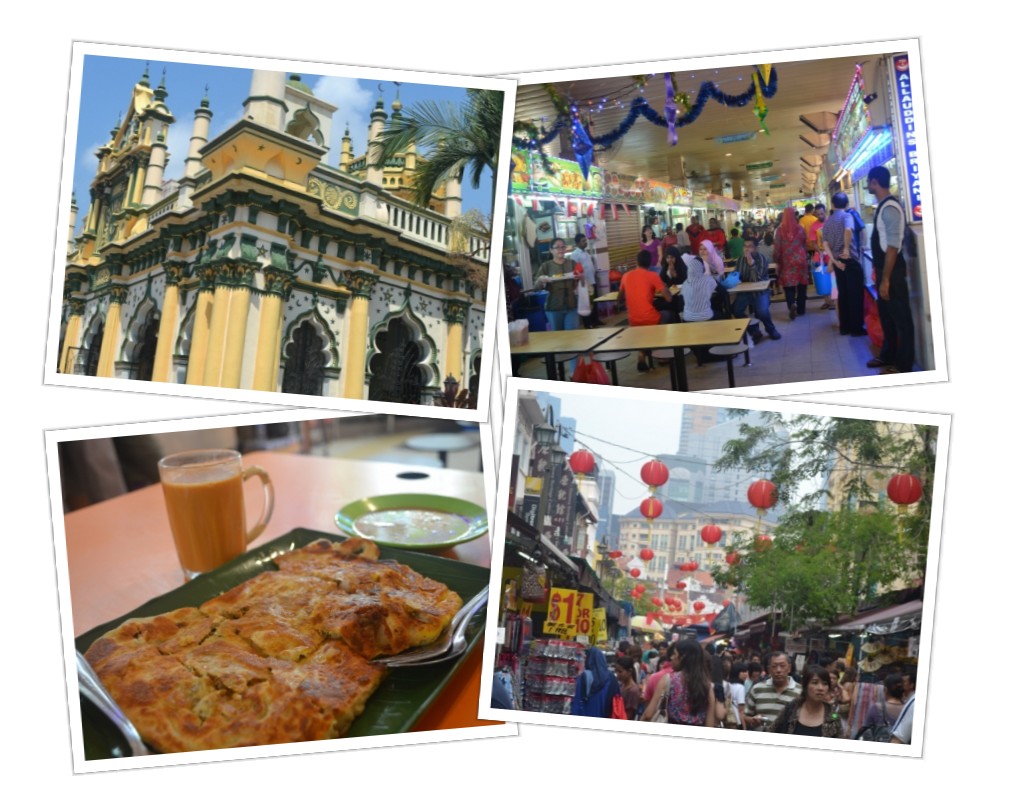
As if in symphony with the city’s complex structural design, the people of Singapore offer a diverse mix of ethnicities, cuisines, religions, cultures and languages. As is the case with most major cities, the first immigrants to Singapore formed smaller communities leaving the modern day city with a Little India, China Town and Arab Street, but the city center is far from segregated. On just one street you can walk by a mosque, temple, shrine, church and synagogue, all while hearing people speak English, Malay, Tamil, Arabic and Cantonese.
After a few days exploring Singapore’s urban sector, we were beginning to feel trapped by the concrete jungle, so we hopped on a bus across the island and headed for, you guessed it, another island. Pulau Ubin is small, sparsely developed and sits between Singapore and Malaysia. It is reachable by a 15 minute ferry and is a popular escape for Singaporeans looking to get away from the hustle and bustle of the city. Mountain biking, kayaking, camping, fishing, and trekking make Pulau Ubin the best bet for outdoor enthusiasts visiting Singapore.
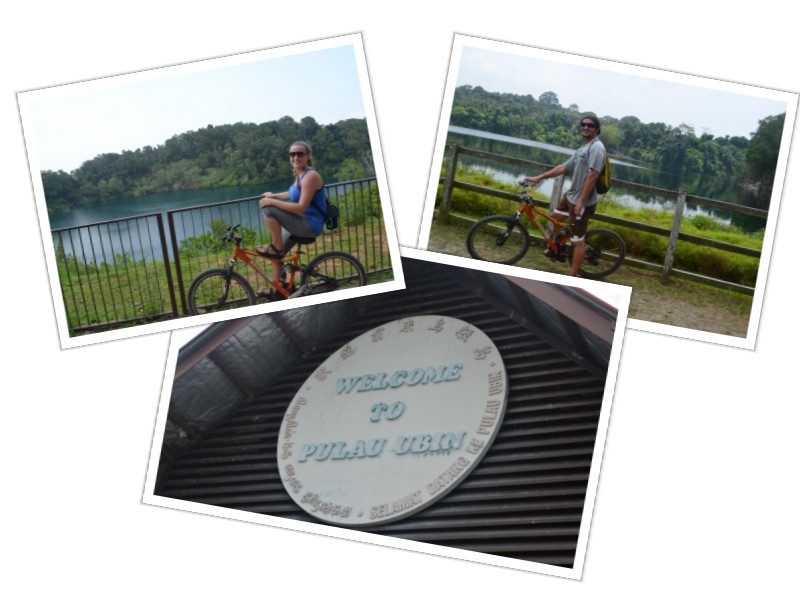
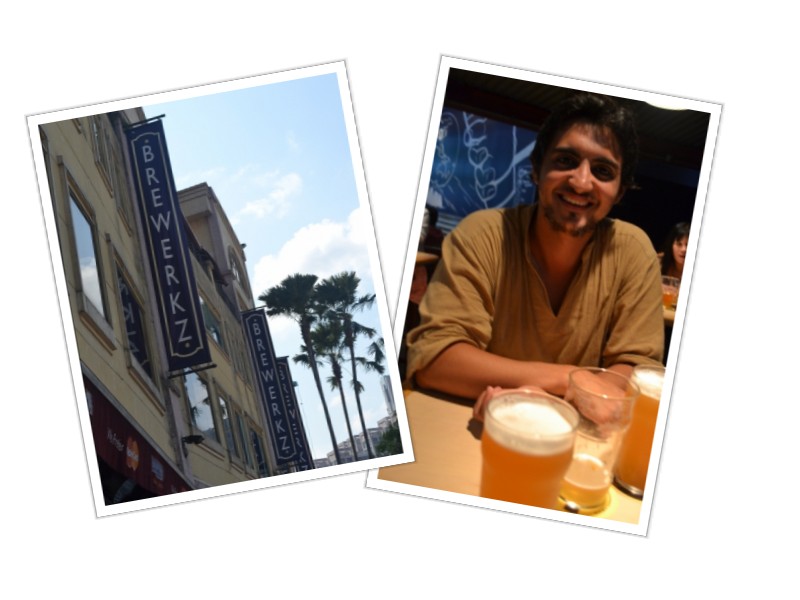
Exhausted and with sore butts, we returned to the city after a day of biking and headed to Brewerkz, our favorite watering hole in Singapore. Any beer loving person who has spent some time in Asia will tell you that stumbling across a micro-brewery is like finding an oasis in the dessert. We figured if we were going to drop some coin on beer in Singapore, better to spend it on these delicious craft brews instead of the same old watery Chang, Tiger, and Beer Lao that is found throughout the region.
As we said earlier, Singapore was supposed to be our gateway to Indonesia, but the ferry situation turned out to be more costly, time consuming and complicated than we originally anticipated. We had been hoping to do some more SCUBA diving anyway, so we decided to look into some other options…

Tioman Island – A Lesser Known Paradise

One night in Singapore, we sat at our hostel pouring over information about the best dive sites in Malaysia. The good news? There didn’t seem to be a shortage. The gold medal goes to the world-renowned Sipadan, however, due to its distant location on Borneo and the fact that diving there requires months of advanced booking, we decided on another option.

Tioman Island was made famous by the movie South Pacific and in the 1970s was included in Time Magazine as one of the world’s most beautiful islands, but in recent decades has lost much of its luster.   It was a place we’d never heard of before, but we were intrigued by the beautiful pictures of its coral reefs and seemingly easy commute from Singapore. Without giving ourselves time to think twice, we booked our tickets and were setting off to Tioman just 24 hours later.
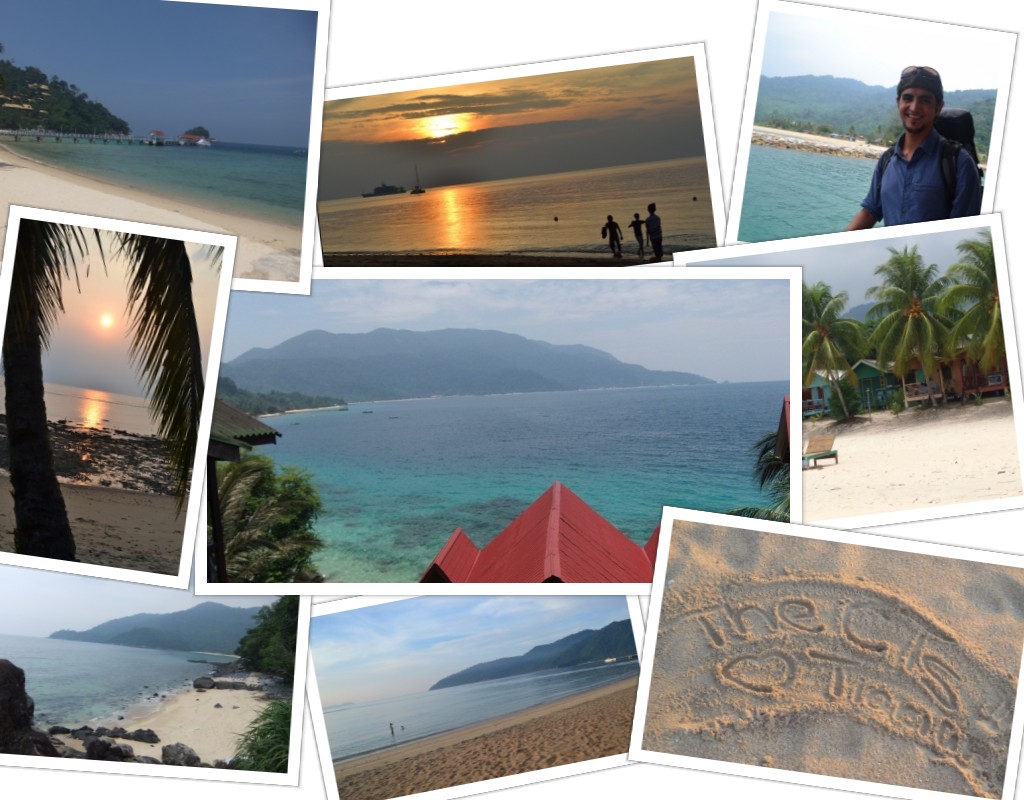
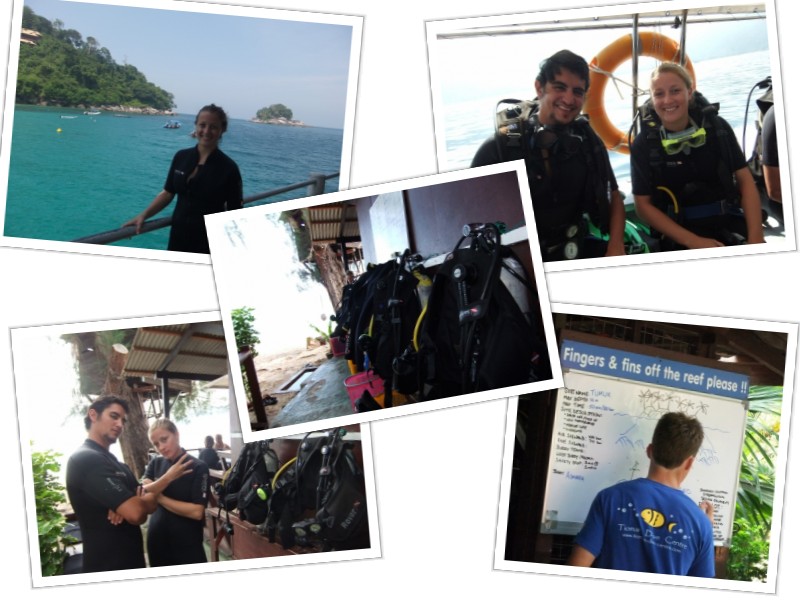
To make a long story short, we fell in love with Tioman, spent many more days there than we intended, and could not stop SCUBA diving. Two dives turned into four, four into six, and six into nine. There are many reasons to love Tioman. First, the entire island is surrounded by a marine park with crystal clear water that gently fades into a spectrum of turquoise blue that can only be found in a true tropical paradise; perfect for diving and snorkeling. Our adventures at sea offered us glimpses of Hawksbill Turtles, Reef Sharks, Barracuda, and a seemingly endless abundance of marine life.
What’s more, the entire island is duty-free! What does that mean exactly? Tioman is one of the few places in Malaysia where you can find cheap booze and cheap tobacco, in a country that otherwise imposes a very hefty tax on these items. Shhhhhhh….don’t tell the wild party kids that have managed to ruin so many of SE Asia’s most beautiful places. Despite the duty-free aspect of Tioman, it still does not attract hoards of party-ready backpackers, but rather offers a bar scene that is a very chilled out, one where tourists and locals mingle and chat under a star-filled sky.

Furthermore, the entire island is layered with jungle that covers the land from shore to mountaintop making it virtually inaccessible by vehicle. So what’s so great about thick jungle? It’s ideal for island trekking (assuming you’ve applied a thick layer of DEET) with plenty of chance to see wildlife, ranging from monitor lizards to monkeys to the world’s largest flower.
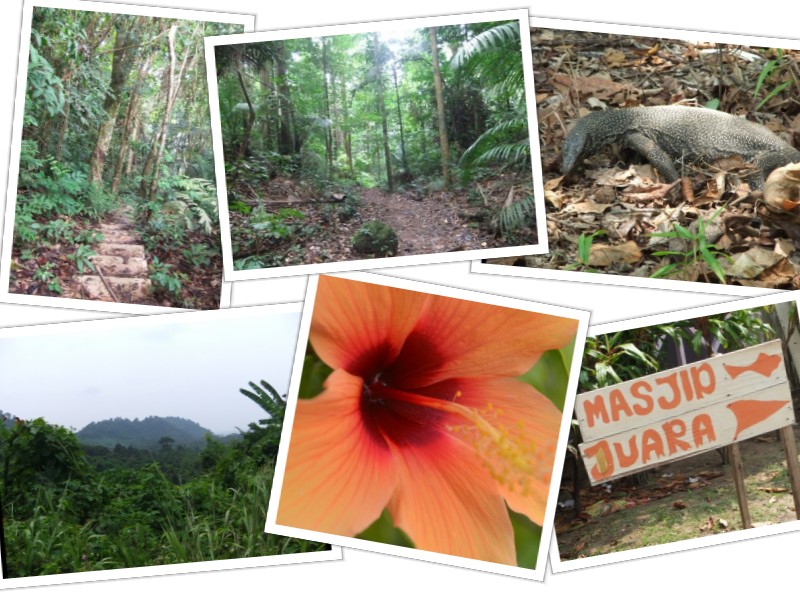
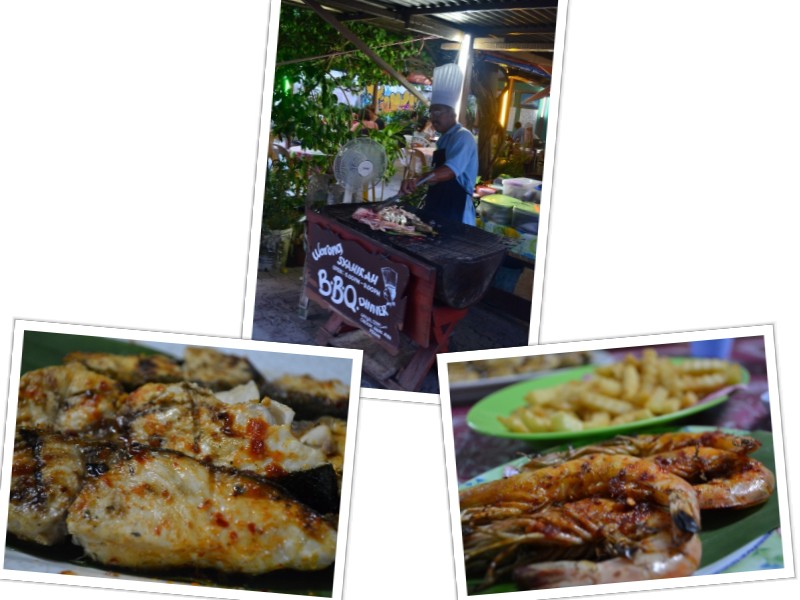
Last but not least, the entire island offers fantastic food. OK, not the entire island, but there is an amazing BBQ seafood restaurant in Tekek village that serves up fresh snapper, prawns, marlin, barracuda, lobster and so much more, all for a ridiculously cheap price. You may be thinking “fresh fish from a marine reserve?” Don’t worry, everything they serve was caught well outside the boundaries of the Tioman Marine Park; we’re certain of this because we saw the island’s lead marine biologist and conservation team eating there every night.
While relatively close together, Singapore and Tioman are worlds apart. Singapore offers all of the luxuries of an international hub, but comes along with traffic, high prices and over development. Tioman can leave you feeling a bit isolated, with nothing more than small villages speckled along its coasts, but provides a genuine island experience. Is one better than the other? We don’t think so; they’re just two different islands on this planet we all call home.

Read Full Post »

Rastafarthais

What, you may be wondering, is the meaning of Rastafarthai? It’s quite simple actually, Rastafarai + Thai person = Rastafarthai. We started using this word to describe some of the locals who work on Railay Beach in Thailand, which we visited a few weeks back. And thanks to Google, we now speculate that we may in fact be the original coiners of this well suited term. Although we did not take any photos of said Rastafarthais, we did manage to pull one off the interweb. It was probably taken by some backpacker who pointed their camera way too close to the rasta’s face and then walked away, like we saw so many tourists do. I mean, how would you like it if someone walked into your office, took your picture, and then turned around and left without saying one word to you? #awkward. Anyway, without further ado, here is a visual of a real-life Rastafarthai.

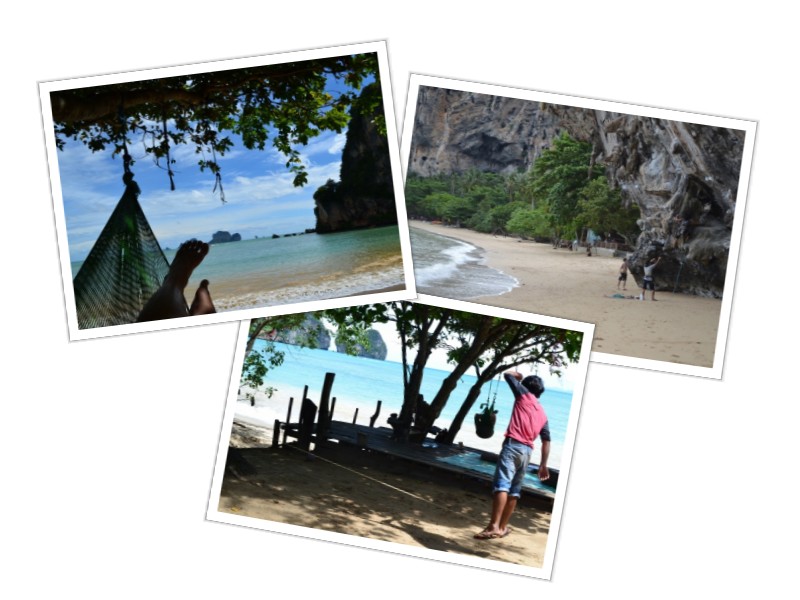
We aren’t sure how dreadlocks and reggae made their way from the Caribbean to SE Asia, but think it’s worth mentioning since many of the activities on Railay are not exactly traditional Thai customs. Most are quite “hippy” really (i.e. tightrope walking, fire dancing, Connect Four, rock climbing, joint smoking, guitar playing…you get the picture). Sure, we’re taking some liberties here by drawing a parallel between rastas and hippies, but it’s not too far off really, is it?

Railay Beach is an interesting place. A drop dead gorgeous place. A relaxing place. An island paradise (that isn’t technically an island). A place with no cars, only footpaths and boats for transportation. A place where wealthy tourists staying at 5-star hotels mingle with backpackers sleeping in $3/night huts. And of course, there are the Rastafarthai who are a strange breed in this predominately Muslim region of southern Thailand.

While the ocean view from our bungalow and delicious food at “Mom’s Kitchen” made the thought of staying for weeks tempting, we decided to relocate to nearby Koh Lanta; while not as abundant as in Railay, the Rastafarthai culture seems to be gaining ground on Lanta as well.

Read Full Post »

“Oh, you make visa run” was the response of a travel agent when we first inquired about booking a bus ticket to Vientiane. He was a bit surprised when we told him that we actually wanted to stay there. Bangkok, Saigon, Kuala Lumpur, and Singapore are all bustling, world-renowned capital cities of SE Asia, attracting hundreds of thousands of tourists each year. And then there is Vientiane, often called the world’s sleepiest capital. For many travelers in SE Asia, Vientiane is nothing more than a place to go to renew their Thai visa. They cross the border and then head back to Chiang Mai or Bangkok the same day. We didn’t have high expectations, but didn’t want to dismiss Vientiane without giving it a try, so we decided to spend a couple days checking it out.

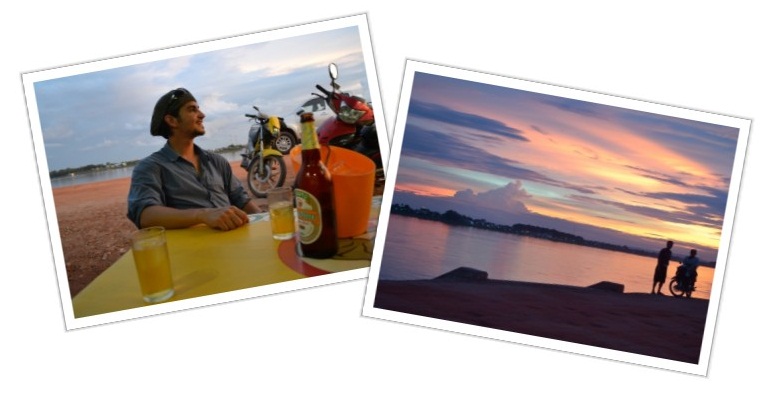
Like many other cities in the region, the mighty Mekong River is at the heart and soul of Vientiane. Here it is very wide and flows slowly beside the city creating a natural border with neighboring Thailand. As if saying “Welcome to Vientiane,” Mother Nature granted us a spectacular sunset over the river on the first evening. The fire-like reds and subtle purple hues in the sky were simply incredible.

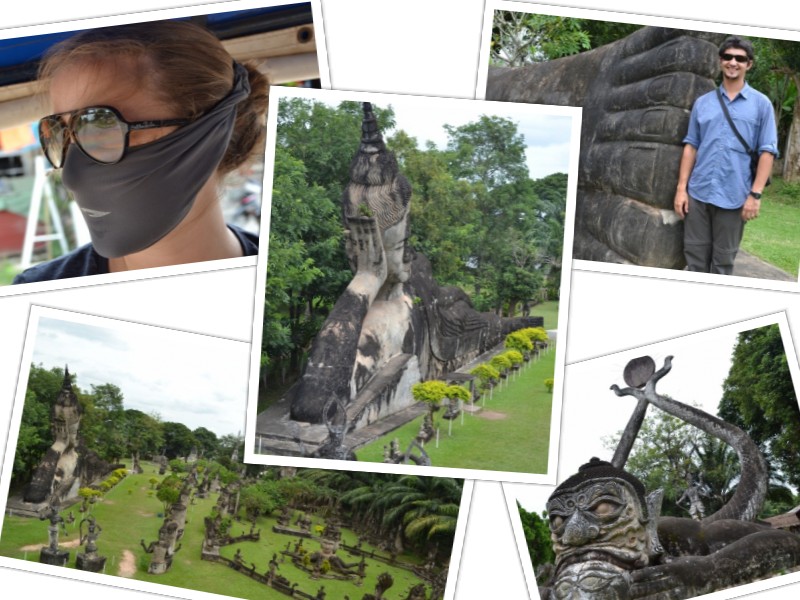
Just 30 minutes outside of the city lays Xieng Khuan, known to many as the Buddha Park. It was a hellishly bumpy and dusty tuk-tuk ride to get there, but well worth the journey. The main attraction at this relatively small park is an enormous statue of Buddha lying on his side. When we say enormous, we mean it; the feet alone are about two meters tall! Although it may be a cop-out to say “pictures don’t do it justice,” we’re going to play that card anyway.

On our last day in town before boarding the night train to Bangkok, we felt obligated to visit Pha That Luang, the Great Stupa. This temple is the quintessential image of Vientiane, also featured on Laos’ currency. While not as stunning as the statues at the Buddha Park in our opinion, it too was worth a visit. It is an impressively symmetrical structure and worshiped as the holiest Buddhist temple in Laos due to a sliver of Buddha’s breast bone which is kept as a relic inside.

Our walks along the Mekong, visits to the Buddha Park and Great Stupa, and days spent wandering through markets on a quest to find tasty Laotian noodle bowls were all reasons we enjoyed our time in Vientiane. It is certainly deserving of more than its Visa run reputation, and we would encourage all who come to SE Asia to stop through Vientiane.

Read Full Post »

Please Don’t Rush

The nation of Laos is officially known by the name of Lao P.D.R. (People’s Democratic Republic), but to many travelers this name also symbolizes a deeply rooted part of the Lao identity. It is often said that locals operate on “Lao Time,” meaning that they are friendly and helpful, but in no particular hurry to get anything done. So backpackers have dubbed it with the not so official name of Lao P.D.R. (Please Don’t Rush). We embraced the P.D.R. attitude and took our time exploring the town and outskirts of Luang Prabang.

It was a welcomed change to move away from the backpacker party scene in Vang Vieng and into the beautifully serene and laid back town of Luang Prabang. The town even has a nightly curfew of midnight which contributes to its low-key environment.

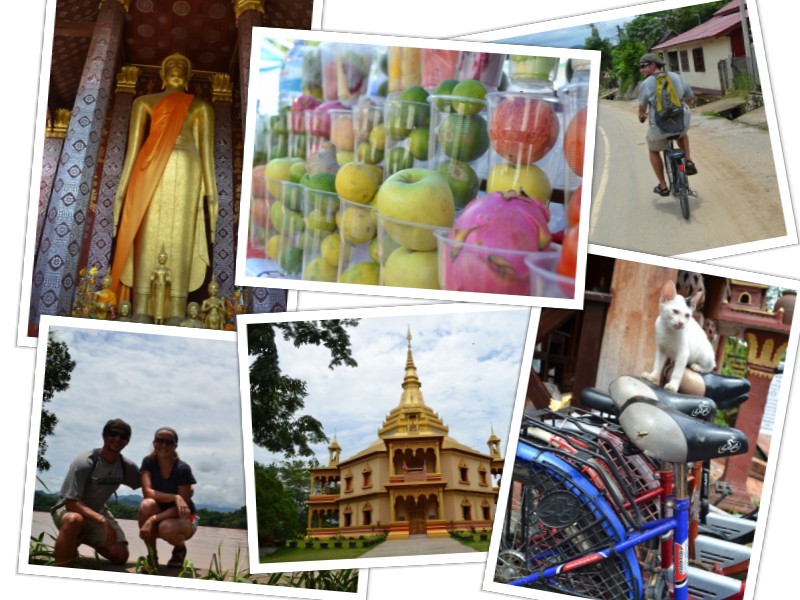
We hired bikes one morning and set off to explore the rolling hills that surround Luang Prabang. The Mekong and its tributaries wind through the landscape while temples and shrines speckle the countryside. On our single-track bicycles, we quickly learned that the “rolling hills” are steeper than they appear. Hydration stops and fruit shake breaks helped us get through the toughest parts.

Waking up very sore and stiff the next morning, we opted to take a boat cruise up the Mekong River.  We piled on board with two other couples and set off towards some villages and caves up river from Luang Prabang. There is something so mesmerizing about the Mekong. It really embodies the “please don’t rush” mentality as it meanders its way through the lush green countryside. The muddy brown waters were running high from the recent rains which made the journey to the cave a bit slower than usual but equally if not more beautiful. We stopped in a small village whose specialty is lao lao whiskey, made from sticky rice, had a few tastes for good measure, and kept on our way.

The caves at the end of the trip were more impressive than we’d imagined. For thousands of years, the two caves we visited have been used as places of worship. The native people of Lao used to worship spirits of nature and believed that the riverside caves were connected with the water gods. After Buddhism arrived in the region, the caves gradually became religious shrines and house countless statues of the Lord Buddha left as offerings by faithful pilgrims.

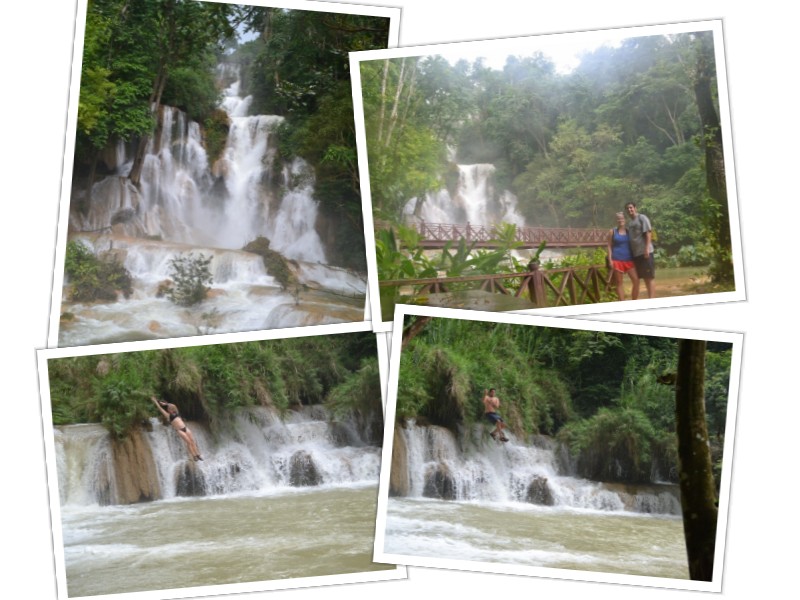
Another well-known attraction in the area is Kuang Si Falls. When it comes to waterfalls, Amy is hard to impress. The many falls of the Colombia River Gorge near her hometown of Portland, OR are tough to beat. This particular waterfall definitely met her expectations. At first, it seemed like nothing more than a fast flowing jungle river with some small drop offs, pools, and rope swings. As we made our way upstream, we stopped for some fun and took a few turns on the swing ourselves before running into one of the most spectacular waterfalls we have ever seen. This bad boy seemed to stretch on forever as it disappeared into the clouds escaping the reach of our camera lens.

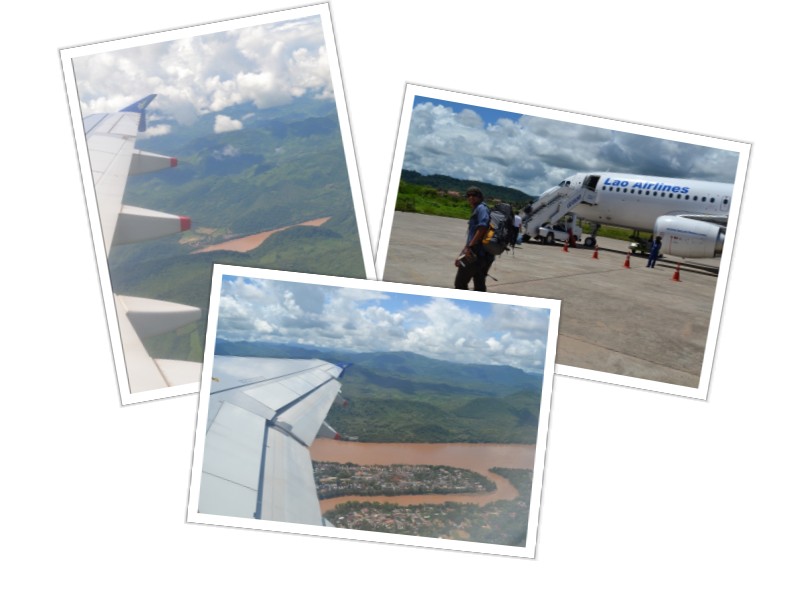
Luang Prabang is the type of place where you can easily get swept away by the nightly market, amazing scenery and easy going locals. Our goal of circumnavigating the globe, however, means that we have to keep moving, even when we want to stay. The lengthy bus ride through winding, mudslide-ridden, mountain passes that we took from Vang Vieng to Luang Prabang was more than we could handle for a second time, so we opted for a short 30 minute flight to Vientiane. In true Lao fashion it turned out to be the easiest and most stress-free travel experience of our trip so far; factor in the brand new airplane, tasty on-board vegetarian snack and breathtaking aerial views of the Mekong, and it may go down as the best flight ever!

Read Full Post »

The Road Ahead

One question that we get a lot revolves around how we plan our travels. People want to know if we are using an around-the-world plane ticket, or if we have just been flying by the seat of our pants. We have been operating somewhere in between. Early on in our trip, we did have some plane tickets booked in advance, for example our departure from the States to Spain and our visit to Denmark. Knowing that we have tickets paid for and dates set helps build a certain type of excitement, but midway through Europe, we took our last scheduled flight; at that point, we were truly free with no solid future plans. It felt great, liberating and new.

After some weeks, we realized that we wanted to visit destinations that required flying. So, in an effort to save money, we booked our airfare to Asia. Following a couple more pre-arranged flights to China, South Korea, Japan, and Vietnam, we again switched into open-schedule mode through SE Asia, purchasing last minute buses and trains as we pleased. Traveling with no concrete plans is the way to go in this part of the world. It’s so easy to hop around that we found ourselves in places we had not intended; truly letting the road choose our course.

The only certain thing in life is change, and as the months slipped away, we again found ourselves faced with some long distances flights approaching. Nature gave us the nudge we needed. Trapped inside during a monsoon downpour in Luang Prabang, Laos, we went on a booking frenzy! When the dust had settled, we had booked six flights and laid out a time table for the next four months of travel.

Here is what lies ahead…

  • Singapore: A weekend in this intriguing city-state.
  • Sumatra: Indonesia’s large but lesser explored island.
  • Malaysia: SCUBA diving in some of SE Asia’s most well-preserved waters.
  • Australia: A week visiting friends in Perth, plus a trip to Sydney.
  • New Zealand: A month of road-tripping and trekking around the north and south islands.
  • Chile: Returning to where Mike studied abroad, Thanksgiving, Amy’s birthday (her parents are meeting us down there!) and a wedding to top things off.
  • Argentina: Christmas and New Years with some of Mike’s family.

We have found this approach of on-and-off planning to be a great way to piece together our RTW trip.  Advanced booking means locking in lower airfare for long hauls, but once you reach a fun region of the world, leaving the “meat” of the journey unplanned keeps every day feeling fresh.

We look forward to blogging about our up-and-coming adventures on the road! If you have any travel suggestions for these parts of the world, or if there is anything in particular you’d like us to write about, let us know. Cheers!

Read Full Post »

To Tube, or Not to Tube

There is pretty much one reason that young travelers go to Vang Vieng, Laos: to tube down the Nam Song River. But would you hop into an inner tube and float down a river where nearly 30 people died last year?

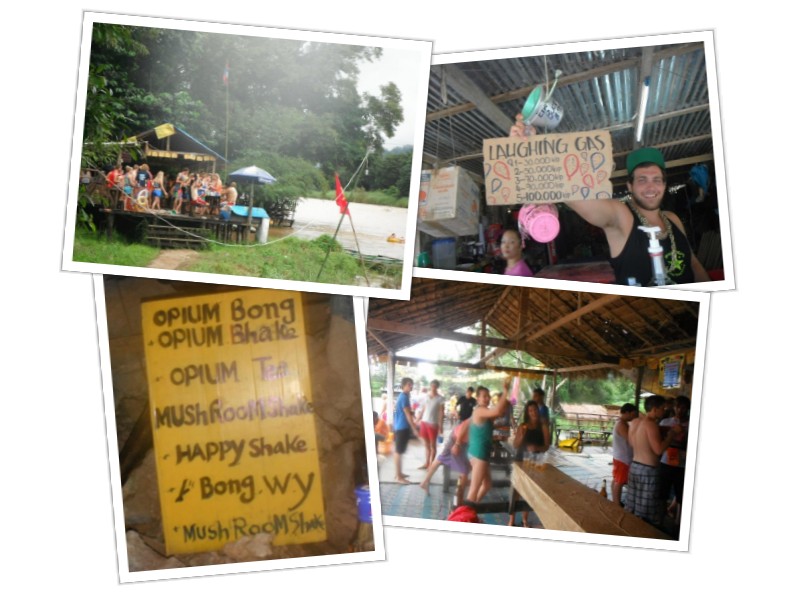
We arrived in Vang Vieng last week after an exhausting journey on four different buses. Our original plan was to spend a few days in Vientiane before heading north, but pretty much everyone on our mini-bus was enthusiastically headed to Vang Vieng for some tubing, and since we had already been on the road for 14 hours anyway, we decided to tag along. It wasn’t until we arrived in town and started doing some research that we realized just how fatal the activity can be. While any river can be dangerous, it’s the atmosphere in Vang Vieng that makes the Nam Song especially treacherous. The banks of the river are lined with float-up bars that indiscriminately hand out welcome shots of whisky and serve everything from beer to opium.

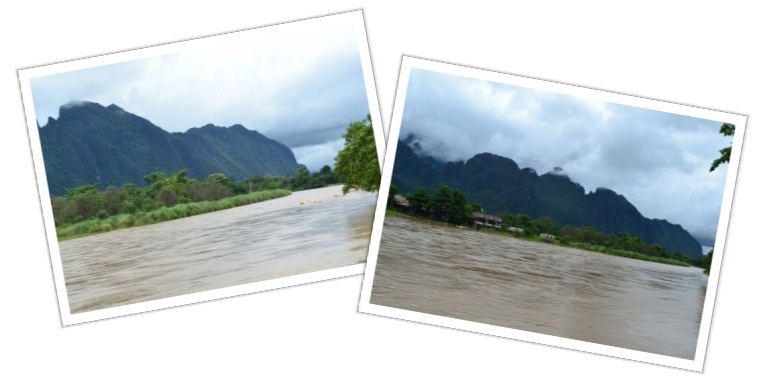
After some deliberation, we decided to attempt floating the river the next morning, but with safety, not partying, as our first priority. By 11:00am the next day we were at the river’s edge with inner tubes in hand. The summer is rainy season in Laos, and the mud-brown river was flowing quickly with water levels high. Needless to say, we were feeling a bit apprehensive. The tubing launch site was located at a bar on the opposite bank, and as we crossed over on a ferry we couldn’t help but wonder, “What the hell are we getting ourselves into?” To be honest, we did accept the free shot of whiskey for a bit of courage and set off down the river with our life jackets strapped tightly and a leash that we devised for keeping our tubes together. Once in the water and on our way, the tranquility of the scenery hit us. We had expected raging crowds and loud music, but what we found was a bit of solitude. In a lightly falling rain, we drifted alone along the base of tall stone cliffs. The lush vegetation and blanket of fog that covered the peaks made them appear to stretch on forever.

The experience was completely different than what we had expected. Many of the bars along the river had not yet opened for the day, but we did stop at two. The families that ran both places were happily surprised to see us. Since we were the only ones on the river, we were able to spend some time talking with them. We learned that the mayhem starts daily at around 2:30pm and got a tip about the best bar to visit for a chilled out couple like us. Having survived one trip down the river and having seen the serene side of the Nam Song, we decided to return for a second run after lunch to see just how wild things get.

At 3:00pm that afternoon, we were again standing across the river from the launch site, but this time with countless others ready to begin their first run of the day. Again we felt a bit uneasy, but for a completely different reason. As we looked upon the scene at the bar on the opposite bank, we witnessed sheer insanity. The tranquil wooden shack from that morning had been transformed into an all-out raging party. Blasting music, buckets of liquor, spray painted bodies, beer pong, chugging contests…you name it, it was probably happening there. As one sign read, “Anything is allowed.” The place was jam packed with people in their late teens and early 20s, some already nearing blackout status before even getting in the water. We quickly realized that we were among the few who were actually wearing life jackets. Some people were even sharing one inner tube between five or six people, barely managing to hang on as they jumped into the water. Keep in mind that there are no lifeguards, no rescue boats, no paramedics and only a very basic hospital in the town. It is said that the reasoning part of the brain doesn’t fully develop until around age 25; Vang Vieng may be the perfect place to prove this theory. At 26, we were amongst the oldest in the crowd.

The idea of cutting people off at the river bars is non-existent. We could only stand to stay at the first place for one beer before deciding to take off and stay ahead of the drunken masses. Along the way, the debauchery continued and bars began to up the offering from alcohol to laughing gas, magic mushrooms and opium (for obvious reasons, we did not partake). The most inebriated became separated from their groups. It became ever clearer that the Nam Song River is not responsible for the high yearly death toll; extremely poor judgment is the real culprit.

The further we separated ourselves from the crowds of annoyingly wasted backpackers, the more we enjoyed the experience. The last bar along the river is located on stilts high above the water and hidden around a bend. We reached it just as the skies opened up to a torrential rain and sat around a fire under the thatched roof, chatting with new friends and contemplated our great day of tubing.

Although we thoroughly enjoyed our day on the river, Vang Vieng is sadly another example of tourism gone array. The city now depends on its tubing industry to survive, so despite the near 30 tourists deaths attributed to the river last year, the madness will continue. Any genuine Lao culture that the city once held has been obliterated. We are glad that we made our way down the Nam Song, glad that we had a good time, and glad that we did it in a reasonable manner. To tube, or not to tube? We say go for it, but remember that only you are responsible for your own safety.

7 Tips for a Fun & Safe Tubing Trip:

  1. Wear a life jacket!
  2. If you drink too much, DO NOT go back in the river. There are plenty of tuk-tuks along the banks to drive you back to town
  3. Stay away from drugs
  4. Don’t share a tube. 1 tube=1 person
  5. Never float the river alone
  6. Stay away from swings, slides, cliffs or anything that sends you plunging into the river
  7. Finish your run before it gets dark

Read Full Post »

A lot can happen in a week. Since we last wrote, we’ve played with tigers, ridden on elephants, watched knockout Muay Thai, honed our motorbike skills, climbed Thailand’s highest peak, and so much more.  Where did we do all of these spectacular things? A little place called Chiang Mai.

Not so little actually, Chiang Mai is the second largest city in Thailand making it somewhat of a “capital” for the northern region of the country. While it doesn’t have the skyscrapers, mega-malls, and constant adrenaline of Bangkok, Chiang Mai still seems to have something for everyone. We easily could have spent a month there, but the tourists visas we acquired at the border with Cambodia were only valid 15 days, so we had to leave before we were ready to say goodbye. Thanks to our friends Daniel and Libby, we got a taste of home and some great suggestions of what to do and see in the city. Here is a glimpse at the different faces of Chiang Mai.

On the Wild Side

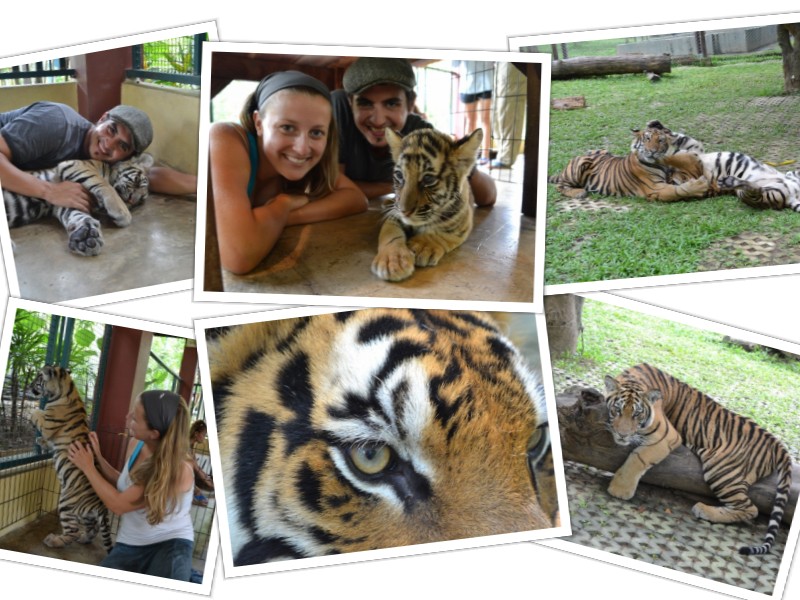
Amy is a cat lover through and through, and since childhood Mike has been watching Jake Jabs play with baby tigers on those annoying American Furniture Warehouse commercials; so when we learned about Tiger Kingdom just outside of Chiang Mai, we jumped all over it. As the name would suggest, this place is crawling with tigers! Tiger Kingdom does not drug their animals prior to allowing visitors into the animal enclosures. This is evident from their playfulness and alert demeanor. For our visit, we chose to get in the cage with the little guys. The tiger cubs we played with were 2-4 months old and beyond adorable. Unfortunately, we couldn’t come up with a plan for lifting one in the fifteen minutes we were allotted, but we did get plenty of pictures.

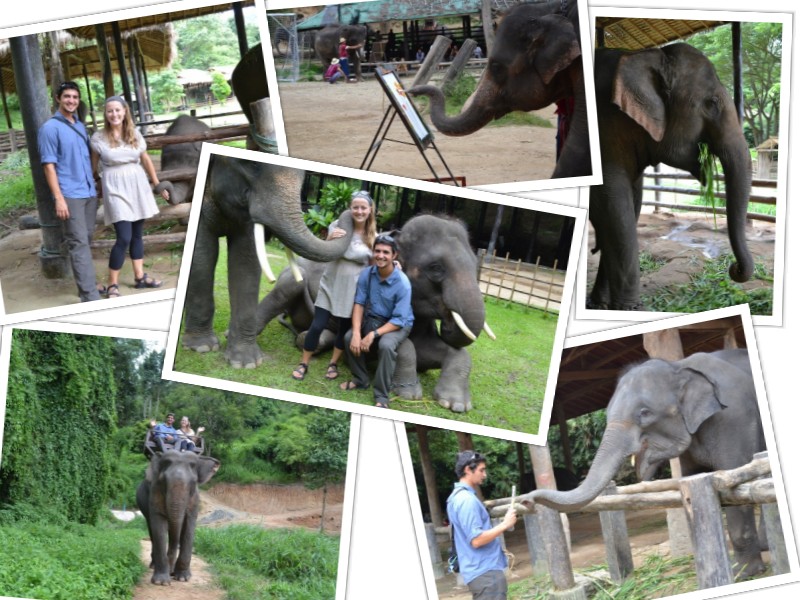
As Thailand’s national animal, elephants are an important symbol of the country’s culture and history. Chiang Mai is home to numerous elephant sanctuaries, some more concerned with the elephants’ well-being than others. We took the advice of our friends and visited a place called Maesa Elephant Camp, a place that rescues elephants from bad situations and breeds baby elephants to increase the dwindling population in Thailand. During our visit, we saw a 4 month old calf with his mother, fed bunches of bananas and sugarcane to a herd of hungry elephants, and even rode on the back of an old-guy by the name of Poo Somboon. He was 41 years old and carried three of us on his back like it was nothing. The camp even has a daily show where the elephants play harmonicas, paint incredible pictures, and shoot soccer goals. There is no doubt that the elephant trainers love and care for these animals, and we can only hope that the elephants themselves also have fun preforming.

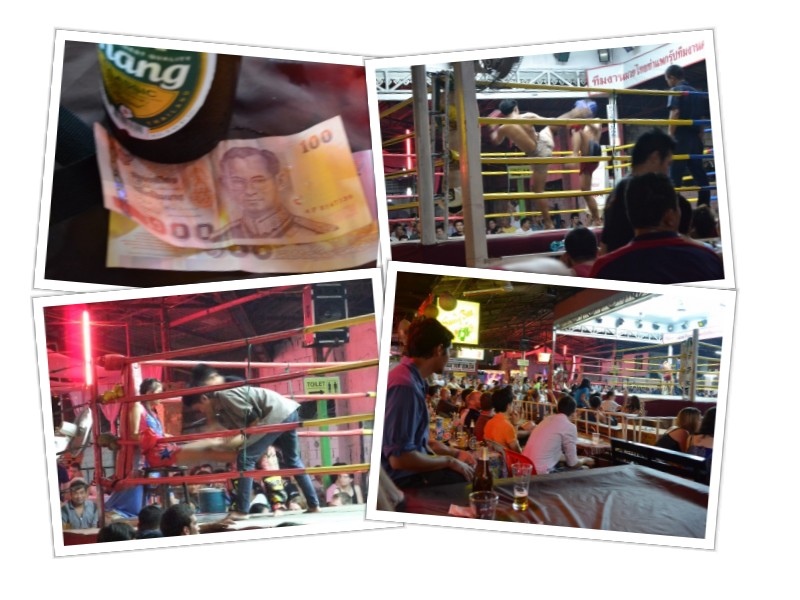
We also got a close look at one of the most dangerous animals around, the Muay Thai kickboxer. You don’t want to mess with these guys or gals. Muay Thai is the nation’s favorite sport and for good reason. We spent an evening watching several fights at a local arena in Chiang Mai. The night began with two female fights then moved on through increasing weight classes of men. Although gambling is technically illegal in Thailand, throwing down a few Baht between friends is common and makes things a bit more interesting. While small, the female kickboxers who started things off fought with great ferocity. The male fighters, on the other hand, were more methodical in their attacks. Unfortunately, the “main event” didn’t even last one round; a knee to the kidney and kick to the temple ended things quite quickly in a knockout.

The Street Food Scene

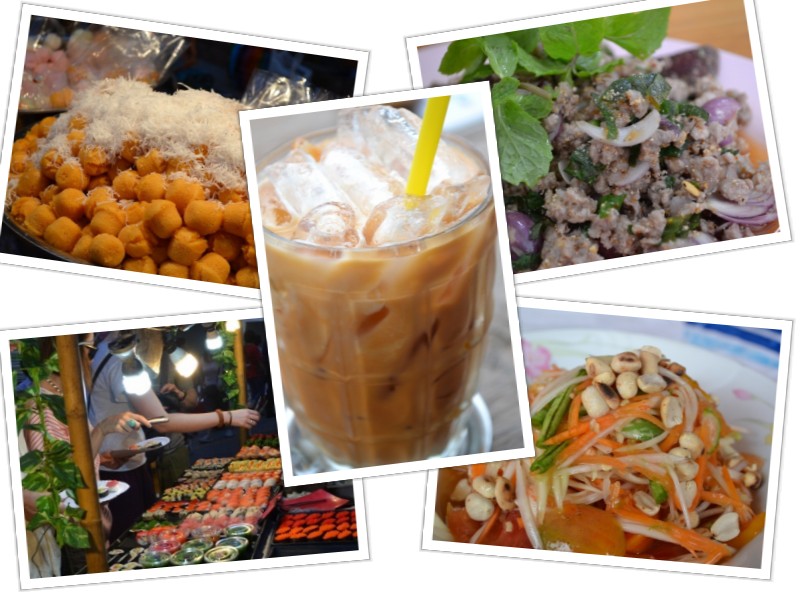
We can say with confidence that Chiang Mai has the best street food scene that we have experienced thus far in SE Asia. The weekly Saturday and Sunday markets boast endless options of Thai food and other interesting specialties like sushi, Indian and Burmese food. We spent our weekend evenings in Chiang Mai grazing through the stands and ended up absolutely stuffed each time.

Greater Chiang Mai

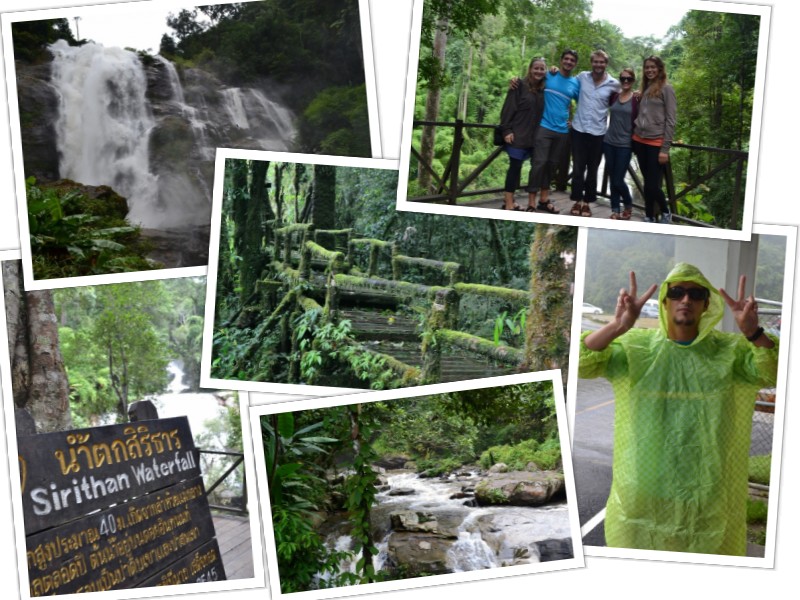
For those with more than a few days to spend in Chiang Mai, we recommend getting out of the city center to visit a doi (meaning mountain in Thai). We spent one day with our friends driving up Doi Inthanon, the tallest mountain in Thailand. The air became cooler and less tainted with pollution as we scaled the mountainside. Thick fog had engulfed Doi Inthanon that day, and the rain was relentless, but we still had fun walking through some trails and visiting a few waterfalls.

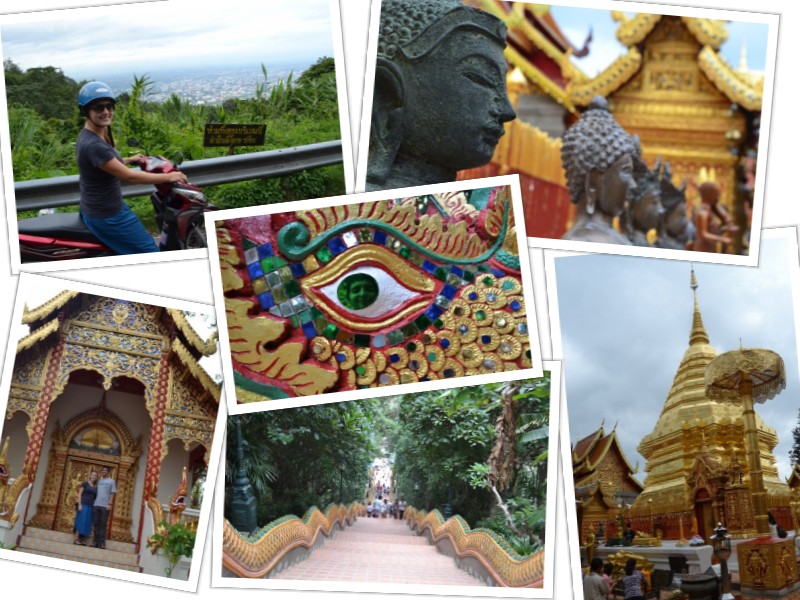
Another more easily accessible mountain is Doi Suthep, which is a short 25 minute drive from the center of Chiang Mai. We rented a motorbike one day to visit the temple that is perched on the top of this mountain, Wat Phrathat. The temple itself is stunning, and the panoramic views of Chiang Mai cannot be beat.

Taking it Easy

After several action-filled days, we were ready for some relaxation. Having heard of the infamous Thai massage, we wanted to give it a try. You can’t walk down a street in Chiang Mai without seeing two or three spas, so it was easy enough to find a spot. We can’t say that getting a Thai massage is the most relaxing experience, but it definitely awakens your muscles and works out the kinks. It’s kind of like visiting a masseuse and chiropractor at the same time.

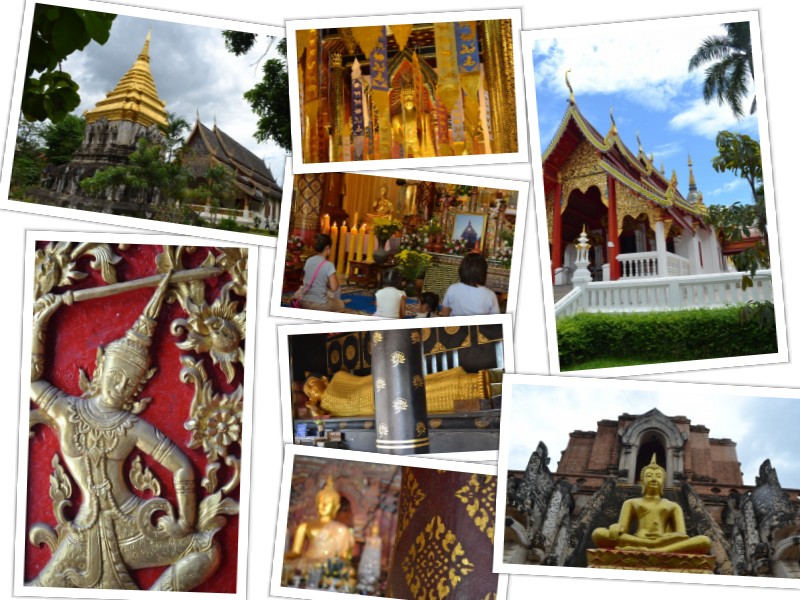
An afternoon stroll through the streets of Chiang Mai will lead you by countless ornately decorated temples. We spent an entire day just marveling at these wats and stopping for Thai Tea along the way. Turns out that it was Buddhist Lent during our visit to Chiang Mai, so we saw lots of activity at the temples.

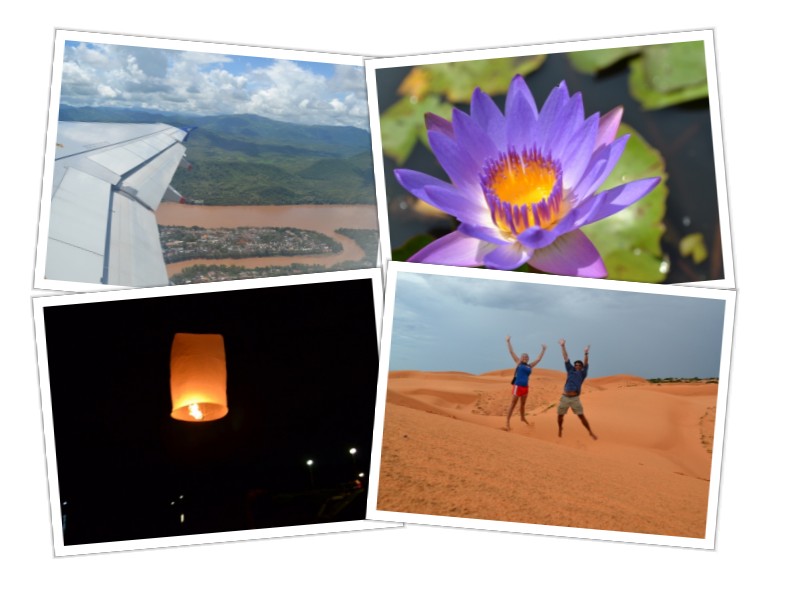
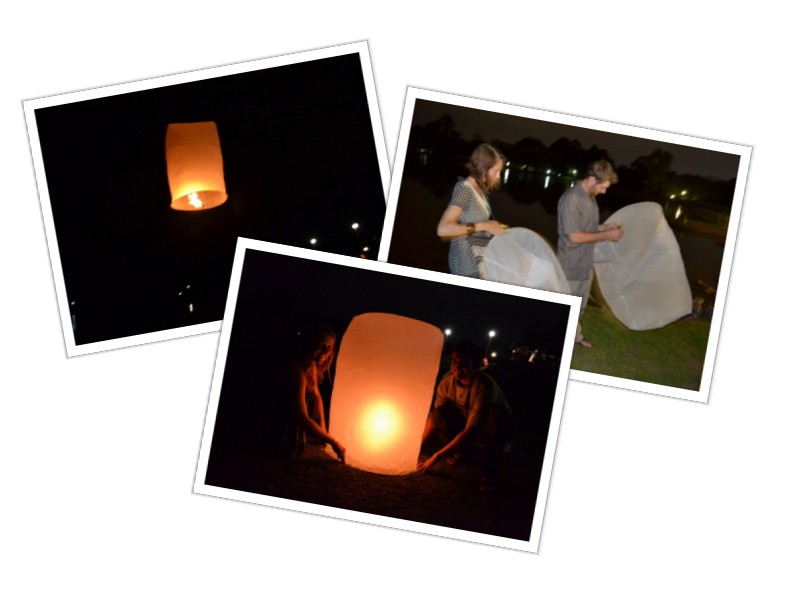
There is nothing like a familiar face, especially when you haven’t been home in seven months. This blog is dedicated to our friends Daniel and Libby – thank you for sharing your home with us for the past week and showing us a great time in Chiang Mai! The hours spent playing cards, telling jokes, and sipping coco locos made us feel so at home. The farewell lanterns were the perfect end to a great week.
Read Full Post »

While on a 15 hour train ride across Thailand from Bangkok to Chiang Mai, we decided to kill some time by writing a blog post. We were going to write about another of our adventures, but then something on the train caught our eye…Travel Guidebooks. As we looked down the aisle, Lonely Planet, Frommer’s and Fodor’s were in the hands of nearly every backpacker on board. We’ve discussed our dislike for guidebooks before, but at nearly seven months into our RTW trip, our pent-up emotions about these over-hyped stacks of bound paper has reached critical mass.

To all our fellow globe trotters out there, we wish to inform you that despite what you may have heard, Lonely Planet is NOT the Bible. Yes, both books are ridiculously thick and claim to have all the answers to life’s questions, but one has served as the basis of a religion for millennia while the other has a new edition every year (we know the Bible has many editions too, but you get the picture). We are constantly amazed at the number of travelers we see who won’t dare do a thing without consulting their holy book. “Better not stay at this hotel, looks great but it isn’t listed here on page 163.” “Mmm, this street food smells delicious, but the book says that it may cause traveler’s diarrhea.” If you only do what the guidebook says, you’re missing out on a whole lot.

Travel guides claim to be a great resource for the independent traveler, but how independent are you really if you’re reading the same damn book as everyone else? Like our friends at UNESCO, guidebooks have a way of massively publicizing truly special travel destinations, which in turn, leads them to become nothing more than a check mark on people’s bucket lists. “This restaurant is a hidden gem amongst the bustling streets of Tokyo.” Well now that you just told the whole world about it, it’s probably not too secret any more, is it?

While they all include sections titled “Best Of” and “Top Picks,” what guidebooks really give you is mediocrity. Do you really think the writers have the time to visit every hostel, hotel, and guesthouse in a city? They pick a few places, check them out (maybe), and if the place isn’t lethal then it’s good enough for their publication. Their one saving grace may be that when we see a restaurant with a big sign that says “Recommended by Lonely Planet” we know to steer clear. What that sign really means is “we know Lonely Planet is sending a bunch of mindless zombies our way; time to jack up our prices, lower our quality, and give crap service.”

We are not quite done yet. Do you have any idea how much a guidebook costs? If we bought one for each country on our RTW itinerary, we would be out nearly a thousand bucks. We used to think college texts books were the biggest rip-off around; then, we decided to travel the world and found out who the real crooks are. Why pay so much for information that is out of date before it is even published? We find that online forums provide much more accurate and useful information. The cost of these: FREE.

Perhaps it’s our desire to travel the unbeaten path that makes us hate guidebooks, or maybe it’s that we don’t want to see all of the same faces in every city as we make our way around the world. Either way, it’s not hard to realize how empty guidebooks’ suggestions are. Just pick up a copy of Lonely Planet for your country, flip through to the section on your hometown and read it. You’ll notice how much they’ve left out.

So now you have it. That’s our two cents on the guidebook industry. However, unlike the producers of these texts, we don’t think that our opinion is the only one that matters. We want to know what you think! Please take our poll below and/or leave a comment to share your thoughts about guidebooks.

Read Full Post »

We bet you’ve seen Indiana Jones or maybe Tomb Raider if you are from a younger generation.  What is it about exploring ancient ruins that captivates the mind and conjures up a deep sense of adventure?  Some of the world’s most well know ruins can be seen at Angkor Wat. It is the single most popular tourist attraction in Cambodia, but for many travelers the question remains, what’s up with Angkor Wat? Last week we visited this mystical city, and through our pictures and story hope to share its wonder.  (NOTE: there are many photos in this post, therefore it may take some time to load!)

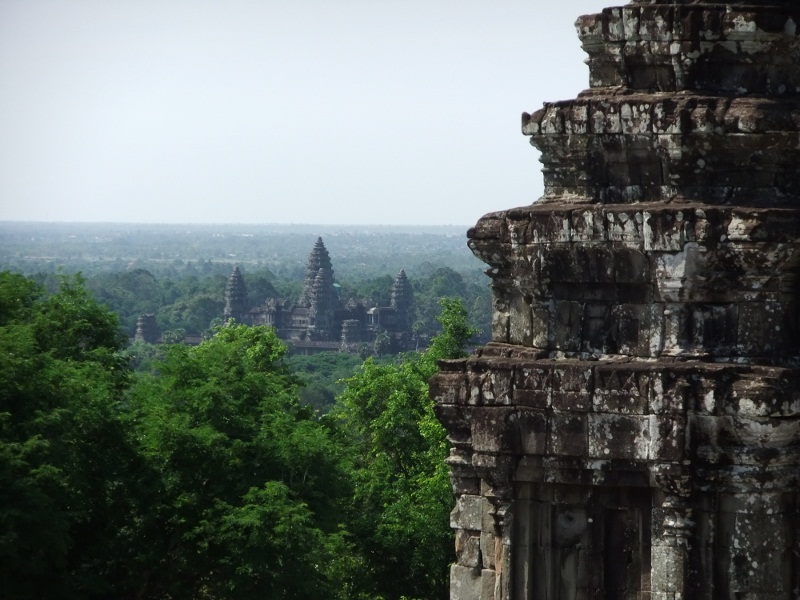
Our favorite view of Angkor Wat from Phnom Bakheng, the famous hill from which sunset and sunrise are watched by tourists each day.

While this temple complex bears the name of its most famous structure, Angkor Wat, it actually contains over 1,000 temple ruins which were the center of the Khmer Empire. It is an awesome place (truly “awe” inspiring, as the word was intended) that all travel lovers should add to their bucket list.

Tickets are required for entry into the Angkor Archaeological Park: 1-day, 3-day or 1-week passes are available. We opted for three days and made it to over 20 of the ruin sites. This amount of time was perfect for us, but if you fancy yourself an amateur archeologist, you may want to go with the 1-week pass.

Day 1

We started our first day early and full of energy and excitement to see Angkor Wat. We had been looking forward to visiting for many years. We found a tuk-tuk to drive us 6km north from Siem Reap to the entry point of the Angkor complex. Despite fellow travelers advising us to hire the tuk-tuk for the entire day, we decided to do things our own way (sound familiar?) and walk between the temples. Our first stop was the granddaddy of them all: Angkor Wat. From there, we set off on a trek through jungle roads and crumbling monuments. When the day was done, we had visited Angkor Wat, Prasat Kravan, Banteay Kdei, Ta Prohm, Ta Keo and Bayon.

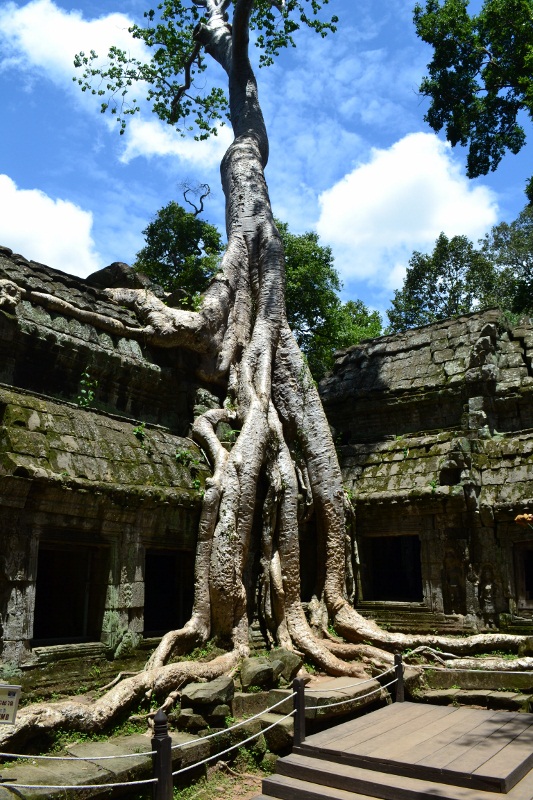
Ta Prohm is commonly referred to as “The Tree Temple” because of the numerous roots that have grown into and around the ancient ruins.

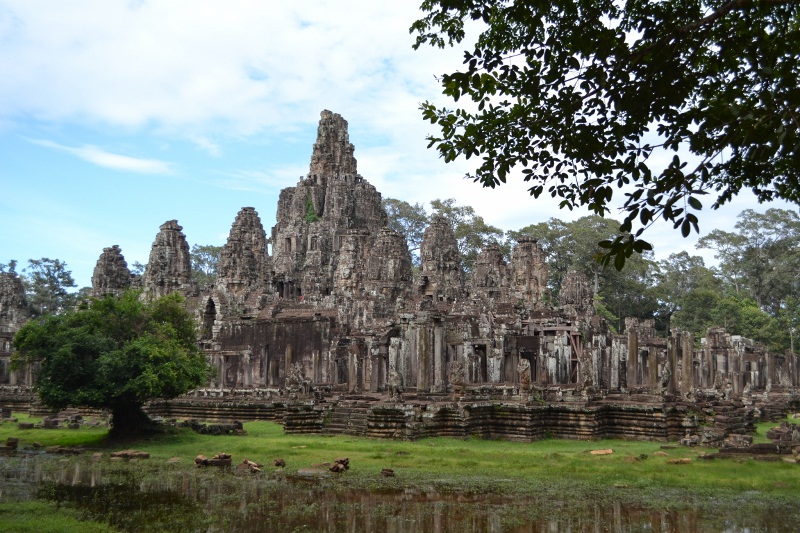
Bayon, the main temple within the ancient walled city of Angkor Thom

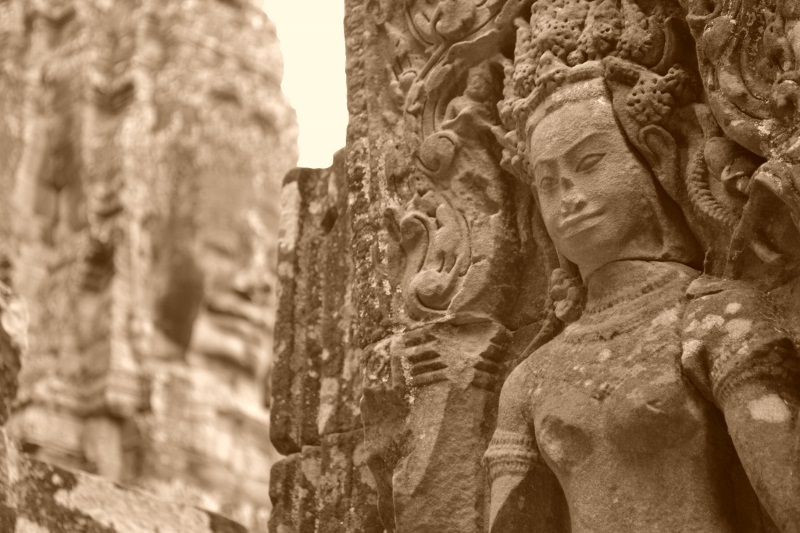
Bayon is filled with massive stone faces, one of which can be seen in the background here.

Day 2

After a very hot, sweaty and exercise-filled day, we came to our senses and opted to hire a tuk-tuk driver for our second day. It ended up being a great decision. We were able to cover more ground and see some of the further out temples that simply would not be walkable (unless you’re a crazed exercise fanatic that gets off on speed walking marathons).  Our first stop was Phnom Bakheng, a pyramidal temple atop a hill from which you can take in an aerial view of Angkor Wat (as pictured in the very first photo of this post). After viewing Angkor Wat from above, we visited Baphuon, the Royal Palace, Preah Khan, Neak Poan, Ta Som, East Mebon and Pre Rup.

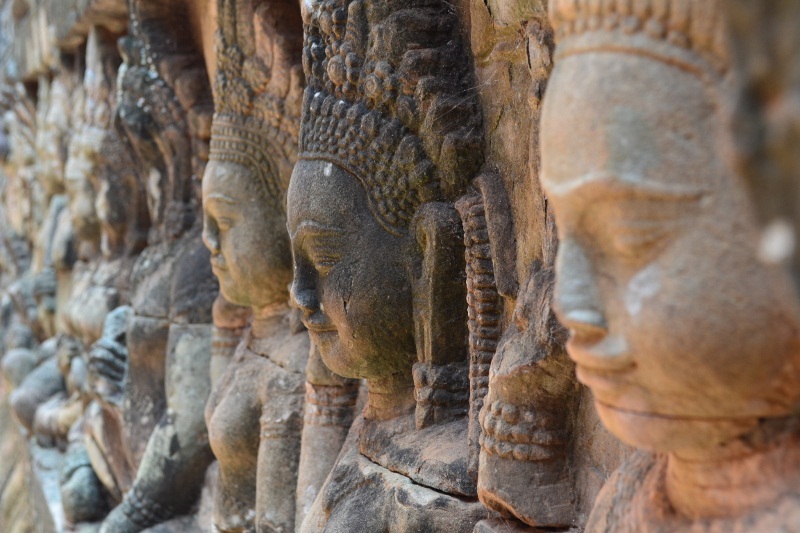
These detailed faces carved out of stone stretched on for hundreds of feet just outside of the Royal Palace within Angkor Thom.

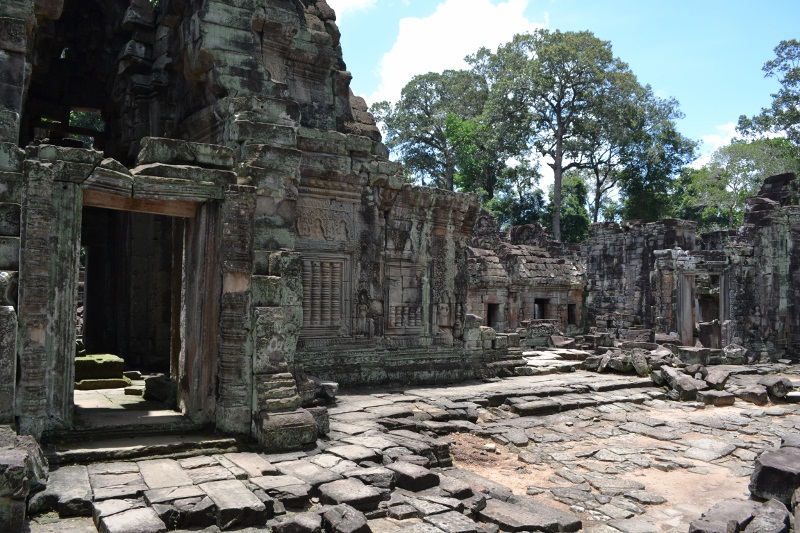
Preah Khan was one of the largest temples we visited in terms of area and also the least restored. The sheer amount of stone used to construct this building blew our minds.

By the time we reached East Mebon in the late afternoon, we were glad that we had hired a tuk-tuk. We likely would not have made it this far without a vehicle.

Day 3

After two days at the Angkor complex, we took a day off to relax and rest our sore mussels.  At only $5 USD per hour, a massage seemed like a pretty good way to spend the afternoon.  We had no idea what we were in for…we endured one of the roughest and painful, yet most effective massages we have ever experienced. Definitely one of those “hurts so good” moments.  We had planned on returning to the ruins the next day, but Amy awoke to a bout of food poisoning (and all that entails) so we took another day off.

The next day her situation had improved. We hired a tuk-tuk once again and this time set our sights on the temples located even further away from Siem Reap.  As would be expected, the more remote the temple the fewer the tourists. It was nice to escape the crowds as we enjoyed more of these magnificent ruins, including Banteay Srei, Banteay Samre, Preah Ko, Bakong and Lolei.

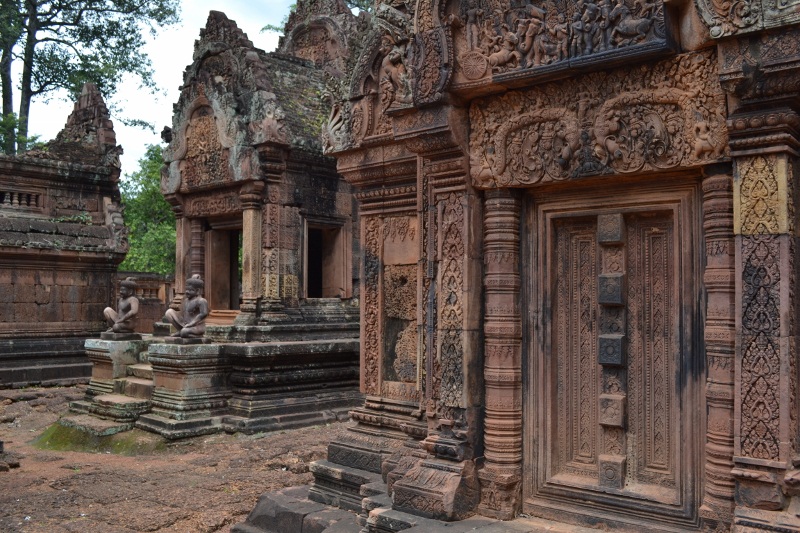
Banteay Srei is one of the furthest out temples from the heart of the Angkor complex. It has the most detailed stone carvings of any of the temples we visited, making it well worth the long journey.

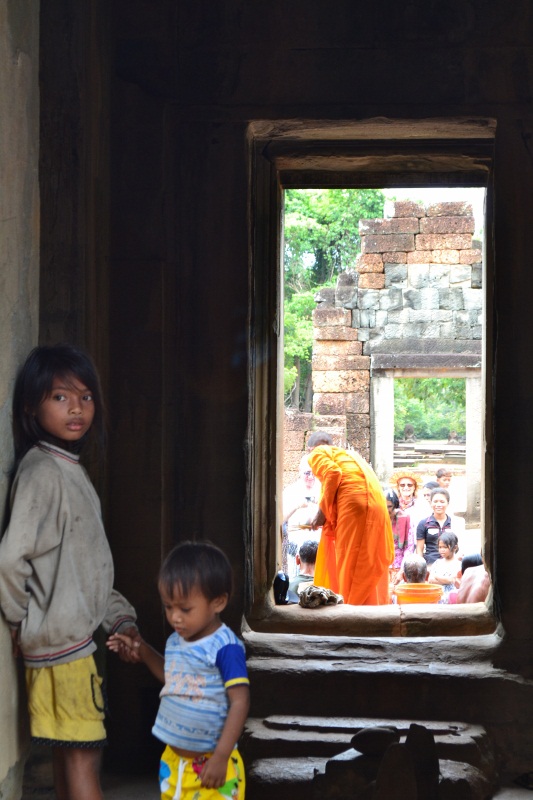
While visiting Banteay Samre, we came across a Buddhist Monk preforming a rain prayer over local villagers. Although many of these temples are ancient, some are still used for religious ceremonies.

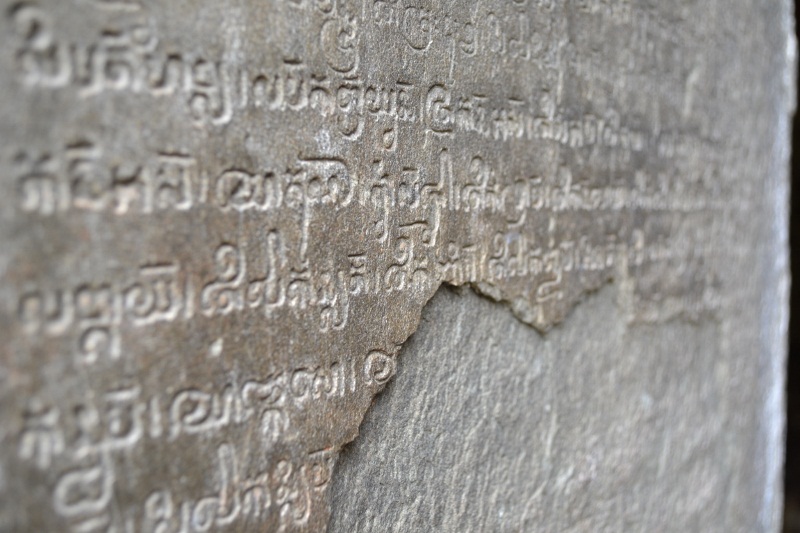
Beautiful Sanskrit carvings lined the door frames of Preah Ko

The main tower of Bakong was built to represent the mythical Mount Meru, also symbolized by the central structure of Angkor Wat.

Too often during our travels we visit UNESCO World Heritage Sites that have been spoiled rather than preserved by being added to this list; many of the sites feel more like Disneyland than places of great historic and cultural relevance.  This was not the case with Angkor Wat.  Despite the millions of visitors annually, the temple complex retains a great deal of authenticity and truly deserves its reputation as a world wonder.  To put it plainly, no matter who you are, Angkor Wat will not disappoint.

Read Full Post »

After nearly a month of traveling Vietnam from north to south, we were eager to depart Saigon and make the journey across the border into Cambodia. Land crossings in this area of the world are notorious for being unorganized and prone to inflated fees, and our crossing fit the bill exactly. We managed to pay less than others on our bus, but were still forced to fork over an “express visa fee” that went straight into immigration officials’ pockets. Gotta love land borders!

After forking over some extra cash, we had  Cambodian visas in our passports

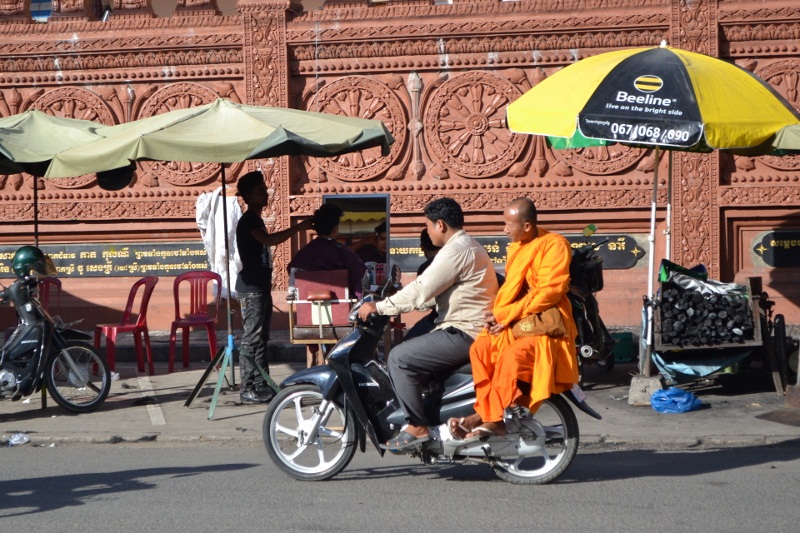
Once across the border, however, all the tension faded away. Cambodia is home to large, flat expanses of sparsely populated countryside, which can really make you feel like you are in the middle of nowhere. Even as we approached the capital city of Phnom Penh, it became clear that Cambodians take life a little bit slower than their Vietnamese neighbors. Buddhist monks stroll through the streets, the sound of car horns is much less prevalent and the locals seem to have smiles permanently glued to their faces.

A monk catching a ride down a Phnom Penh street

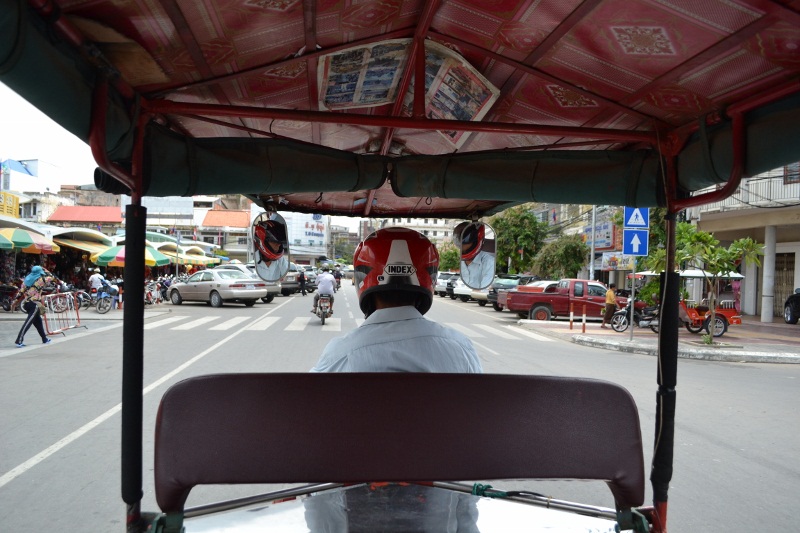
For many travelers, Phnom Penh is merely a stop-over on the way to Siem Reap and Angkor Wat. For us, spending a few days in the capital allowed us to learn more about the country’s unstable and tragic political history in the last century. We decided to make an early start one morning and set off for an all-day power tour of the city. Our first stop was the Royal Palace.  There are no official bus routes in Phnom Penh; we hopped aboard a tuk-tuk to get there. These motor carriages serve as the city’s public transit system.

Cruising in a tuk-tuk

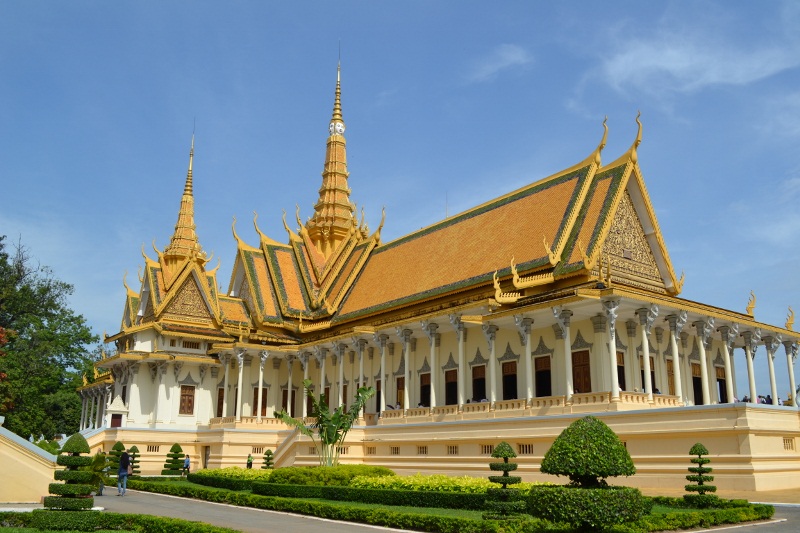
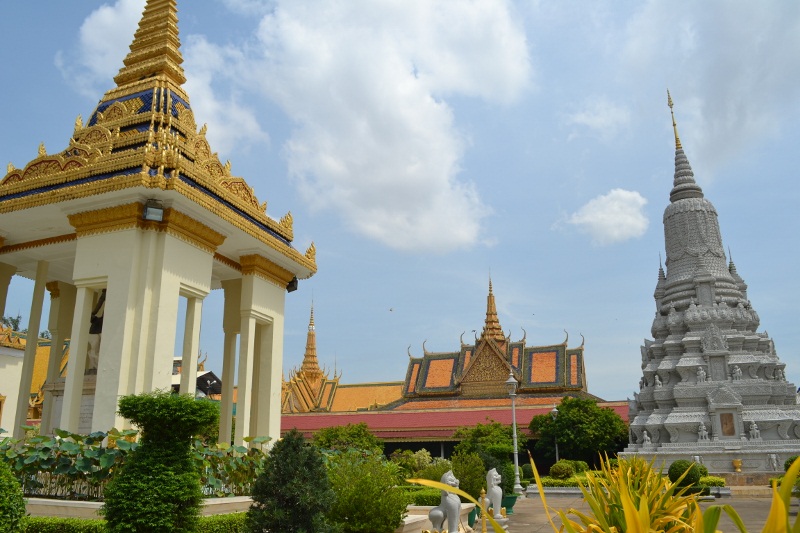
We took our time exploring the Royal Palace and admiring the colorful layered roofs and traditional Khmer architecture. The well-manicured grounds and stunning buildings offer a glimpse back into the early 20th century, before Pol Pot and the Khmer Rouge.

Throne Hall in the Royal Palace

Courtyard of the Silver Pagoda

Following the palace we grabbed a quick bite to eat and headed back along the river to see where the city of Phnom Penh gets its name. The city existed for centuries before becoming the capital and the story goes that an old lady named Penh found four Buddha statues floating on a log during a massive flood. She had a temple built upon the tallest hill in the area to house the Buddhas. “Phnom” means hill in Khmer, and since the temple was constructed under the orders of Penh, the city became known as Phnom Penh, or Penh’s hill.
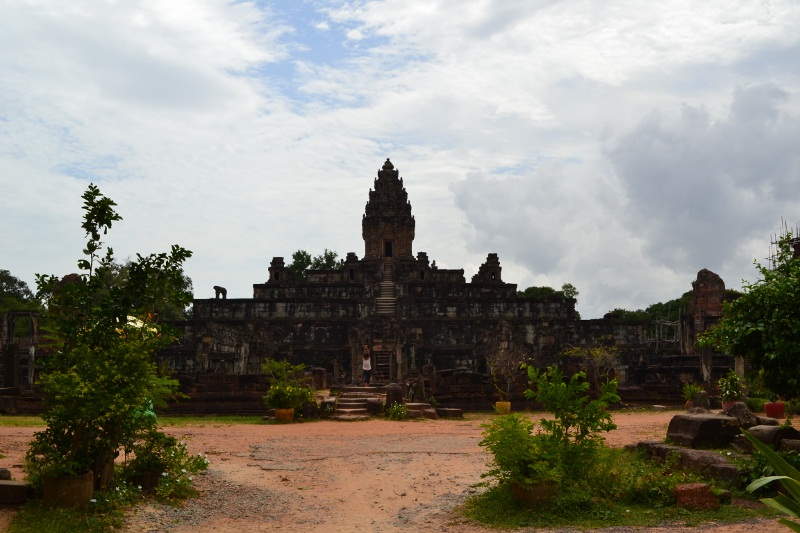
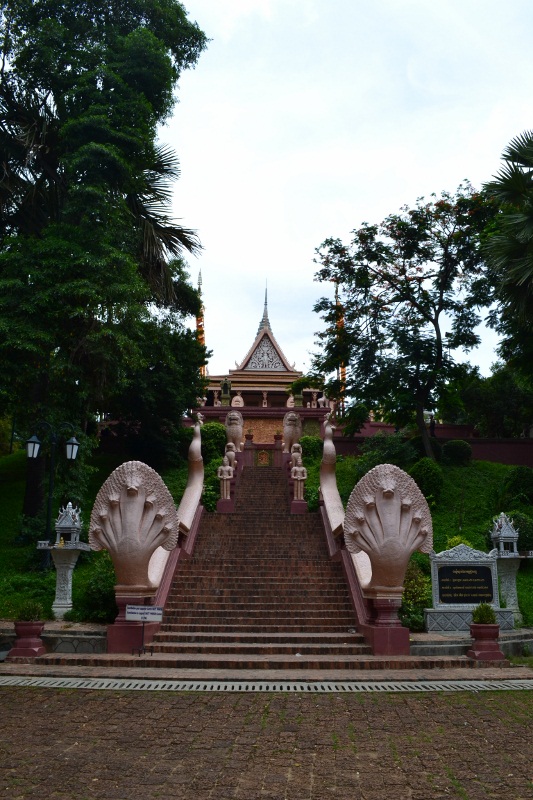
Wat Phnom

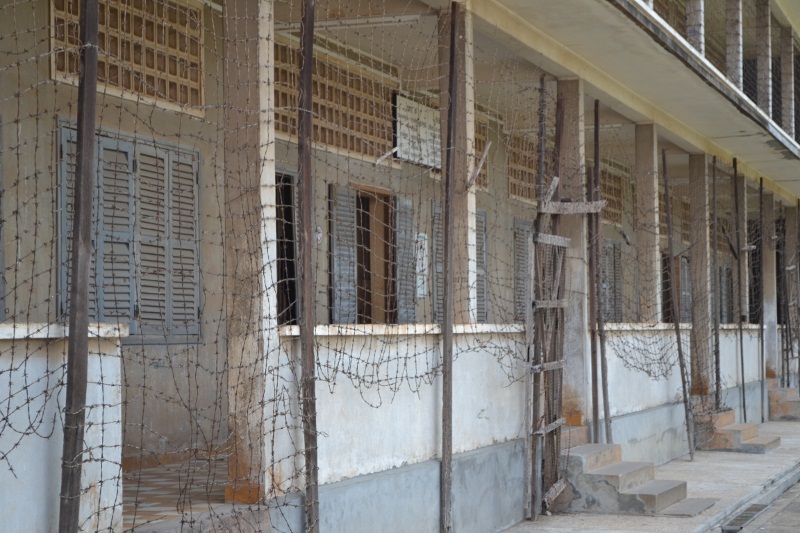
After a brief stop at the Central Market, we hoped on a tuk-tuk toward Tuol Sleng Genocide Museum. Formerly S-21 prison, and a primary school before that, the Khmer Rouge used this complex to detain, torture and execute Cambodians during their horrific reign in the 1970s.

One of the four buildings that make up S-21 Prison, now the Tuol Sleng Genocide Museum

Sadly, one of Phnom Penh’s major tourist draws is an area outside the city known as “The Killing Fields.”  This area contains the largest mass graves from the Khmer Rouge era. Despite frequent offers from tuk-tuk drivers to take us there, we made a conscious choice not to visit.

By the end of the day, we felt that we had received a pretty good crash course in recent Cambodian history. We had come to Phnom Penh with a brief background after reading First They Killed my Father, but touring the city made what we had learned that much more impactful. As though in line with our somber afternoon, a wall of rain poured down from the skies that evening.

The next day we awoke to a sunny morning and prepared to explore a brighter time in Cambodia’s history, the age of the Angkor people. Despite the seven hour ride ahead of us, we happily boarded our bus and took off for Siem Reap.
Read Full Post »

« Newer Posts - Older Posts »