Feeds:
Posts
Comments

Archive for the ‘Travel’ Category

It took some discussion to figure out the best way to convey our thoughts on our transition from Europe to Asia. Technically speaking, we first visited Asia last week while in Istanbul; the city of is divided between two continents by the Bosphorus River, and we took a short ferry ride across one afternoon. That being said, our flight from Turkey to China will be the longest distance we have flown yet. For us it symbolizes a major shift for The Chamborres Expedition; so we decided that now is the best time to share our thoughts. We intentionally scheduled this post to publish during our trans-continental flight to China, so we are literally in the air as you read this!
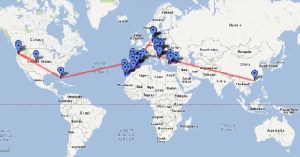
An updated map of our route so far. Click here to check out more details.

For those of you who are visiting our blog for the first time, we just wrapped up the first “segment” of our RTW trip. In the last 13 weeks we have been to 10 countries and before diving into the next part of our expedition, we wanted to take a moment to step back and reflect on the past three months, including some of our favorites (as well as the least liked moments) along the way.
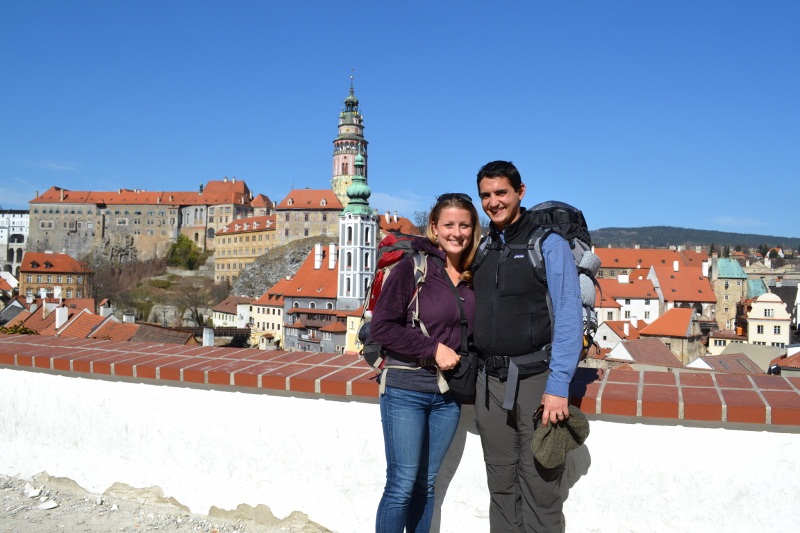
Traveling with our trusty packs

The first few weeks of our trip were surreal and filled with a sense of elation. The phrase “can you believe we’re finally on the road?!” was nearly a daily occurrence. You could call it the honeymoon phase.

As time went on and we became more comfortable in our roles as permanent travelers, we began to see Europe in a clearer lens. We realized that the continent is not as cohesive as it appears on the surface. Since arriving in Europe via Barcelona on January 16th, we have traveled in and out of the EU, while hearing numerous languages, exchanging many different currencies, and learning about the extremely diverse history and culture of this incredible continent. We have found that Europe is often labeled as “not that different than home” by Americans, Canadians, Aussies and Kiwis. Yes, English is widely spoken, and yes, the food and culture are not as seemingly exotic as in other continents; however, anyone who takes the time to get to know Europe will realize that there are many lessons to be learned here.

Countless times during our trip we have said “This country is amazing. We could spend a whole year here and still not see everything.” That’s the truth. When you scratch the surface of something great, you naturally want to dig deeper, but eventually we found ourselves yearning for more excitement, seeking that thrill that we had when we stepped on the plane for Spain. We realized that we were frequently talking about how stoked we were to get to Asia: to step further outside of our comfort zone; to be forced to play charades at every corner because people don’t speak English; to eat something so deliciously mouthwatering only to realize it’s dog meat; to bike through the insane streets of Bangkok. We may take back these wishes once we get to China, but this is what we have been yearning for in the past few weeks.

Our last full day in Turkey was spent similarly to our last days in Denver before the beginning of our trip: running errands, organizing, and mentally preparing for a big change. We wanted to make sure our laundry was clean, our medicine cabinet was well stocked, that our confirmation emails were printed out, and that we had backup copies of our passports and visas tucked away in our packs. Putting our time in central Turkey aside, landing in China will be for both of us a first time in Asia. We are a bit anxious and a lot excited.

In our post One Month ‘til Departure, we each listed the things we were most looking forward to during our RTW trip. For Amy, one of those things was Asia, and it still tops the list. She had mentioned an eyelash curler as a luxury item she couldn’t go with out, but has since stopped using it and make-up all together. Mike was excited for the pork in Spain (mission accomplished!) and also to explore Istanbul (check that one off too). Up and coming on his list are relaxing on the beaches of SE Asia and seeing the Great Wall of China. Lots of firsts await us in Asia, and we are excited to share them with you. Accessing our blog in China may prove to be a challenge, but either way we promise some great posts about Istanbul and Ephesus in the near future.

To wrap up this post, we thought a run-down of some of the bests and worsts from our visit to Europe, Morocco and Turkey would be a fun read. We are often asked questions like “what has been your favorite thing so far?” and while that is an impossible question, we can definitely narrow down some very memorable moments:

  • Best Food – Lamb and couscous tagines in Morocco (Amy), Jamón ibérico de pata negra in Spain (Mike).
  • Best Hosts – The Frederiksens who housed us, fed us and toured us around Denmark for a week.
  • Best Beach Town – The friendly people, cobbled streets and incredible cliffs of  Lagos, Portugal.
  • Best TourPort wine tasting in Porto, Portugal.
  • Best Train RideThe journey from Mostar to Sarajevo. Not necessarily the best train itself, but definitely the most beautiful scenery.
  • Best Hostel Atillas Getaway Traveler’s Resort in Selçuk, Turkey (go here if you are visiting Ephesus!)
  • Worst Hostel Hostel from hell in Dubrovnik, Croatia.
  • Worst 1st ImpressionMarrakesh, Morocco. What a crazy first 24 hours!
  • Worst Week – Stuck with the flu České Budějovice, Czech Republic.
Read Full Post »

From the early days of planning our RTW trip, we knew that we wanted to visit Istanbul, however we didn’t know much about other destinations in Turkey. After reading an article in the New York Times, we became very interested in a region called Cappadocia.

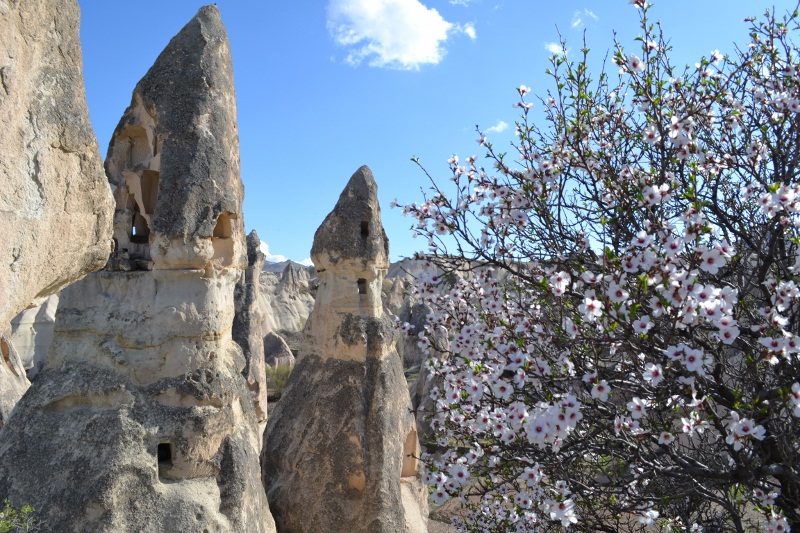
Spring blooms in Cappadocia

While we were able to find tons of info on organized tours of Cappadocia, there was not much out there for the independent traveler. What we could find about exploring on your own suggested that the only feasible option was to rent a car. Tours are not our style, and renting a car was out of our budget; what were we to do? We caught a break when Amy’s mom sent us a link to a fantastic blog named Captivating Cappadocia. We contacted the author, and he kindly provided useful suggestions about a car-less approach to Cappadocia. Thanks Duke! Based on his advice, we decided to stay in Göreme, which proved the perfect home base for exploring the region.

Since we found it a bit difficult to plan our trip within a short time frame and on a budget, we have outlined our 4-day itinerary below so that other backpackers may use it as a reference. Keep in mind that this is one of a million different possibilities, and nearly everything can be planned after you arrive, so don’t worry!

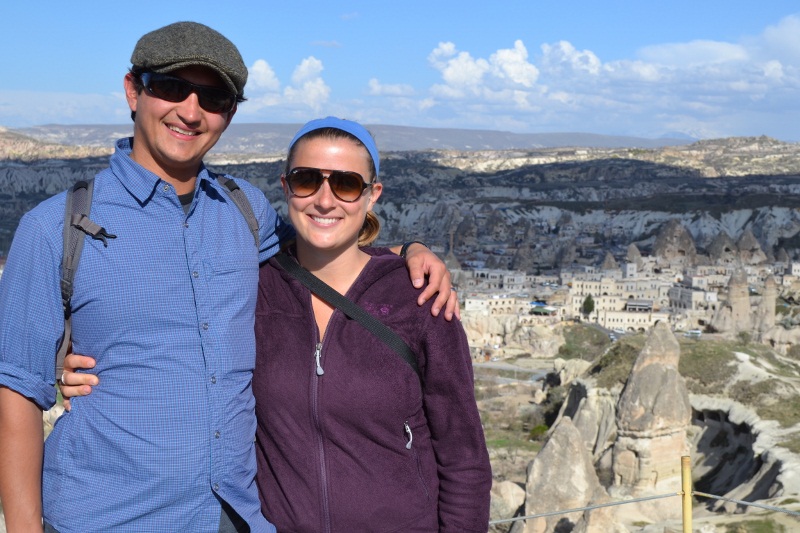
Taking in the spectacular view from the Göreme Panorama

Before You Leave

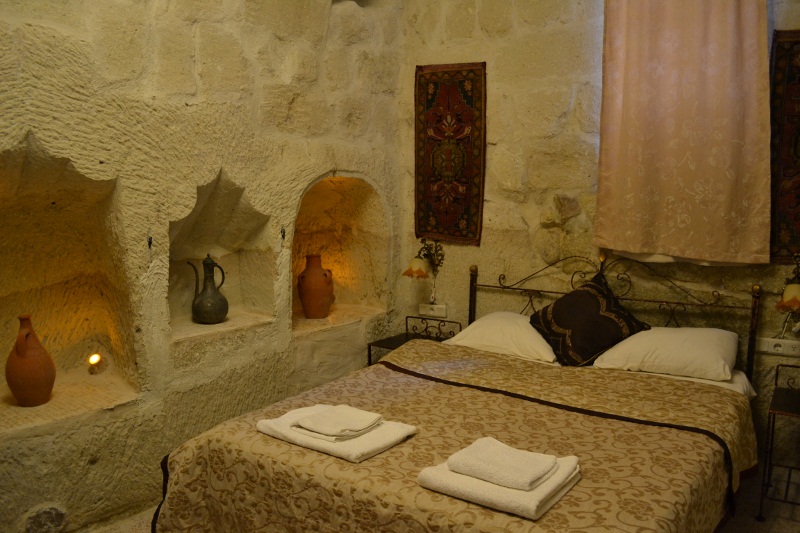
Lodging: Do some research online before you leave and narrow it down to 2-3 places that fit your needs. Then negotiate via email for the best deal. We found that many hotels are willing to lower their rates in exchange for cash payment or multiple night stays. Also, we suggest staying in a “cave hotel” because it is fun and unique to Cappadocia; although more expensive than a hostel, it is still doable on a budget.

Our cave room!

Bus ticket: While a bus is not the fastest method of transportation, overnight buses are the most affordable way to get from Istanbul to Cappadocia. A ticket runs about 50-60TL and may be purchased from almost every travel agency in Istanbul. You should try to reserve a few days in advance as buses often fill up.

Day 1

Most overnight buses arrive in Göreme between 7:00-10:00am. Go drop off your stuff, grab a quick breakfast, and head straight to the Göreme Open Air Museum. It’s a short 1km walk from the town center and will quickly have you enchanted by the ancient cave dwellings and well-preserved rock churches.

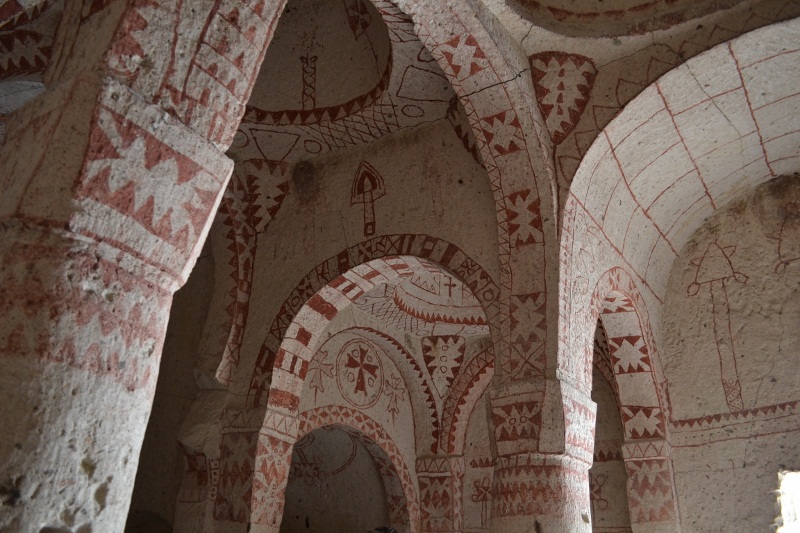
The Göreme Open Air Museum is an ancient Christian city that consists of multiple churches, chapels and cave dwellings.

Amazingly well-preserved frescos in the Elmalı (Apple) Church

The Chapel of St. Barbara – a columned rock church

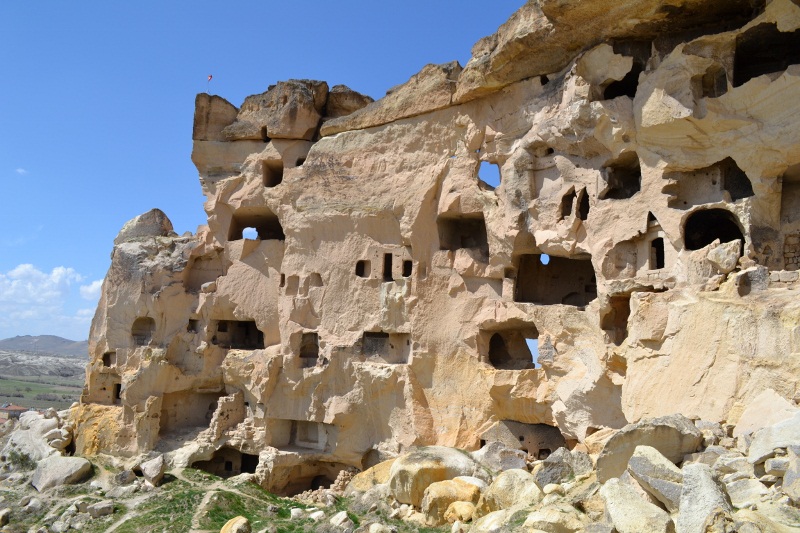
After exploring the museum, head back into town for lunch (there are tons of delicious and affordable places to choose from). Then, hike north to Çavusin. Here you will find dwellings that have been carved into the cliffs which are open to explore on your own for free.

We could have spent all afternoon exploring the caves of Çavusin.

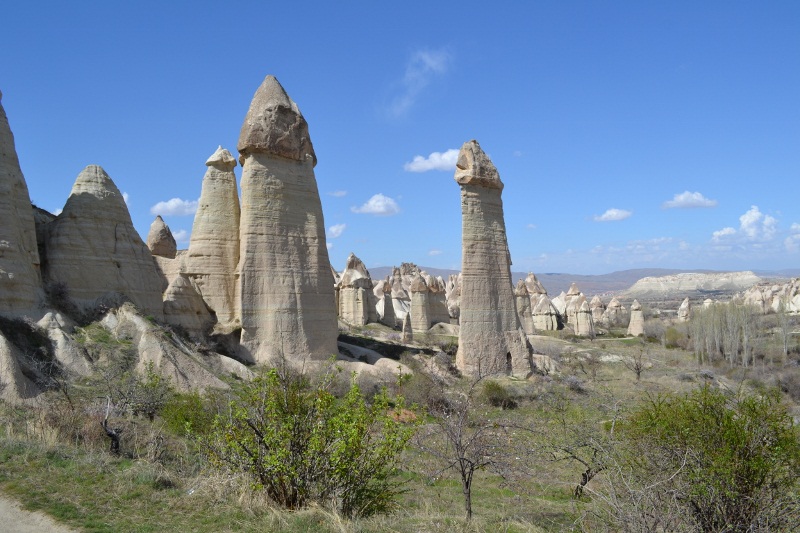
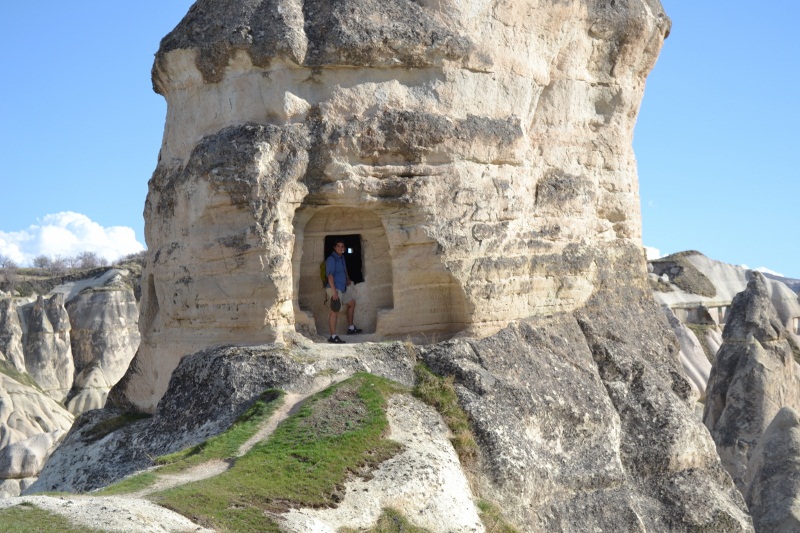
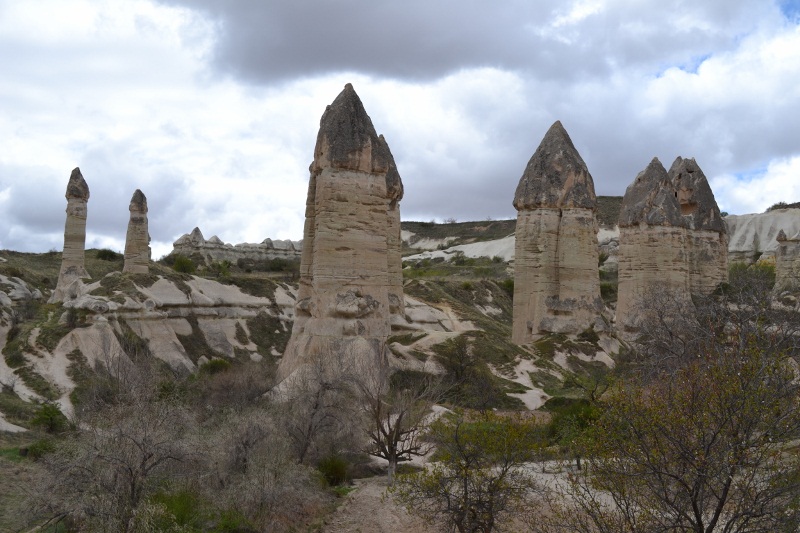
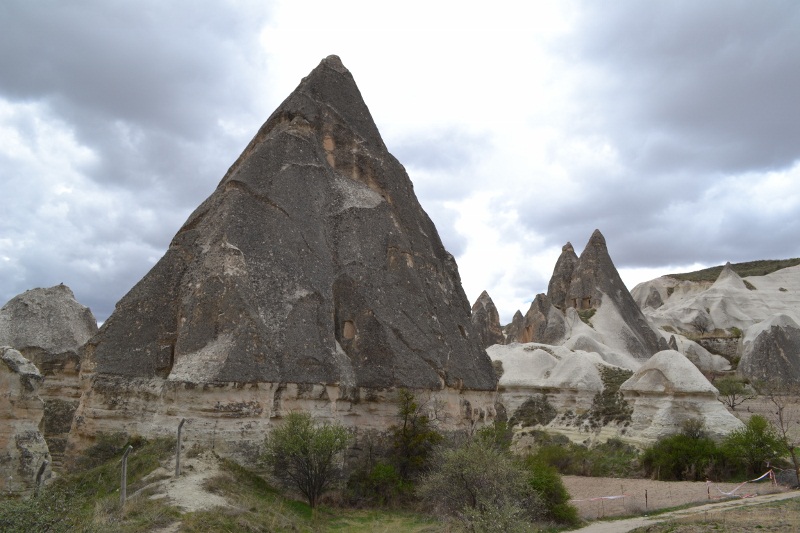
On your way back to Göreme, detour off of the main road through Love Valley. The rock formations in this valley were some of our absolute favorites!

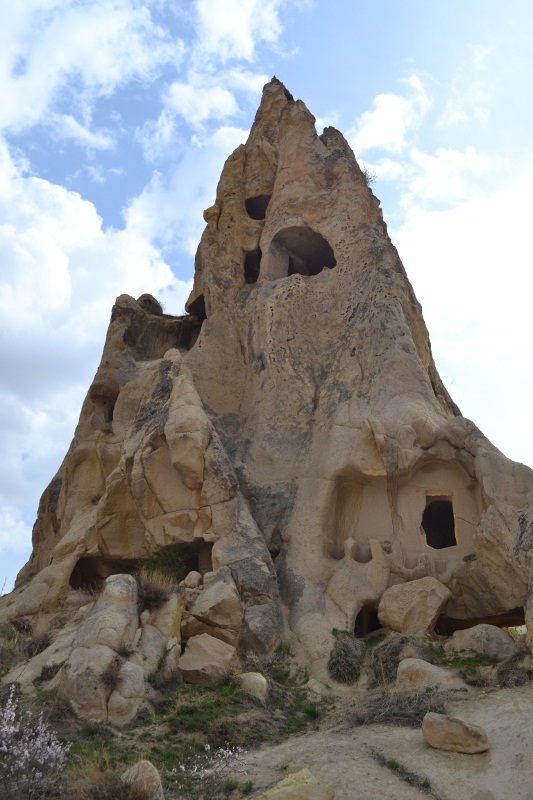
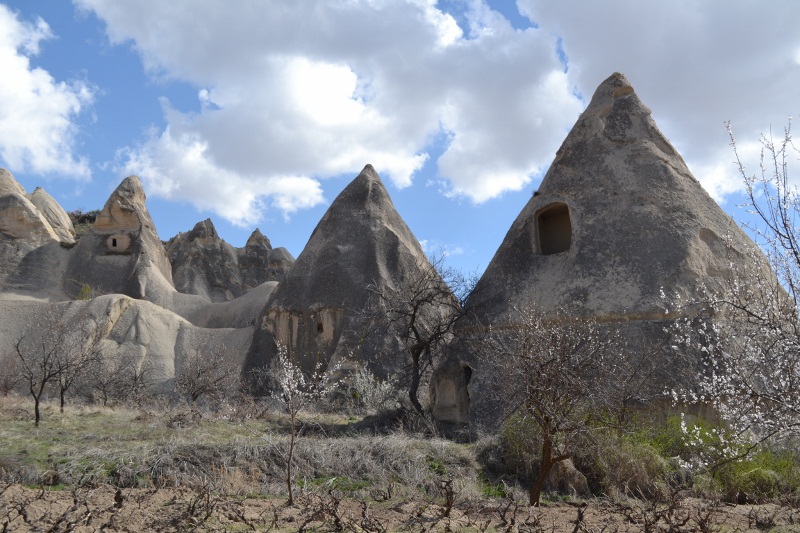
Pyramid-shaped fairy chimneys in Love Valley

“Fill-in-the-blank”-shaped fairy chimneys in Love Valley

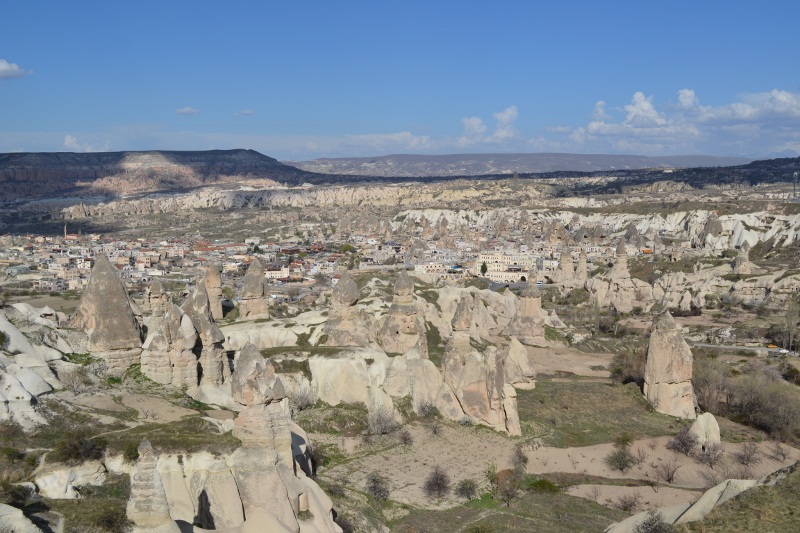
As you come to the end of the Love Valley, you will arrive at the Göreme Panorama where you can catch great 360 views of the surrounding area.

Göreme Panorama – we cannot imagine what people back in the day thought when they first arrived to this incredible place.

Finish your day of hiking with a short trek back to Göreme through the fairy chimneys which sit just below the panorama.

Mike exploring one of the many fairy chimneys near Göreme

Based on this itinerary, we estimate that your legs will do about 13km of walking. So wear good shoes, and bring plenty of water. If that distance seems a bit too intense, there are plenty of bicycles, ATVs and motorbikes for rent in the area.

Day 2

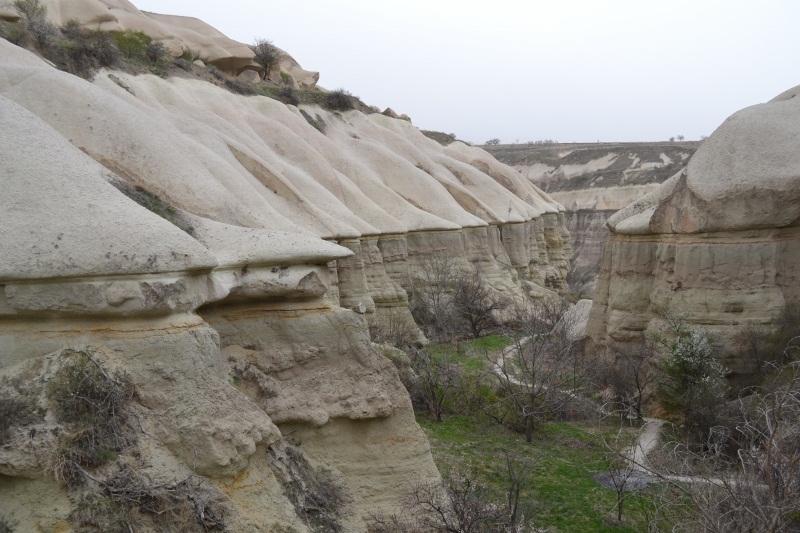
Eat a big breakfast and pack some snacks before setting off on another day of hiking. This time in the Rose and Red valleys, which sit to the north-east of Göreme. Here you will find spectacularly colored rocks, high cliffs walls, and of course, more dwellings and churches carved into the tufta stone.

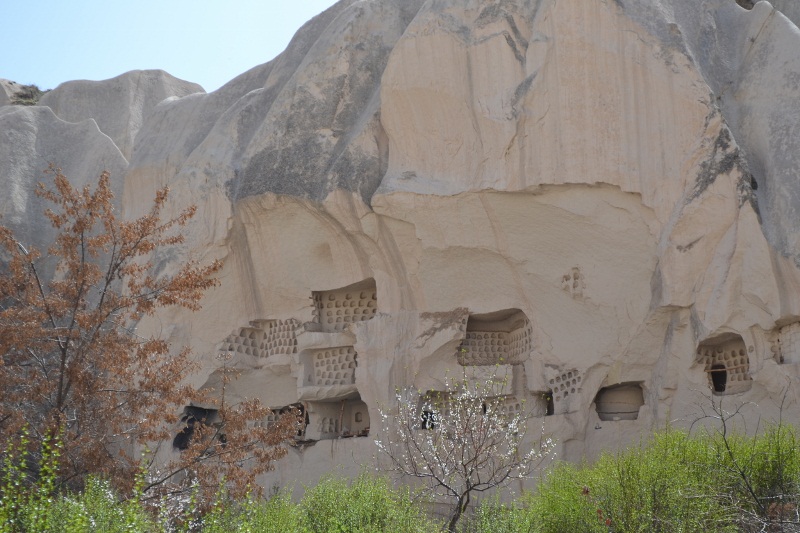
Pigeon coops carved into the rock cliffs of the Rose Valley

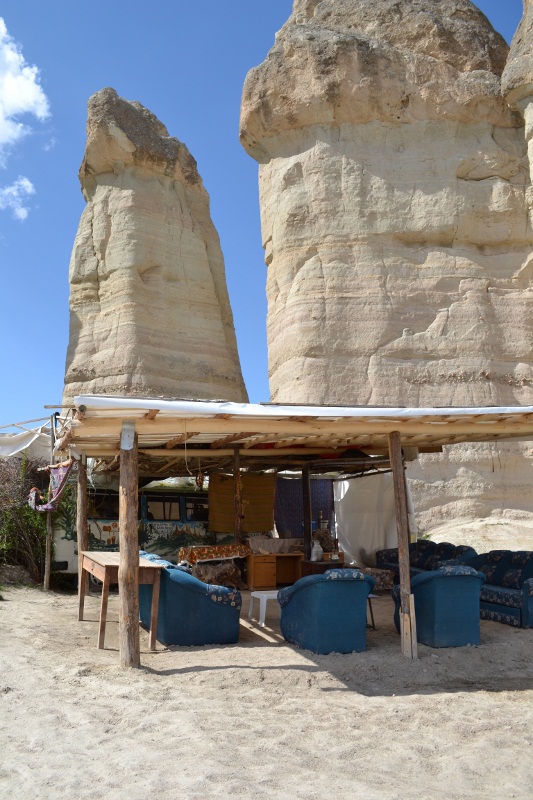
If the snacks you brought along aren’t enough, you will undoubtedly stumble upon some small outdoor cafes set up along the trail by entrepreneurial Turks.

Beautiful place for a cafe, huh?

After hiking, return to Göreme for a late lunch; then, rest with a nap in your cave hotel. When you feel rejuvenated, head to the mini-market and grab some beer or wine to enjoy while scoping the view from Sunset Hill. This viewpoint is located just a few minutes from the center of town and offers fantastic views of Göreme and the nearby valleys.

Day 3

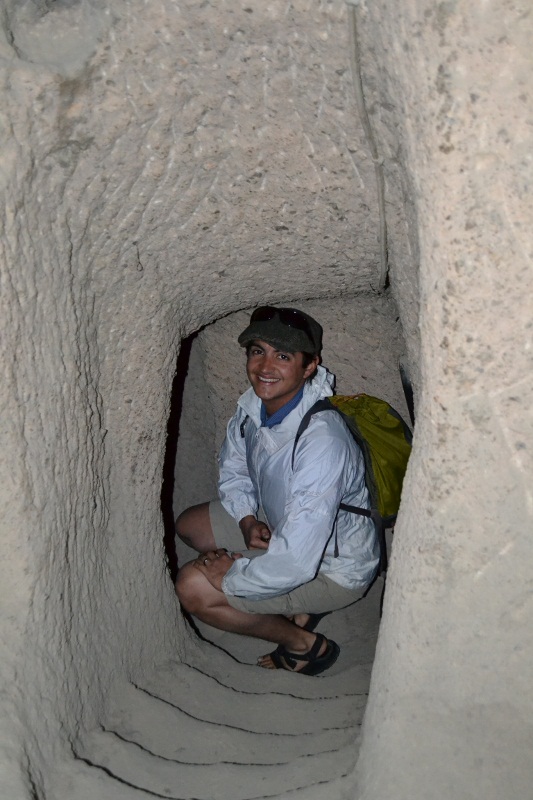
Spend your morning exploring one of the many underground cities of Cappadocia. We suggest the town of Kaymaklı. To get there, take the bus to Nevşehir, which departs every half hour from the Göreme bus station. After arriving in Nevşehir, hop on a dolmus (mini-bus) direct to Kaymaklı. There are tour guides available, but we suggest just reading about the city before you visit and navigating the tunnels on your own. You’ll be able to explore at your own pace this way. Don’t worry, you won’t get lost and stuck inside like the Turkish guides may claim after you decline their services.

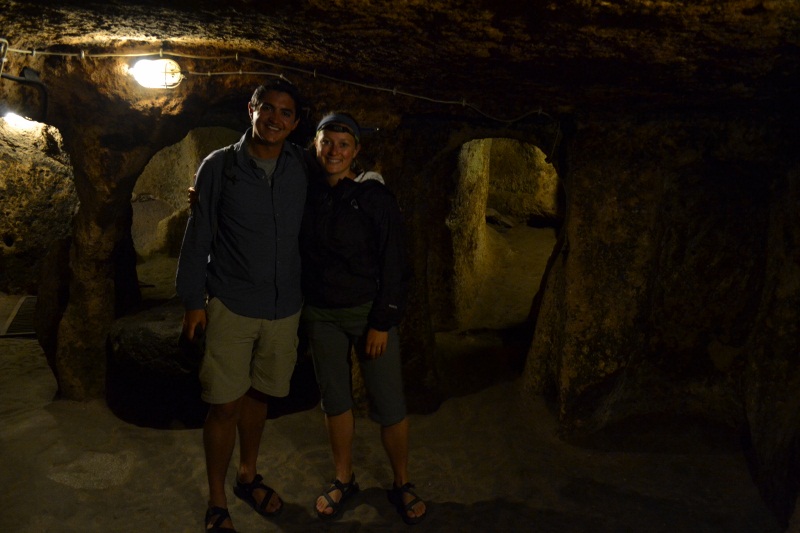
Mike ducking through a tiny passageway.

Bring a headlamp and/or flashlight with you – it will allow you to navigate through the ultra-secret parts of the underground city!

Those with claustrophobia or breathing conditions should be advised that the underground city contains many small passage ways and is quite dusty.

Visiting Kaymaklı should only take a half-day. After lunch you have more time for…you guessed it, more hiking! The Pigeon valley hike is about 4km and runs between Göreme and the nearby town of Uçhisar. It is a great way to spend the afternoon after being confined to the small spaces of the underground city.

The mushroom top cliffs of the Pigeon Valley

Day 4

After three days of hiking, we felt deserving of some relaxation. Sleep in and have a late breakfast. Most hotels will allow you to store your luggage while you enjoy your last day in Göreme. We suggest spending some time at a tea house and chatting with the owner or planning your next travel move, and then ending your visit with one final hike through the Zemi Valley.

More interestingly shaped fairy chimneys

Taking one last hike in Cappadocia through the Zemi Valley

If you are too beat to even think about hiking, there is a Hamam (Turkish bath) located right by the bus station where you can enjoy a spa day before taking another night bus out of Göreme.

This 4-day budget itinerary is definitely centered on hiking the valleys because we love hiking, hiking is free, and hiking is the best way to appreciate the natural beauty of Cappadocia. However, if your budget is a bit more flexible, the same basic plan could be modified to include an all-day tour (90-140TL) and/or hot-air balloon ride (300-450TL). Both activities come highly recommended by many people in the area. The good news is that pretty much whatever you do in Cappadocia, you are sure to have a good time.

Read Full Post »

We believe that each place you visit leaves you with just a little more knowledge about the world in which we live. Last week we traveled to Bosnia and Herzegovina where we expanded our understanding of the Bosnian War. This former Yugoslavian nation does not likely appear on many RTW itineraries, and, to be honest, we didn’t have very high expectations. Sarajevo simply appeared to be a good place to exit Eastern Europe, but we could not have been more wrong. The sights we saw and the stories we heard about the Bosnian War impacted us profoundly. We are going to share our impressions, but first want to clarify that it was a very complicated war. It would take years of research to fully understand what happened, if understanding war is even possible.

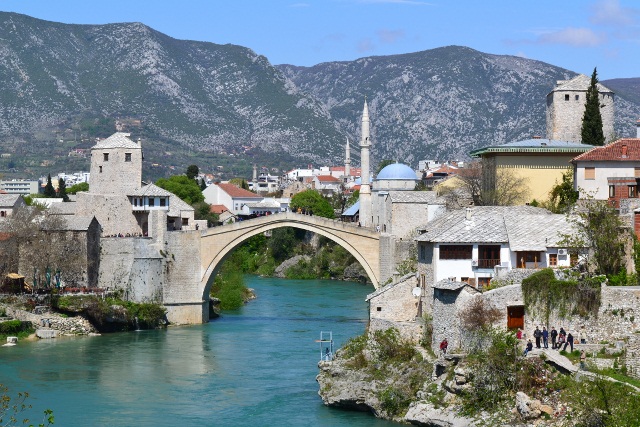
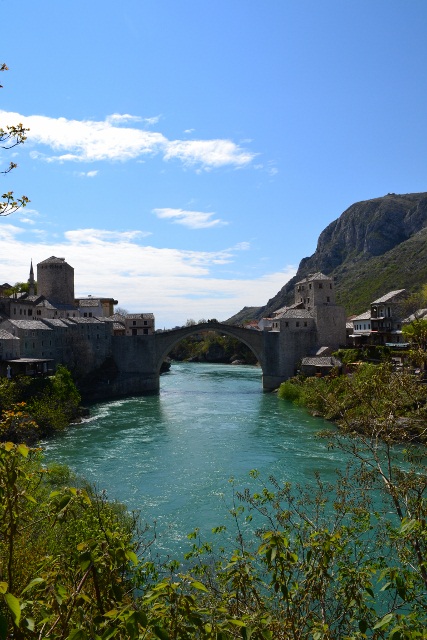
Our first stop in Bosnia and Herzegovina was Mostar. Situated in the Herzegovina region, this relatively small city of about 130,000 people is most well-known for its old bridge (Stari Most) which spans the Neretva river.

The stunning Stari Most.

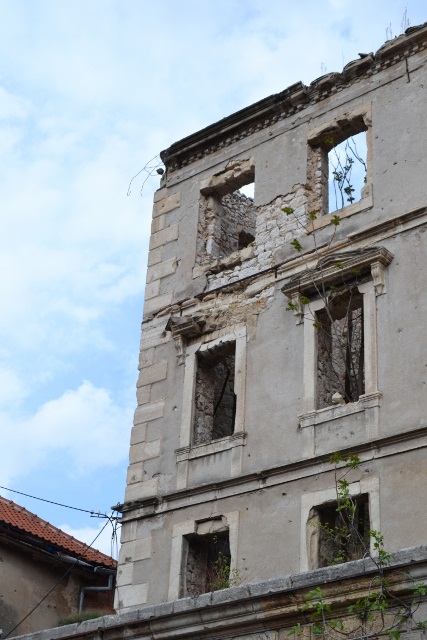
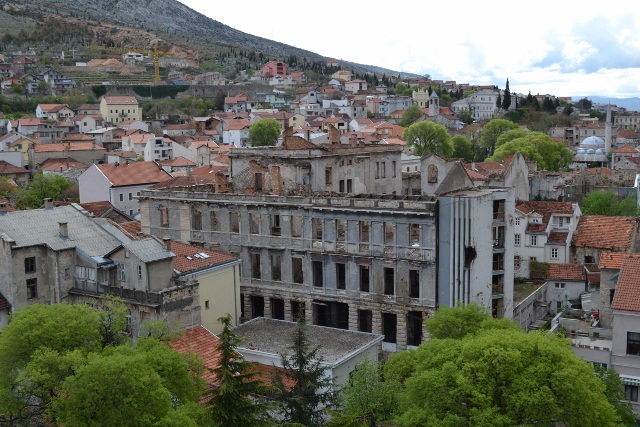
Sadly, however, the first thing that caught our attention in Mostar was not the bridge nor beautiful nearby mountains; it was the many bombed out ruins of buildings. Despite the nearly 15 million dollars that have been put into the reconstruction of the city since the war ended in 1995, many buildings remain in shambles.

Scars from the war can be seen everywhere.

Over the years, we have both visited developing nations and have seen poor living conditions, but witnessing the destructive power of war is something completely different. It left us feeling quite somber as we wondered through the town.

View of Mostar from the Old Bridge Museum.

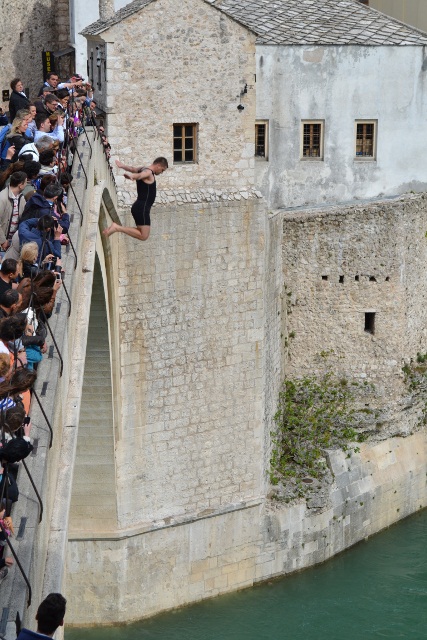
After an evening of pondering our first impressions of Bosnia and Herzegovina, we decided to check out the brighter side of Mostar and see why it is a top tourist destination. Stari Most is indeed a magnificent bridge, and its white stone arch makes a beautiful contrast against the brightly colored, turquoise-blue water of the river. Our first walk across the bridge was met with an overwhelming cluster of camera-in-hand tourists peering over the edge. We quickly noticed that the crowd had formed to watch a group of locals jumping off the bridge into the quickly moving current below.

The things some people will do for a buck (or a Mark)…

At the Old Bridge Museum, which is housed in one of the bridge’s two towers, we learned that the original bridge was built in 1557 for the Ottoman Sultan Suleiman the Magnificent. Like many buildings in Mostar, Stari Most was greatly affected by the war. In fact, after standing for more than 400 years, the original bridge was destroyed during a shelling on November 9, 1993. Reconstruction of the current bridge was not completed until 2004.

The reconstruction of Stari Most attempted to match it as closely as possible to the original, even using some of the same stones which were recovered from the river.

Our visit to Mostar happened to coincide with Easter. It was thought-provoking to spend this holiday in a primarily Muslim area; most people seemed to be going about their day as normal. You wouldn’t have known it was Easter at all were it not for the sound of church bells intermingled with the Islamic call to prayer. Interestingly enough, we entered our first mosque on Easter and walked to the top of the minaret where it is possible to take in panoramic views of the town.

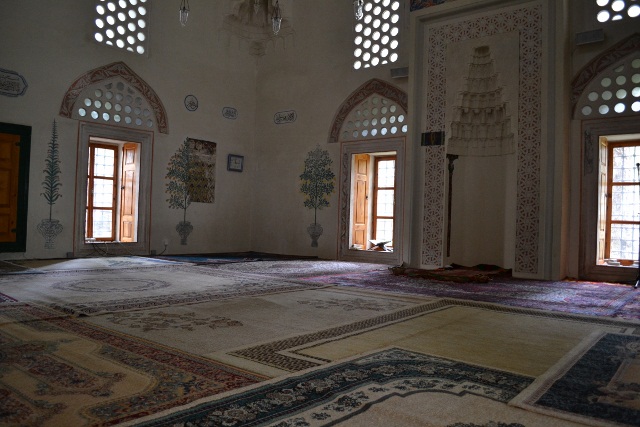
Interior of the Karadjoz-bey mosque, the largest mosque in the Herzegovina region.

The Bosnian War was one of several wars that begun as a result of the dissolution of Yugoslavia and occurred when ethnic and religious tensions between Bosniaks (Bosnian Muslims), Serbs (Orthodox Serbians) and Croats (Catholic Croatians) had reached a peak. While the wars have ended and the country of Bosnia and Herzegovina is now at peace (at least on the surface), signs of conflict between these groups are still present. One example in Mostar is the cross on Hum Hill. This hill was a key military position during the war and was the base of many Croat sniper and mortar attacks against the Bosniak population. Today, the hill is crowned by an imposing cross which stands at 33 meters high. For many Bosniaks, it is viewed as an attempt by Catholic Croats to claim ownership over the city. The city’s Croat population, however, argues that Muslim monuments (i.e. numerous mosques and the Stari Most) dominate the city’s old town. For the Croats, the construction of the cross in 2000 simply meant having a monument to call their own. Regardless of which side you’re on, the cross on Hum Hill is just one example of how the war continues to impact society today.

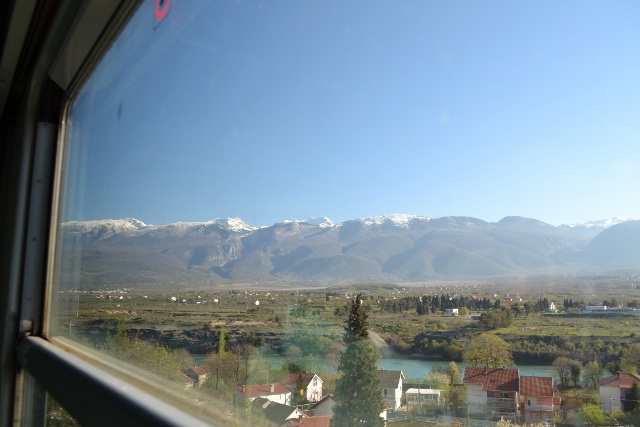
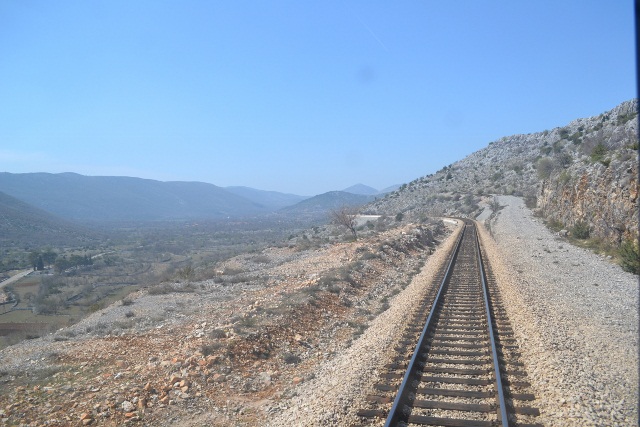
After a few days in Mostar, we caught a morning train to Sarajevo. In a recent post we mentioned how much we love train travel, and this trip was no exception. The train ran along the Neretva river, through rolling hills, and eventually, into snow-capped, rocky mountains. The two and a half hour ride was simply spectacular. For only $6 per person, it may be the best money we have ever spent.

Our attempt at capturing the beautiful train ride from Mostar to Sarajevo.

As the train pulled into Sarajevo, it was back to reality. While the city appears to have recovered and rebuilt more than Mostar, many buildings are still riddled with bullet holes and crumbling from mortar blasts. Yet, at the same time, the city has the vibe of a thriving European capital.

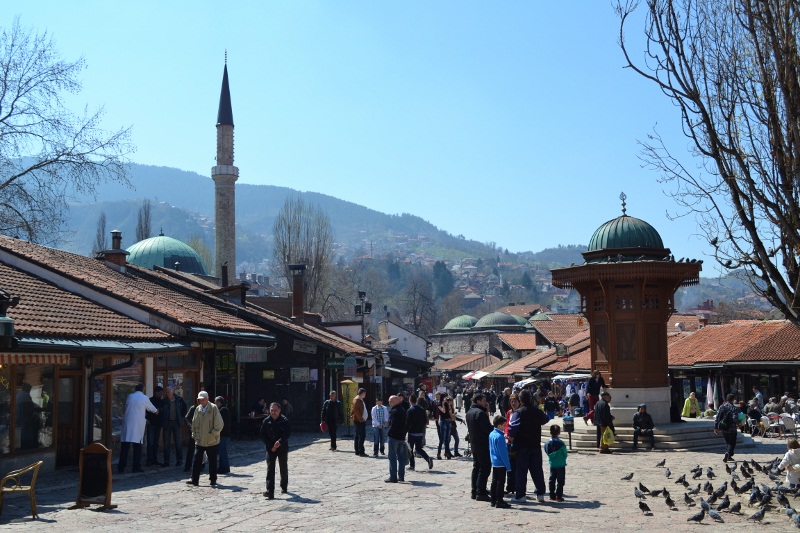
Bascarsija Old Town Square in Sarajevo

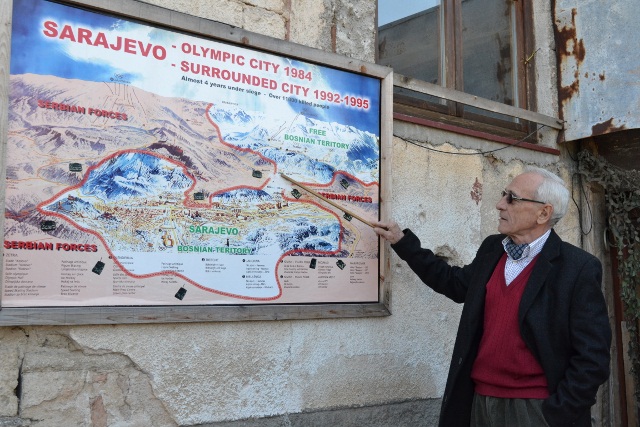
Unfortunately we only allowed ourselves one day and night in Sarajevo, but we think we made the most of it. Wanting to learn more about the war, we signed up for a “Tunnel Tour” through our hostel which is run by a family from Sarajevo. We learned so much from Saed, the father, who shared his knowledge about the history of the war and also many personal stories. He and his family lived through four years of war in the same building where they now run their hostel. It was chilling to hear him explain their daily routine of waking up before the gunfire and bombing began at 5am and relocating to the basement where it was safer.

Soaking in Saed’s stories and knowledge.

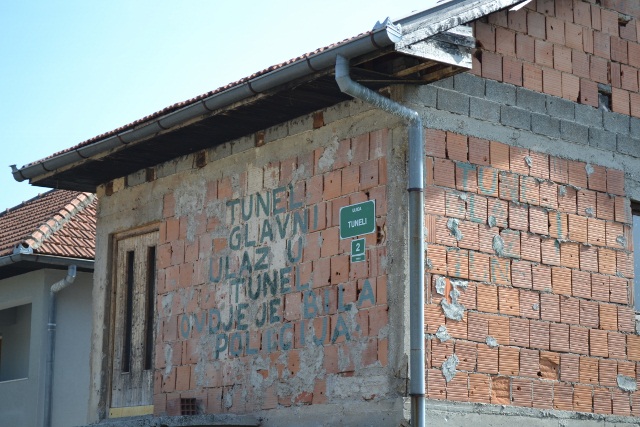
During the tour, we were driven all over the city of Sarajevo as Saed explained the landscape. An important note is that almost all of the buildings from the 1984 Olympic Games were destroyed; some have been rebuilt with donations from the international community, while others have been lost forever. We discussed what the city may have been like today if the war had never happened. It was growing rapidly and prosperous enough to attract the Olympics in ’84, but by ’94 was the centerpiece in a savage war. The name “Tunnel Tour” stems from the most important site visited, the entry of a tunnel which runs below Sarajevo airport, connecting the former Olympic Village of Dobrinja to the base of the mountains. It allowed the people of Sarajevo to transport much needed supplies to and  from the outside world during the siege, and it was vital to their ability to hold off the Serbian forces.

Entrance to the tunnel

During our week stay in Bosnia and Herzegovina, we learned so much about the history of the country and the perseverance of the Bosnian people. We both recall hearing about the Bosnian War on the news when we were young; it was the first war that we remember happening during our lifetime. Perhaps because of this, it made our visit more impactful. While Bosnia and Herzegovina is not the most glamorous of destinations, it is certainly a thought-provoking and beautiful place to visit, worth adding to your next European trip.

Read Full Post »

When we woke up the morning after our hectic first night in Dubrovnik, we were ready to turn a new page and enjoy ourselves.

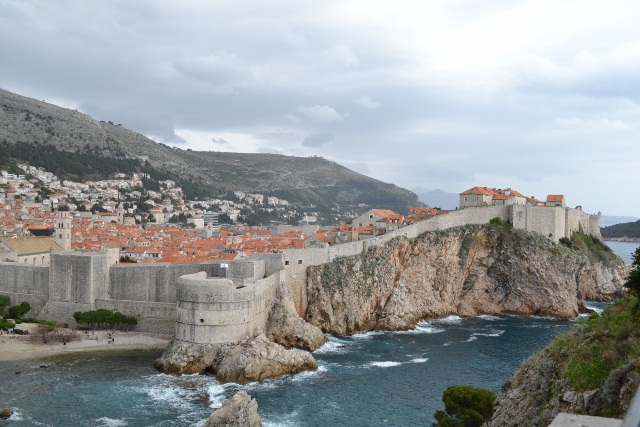
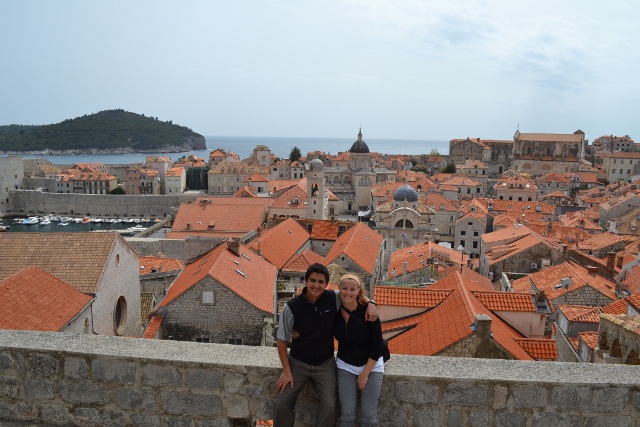
View of Dubrovnik’s old town from Fort Lovrijenac.

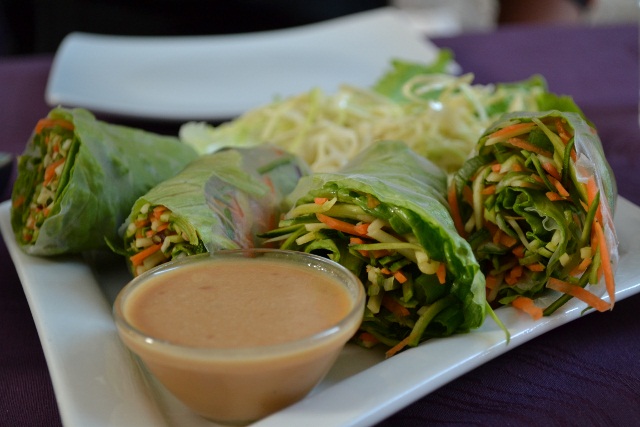
We started off by having lunch at a great vegetarian restaurant in the old town called Nishta. In central and eastern Europe, there is no lack of meat and potatoes, so stumbling upon a creative vegetarian restaurant was very refreshing. We loved this place so much that we ended up eating there three times during our short stay in Dubrovnik. By the way, we received no compensation for writing this, we just loved it that much. After a satisfying lunch, we were off to explore the town.

One of the many tasty dishes we enjoyed at Nishta Vegetarian Restaurant.

As a UNESCO World Heritage Site and one of the most picturesque old towns in Croatia, Dubrovnik has become a tourist hotspot. Even though we were there in the off-season, the town was still crawling with visitors; not our ideal way to travel, but worth it, considering the sheer magnificence of this place.

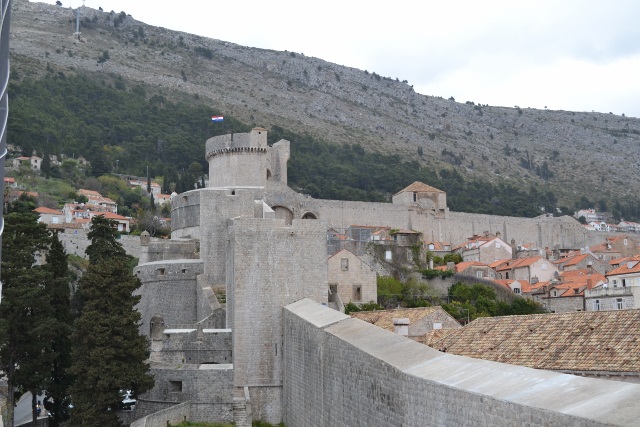
Even though the wall walk is only 2km, it took us nearly 3 hours! We were stopping constantly to snap photos and enjoy the view.

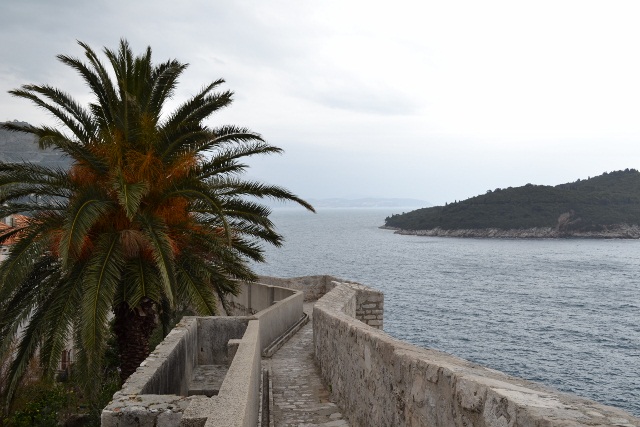
Many European cities that we have visited claim to have amazing castle districts; however, Dubrovnik is truly the definition of a town within a castle. The wall completely encircles the old town, with only four gates with which to enter and exit. The best way to soak up the spectacular views is to take the “wall walk.” Tickets cost 70 KN (about 12 USD) and allow you to walk along the entire exterior wall of the city and visit the nearby fort. The walk is about 2km long and provides a 360 degree perspective on the city, sea and nearby islands.

View from the wall towards Lokrum Island.

One of the things that amazed us was the massive amount of stone and man power that went into constructing not only the wall, but all of the streets and buildings located inside of the city wall. Everything is made of stone.

During the 1991-92 Siege of Dubrovnik, the castle walls proved to be more resistant against modern weaponry than newly constructed buildings.

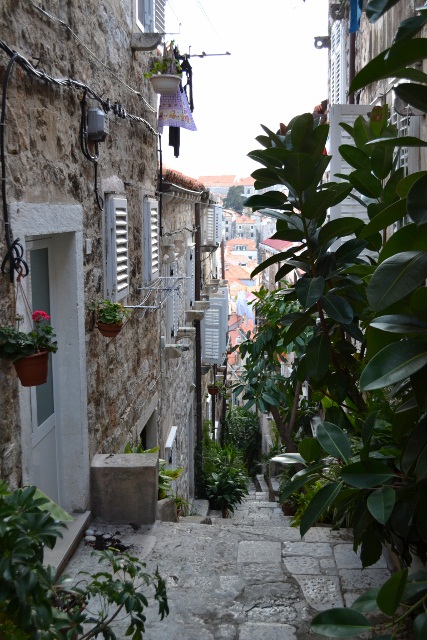
Another feature to note is that most of the city’s buildings are situated on steep hills, so exploring the town is quite literally breathtaking. After our first day we were exhausted, so we headed back to our hostel for a home cooked meal. The kitchen was located on the ground floor, and we couldn’t help but chuckle as we heard other tourists panting and gasping “I need a break” as they walked by our door.

The end of the 60+ stairs leading up to our guesthouse.

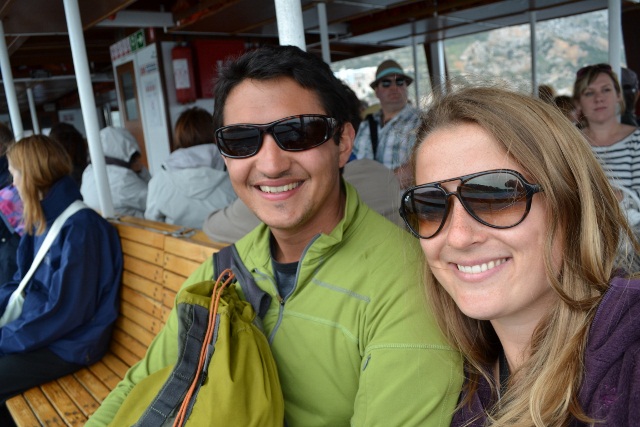
On one of our days in Dubrovnik, we decided to take a ferry to the nearby island of Lokrum. Being only a 15 minute ride makes Lokrum easily accessible as a half-day or full-day trip from Dubrovnik.

Heading out for a day of hiking on Lokrum Island.

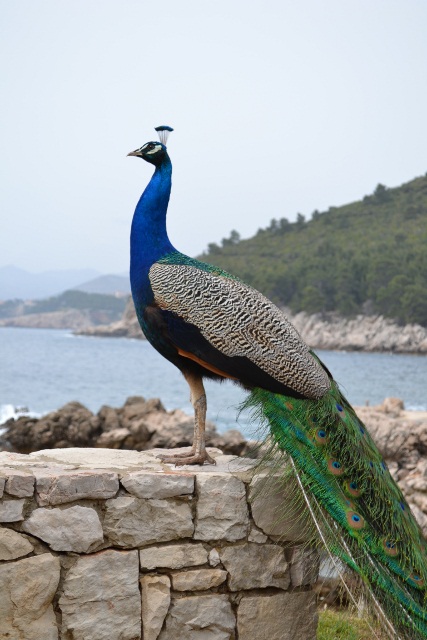
Lokrum is a great place to take in views of Dubrovnik and sunbathe as well if the weather is right. We brought lunch with us and hiked around the edge of the island to find the perfect picnic spot. This proved a little more difficult than we had imagined due to the infestation of peacocks on the island. Peacocks were introduced from the Canary Islands and the population has since spread out of control. These birds will not leave you alone once they figure out that you have food in your pack.

They look beautiful, but they are really just over-sized pigeons.

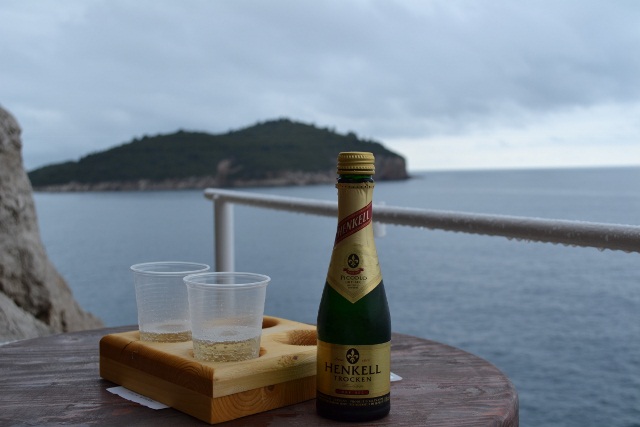
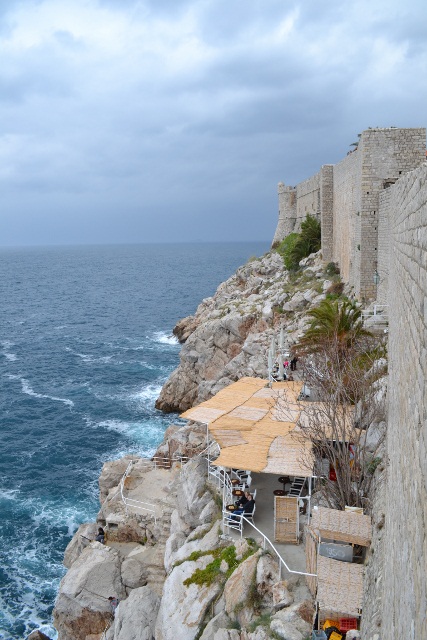
It rained on and off on our last day; for Amy, as a native Oregonian, rain is always a welcome sound and smell. In between the clouds, we stopped for a glass of bubbly at a bar that is situated on the rocks which form part of the castle wall. Definitely a splurge from our usual backpacker budget, but champagne always tastes better with a view.

The view that justified the cost.

The only sign we could find for this place read “Cold Drinks” – we think that name sums it up pretty well.

Excluding our hostel mishap that we shared in Part II of this series, we absolutely loved the Dalmatian Coast. While Croatia has been growing in popularity among tourists in recent years, it still seems to be somewhat under the radar, but surely won’t be for long. The islands, beaches and cliffs that make up the Dalmatian Coast are a sight to see, and the Croatian people are so welcoming that you immediately feel at home in their country. We will definitely be back.

Read Full Post »

In our last post, Dalmatian Coast: Part I, we mentioned how we booked our Dubrovnik accommodations without much forethought at 4:00am on the day we were arriving. Before sharing the many pleasant parts of our visit to Dubrovnik, we will finish telling you the story of our hostel from hell. We hope that you find it amusing and that it will help prevent others from making the same mistakes we did.

After staying up until the wee hours of the morning, we were in no hurry to leave Split and get on the road to Dubrovnik, but had to keep moving. We didn’t know the check-out time of our current apartment. We hadn’t packed. We didn’t know when the bus was leaving. But, thankfully we did know where we would be staying that night in Dubrovnik. Or so we thought…

The bus ride from Split to Dubrovnik was absolutely gorgeous. It drove right along the coast which provided incredible views of rocky cliffs slipping into the Adriatic Sea. After four hours, we had arrived in Dubrovnik. Once we found the address of the hostel where we had booked a room, we looked at each other with a “is this really it?” sentiment. There was no sign, the yard was cluttered with debris, a half dead bird was twitching on the porch, and children’s toys were scattered about. There was no doorbell or buzzer to be found. We proceeded to knock on each of the house’s three doors. Finally, a lady answered. She showed us around, and within seconds we realized the awful mistake we had made.

The place was filthy and in terrible condition: stained sheets, chipped paint, a broken window, busted handles, rusted fan, mold and cobwebs. They were the most uninviting accommodations we have ever seen. After a little discussion, we decided to inform the lady that we would only be staying one night (since we were already locked in due to our online pre-booking) and cancelling the other two nights of our reservation. She blew up! She was yelling at us and threatening to call the police, demanding that we hand over our passports. Yeah right! We kept our cool and explained that our reservation email specified that we could cancel if we paid for the first night. Eventually we smoothed things over, paid for one night, and decided to tough-it-out. In hindsight, we don’t know what we were thinking; we should have hightailed it right out of there.

Attempting to distract our minds from this hellish inferno of hostel, we sat down to catch up on email, book a new room, and do some research about our up-and-coming trip to Turkey. Suddenly, Mike spotted a bed-bug crawling on one of the mattresses; then, Amy moved our camera bag and found another. Before we knew it, we had found a third. That was all it took; at 11:00pm we called the owner of our recently booked (and positively reviewed!) guesthouse and asked if we could check in immediately. This is where our luck turned around.

Nikkolina, the owner of our new guesthouse, was truly an angel. She could hear the distress in Amy’s voice, and despite her guesthouse being full, offered to meet us right away. Amy was nearly having a panic attack as we walked out of the place we now refer to simply as “Hell.” We basically ran across town, packs and all, through the drawbridge and into Old Town Dubrovnik.

When we arrived, Nikkolina showed us to an extra room where we could stay even though it was not typically used by guests. Although just a simple, cozy and clean guesthouse, this place looked like a 5 star hotel to us! It was after midnight by this point, and we knew there was still one more thing we had to do before falling asleep: a bed-bug inspection. Mike’s work history in hotel housekeeping came in handy. We whipped out our headlamp and flashlight (putting them to use for the first time) and went through every single item in our backpacks in painstaking detail. We found one hitchhiker, put him to death, and continued inspecting the rest of our gear. An hour later, we were done and confident we had conquered the situation. Still, falling asleep proved difficult; after some assistance from sleeping pills, however, we were finally able to get a relatively good night’s sleep.

What did we learn from this experience?

  • Don’t wait until the day of arrival to book a guesthouse (especially if you’ve stayed out until the early morning).
  • Don’t book an accommodation that doesn’t have any reviews online.
  • If a place looks and/or feels wrong, leave immediately (dying birds cannot be a good omen).
  • When in doubt, only book one night. It’s better to have to switch hotels because they are fully booked than to be stuck somewhere horrible.

You’re probably thinking right now, duh Mike & Amy, this is all common sense stuff. And, you’re right, it is. We like to consider ourselves relatively well traveled people, but the excitement of our RTW trip got the best of us. Yes, it could have been worse, but it felt like the pits at the time. It all worked out in the end, and we will share our amazingly positive experiences in Dubrovnik in the final chapter of this series – Dalmatian Coast: Part III.

Read Full Post »

Our journey to southern Croatia’s Dalmatian Coast was done in a very “fly-by-the-seat-of-your-pants” kind of way; all of our train tickets were purchased at the station within an hour of departure. Traveling this way brings a sense of excitement and anticipation that is difficult to find in today’s internet-centric world where planning a trip can be done with just a few clicks of a button. In the past few weeks, we have been using trains as our primary mode of transportation which allows us to see much more of the landscape than traveling by plane. For both of us, trains are our favorite way to travel. They are not always the fastest way to get around, and you often have to make connections and switch trains, but the experience is so much more laid-back than flying.

The scenery along the train ride from Zagreb to Split included everything from snow-capped mountains to vineyards to lakes.

The trip from Eger, Hungary to Split, Croatia took us two days via three different trains, totaling about 14 hours on the rails when all was said and done. Our “layover” in Zagreb, the capital of Croatia, was a nice surprise. The city was much more full of life than we had anticipated, with tons of young people out and about enjoying the parks, cafes and restaurants that line the cobbled streets.

It’s a bit of a miracle that we made it to Split at all. Half way through our train ride we noticed that we had been stopped on the tracks for quite a while. Wondering what was going on, we poked our heads out of the window and noticed that the train was being decoupled; the front half was pulling away, while our car was left standing on the tracks. The train conductor didn’t speak English, so we just went with it and hoped that we were on the right car. Another engine arrived a few minutes later, and we were on our way again. Upon arriving at the Hungary-Croatia boarder a few hours later, our passports were checked and stamped. Our concern about being on the right train was raised again when we looked down at our passports and saw “Republika Hrvatska.” Hrvatska?!  We thought we were going to Croatia.  Turns out Hrvatska is Croatia.  English versions of cities and countries are often different (i.e. Sevilla>Seville. Lisboa>Lisbon.), but how did someone come up with Croatia from Hrvatska? Anyway, we digress.

We did eventually arrive in Split, and when we did, we felt very glad to be back in a city on the sea. Our last view of the ocean was in Denmark, and although only a month ago, it felt like ages. Being from Colorado, Mike had always said that he prefers the mountains to the sea, but it seems that each time we travel to the coast it is harder for him to leave.

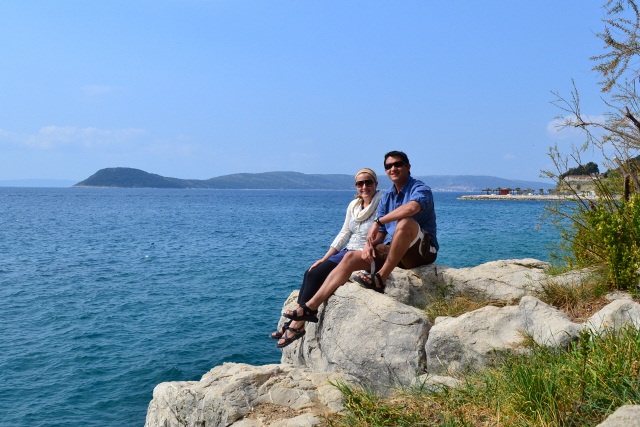
Relaxing along the rocky Dalmatian Coast.

Split is the second largest city in Croatia, yet only recently has become a popular tourist destination. It serves as the transportation hub for the numerous islands that speckle the Dalmatian Coast. It is also known for Diocletian’s Palace, the ancient Roman palace that encircles in the old town, and for its numerous beaches and party atmosphere.

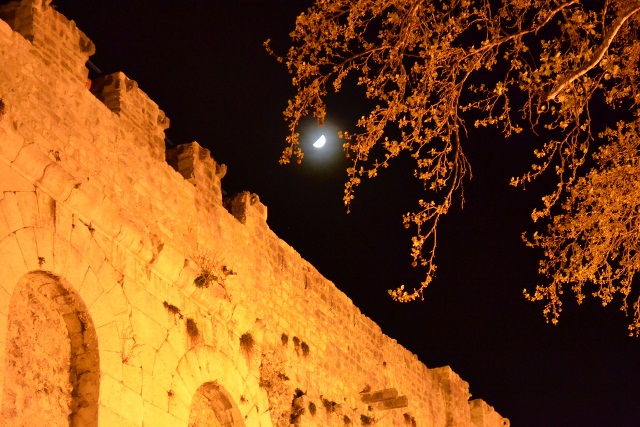
An exterior wall of the Diocletian’s Palace under the moonlight.

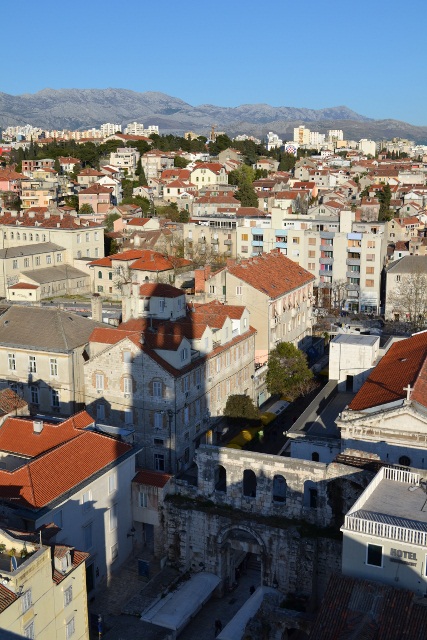
View of Split from the top of the bell tower.

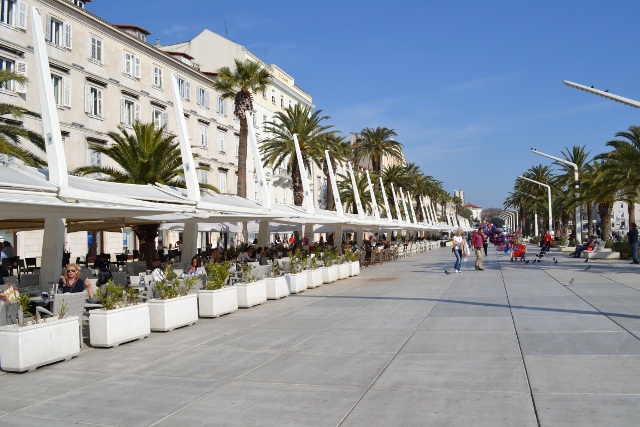
The cafe culture along Split’s main pedestrian street  is also prevalent. On our first day there, Amy said “is it just me, or is everyone staring at us?” We quickly learned that people watching is THE thing to do in Croatia. Everyone looks at everyone else, and most people can be seen decked out in big sunglasses to aid in the sport of people watching.

The Split Riva, or sea promenade, is lined by outdoor cafes and restaurants.

We had originally intended on staying three nights in Split, but after a day,  we decided that would not be enough, so we extended our visit for another two nights. The weather gods blessed us with warm temperatures and cloudless skies, making ideal conditions for a few days at the beach.

Crystal clear water along Znjan beach.

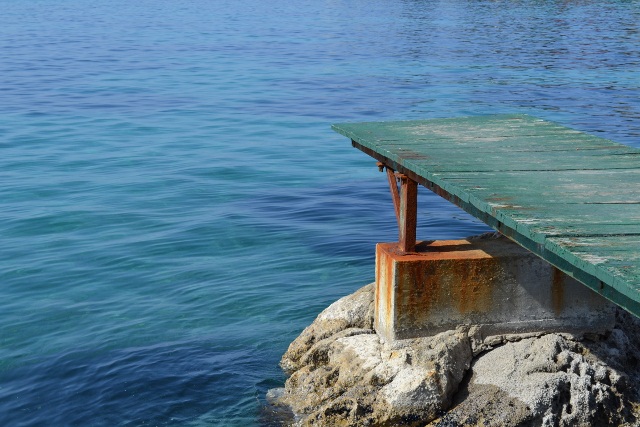
Diving board along the popular Bačvice beach.

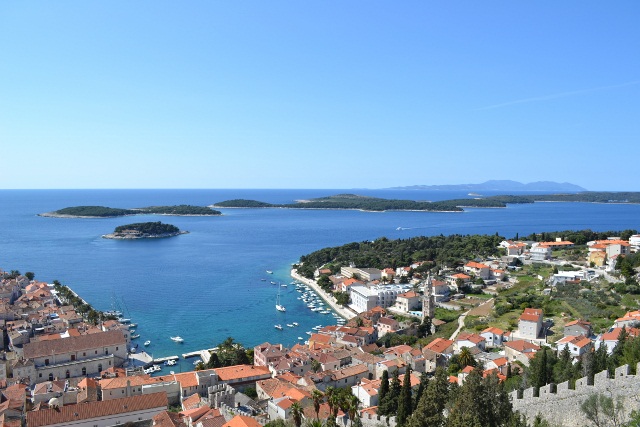
The most famous island along the Dalmatian Coast is Hvar. The ferry from Split to Hvar takes about two hours and the scenery is gorgeous. The boat ride alone justifies the cost of the ticket, but the stunning natural beauty of Hvar is the real gem. We spent our day on Hvar hiking up to the castle for an amazing view, strolling along the coast and swimming in the turquoise sea. Then, we soaked up some sun while dining in the plaza. It was one of the most relaxing and enjoyable days of our journey thus far. It literally felt like heaven.

View of Hvar harbor and the Pakleni Islands from the castle.

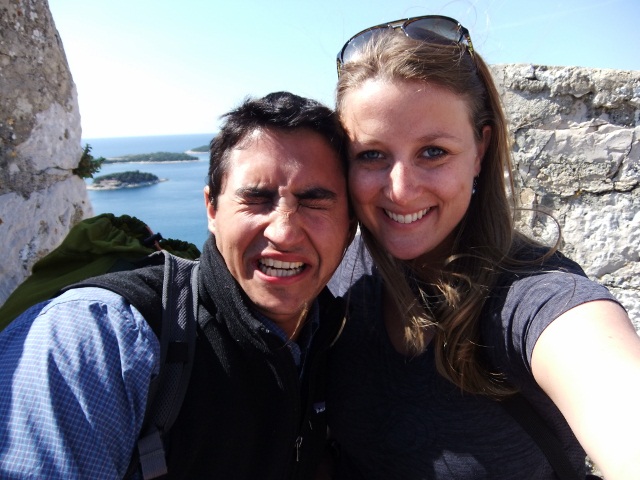
Have you ever seen such a perfect mid-sneeze photo? We were laughing for days over this one.

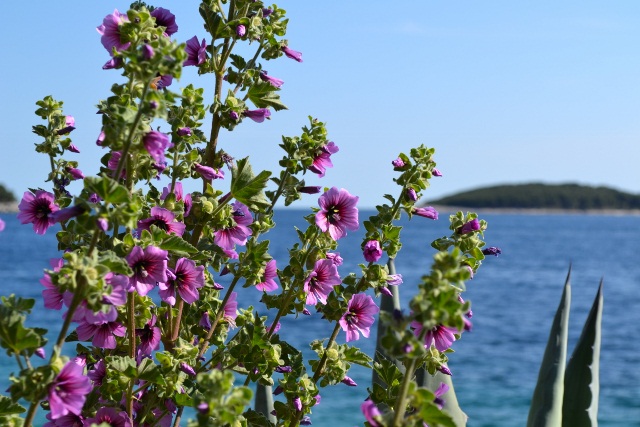
Flowers were blooming all over Hvar Island. It must be spring.

Maybe it was the great weather that put everyone in a good mood, but whatever the case, we encountered only friendly people on the island. Everyone we met, tourists and locals alike, had a huge smile on their face. Among those we met was a really fun couple that we kept running into throughout the day. We spent the entire ferry ride back to Split chatting it up with our new friends, Juan and Saskia. Originally from Zimbabwe, they now live in Australia and are currently wrapping up a 9-month road trip around Europe. Dinner that night turned into ten hours of stories and jokes. While being away from friends and family back home can be hard, one of the best parts of our expedition is meeting total strangers along the way and witnessing first-hand how a love of travel brings people together.

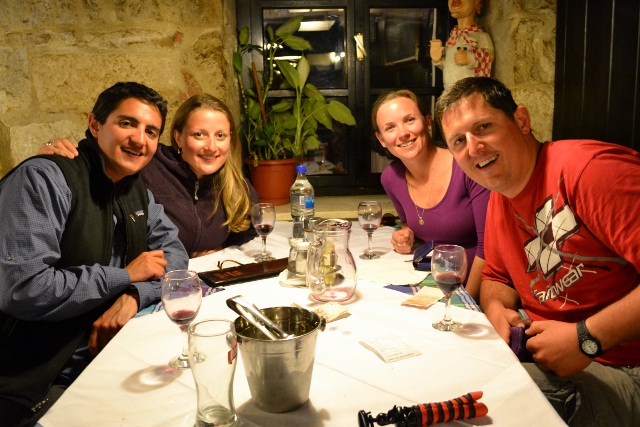
The crew after a delicious Croatian meal.

We had to leave the next morning for Dubrovnik, so once we returned to our apartment at 4:00am, we hopped on the internet and booked the first affordable place that we could find. Remember what we said at the beginning of this post about a few clicks of a button? BIG MISTAKE. But more to come on that story in our next post…stay tuned for Dalmatian Coast: Part II.

Read Full Post »

Three days ago, while waiting at the train station, we started chatting with a fellow passenger about our RTW trip. Next thing we know he whips out a business card and…April Fools! That was just a ploy to get you to read our post. It’s about our wine tasting adventures in Eger, Hungary, and we promise if you keep reading you’ll enjoy it (especially if read with a glass, or bottle, of wine). And maybe if you tell enough of your friends about our blog, we might be on the Travel Channel someday 🙂

Eger is home to Hungary’s infamous “Bull’s Blood” red wine (Egri Bikavér). It is delicious stuff; a cuvee made from a blend of three or more grape varietals, many of which we had not heard of before our visit. You can taste Bull’s Blood, and many other red and white wines, in an area just outside of the old town called The Valley of Beautiful Women.

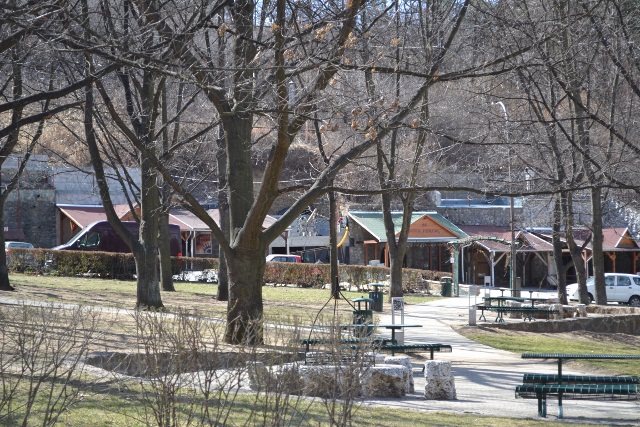
Wine cellars line the horseshoe-shaped road that makes up the Valley of the Beautiful Women

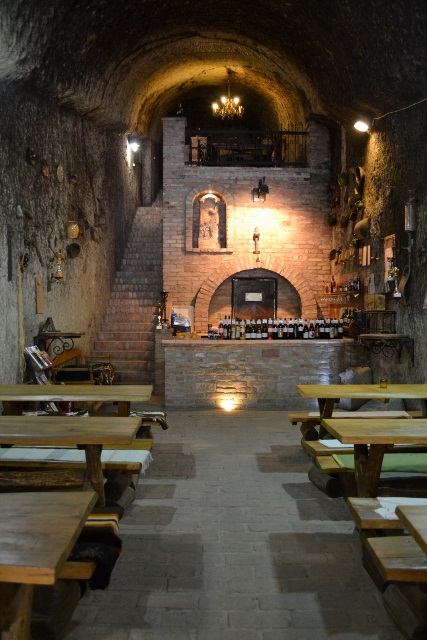
Interior of cellar #19, the first stop of our wine tasting adventure.

The cellars in the valley are lined up one right after the other and vary quite a bit in terms of their décor and seating arrangements. Some are very well appointed with great patios; others are simply holes dug into the side of the hill with standing room only. Either way “tastes” of wine, which are actually full glasses, start 90 HUF, which is less than 50 cents! The price and proximity of the cellars make this a gloriously dangerous place. The good news is that the walk back to Eger only takes about 15-20 minutes.

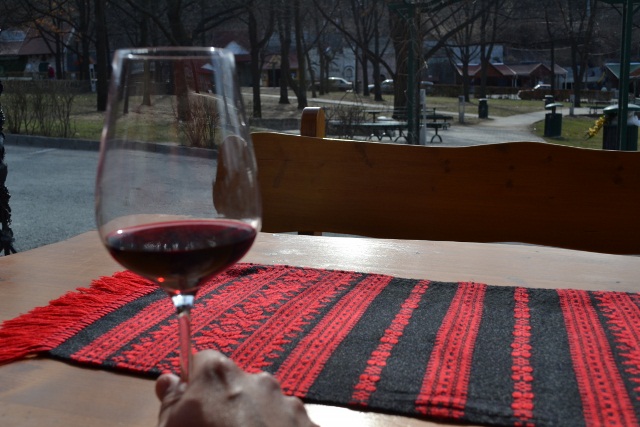
Enjoying a glass of Bull’s Blood at cellar #17

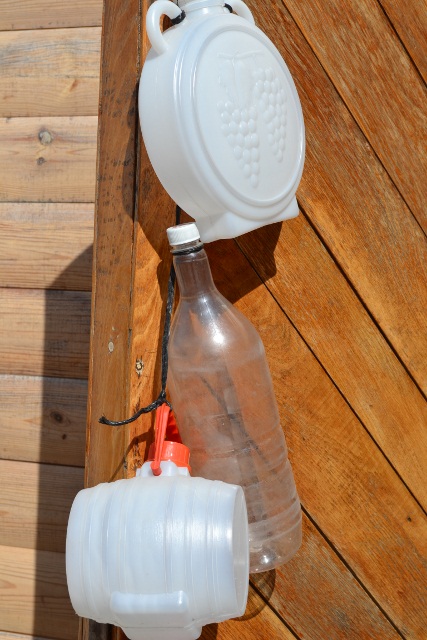
If countless glasses of wine haven’t quenched your thirst, the cellars also sell wine in bulk, poured straight from large tanks. You can buy plastic jugs to have filled with your favorite wine, or can bring your own container.

Plastic containers are available everywhere in the Valley, so you can take home a liter too.

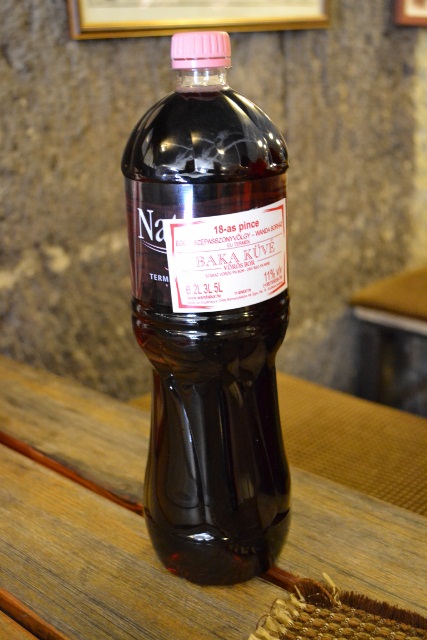
Someone filled us in on the wine-by-the-liter deal before we arrived, so we brought our own water bottle. Reduce, reuse, recycle, right?

“I’ll take 1.5L of Bull’s Blood to go, please!”

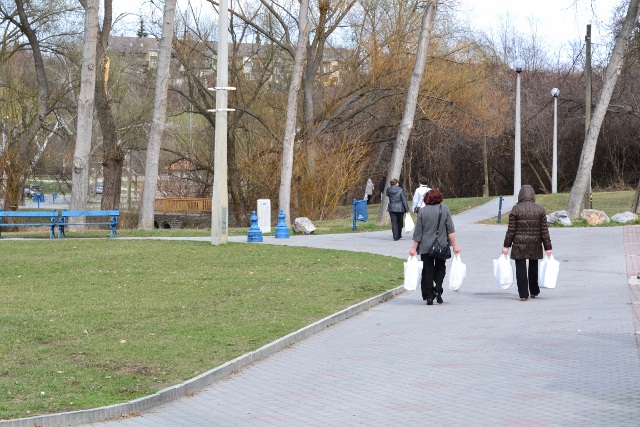
It is a funny sight to see locals and tourists alike carrying grocery bags full of wine in plastic bottles. We got our 1.5 liter bottle filled for just under $4 USD.

A few locals carrying away their stashes of wine for the weekend.

Aside from wine tasting, Eger is a fairly small town with few tourist attractions; easily covered on foot in a few hours. In our previous blog we talked about how much we loved the Hungarian food in Budapest, and the trend continued in Eger. We stumbled upon a fantastic restaurant near the castle called Imola and had one of the best meals of our trip thus far. The highlight was a smoked duck appetizer served cold with goose liver mousse and berry preserves. We aren’t usually huge fans of liver, but this dish was stellar! It was a bit shocking to find such an amazing and elegant restaurant in a small agricultural town.

Spending a few nights in the countryside was a perfect way to wrap up our time in Hungary and relax before a busy two days of train travel to our next destination, the Dalmatian Coast in Croatia.

Read Full Post »

Until a few weeks ago, we had envisioned Budapest as one city, but the fact is  there are many sides to this spectacular place.  From a literal perspective, there are two sides, Buda and Pest, sitting opposite each other along the Danube River. They officially became one city in 1873 and today are joined by a series of bridges and rail lines that make up the greater city of Budapest. However, beyond the two banks of the river, lie the many different faces of Budapest, and this is what makes it such a great place to visit; there is something for everyone.

Budapest for the History Buff

Like many other capital cities in Europe, Budapest features a historic castle quarter. Located on the Buda side of the river, Castle Hill is the place to go for the best views of the city, and it is home to several museums and monuments including, not only Buda Castle, but numerous churches, the National Széchenyi Library and Sándor Palace, the official residence of Hungary’s President.

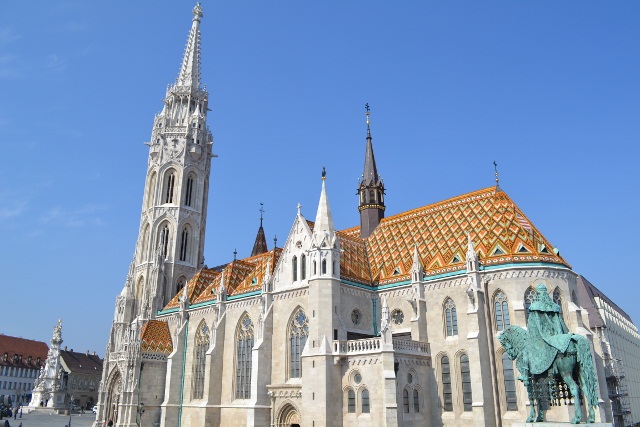
Check out this spectacular diamond tiled roof of the Matthias Church on the Buda side

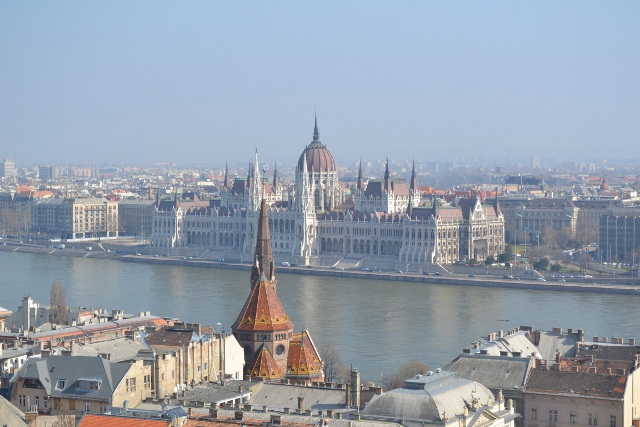
View of the Hungarian Parliament Building as seen from Fisherman’s Bastion

After exploring the castle district, take a ride on Budapest’s underground metro system, the oldest subway system in continental Europe. Many of the stations have classy tile work and a very historic feel to them. Lastly, don’t miss the Hungarian National Museum which houses great exhibits about the nation’s history and current archeological excavations.

Budapest for the Foodie

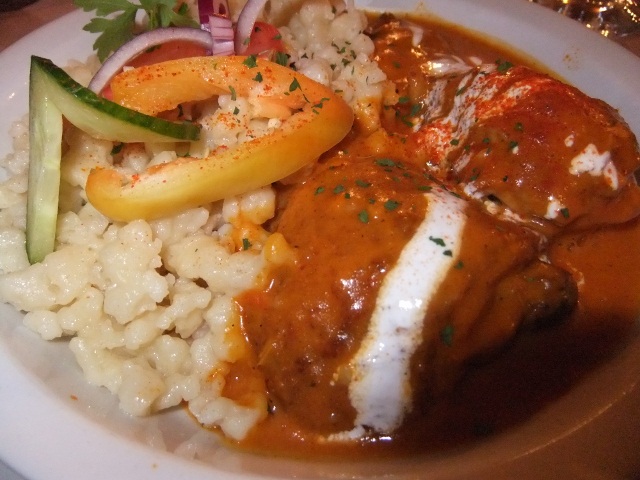
Eastern European food is generally not anything to write home about; but, we had high expectations for Budapest. The bar was set high by one of our favorite restaurants from home, a Hungarian spot in Denver called Budapest Bistro. We were not disappointed. Hungarian food takes the basic meat and starch components that are used in so many Eastern European countries and jazzes it up with paprika. This spice doesn’t add heat, but flavor. Some of our favorites included: chicken paprikash, rabbit in red wine sauce and garlic seasoned goose leg.

Chicken paprikash with spaetzle…this picture does not do it justice, we were more concerned with eating it at the time than getting a good shot

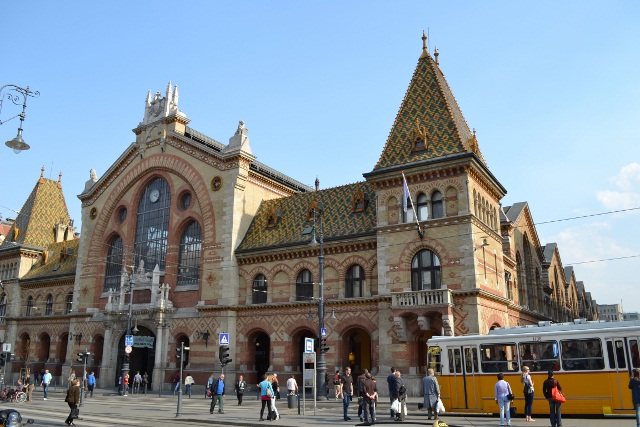
In addition to the traditional Hungarian restaurants that cover the streets of Buda and Pest, you should also check out the Central Market Hall (Nagy Vasarcsarnok). At a first glance, this market looks like any other in Europe with produce, meat and seafood stands, but upstairs there are several food counters where you can graze to your heart’s content. We particularly loved the stuffed cabbage rolls.

Nagycsarnok in Budapest – Home of many delicious Hungarian food stands

Budapest for the Party Fiend

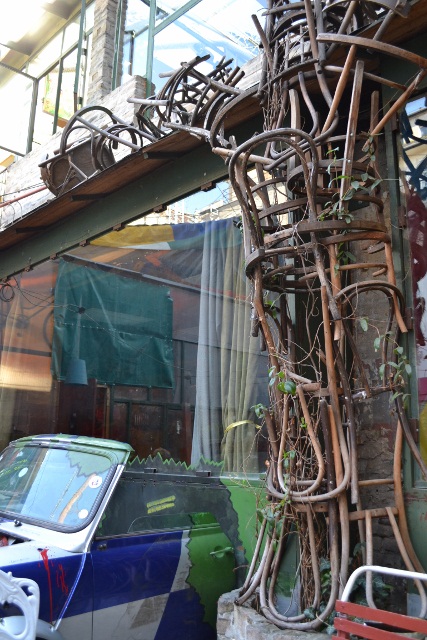
If you don’t look closely, you may miss one of the most interesting parts of Budapest’s nightlife: ruin bars. Tucked into warehouses and dilapidated buildings, these bars are often unmarked and therefore easy to miss. Stop by during the day for a relaxing coffee or beer, or visit on a Friday and Saturday night to experience the liveliest atmosphere in town. Ruin bars are eclectically decorated, including anything from rusted old cars that have been converted into seating to toilets that are being used as planting boxes. They feature many types of entertainment from DJs to dancers to interactive art pieces.

Funky decor in Szimpla’s outdoor patio

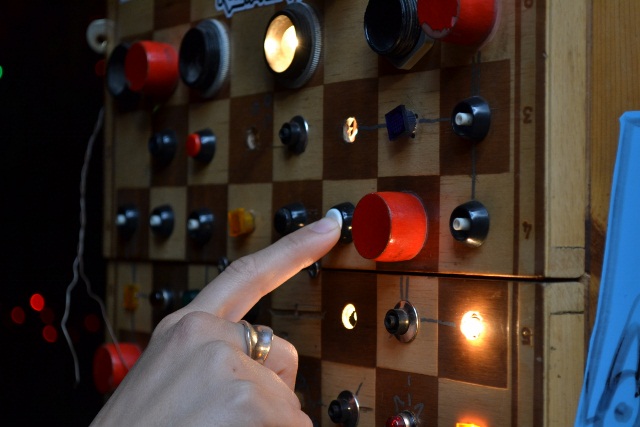
Random and fun interactive art piece in Szimpla Ruin Bar. This basic circuit board controls a crazy assortment of lights, bells, whistles and music.

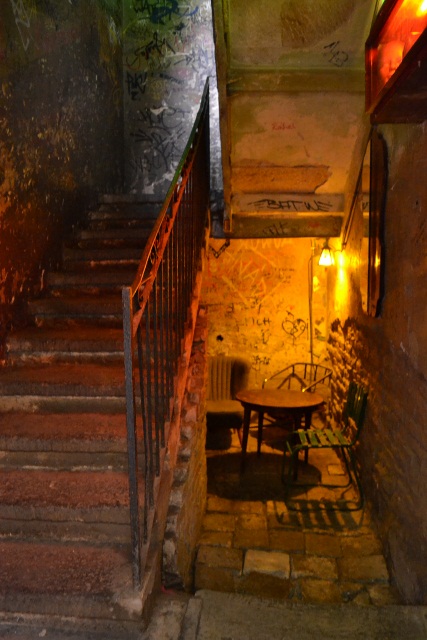
Hidden seating area at a Budapest ruin bar

If you want to read a detailed summary of ruin bars in Budapest, check out this post.

Budapest for some R&R

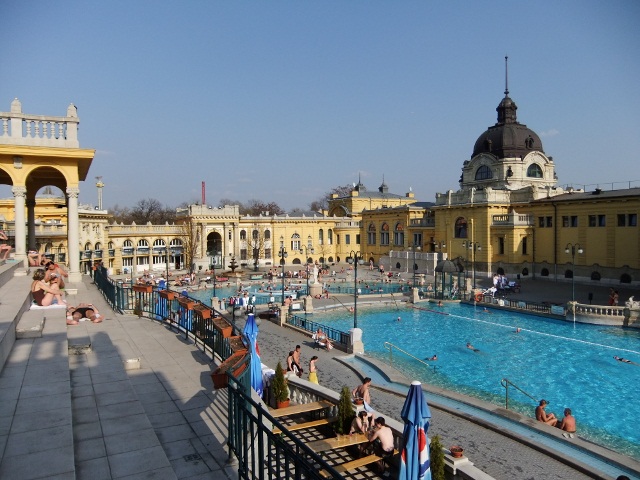
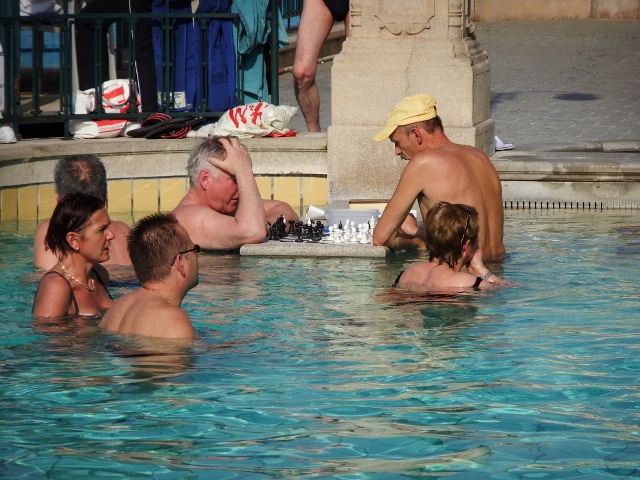
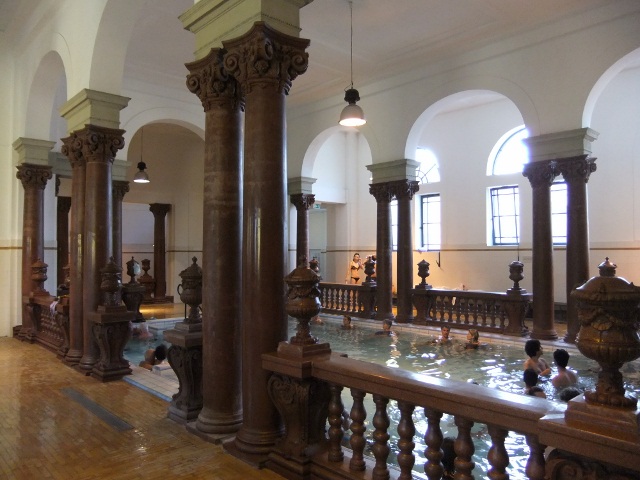
Likely brought into popularity when the Turks invaded Hungary, gyógyfürdő (thermal baths) are a traditional part of Hungarian life. These facilities usually include indoor and outdoor pools whose temperatures vary based on the minerals of which they are composed. Definitely set aside at least one full-day for relaxing in a fürdő during your visit to Budapest. We loved our visit to Széchenyi Fürdő, one of Europe’s largest thermal baths situated in the center of City Park. You can purchase tickets which provide access to various services, ranging from the use of the basic thermal baths for about 3,000 HUF to pool access with a private cabin, including massages and spa treatments for upwards of 9,000 HUF.

Outdoor thermal baths at Széchenyi Fürdő. These get up to 38 degrees Celsius – the biggest hot tub we’ve ever seen!

Locals playing chess in the thermal baths. They must be prune proof.

One of the indoor thermal baths at Széchenyi Fürdő

If public baths aren’t your style, no need to worry; head over to Margaret Island (Margitsziget). This island park sits right in the middle of the Danube River and can easily be reached by foot or by public transportation. The park is just over 5 kilometers around and has countless areas for picnicking and sunbathing. There are also tennis courts and trails for biking and running, if working out is your idea of relaxation. A small petting zoo, water park, ice cream stands and cafes make it a family friendly destination.

Budapest for the Arts Lover

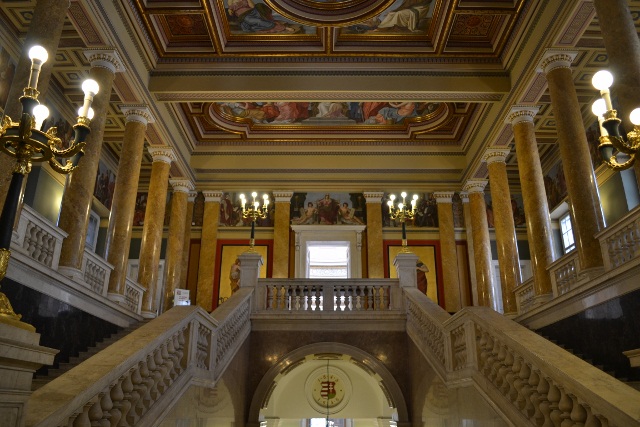
If arts and theater are your thing, be sure to visit Budapest during the Budapesti Tavaszi Fesztivál (Spring Festival) which happens each year in March. We happened to be in town this week, and although we didn’t take advantage of its offerings, you can be guaranteed so see a wide variety of operas, shows, and live musical acts at venues across the city. During the rest of the year, the city houses several art museums, including the Hungarian National Gallery which includes a feature on famous artists from Budapest.

Frescoes at the Hungarian National Museum

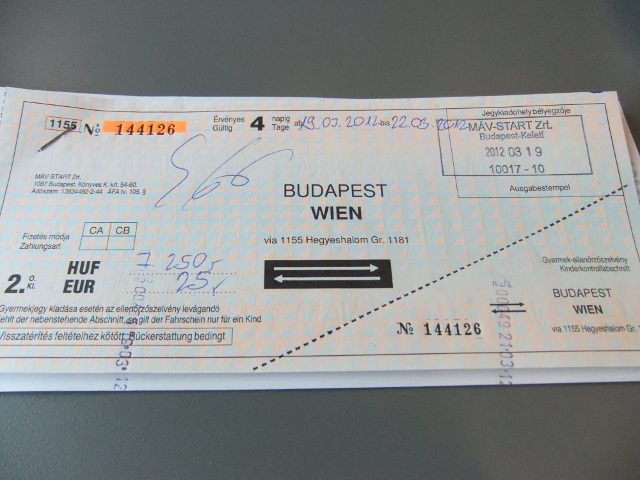
As for our personal experience in Budapest…fantastic! Even before we arrived things were going our way. The night before we left Vienna, we saw a sign at the reception desk of our hostel that said “free ticket to Budapest.” Although it seemed too good to be true, we asked for more details. As it turned out, a fellow traveler had purchased a round-trip ticket and wasn’t going to be using the return. So, rather than trying to sell it, they asked the hostel to try and find someone who could use it. Funny how things like that work out; we were actually planning on doing the exact same thing with our round-trip tickets from the Czech Republic.
Free train ticket to Vienna thanks to a kind stranger!

But anyway, back to Budapest, it has been one of our favorite destinations thus far. Despite the fact that neither of us speaks a word of Hungarian, we felt at home. Before arriving, we had heard some bad things about Budapest being a “sketchy” city with lots of people out to scam tourists; so we had our guard up a bit when we arrived. As it turns out, everyone we encountered was friendly, helpful, and honest. Add the delicious food, sights, and activities, and you have all the makings of a wonderful city. If you are planning a trip to Eastern Europe DO NOT miss Budapest.

Read Full Post »

Surprise! We’re in Vienna. Well, technically speaking we are in Hungary now, but we were in Vienna.  We had no intention of visiting Austria during our RTW trip, but had to in order to get to our desired destination, Budapest. It took four hours, a bus and two trains from Český Krumlov, but before we knew it, we had arrived.

Vienna was a lovely surprise. Granted, we did spend our only full-day of sightseeing slightly hung-over, but you have to make sacrifices sometimes, right? Life is short. Two Americans, one Korean-born Australian and one Argentine in Austria = a jolly good time. Jägerbomb anyone? We have no idea where Diego and Lisa are now, but we wish them safe travels.

So, what did we see on this glorious day in Vienna, you ask?

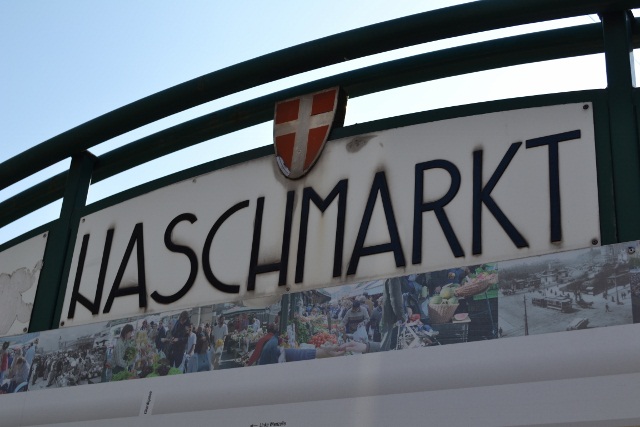
Naschmarkt

An incredible outdoor market that stretches on for blocks, with stall after stall of flowers, spices, pastries, sipping vinegars, produce, meat, seafood, and more. Most importantly, it provided a much needed hummus fix for Amy.

Naschmarkt entrance. You can read about the history of this market here.

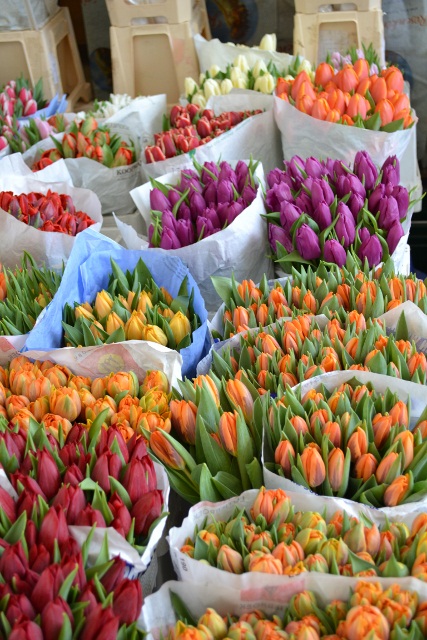
Colorful tulips. Christina, I was thinking about you when we walked by this stand.

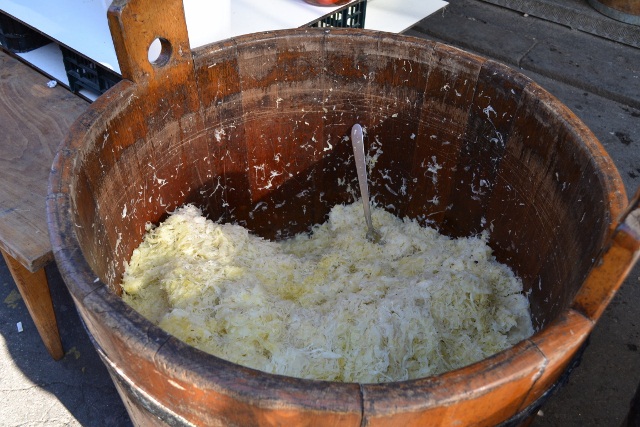
That’s a lot of kraut!

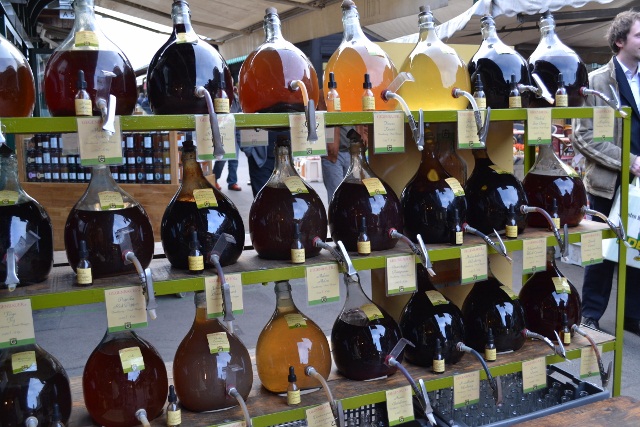
Rows upon rows of tasting vinegars

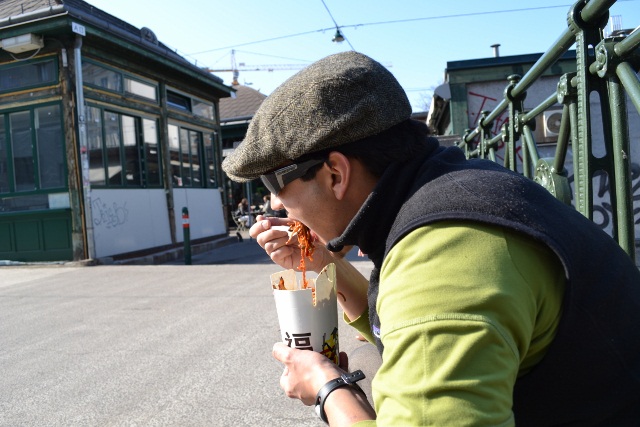
An interesting observation we made in Vienna is that Austrians are constantly eating on the go; there are countless food stands strewn across the city, and it seems as though every third person you see is eating on the move. Anyone giving Americans a bad rap this behavior should visit Vienna. Naturally, we had to give eating Vienna-style a try, so picked up some fantastic noodles-in-a-box from the Naschmarkt.

Yum.

Ringstraße

The heart of Vienna is encircled by roads that are collectively called Ringstraße (Ring road). We spent a few hours walking it and were astounded by how grandiose everything is; architecturally it is one of the most impressive European cities we’ve seen thus far. Pictures simply do not do it justice. It is quite an experience to literally be stopped in your tracks by the magnificence of a building, every single block, for five straight kilometers.

The Austrian Parliament Building situated on Ring road

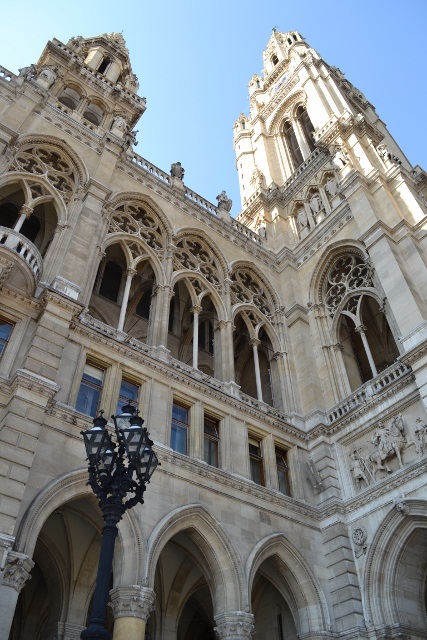
The Vienna City Hall, also located just off of Ring road

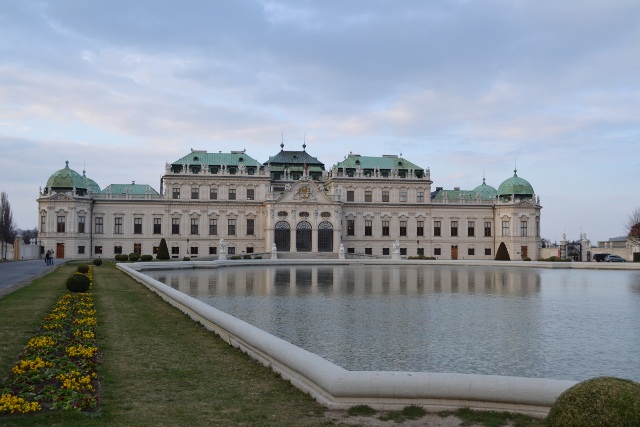
The stunning Upper Belvedere Palace, near Ring road

People Watching

Honestly, no place we visit is without this activity; however, people watching in Vienna seemed to be of particular interest. Every park had a sign posted that attempted to communicate “do not walk on the grass” with stick figures, but none of them seemed to get the point across. There were bodies littering the grass and soaking in the afternoon sun; ideal for people watching.

All in all, our less than 48 hours in Vienna were pure and simple fun. We didn’t feel obligated to do and see everything since our time was limited. Hell, we didn’t even have Viennese coffee. What we did manage to do was get a pleasant taste of the city that left us wanting more.

Read Full Post »

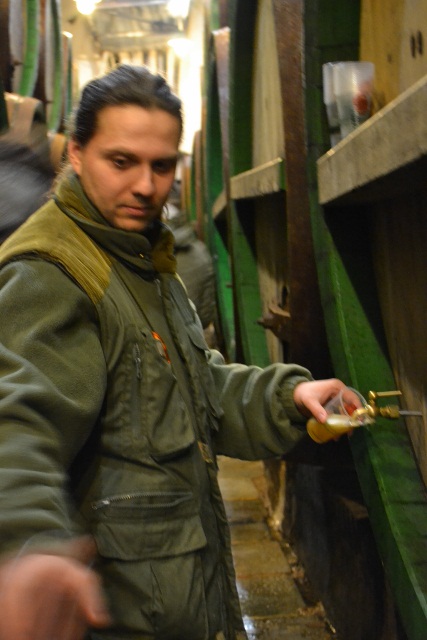
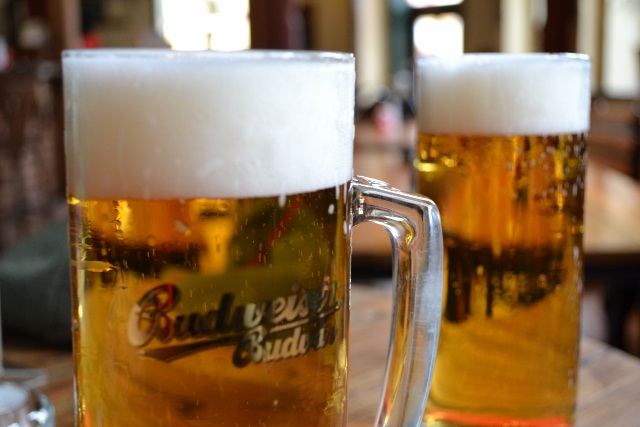
Ever heard of Pilsner beer? How about Budweiser? Unless you have been living under or rock, the answer is likely yes. Our journey into the heart of Czech beer country led us to the birthplace of Pilsner and the home of the original Budweiser beer. As beer lovers, it was a lot of fun to tour the Plzeňský Prazdroj brewery (a.k.a. Pilsner Urquell) in Plzeň and check out the Budweiser Budvar facility in the town of České Budějovice; that being said, our vote for best beer in the world remains with American craft brewers. Sorry Czech Republic, but the creativity and variety of beer in the States is simply amazing.

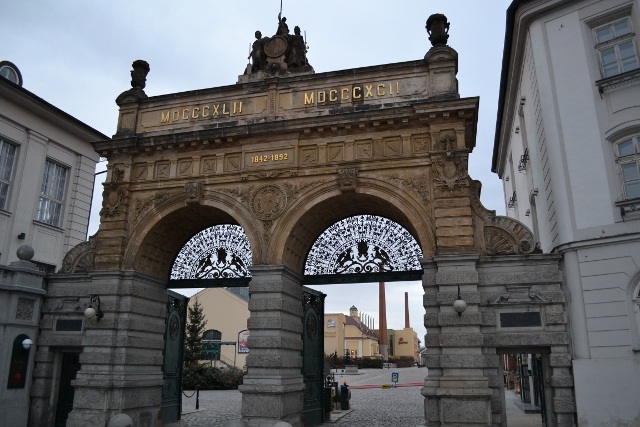
Gates leading into Pilsner Urquell

Tasting unpasteurized, unfiltered Pilsner Urquell straight out of the barrel. Only place you can get this stuff on earth.

Nice and heady Budweiser Budvar. We prefer less foam, but when in Rome…

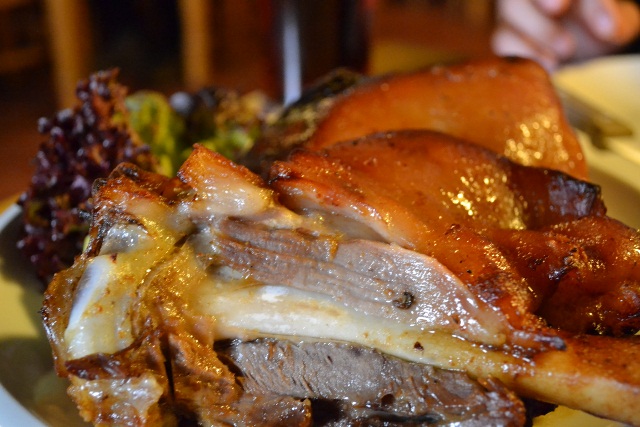
While the Czech Republic was not the beer mecca we had envisioned, our route was still filled with many other delights: among them, the pork knee and Czech hockey. A knee may not sound very appetizing, but don’t knock it till you’ve tried it. Mike became nearly obsessed with trying this traditional Czech dish after watching an episode of No Reservations; when he finally got his fill in Plzeň…well, you might just say he was in “hog heaven.”

Roasted pork knee (not pictured: Mike, drooling)

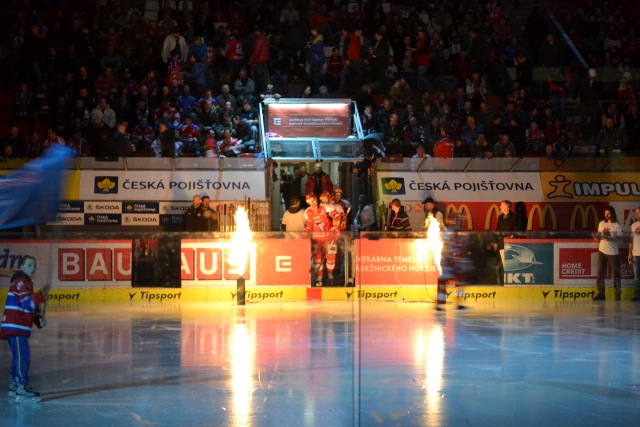
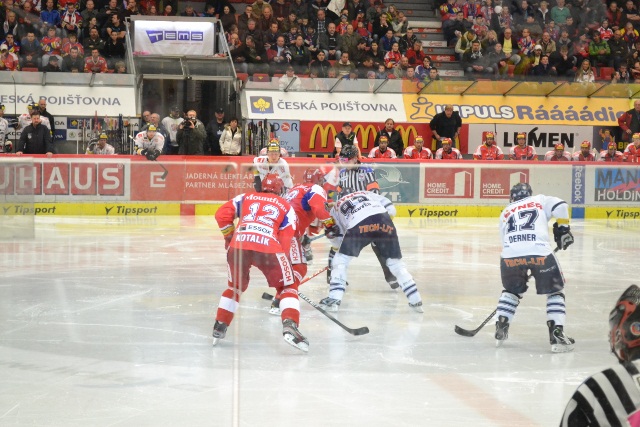
In most of Europe, and the world for that matter, football (soccer) is the king of sports. Not the case in the Czech Republic. Hockey reigns supreme. By pure chance, our visit to the country coincided with the playoffs of their pro hockey league; so, we decided to check out a game in České Budějovice. What a time. Football may not be the Czech sport of choice, but the fans are no less enthusiastic: drums, horns, flares, and all.
HC Mountfield vs. HC Liberec at Budvar Arena

Face off following one of the many fights that broke out on the ice that night

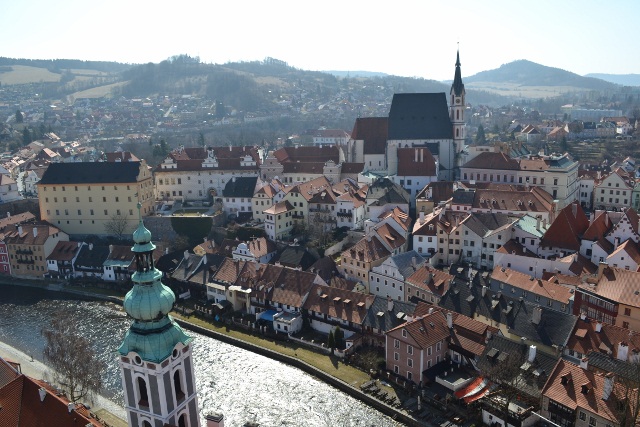
The Beer Route through Plzeň and České Budějovice was great, but the real gem of our trip to southern Bohemia had nothing to do with beer at all, it was a small town called Český Krumlov. For many it is just a day trip from České Budějovice, but we made a long weekend out of it. Learning from the many expats that we met during our visit, we took to calling it “The Krumlov,” and we must say that we think it is one of the most photogenic places in Europe.

Český Krumlov from the castle tower

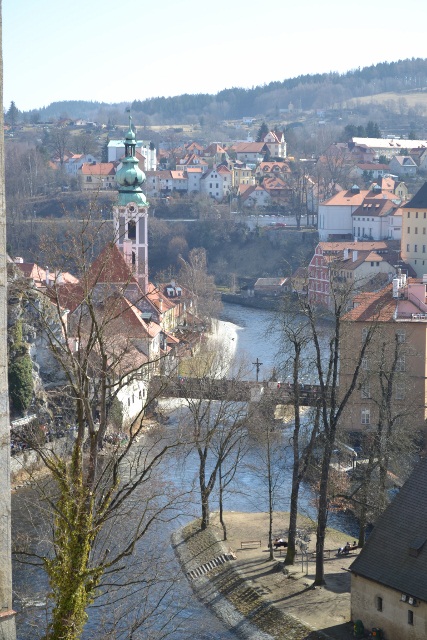
The Vltava River winding through Český Krumlov

In addition to its looks, The Krumlov captivates you with its charm and slow-paced way of life. Just as the Vltava River delicately bends and curves around the old town, locals and tourists alike seem to walk a step slower than in the rest of the Czech Republic. Stores close at 6pm during the week, before noon on Saturday, and are closed on Sundays. At dusk, your senses come alive as a haze fills the sky from wood fired stoves; you can smell the evening setting in as fires warm the quaint village homes.
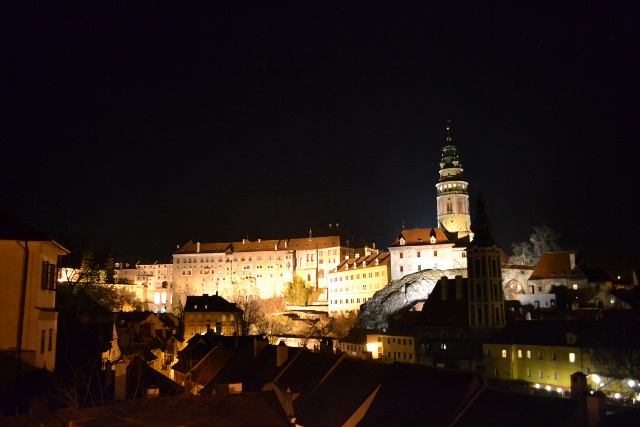
Český Krumlov Castle all lit up at night

During the day, the town seems torn between two worlds. Many streets are lined with gift shops and tour groups are common, but turn the right corner and it feels like you have traveled back in time to medieval Europe. The castle moat is still guarded in the same way it has been for centuries. Forget the armed guards, try live bears!

One last picture in The Krumlov

It seems that as we let go of planning and set itineraries, we stumble upon more hidden travel destinations. At first, traveling in this style had us both a bit on edge, but with each passing day, we are beginning to appreciate the true sense of freedom that it brings.

Read Full Post »

« Newer Posts - Older Posts »